What to Do When Camellia Drops Its Leaves? A Detailed Explanation of Whether It Is Suitable for Indoor Growing
Camellia, the one whose flowers come from the tea plant - just hearing the name camellia makes one feel a little sad, because there is a novel called The Lady of the Camellias, and that is a tragedy. Let's look at what to do when camellia drops its leaves? Is camellia suitable for growing indoors:
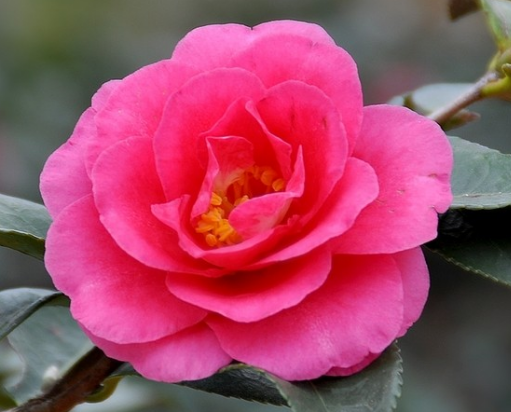
What to do when camellia drops its leaves:
First, the potting soil is too dry or too wet. When planting camellia seedlings, make sure the potting soil is moist; camellia likes to grow in a warm and humid environment. When planting, water thoroughly. Generally, water once a day in spring and autumn, and in summer water once in the morning and once in the evening. When summer is too hot, the flowerpot should be cooled down by sprinkling water around it. The water used for watering should be left in the sun for a while, or some ferrous sulfate can be added to the water.
During the growing period, if there is not enough watering, the leaves will drop. When planting camellia, choose moist, fertile, well-aerated, slightly acidic soil. If the soil is waterlogged and too wet, the roots will have difficulty breathing, which will also affect the growth of the camellia. Therefore, drainage should be done well on rainy days, and the soil should have good drainage. Watering camellia depends on the growing period. Normally, keeping the soil slightly moist is enough, but during the growing period, more water should be given. At least 5 hours of light should be ensured every day, and shading measures should be taken in summer; it is best to place it in a semi-shaded spot for growing.
Second, fertilizing. During bud formation, apply phosphorus fertilizer 1 to 2 times to ensure the quality of later blooming. After the flowers fade, nitrogen fertilizer should be applied once a week, 1 to 2 times in total, mainly to promote the growth of branches and leaves. When fertilizing, control the concentration well, and do not use raw fertilizer.
Third, pests. If the camellia leaves grow too densely, cut away the overly dense leaves to ensure light and ventilation for the camellia, and avoid pests such as red spiders that cause leaf drop. After pests occur, the leaves can be brushed with soapy water as treatment.
Is camellia suitable for growing indoors:
Camellia can be grown indoors, but note that camellia relatively likes sunny and well-ventilated places, and indoors it is easy for it to wither and die if one is not careful.
That is all for the methods of dealing with camellia leaf drop. If you want to grow it indoors, you need to take the camellia out to get some sun.
Is Camellia Toxic, and Is It Suitable for Growing Indoors? Non-toxic and with Many Benefits for Indoor Growing
Camellia, a very beautiful ornamental flower. If you know about it, everyone should know that camellia flower colors are very vivid. In life, there is a saying that the more gorgeous something is, the more toxic it is, and from this the rumor that camellia is toxic has spread. So is camellia toxic? Is camellia suitable for growing indoors? Here, the editor will explain it for everyone.
One, is camellia toxic? Two situations
In life, as one of China's top ten famous flowers, the beauty of camellia is admired, but some people also raise this question in doubt: is camellia toxic? For this, the editor found two results: one is that camellia is toxic, and the other is that camellia is not toxic. The details are as follows:
1. Camellia is non-toxic
Before growing camellia, some people say it is toxic! In fact, camellia is not toxic; some people just confuse it with another plant. So, growing camellia at home does not require worrying about harm. Not only is it non-toxic, camellia also has many benefits and effects; as a medicinal material, it can also help treat many diseases.
2. Camellia is toxic
There are many varieties of camellia. Ordinary camellia is not toxic, but there is also one called datura camellia that is extremely toxic. It is understood that the seeds, fruits, leaves, and flowers of datura are all toxic, with the seeds being the most toxic. After a child mistakenly eats 3-8 of them, poisoning can occur, and the consequences are very serious.
Two, is camellia suitable for growing indoors? Suitable
Generally speaking, the camellia we usually grow is non-toxic, and camellia also has a long flowering period and a pleasant fragrance. So is camellia suitable for growing indoors? Obviously it is suitable. Not only is it suitable, there are also many benefits to growing camellia indoors.
Three, the benefits of growing camellia indoors
1. Strong ornamental value
Camellia always blooms quietly in late autumn when the weather is slightly cool, so it is very suitable for planting at home for the owner to admire. Growing camellia at home, after it blooms, its brightly colored flowers and refreshing fragrance both make people feel relaxed and happy. Such beautiful scenery can actually be enjoyed at home, truly a great blessing in life.
2. Purifying the air
Camellia has a strong ability to absorb carbon dioxide, and it also has strong resistance to harmful gases in the air such as smoke, hydrogen sulfide, chlorine, hydrogen fluoride, and smoke, thus purifying the air. So a beautiful environment and purifying the air are also one of the benefits of growing camellia indoors.
3. The feng shui effect of camellia
In addition to the above two points, the benefits of growing camellia indoors are also reflected in feng shui. Growing camellia at home, whenever winter comes and people feel lazy, seeing such a camellia full of vitality will also inject vitality into oneself again and encourage one to strive upward.
In addition, placing a pot of camellia on the balcony can not only beautify the home environment and purify the air, but also improve home feng shui. Because the balcony is relatively open and has sufficient sunlight, it is itself very suitable for growing camellia. Moreover, cultivating camellia on the balcony also has the effect of bringing vitality and wealth.
Overall, camellia is very beautiful and not difficult to grow. More importantly, the camellia we commonly see is non-toxic, so friends who are tempted can get a pot and try growing one. If you do not know how to grow it, you can also look at the cultivation methods for camellia. That is all the editor's introduction on whether camellia is toxic, hoping it can help everyone. Finally, may everyone's camellia bloom beautiful flowers.
What to Do If Camellia Keeps Dropping Leaves and How to Remedy It
Friends who like flowers and plants must all know camellia, but growing camellia well is not so easy. Some flower lovers' camellias drop leaves very easily. To deal with camellia leaf drop, first find the cause. So what should be done if camellia keeps dropping leaves?
What to do if camellia keeps dropping leaves:
Leaf drop after flowering may be caused by the potting soil being too dry. Because after flowering, the plant needs to sprout branches and buds and enter the growing period. If watering is insufficient or does not penetrate, it is easy to cause leaf drop. For potted camellia, choose loose, fertile, well-drained acidic soil, and avoid alkaline soil. The size of the flowerpot and the ratio to the seedling should be appropriate.
Daily care should place it in a moist, ventilated, semi-shaded, semi-sunny spot. It needs more than 5 hours of light. The amount of watering should also change with growth and seasons. Normally, keeping it generally moist is enough; during the growing period it can be slightly wetter. In hot summer, depending on whether the potting soil is dry or wet, water once in the morning and once in the evening. Never water with cold water under high temperature and strong sun.
For camellia after the flowers fade, nitrogen-based fertilizer should be applied promptly 1 to 2 times, about once a week, to promote the growth of branches and leaves. During the bud formation period, phosphorus-based fertilizer should be applied 1 to 2 times, about once every 10 days.
Camellia is most susceptible to damage from scale insects and red spiders. This is caused by leaves overlapping too densely and poor ventilation. The control measure is to remove the overly dense branches and leaves to allow ventilation and air permeability. For existing pests, a small toothbrush dipped in soap powder water can be used to brush them off.
The reasons camellia keeps dropping leaves:
One, waterlogging and root rot cause camellia leaf drop
Some flower lovers have not had their camellia for long and water it very diligently. Because the pot is large, the root soil is wet for a long time, which suffocates the roots, causing the camellia roots to rot, so the leaves drop.
Two, anthracnose
This disease occurs on the leaves of camellia, mainly on mature leaves or old leaves. The lesions are nearly round or irregular, water-soaked dark green, and finally turn yellow-brown or red-brown. On the lesions there are tiny black granular spots. The lesions vary in size, and some can expand to more than 1/2 of the leaf. The edges have yellow-brown raised lines, with a clear boundary from the healthy part.
1. Remove dead branches and fallen leaves to eliminate the source of infection.
2. Strengthen cultivation management and increase the application of organic fertilizers. Weed frequently and irrigate reasonably to enhance the plant's disease resistance.
3. In the early stage of the disease, spray once every half month with an equal-amount 150-fold Bordeaux mixture, 65% zineb 600—800-fold solution, or 70% thiophanate-methyl 1000-fold solution, for 2—3 consecutive sprays.
Three, poor ventilation
Some camellia leaf drop is caused by poor ventilation. Especially in winter, being kept indoors for a long time with poor ventilation, stale air, or a room temperature above 20°C can also cause bud drop and leaf drop.