How to propagate rubber plant from leaves and what is the cutting temperature
When it comes to the rubber plant, many people love growing it. This rubber plant grows super green and lush, and it looks beautiful. Let's see how to propagate rubber plant from leaves? What is the cutting temperature for rubber plant:
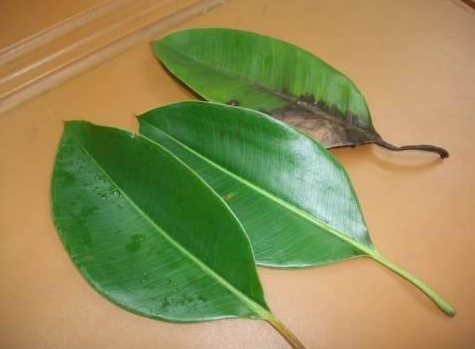
How to propagate rubber plant from leaves:
1. Timing of cuttings and leaf selection:
You should know that the rubber plant is a tropical plant, and the cutting temperature is best above 20°C. If the temperature is too low, it will affect sprouting and rooting. Of course, the temperature should also not exceed 32°C.
Wait until the weather warms up and the temperature stabilizes before doing the appropriate cuttings. The leaves chosen should be healthy, free of pests and diseases, and ideally thick, sturdy leaves from the bottom.
2. Choosing the cutting method
Leaf cuttings also have many propagation methods. The three most effective are using river sand, perlite, or water propagation for rooting.
All three methods make it very easy to promote rooting, but after the roots grow to 3-5 cm, they need to be transplanted into potting soil.
3. Notes on water propagation
Water-propagating the cut rubber plant leaves for rooting is also quite good. Prepare purified water or tap water that has been left to stand for 2-3 days. Put the thick, sturdy rubber plant leaf together with its petiole in, and it is best to soak about 5 cm of the petiole in water. It does not matter if the leaf itself does not touch the water. Before rooting, generally change the water once every 3 days to keep the water active.
4. Propagating in soil
For the soil, it is best to choose sandy soil that is loose, breathable, and well-draining. The scissors used to trim the rubber plant leaves should be a bit sharp, and it is best to disinfect them before trimming.
Insert the leaf diagonally into the soil about 3 cm, keep the soil slightly moist but not waterlogged, and grow it in a warm, shaded place with good ventilation. Do not expose it to sunlight at first.
5. Notes on leaf cuttings
Although propagating rubber plant from leaf cuttings is relatively easy to succeed with, note that you must not lose patience. Sometimes after one or two months of care there is still no change, and you should not worry. Growing and propagating plants requires full patience.
If the temperature and humidity are not enough, leaf cuttings are also relatively difficult to succeed with. Gardeners in more southern regions have a natural advantage, but if the temperature and humidity are insufficient, you can cover them with a plastic bag, and when the temperature rises at noon, open the bag for ventilation.
What is the cutting temperature for rubber plant:
For rubber plant cuttings, generally above 20°C is more suitable.
That is all for the introduction to rubber plant leaf propagation methods. The cutting temperature is also something to pay attention to.
How to take rubber plant cuttings: rubber plant cutting propagation techniques
The low survival rate of rubber plant cutting propagation gives many friends a real headache. So how do you propagate rubber plant? Next, Xiao Qi will talk about the rubber plant propagation methods and cutting propagation techniques, so everyone can improve the success rate of rubber plant cutting propagation.
I. Propagation methods for rubber plant
Rubber plant is generally propagated by cuttings and layering. For cuttings during the spring and summer growing season, it is advisable to choose sturdy two-year-old branches from the middle and upper parts of the plant as cuttings. For autumn cuttings, choose lignified branches of the current year as cuttings. As long as the bed temperature during cutting can be kept above 15°C, the cutting time is not restricted. Besides cutting in a propagation bed, water cuttings can also be done. In April to May, take a 15 cm long branch of the current year, remove the lower leaves, wait for the cut to dry, then insert it into a glass bottle filled with water, place it in scattered light, change the water once a week, and roots can form after about 1 month.
II. Rubber plant cutting propagation techniques
1. Cutting time:Choose the cutting time in summer when the temperature is high and the air humidity is also relatively high. Generally, late June to late July is suitable, and the cuttings easily survive.
2. Selection of cuttings:The quality of the cuttings directly affects the survival rate of cutting propagation, so the cuttings to be used must be strictly selected. Generally choose sturdy branches from the previous year that are not yet fully lignified on the surface as cuttings. Such branches have relatively sufficient nutrients, so they root easily and also have strong disease resistance. Conversely, if branches that are too lignified are chosen, they do not root easily and are very difficult to keep alive, while choosing branches that are too tender makes them prone to rot.
3. Preparatory work before cutting:One alcohol lamp (or a cup of boiling water), several sterilized canning jars (just boil them in water), and one cutting bed, which can be replaced by a wooden box (the length of the wooden box depends on the number of cuttings, and a depth of 15 cm is enough). Drill small holes evenly in the bottom of the wooden box with a woodworking drill so water can pass through, spread a 5 cm thick layer of coarse river sand evenly (just rinse it clean with water), and on top of the coarse sand spread a 10 cm thick layer of fine river sand (also rinsed clean with water). Water it thoroughly with a watering can, and make a cover with plastic sheeting, wire, or wood, with a height of 35-40 cm, and a length slightly larger than the wooden box used as the cutting bed.
4. How to perform the cuttings:
a. Quickly cut the selected sturdy branches into 12-15 cm segments and quickly hold the cut end over an alcohol lamp to scorch it (or blanch it in boiling water). Burning (blanching) time: until the white sap of the rubber plant no longer continues to seep out (Note: this is the key to whether the cuttings can survive. The purpose of burning or blanching the cut end is twofold: first, after the cut end is burned or blanched, the sap can no longer continue to seep out, thereby ensuring that the cutting has sufficient nutrients and water to survive; second, it prevents bacteria in the sand of the cutting bed or in the air from infecting the wound and causing rot)
b. Remove the excess leaves, leaving only two leaves. Place it in a canning jar, fill it with clean water (the water should have been left in the sun for 2-3 days in advance), and place it in a place with sufficient sunlight. Spray clean water on the leaf surface 2-3 times a day to lower the temperature, and change the water in the jar once every 2-4 days. In hotter weather with sufficient sunlight, the cuttings can grow white roots in 8-10 days.
c. When the roots grow to 3-5 mm long, they can be planted into the wooden box filled with river sand, with a planting depth of 7-9 cm, and they should be inserted straight. After spraying enough water, cover with a plastic cover and spray clean water once each morning and evening.
d. After 10-15 days, the cuttings can be transplanted into flower pots with plain soil, placed in a shaded, cool place. After half a month, once the roots are established, remove the excess axillary buds, keeping only two, and water with a little dilute fertilizer solution, gradually moving from the shaded, cool place to full light.
The above is an introduction to rubber plant propagation methods and cutting propagation techniques. If you want to improverubber plant cuttingspropagation success rate, you should read carefully.
How to propagate rubber plant, how to take rubber plant leaf cuttings / soil cuttings / water cuttings are all possible
Rubber plant is an evergreen tree, and its propagation method is somewhat special compared with other plants. For example, in the commonly used cutting propagation, you can use either cuttings or single buds, and both water cuttings and soil cuttings are possible. There are many choices, so how do you propagate rubber plant? How do you take rubber plant leaf cuttings? Let's look at the propagation methods for rubber plant.
How to propagate rubber plant
According to the statistics from gardeners' propagation experience, the propagation methods that can be used for rubber plant are mainly cuttings and layering, and within cuttings there are also many forms. Divided by cutting material, there are branch cuttings and leaf cuttings. Divided by substrate choice, there are water cuttings and soil cuttings. Below is a detailed introduction to these methods.
Propagation methods for rubber plant
I. Rubber plant cutting propagation
Making cuttings
1. Branch cuttings
(1) Time. Branch cutting time is generally chosen in April-May or September, because at this time the temperature is easier to keep above 20°C.
(2) Choosing branches. From the rubber plant, choose relatively sturdy semi-lignified branches, cut them off, and then divide them into several 12-15 cm cuttings. Seal the cut ends with clay or plant ash to avoid excessive milky sap flowing out, then place them in a shaded, cool place to dry for later use.
2. How to take rubber plant leaf cuttings
(1) Time selection. The time is likewise chosen in spring when the temperature is above 20°C, for the purpose of making rooting easier.
(2) Selecting leaves. From the rubber plant, choose leaves that are not sturdy and thick and have obvious gloss. Wait, the source says choose healthy, thick, glossy leaves, so cut the leaf together with its petiole, then cover the wound with plant ash. After the milky sap no longer flows out, disinfect with potassium permanganate solution, and then place in a shaded, cool place to dry.
Starting the cuttings
1. Soil cutting propagation
(1) Making the substrate. Use river sand, perlite, and so on to make the substrate, and water the surface appropriately to keep the surface moist, making it convenient for cutting later.
(2) After the substrate is made, how do you propagate rubber plant? Insert the branch or leaf into the substrate, then water thoroughly, and afterward keep the soil moist but not waterlogged. Control the temperature at 18-25°C, spray water on the soil from time to time, and then place it in a shaded, cool place. It can root in 2-3 weeks, and after new shoots grow, light can be increased.
2. Water cutting propagation
(1) Leaf water cuttings. Take out the dried and disinfected leaf, put the petiole into water, keeping only 5 cm of the petiole in the water, while the leaf part should be exposed outside the water. Then change the water once every 3-5 days. After rooting, change the water once every 1-2 days, and after 50 days it can be transplanted.
(2) Branch water cuttings. Take out the branch cut from the rubber plant, insert the lower part of the branch into water, with the part in the water being one third of the branch. Then change the water once every 3 days. After waiting two months for roots to form, it can be transplanted into a pot.
II. Layering propagation
1. Time
The time for layering is generally June, because after layering it will root in July-August, and then after being transplanted elsewhere it can smoothly adapt to the new environment and prepare early for overwintering.
2. Layering method
When using layering, how do you propagate rubber plant? What is mainly introduced here is air layering. From the plant, choose a sturdy and full 2-year-old branch, make a ring-shaped peel 1 cm wide at the predetermined position, then apply 30-50 ppm naphthalene acetic acid solution.
Use a plastic bag filled with wet soil to wrap the wound, tie the upper and lower sides of the plastic bag tightly, be careful to keep the soil inside the bag moist, and then wait 3-4 weeks for it to root. After it roots, it can be cut off and transplanted, and afterward normal management can be carried out according to rubber plant cultivation methods.