How to Grow Mint: Methods, Precautions and Varieties
Mint is something many people know about. It has a very fresh, delicate fragrance that leaves a wonderful impression. Let's take a look at the growing methods and precautions for mint. And what varieties of mint are there:
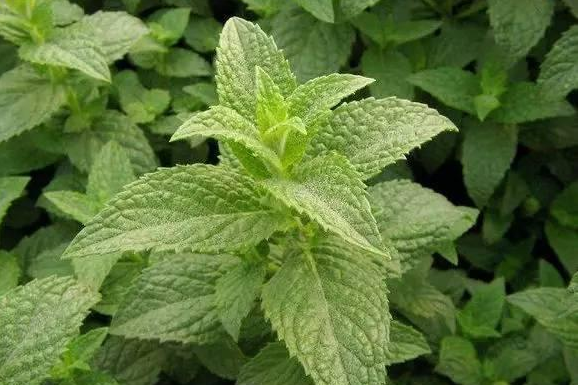
Growing Methods and Precautions for Mint:
1. Key Points for Growing Mint in Water:
We just need to snap off a section of mint stem about 10 cm long, then remove the lower leaves, let it air-dry for about five minutes, and soak it in clean water (the water is best if it is tap water that has been left standing for two days, purified water, or rainwater). The leaves should not touch the water. Place it in a shaded, well-ventilated spot with bright light, and change the water every 2 days. In less than two weeks you will see roots growing.
Mint grown in water can take root and sprout, but it is very hard for it to grow lush, so later on it still needs to be planted in soil.
2. Growing Mint in Soil Indoors
With mint you grow yourself, you can pick the leaves and eat them right away. Of course, you need to grow edible mint varieties. Varieties like Japanese mint, which contain too much menthol, cannot be used for eating.
Choose a medium-sized flower pot with good drainage, and of course it must have drainage holes.
1. Location
Mint needs a suitable location to grow. In summer it needs appropriate shade. It needs 3 to 4 hours of light, and just a little light is enough for it to grow well. The growing environment should of course be ventilated and bright. Planting it on a windowsill or balcony is quite suitable.
2. Soil
Whether mint grows well or not mainly depends on the soil and watering. Beginners can simply use loose, fertile potting soil, generally a 1:1 mix of peat soil and perlite.
Appropriately adding some bone meal and organic fertilizer as a base fertilizer can help mint grow better later on.
3. Water
Mint likes slightly moist soil, but it cannot be too wet, and waterlogged soil is even worse. In winter, if the environment is below 15°C, keep it appropriately dry.
When the weather is good, water more, keeping the potting soil slightly moist but not wet.
4. Fertilizer
For fertilizing mint, a water-soluble diluted liquid fertilizer is enough. Of course, if you have some organic compost or manure, you can also give a little, but it must be fully rotted.
Remember not to give concentrated fertilizer. Apply thin fertilizer frequently, and fertilize less in winter.
3. How to Make Mint Grow More Lush?
1. Pinching and Pruning
Mint needs frequent pinching to grow more lush. Some flower lovers are reluctant to prune, and their mint just grows straight up without many branches, making it hard to grow strong.
When mint grows to 15 cm, pinch off the top to let it grow branches. Keep pinching the tops and branching.
2. Temperature
Mint likes a warm environment and is not cold-tolerant. In winter it should be moved indoors for care. If the environment is kept at around 20°C, then be careful not to let the environment get too dry, and mist it frequently.
A daytime temperature of 18 to 28°C and a nighttime temperature of 13 to 15°C is what it likes best. Of course, this is just a reference.
3. Harvesting
Harvesting mint is not complicated. You do not need to pull up the whole plant. Instead, when you see the parts that are growing more lush, just cut off their branches. Constant pruning, constant pinching of branches and appropriate pinching can make your mint grow more lush. #p#Subtitle#e#
Varieties of Mint:
1. Peppermint (European Mint)
Its leaf edges have deep and sharp serrations, and the mint aroma is obvious. It is a widely grown hybrid mint, native to Europe, and can be used as a food seasoning. This mint variety is a cross between spearmint and water mint.
2. Champagne Mint
When young, it looks similar to peppermint, except that the stem near the soil is purple or coffee-colored. But as it grows, the difference becomes more obvious. The leaves tend toward oval, the color is lighter than peppermint, and the scent is also lighter than peppermint.
3. Roman Mint
Roman mint has small, fuzzy leaves. The leaves are thicker than peppermint and champagne mint, and the mint aroma is obvious.
4. Chocolate Mint
The leaves originally tend toward oval, but after growing mixed together they become more and more pointed (a mutation?). The leaf veins are very deep, and the stem is purple or coffee-colored. The scent is lighter than peppermint. It is an extremely aggressive mint, even more so than spearmint. Those growing it in a small yard should be careful.
5. Spearmint
Spearmint's leaves are ovate, with netted veins. The leaf surface is sunken and raised, sunken and raised, forming a bumpy appearance.
6. Grapefruit Mint
Grapefruit mint has large leaves with white fuzz. The scent is lighter than chocolate mint, with a fresh fragrance. Why it is called “grapefruit” I do not know either.
7. Scottish Mint
Scottish mint's leaves are larger than those of peppermint, champagne mint, spearmint, and chocolate mint. It branches extremely strongly, and the stem is purple or coffee-colored.
8. Variegated Pineapple Mint
Originally pineapple mint and thyme lived together, but pineapple mint was too aggressive, so they had to be separated.
Features: The leaves have fine hairs, it branches extremely strongly, but mostly creeps along the ground, and the scent has a fruity sweetness.
9. Catnip
Catnip, originally called Schizonepeta, also known as: camphor grass, cool mint, barnyard mint, small mint, mint, anise, wild schizonepeta, small schizonepeta, elsholtzia. I hear some cats really love it!
It likes a cool environment with full sun or partial sun, and the planting bed needs good drainage. The flowers are light blue, and the leaves are toothed. It is generally often planted along hedges and roadsides. It has strong growth vigor, and the flowers bloom through the summer.
10. Corsican Mint
Most “Corsican” mint in China is actually “creeping clinopodium”. It is a
small creeping variety, with plants 2.5-10 cm tall. The leaves are very small, smooth and round, and it produces extremely small light purple flowers. In cool, damp places it is very suitable as a ground cover plant. It is mainly used in sweet, aromatic liqueurs. 11. Pennyroyal
This kind of mint cannot be eaten. It is a variety specifically used to extract menthol (the main component in the essential oils of mint and European mint).
12. Champagne Mint
Champagne mint's leaves are rather slender. Peppermint's leaf edges have obvious serrations. As for Scottish mint, its leaves have hairs.
13. Bee Balm
Bee balm, also called horsemint, is native to the Americas, and is cultivated in gardens across China. It can be used for tea, decoction, grilling, eating raw, pickling, and sauces. It can also be used for sterilization, bathing, and incense.
14. Xiangcao, China's native mint
This is a rare vegetable with a very distinctive character. Its fragrance is rich and mellow, and its green color is pleasing to look at. It can be grown as a flower, used to season fresh dishes, used as a garnish for main dishes, or eaten directly as a cold salad.
15. Jamaican Mint
A low-growing shrub that gives off a mint scent
16. Moneywort
It is often confused with gotu kola. It can be used to make herbal tea, for ornamental purposes, and for medicinal use. The tender leaves can be eaten raw in salads. It is suitable for planting in hanging baskets and trailing as an ornamental plant. There are variegated varieties grown for their foliage.
17. Spearmint (Dutch Mint)
It is one of the most common and versatile garden mints, also known as Dutch mint. It is native to Europe and the Mediterranean region. The plant is similar to peppermint, but the plant height is shorter, about 75 cm tall, and the stem is also shorter, though more upright and with more branches.
That is all for the growing methods and precautions for mint. It turns out there are so many varieties of mint. I am simply stunned.
How to Grow Apple Mint: Growing Methods and Precautions for Apple Mint
How do you grow apple mint? What are the growing methods and precautions for apple mint? Today let's take a detailed look at apple mint! First of all, apple mint is also called woolly mint or fragrant mint, and it is one variety within the mint genus. Apple mint mainly grows in western Europe and the western Mediterranean. It is a perennial herbaceous plant, mainly used for cooking and landscaping.
Growing Methods for Apple Mint
Apple mint likes a growing environment with plenty of sunlight, warmth, and moisture, and the frost-free period should be kept at more than 200 days. Apple mint does not have very high soil requirements. Apart from heavy alkaline land, heavy clay land, and sandy land, it can be planted in any other soil. Apple mint is not suitable for planting in shady places, because apple mint needs a large amount of light, especially during the budding and flowering stage. At this time, sunlight is very important for increasing the content of menthol and mint oil.
Apple mint can be propagated by rhizome, cutting, and seed. Because cutting and seed propagation grow slowly and are prone to variation, rhizome propagation is generally used. With rhizome propagation, planting can be done in spring or before winter. Spring planting is mostly done from late March to early April, and pre-winter planting is done around late October.
Precautions for Apple Mint
Apple mint plants are usually 40 to 100 cm tall and are propagated through underground rhizomes. Its flowering period is in the middle and late part of summer, and its flowers are generally light purple or pink.
Uses of Apple Mint
Apple mint is a very popular herbaceous plant and is usually used as an ornamental. A location with full sunlight to slightly shady conditions can promote its growth. Its leaves can be used to make apple mint jelly or steamed powder. It can also be used as mint tea, a decoration, or added to salads.
The above are the growing methods and precautions for apple mint. Also, after reading about the uses of apple mint above, do you have the urge to go plant a pot of apple mint right away? Then hurry up and grow a pot of your own apple mint!
Further Reading:
Mint Fertilizing, Planting Methods, Harvesting, Propagation, Growing Methods and Precautions
How do you grow mint? Growing methods and precautions for mint. If you want mint to grow lushly or even fill the pot, what should you do?
Mint is a kind of herb. There are dozens of varieties of mint, because during its growth it can also mutate due to changes in the environment and geology. What we commonly grow, or what also grows in the wild, is field mint, also called Chinese mint. There is also the common spearmint, also called green mint, which has the cool flavor of chewing gum. Xiaoya has grown mint for a long time and has grown several varieties of mint, and thinks mint is the easiest plant to grow among many plants. If you want mint to grow lushly or even fill the pot, what should you do? Actually, it is really very simple. If you do not believe it, take a look!
Tools/Materials:
Flower pot, mint, watering can, soil, gardening tools, organic fertilizer, etc.
Methods/Steps:
Mint needs plenty of sunlight. If you grow mint, you must put it in a place with plenty of sunlight. Do not worry even if the summer sun is strong. If there is not enough sunlight, mint tends to grow leggy, the leaves do not grow large, and it is also especially spindly. A whole pot may look smaller and smaller.
Growing mint requires plenty of water. Hydroponics is also possible, but soil culture will grow better. If you have not watered for a few days and the flower pot is extremely dry, even the leaves are dried out and withered, do not worry. As long as the roots are still alive, water it again and it will quickly recover its former vitality.
Growing mint requires fertile, loose soil. If the flower pot is too small, or there is too little soil, the nutrients cannot keep up, and it will grow very slowly. So use soil that is breathable and has strong water permeability, and is very fertile. Ordinary garden soil, leaf mold soil. Add a little chicken manure fertilizer, and that is good. It is not picky about soil.
If you want mint to fill the pot and grow very fast and very lush, there is a little trick: repot it once every year, in spring or autumn. Change to a larger pot and make the soil more fertile, and it will grow faster, because it is like spider plant, and its root system even develops faster than spider plant's, and it can quickly occupy the entire flower pot.
Mint is very strange. Pruning it often, using its leaves to make tea and so on, is no problem. The more you cut, the more lush it grows. Loosening the soil often, or adding some soil, or fertilizing, will make it grow faster. Be sure to put it in a ventilated place on the balcony.
The above is what I have put together for you about mint. I hope it is helpful to everyone. Please continue to follow Succulent Garden to learn more information.