Is Croton variegated toxic? Solutions for leaf drop
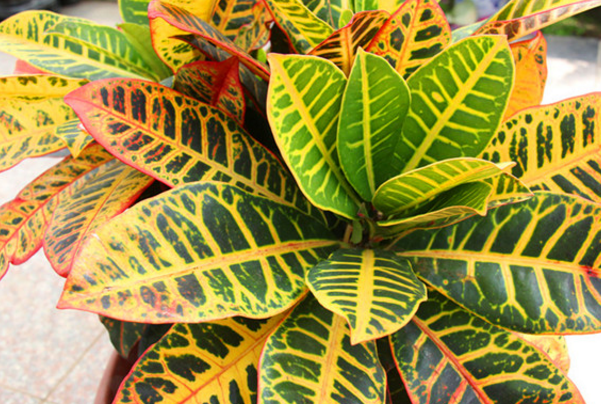
The relatively large ornamental plant Croton variegated has a very warm name, just like sunshine spilling down, so the plant itself is also brilliantly colorful. Today we will appreciate the Croton variegated that bears the name of sunshine.
Is Croton variegated toxic?
1. Croton variegated is toxic
Croton variegated is a shrub plant in the Euphorbiaceae family. Its branches are slender, smooth and hairless, with obvious leaf scars on them.
The toxicity of Croton variegated comes from its branches and leaves. There is sap inside the branches, and that sap contains toxins. Therefore, Croton variegated is toxic.
2. Can Croton variegated be kept indoors?
Croton variegated is toxic. If people or livestock accidentally eat it, symptoms of abdominal pain and diarrhea will appear. If exposed to it for a long time, it can cause nasopharyngeal cancer and damage human health, so pay attention to Croton variegated.
According to the source of its toxicity and its harm to the human body, Croton variegated should not be kept indoors. If there are small children, they may accidentally eat its leaves, or break off the branches and bite them, which will cause poisoning in small children, so it is not suitable for planting indoors.
3. Where can Croton variegated be grown
Croton variegated has dense leaves and colorful foliage. It looks bright and varied, and is a very good foliage plant, so its ornamental value is still relatively great.
If you grow Croton variegated, then gardens, courtyard study rooms, and living rooms are still relatively suitable.
First, Croton variegated is planted in gardens, on both sides of roads and beside pond water, which both beautifies the environment and allows for viewing.
Second is the courtyard, because the color of Croton variegated changes, with colorful and bright hues. Planting it in the courtyard also makes a gorgeous scenic line.
Finally, it can be grown in the lobbies of restaurants, hotels and other places as an ornamental plant, making people feel pleased.
But be sure to pay attention: when small children are present, do not let them get close, and even more do not let them touch it, so as to avoid accidental eating and poisoning.
What to do if leaves drop
1. Croton variegated dropping leaves is due to improper temperature
When growing Croton variegated, you need to give it a warm environment. Croton variegated likes warmth and is not cold-tolerant. Its suitable growth temperature is between 20℃——30℃, and in winter the ambient temperature should preferably not be too low.
In winter, if the temperature for Croton variegated is kept at around 10℃ for a short time, it will cause the leaves to become less vivid and lack luster. If the maintenance temperature is 4℃——5℃, Croton variegated will suffer cold damage, and the leaves will be frozen. This causes it to drop a large number of leaves, or even freeze to death.
Therefore, when growing Croton variegated, a relatively high temperature must be maintained in winter. During maintenance, the temperature should not be lower than 13℃.
2. Croton variegated dropping leaves is due to insufficient watering
Croton variegated is a plant that likes moisture. When growing it, you must give it sufficient water, and you need to frequently spray water on the Croton variegated plant to increase air humidity. However, in winter, because the temperature is relatively low, it needs to be kept dry. At this time the plant has already entered a semi-dormant state. If it is watered too much, it will cause Croton variegated to drop leaves.
When watering Croton variegated, be sure to note that in winter it cannot be watered too much.
3. Croton variegated dropping leaves is due to insufficient light
Croton variegated is a plant that likes light. When growing Croton variegated, you must satisfy its light needs during the growth period, so that it will grow well. However, when grown indoors, the light conditions may not be very good. If there is insufficient light for a long time, the leaves of Croton variegated will become dull in color, lack luster, and even drop leaves. Therefore, when growing Croton variegated, the light must be sufficient, and indoors it should also be placed in a place where it can receive sunlight for maintenance.
Is Croton variegated toxic? Differences from Croton
Croton variegated is also one kind of plant, and many people like to keep it at home, so is this Croton variegated toxic? What are the differences from Croton:
Is Croton variegated toxic:
Croton variegated is toxic.
Croton variegated is a shrub plant in the Euphorbiaceae family. Its branches are slender, smooth and hairless, with obvious leaf scars on them. The toxicity of Croton variegated comes from its branches and leaves. There is sap inside the branches, and that sap contains toxins.
Differences between Croton variegated and Croton:
Croton variegated is Croton.
A shrub or small tree in the Euphorbiaceae family, up to 2 m tall. Native to the Malay Peninsula of Asia through Oceania; widely cultivated in tropical regions. Commonly cultivated in the southern provinces and regions of China. This species is a common garden or park foliage plant in tropical and subtropical regions; it is easy to propagate by cuttings, and there are many horticultural varieties.
Croton variegated is toxic and is the same as Croton; it is just called by a different name.
Is Croton variegated toxic, and can it be placed indoors?
Croton variegated is toxic
Croton variegated is a shrub plant in the Euphorbiaceae family. Its branches are slender, smooth and hairless, with obvious leaf scars on them.
The toxicity of Croton variegated comes from its branches and leaves. There is sap inside the branches, and that sap contains toxins. Therefore, Croton variegated is toxic.
Can Croton variegated be kept indoors?
Croton variegated is toxic. If people or livestock accidentally eat it, symptoms of abdominal pain and diarrhea will appear. If exposed to it for a long time, it can cause nasopharyngeal cancer and damage human health, so pay attention to Croton variegated.
According to the source of its toxicity and its harm to the human body, Croton variegated should not be kept indoors. If there are small children, they may accidentally eat its leaves, or break off the branches and bite them, which will cause poisoning in small children, so it is not suitable for planting indoors.
Where can Croton variegated be grown
Croton variegated has dense leaves and colorful foliage. It looks bright and varied, and is a very good foliage plant, so its ornamental value is still relatively great.
If you grow Croton variegated, then gardens, courtyard study rooms, and living rooms are still relatively suitable.
First, Croton variegated is planted in gardens, on both sides of roads and beside pond water, which both beautifies the environment and allows for viewing.
Second is the courtyard, because the color of Croton variegated changes, with colorful and bright hues. Planting it in the courtyard also makes a gorgeous scenic line.
Finally, it can be grown in the lobbies of restaurants, hotels and other places as an ornamental plant, making people feel pleased.
But be sure to pay attention: when small children are present, do not let them get close, and even more do not let them touch it, so as to avoid accidental eating and poisoning.