Which drought-tolerant plants won't die even if you don't water them for a month?
Often it's not that you're bad at caring for plants, but that the plant you chose isn't right for you. For example, if you're so busy with work every day that your feet barely touch the ground, a pot of pennywort will surely dry up and die; and if your home doesn't get enough light, a pot of succulents will surely grow leggy. How to choose a flower that suits you is quite a subject.
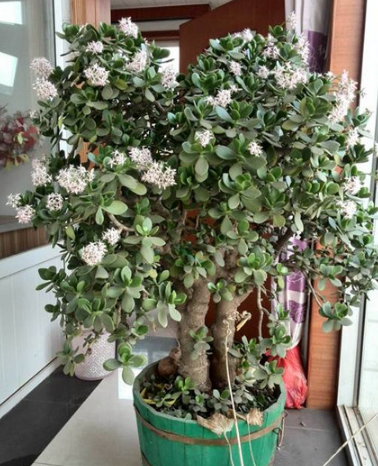
A must-have for the lazy——won't die even without water for 1 month
1. Jade plant
The jade plant has thick, fleshy leaves in a deep green, like jasper. Its crown is upright and elegant, vigorous and simple, full of the charm of an ancient tree. Its flowering season is in summer and autumn, when the whole tree blooms profusely, white as snow, elegant and distinctive.
How to grow:
The jade plant can be propagated by cuttings, with spring and autumn being the best times. You can use leaf cuttings or stem cuttings; for leaf cuttings, old, thick leaves are best, and for softwood cuttings, choose robust growing tips, bury them in sandy soil, keep them moist, and they will root in a month.
The jade plant likes dry conditions and dislikes damp, so don't tend to it too diligently and don't water it too much; it's very suitable for lazy care.
The jade plant likes an environment with plenty of light. You can water it less, but it can't do with less light.
2. Aloe
It can beautify the skin and be eaten, and it can also absorb harmful gases such as formaldehyde and toluene. A pot of aloe is like a small treasure chest, and it's very drought-tolerant, making it one of the must-choose plants for lazy people.
How to grow:
Aloe easily produces offsets on the mother plant; just snap them off and plant them in a pot, and you'll get a new pot of aloe.
Aloe has a very strong ability to resist drought. Even if left dry out of the soil for a month and then planted again, it can still survive. But during the growing season it's best to keep it well watered, so the aloe can grow a bit faster; just be sure to avoid waterlogging.
Aloe likes light and can tolerate a semi-shady environment. Regularly adding organic fertilizer can make the aloe grow more luxuriantly.
3. Christmas cactus
The Christmas cactus has drooping stems, and its red flowers are very vivid. Hung up like a spider plant, it's far more beautiful than a spider plant.
How to grow:
The Christmas cactus can be propagated by cuttings. When taking cuttings, choose stems with 3 to 6 segments, bury 1 to 2 segments in sandy soil, and with good care, it can bloom the next year.
Water less and fertilize less. In summer when the air is dry, you can spray water around the leaves more often; especially during the bud-setting period, spraying the leaves more can encourage more buds to form.
Repot every other year. First put a layer of coarse sand at the bottom of the pot to help with drainage. When repotting, you can also trim off the weak and overly dense branches, which can encourage flowering.
Super shade-tolerant——lush and leafy even without light
1. Japanese evergreen
The leaves of the Japanese evergreen are green all year round, which is why it is called "evergreen." Another advantage is its particularly good shade tolerance, so flower lovers whose homes don't get enough light might as well buy a pot of Japanese evergreen.
How to grow:
The Japanese evergreen can be propagated by division. When repotting every spring, cut one Japanese evergreen plant into several parts, making sure the cuts are smooth, then coat them with plant ash and repot them.
The Japanese evergreen is shade-tolerant and afraid of sun, so in summer be sure to avoid strong direct sunlight.
Generally, watering once every two or three days is enough. The Japanese evergreen is afraid of water accumulation, and too much water easily causes root rot.
2. Cast iron plant
The cast iron plant, also called the spider's egg, has neat, deep green leaves and extremely strong shade tolerance. It also has a certain ability to absorb formaldehyde, hydrogen fluoride, and carbon dioxide.
How to grow:
The cast iron plant can be propagated by division, best in early spring. Take the plant out of the pot, use a sharp small blade to divide it into two parts, then trim appropriately so that each part has three or four leaves, which helps it survive. After repotting, water thoroughly and place it in a cool, ventilated spot for care.
Apply a thin liquid fertilizer to the cast iron plant once a month, which can encourage new leaves to sprout.
In summer avoid direct sun and increase ventilation; in winter reduce watering and stop fertilizing.
3. Dracaena fragrans
Dracaena fragrans has a thick trunk and sword-shaped leaves. Its style is plain and elegant, with a rich southern charm, and its shade tolerance is also super strong. Placing it in the living room, bedroom, or study is an excellent choice.
How to grow:
Dracaena fragrans is mostly propagated by cuttings. In May and June each year, cut mature, robust stems into sections 5 to 10 cm long, insert them into a medium mainly of vermiculite or coarse sand, keep it moist, and they will root in about 40 days.
Dracaena fragrans is shade-tolerant but not cold-tolerant. In winter it must be moved indoors, and it's best to place it somewhere with plenty of light.
During the growing period, water once every three to five days; during the winter dormant period, water once every ten days to half a month. Keep the potting soil slightly moist so it can overwinter safely.
4. Bird's nest fern
The bird's nest fern is a relatively large shade-loving foliage plant. Hung indoors, it has a very tropical feel. Flower lovers whose homes don't get enough light might as well choose a pot of bird's nest fern, though the prerequisite is relatively high humidity.
How to grow:
The bird's nest fern can be propagated by division. When the bird's nest fern grows fairly large, small branches will appear. In late spring and early summer, you can use sharp scissors to divide the base into two parts, then cut the leaves shorter by one third, repot them, and they will become new plants.
The bird's nest fern has relatively high water requirements. Not only should the potting soil stay moist, but the environment should also maintain relatively high humidity, so besides normal watering, you should also spray water frequently.
During the growing period, apply a phosphorus-potassium fertilizer once every half month, which can keep the bird's nest fern producing new leaves, and the leaf color will also become deep green.
Super tough growth——lush and green even without fertilizer
1. Pennywort
Pennywort can be grown directly in water. It's not afraid of water but afraid of drought, and even without fertilizer it can grow lush and leafy.
How to grow:
Pennywort can be propagated by division, which is simple and easy to do. In March and May each year, take the pennywort out of the pot, and you can divide the roots into several parts directly by hand. Repot each part, and they will root in one to two weeks.
Pennywort has relatively high light requirements. If the light is insufficient, the stems and leaves tend to grow leggy.
Water must not be lacking. You can plant pennywort directly in water to avoid wilting caused by drought.
2. Peace lily
The peace lily is beautiful in both flower and leaf, grows vigorously, and has fairly high shade tolerance. It is very pretty as an indoor decoration.
How to grow:
The peace lily can be propagated by division, best done in May and June each year. Tip the plant out of the pot, then cut the clump apart from the base and repot.
The peace lily likes a hot, humid environment. During the growing period, keep the soil moist often, but do not water too much; long-term dampness will cause the roots to rot.
Repot once every one or two years. When repotting, trim the roots and remove the old soil, which can help the peace lily bloom.
3. Spider plant
Everyone is surely familiar with the spider plant. Many flower lovers will find that even without fertilizing it, it still grows well. It's easy to keep alive and easy to grow, which is probably why spider plants are so cheap.
How to grow:
The small plantlets growing from the spider plant's stems can be cut off directly with scissors and potted, watered thoroughly, and placed in a cool, ventilated spot; they will root within a few days.
The spider plant likes a semi-shady environment. Under scattered light conditions such as windowsills, balconies, and living rooms, it can grow normally.
Avoid water accumulation in the potting soil. The spider plant has fleshy roots and is drought-tolerant but not moisture-tolerant.
4. Parlor palm
The parlor palm is relatively small in size, with a graceful plant shape. Placed on a desk, coffee table, or office desk, it is plain and elegant. Because it is small and grows slowly, its fertilizer needs are not great either.
How to grow:
The parlor palm likes a semi-shady environment. If the light is insufficient, the plant will become thin and weak.
During the growing period, keep the potting soil moist. In winter during the dormant period, wait until the potting soil is two-thirds dry before watering, and keep the air moist; if the air is too dry, the leaf tips will turn brown.
Which plant suits you to grow? Hurry up and claim one.
Flowers that won't die no matter how you mess with them, aren't you going to get a pot?
1. A must-have for the lazy——won't die even without water for 1 month
Jade plant
The jade plant has thick, fleshy leaves in a deep green, like jasper. Its crown is upright and elegant, vigorous and simple, full of the charm of an ancient tree. Its flowering season is in summer and autumn, when the whole tree blooms profusely, white as snow, elegant and distinctive.
How to grow:
1. The jade plant can be propagated by cuttings, with spring and autumn being the best times. You can use leaf cuttings or stem cuttings; for leaf cuttings, old, thick leaves are best, and for softwood cuttings, choose robust growing tips, bury them in sandy soil, keep them moist, and they will root in a month.
2. The jade plant likes dry conditions and dislikes damp, so don't tend to it too diligently and don't water it too much; it's very suitable for lazy care.
3. The jade plant likes an environment with plenty of light. You can water it less, but it can't do with less light.
Aloe
It can beautify the skin and be eaten, and it can also absorb harmful gases such as formaldehyde and toluene. A pot of aloe is like a small treasure chest, and it's very drought-tolerant, making it one of the must-choose plants for lazy people.
How to grow:
1. Aloe easily produces offsets on the mother plant; just snap them off and plant them in a pot, and you'll get a new pot of aloe.
2. Aloe has a very strong ability to resist drought. Even if left dry out of the soil for a month and then planted again, it can still survive. But during the growing season it's best to keep it well watered, so the aloe can grow a bit faster; just be sure to avoid waterlogging.
3. Aloe likes light and can tolerate a semi-shady environment. Regularly adding organic fertilizer can make the aloe grow more luxuriantly.
Christmas cactus
The Christmas cactus has drooping stems, and its red flowers are very vivid. Hung up like a spider plant, it's far more beautiful than a spider plant.
How to grow:
1. The Christmas cactus can be propagated by cuttings. When taking cuttings, choose stems with 3 to 6 segments, bury 1 to 2 segments in sandy soil, and with good care, it can bloom the next year.
2. Water less and fertilize less. In summer when the air is dry, you can spray water around the leaves more often; especially during the bud-setting period, spraying the leaves more can encourage more buds to form.
3. Repot every other year. First put a layer of coarse sand at the bottom of the pot to help with drainage. When repotting, you can also trim off the weak and overly dense branches, which can encourage flowering.
Desert rose
The desert rose is a small plant, but its shape is vigorous and simple, with the lower root stem like a wine bottle, and the flowers are bright red and gorgeous, very distinctive.
(Image by: Walking the World Source: Sina Blog)
How to grow:
1. The desert rose is best propagated by cuttings in summer. Cut a tip branch about 10 cm long, then insert it into sandy soil, and it will root in three or four weeks.
2. If you care for a desert rose, be sure to avoid a damp environment. Each time you water, make sure the surface of the potting soil is completely dry first.
3. The desert rose likes an environment with plenty of light. Only with sufficient light will it have many flowers and vivid colors. During the spring and summer growing period, you can apply decomposed compost.
(Image by: A Leaf Boat Drifting the Ocean Source: Desert Rose Forum)
2. Super shade-tolerant——lush and leafy even without light
Japanese evergreen
The leaves of the Japanese evergreen are green all year round, which is why it is called "evergreen." Another advantage is its particularly good shade tolerance, so flower lovers whose homes don't get enough light might as well buy a pot of Japanese evergreen.
How to grow:
1. The Japanese evergreen can be propagated by division. When repotting every spring, cut one Japanese evergreen plant into several parts, making sure the cuts are smooth, then coat them with plant ash and repot them.
2. The Japanese evergreen is shade-tolerant and afraid of sun, so in summer be sure to avoid strong direct sunlight.
3. Generally, watering once every two or three days is enough. The Japanese evergreen is afraid of water accumulation, and too much water easily causes root rot.
Cast iron plant
The cast iron plant, also called the spider's egg, has neat, deep green leaves and extremely strong shade tolerance. It also has a certain ability to absorb formaldehyde, hydrogen fluoride, and carbon dioxide.
How to grow:
1. The cast iron plant can be propagated by division, best in early spring. Take the plant out of the pot, use a sharp small blade to divide it into two parts, then trim appropriately so that each part has three or four leaves, which helps it survive. After repotting, water thoroughly and place it in a cool, ventilated spot for care.
2. Apply a thin liquid fertilizer to the cast iron plant once a month, which can encourage new leaves to sprout.
3. In summer avoid direct sun and increase ventilation; in winter reduce watering and stop fertilizing.
Dracaena fragrans
Dracaena fragrans has a thick trunk and sword-shaped leaves. Its style is plain and elegant, with a rich southern charm, and its shade tolerance is also super strong. Placing it in the living room, bedroom, or study is an excellent choice.
How to grow:
1. Dracaena fragrans is mostly propagated by cuttings. In May and June each year, cut mature, robust stems into sections 5 to 10 cm long, insert them into a medium mainly of vermiculite or coarse sand, keep it moist, and they will root in about 40 days.
2. Dracaena fragrans is shade-tolerant but not cold-tolerant. In winter it must be moved indoors, and it's best to place it somewhere with plenty of light.
3. During the growing period, water once every three to five days; during the winter dormant period, water once every ten days to half a month. Keep the potting soil slightly moist so it can overwinter safely.
Bird's nest fern
Bird's nest fern is a relatively large shade-loving foliage plant. Hanging one indoors gives a very tropical feel. Gardeners whose homes lack enough light might want to choose a bird's nest fern, though the prerequisite is fairly high humidity.
Growing methods:
1. Bird's nest fern can be propagated by division. When the bird's nest fern grows fairly large, small offshoots will appear. In late spring and early summer, you can use sharp scissors to split the base into two parts, then cut the leaves shorter by one third and repot them, and they will become new plants.
2. Bird's nest fern has relatively high water requirements. Not only must the potting soil stay moist, but the environment must also maintain fairly high humidity, so besides normal watering, you should also mist it often.
3. During the growing period, apply a phosphorus and potassium fertilizer once every half month, which will keep the bird's nest fern producing new leaves, and the leaf color will also become a deep green.
3. Tough growth - it stays lush green even without fertilizer
Copper coin grass
Copper coin grass can be grown directly in water. It is not afraid of waterlogging, only of drought. Even without fertilizer, it can grow with luxuriant branches and leaves.
Growing methods:
1. Copper coin grass can be propagated by division, which is simple and easy to do. Every year in March and May, take the copper coin grass out of the pot, and you can directly divide the root system into several parts by hand. Repot each part, and they will root in one to two weeks.
2. Copper coin grass has relatively high light requirements. If the light is insufficient, the stems and leaves tend to become leggy.
3. Water must not be lacking. You can plant copper coin grass directly in water to avoid wilting caused by drought.
Peace lily
The peace lily is beautiful in both flower and leaf, grows vigorously, and tolerates shade quite well, making it very pretty for decorating indoors.
Growing methods:
1. The peace lily can be propagated by division, best done every year in May and June. Tip the plant out of the pot, then cut the clump apart from the base and repot it.
2. The peace lily likes a hot and humid environment. During the growing period, keep the soil moist often, but do not water too much. Long-term wetness will cause the root system to rot.
3. Repot once every one or two years. Combine repotting with root pruning and remove the old soil, which can help the peace lily bloom.
Spider plant
You are probably all familiar with the spider plant. Many gardeners will find that even without fertilizing it, it can still grow well. It is easy to keep alive and easy to grow, which is probably why spider plants are so cheap.
Growing methods:
1. The small plantlets produced on the spider plant's stems can be cut off directly with scissors and potted. Water them thoroughly and place them in a cool, ventilated spot, and they will root after a few days.
2. Spider plants like a semi-shaded environment. They can grow normally under scattered light conditions such as windowsills, balconies, and living rooms.
3. Avoid water accumulating in the potting soil. Spider plants have fleshy roots and tolerate drought but not wetness.
Parlor palm
The parlor palm is relatively small in size with a graceful plant shape. Placed on a desk, tea table, or office desk, it looks simple and elegant. Because it is small and grows slowly, its fertilizer needs are not very high either.
Growing methods:
1. The parlor palm likes a semi-shaded environment. If the light is insufficient, the plant will become thin and weak.
2. During the growing period, keep the potting soil moist. In winter during the dormancy period, wait until the potting soil is two-thirds dry before watering. Keep the air humid. If the air is too dry, the leaf tips will turn brown.
Gardeners, what other flowers do you think are super easy to grow?
Hurry up and recommend them to everyone~
10 kinds of flowers that just will not die no matter how you mess with them~
Some flowers really do not need much care. Maybe the more attention you give them, the worse they grow! Today Huahua has picked out 10 kinds of flowers that are very suitable for rough, low-effort care. The less you pay attention to them, the faster they grow!10 kinds of flowers that just will not die no matter how you mess with them~
1. Geranium
The geranium itself is very adaptable and can basically grow in any soil.1. Place it in a spot with good light such as a south balcony, or simply grow it outdoors.
2. Water by the principle of dry-wet cycling. Generally water about once a week.
3. In spring and autumn, apply a topdressing once every 10 days. From bud formation to the flowering period, apply fertilizer once every 7 days. You can use decomposed cake fertilizer water at a ratio of 1:5.
10 kinds of flowers that just will not die no matter how you mess with them~
2. Inch plant
The inch plant grows very quickly. Before you even notice, it can grow into a long, large patch!
1. It likes a cool, shaded environment. Usually keep it indoors or on a north balcony.
2. Water in time. Generally watering once every 3-5 days is enough.
3. Usually you can spray the inch plant with a foliage fertilizer, or you can also drip a little nutrient solution into the water each time you water.
10 kinds of flowers that just will not die no matter how you mess with them~
3. Amaryllis
Amaryllis is simply too easy to keep alive. Basically, bury the bulb, water it normally, and it will bloom for you!
1. Give it plenty of sunlight. If you have conditions to grow it outdoors, put it outside. If not, put it on a south balcony.
2. Fertilize mainly with phosphorus and potassium fertilizer, once a month. You can use decomposed fish and shrimp shells, eggshells, and so on, or you can use monopotassium phosphate.
3. Watering must follow the dry-wet cycle. Wait until the top 2-3 cm of soil is completely dry before watering, otherwise water will accumulate and rot the bulb.
10 kinds of flowers that just will not die no matter how you mess with them~
4.Asparagus fern
As long as there is enough water, the asparagus fern will basically send up new shoots one after another, and you cannot stop it!
1. During spring and summer, it is best to water once every 3-5 days.
2. Mist the asparagus fern leaves every day to increase air humidity.
3. It is more suitable for placing in the living room or on east and west balconies, and must not be exposed to direct sunlight.
10 kinds of flowers that just will not die no matter how you mess with them~
5. Aloe
The aloe at Huahua's home was hardly cared for at all, and now it has become a big pot...
1. Place it in a spot with good light, preferably a south balcony.
2. In spring, water about once every 5-7 days. In summer, evaporation is high, so water once every 3-5 days.
10 kinds of flowers that just will not die no matter how you mess with them~6. Kalanchoe
Kalanchoe is recognized as easy to keep alive. Huahua propagates it from a newly pinched stem every year, and it has never failed.
1. Kalanchoe is suitable for placing on a south windowsill, south balcony, or other spot with relatively good light conditions.
2. Kalanchoe should be watered a bit less. Right now, watering once a week is about right.
10 kinds of flowers that just will not die no matter how you mess with them~
7. Ivy
Ivy itself is very easy to grow. As long as there is water, it is fine~
1. For indoor growing, place it in scattered light, such as a bright living room.
2. Ivy likes a humid environment. You can keep watering at a rhythm of once every 3-5 days.
3. Ivy likes nitrogen fertilizer. About once every half month, a thin bean cake water solution can make ivy grow faster!
10 kinds of flowers that just will not die no matter how you mess with them~
8. Copper coin grass
Really, when you mention it, as long as your copper coin grass can be grown outdoors, it is absolutely on a pace to become a nuisance.
1. Give it more sun, you must give it more sun. Copper coin grass kept indoors without light absolutely cannot be grown well!
2. Each time you add water, you can throw a few slow-release fertilizer granules into the copper coin grass container, or drip in a few drops of nutrient solution.
3. Normally it must not lack water. It is best to use a pot without drainage holes and keep the potting soil in the pot moist.
10 kinds of flowers that just will not die no matter how you mess with them~
9. Pothos
Pothos is an essential plant for beginners. Does its ease of growing even need Huahua to go on about it?
1. Place it on a balcony so pothos can get plenty of light, and it will absolutely grow like crazy.
2. Water it with fish tank water or rice washing water, which contain rich nutrients and carry no risk of burning the roots.
10 kinds of flowers that just will not die no matter how you mess with them~
10. Spider plant
Spider plant is also one of the beginner plants. This kind of plant does not need much care. As long as its living environment is suitable, it will absolutely grow like crazy~
1. It is suitable for scattered light. Usually place it in the living room or on a balcony behind glass.
2. In spring and autumn, watering once about every 5 days is enough. When you have time, mist the spider plant leaves, which can make it grow better.
3. In the spring and autumn growing seasons, you can give a thin bean cake water solution once every 10 days, and self-made organic fertilizer also works~ If it is a variety with golden or silver edges, use less nitrogen fertilizer, otherwise the golden or silver edges will fade.
Gardeners who keep these plants at home, whatever you do, do not pay them too much "attention"!