Is the desert rose poisonous, and what should be done if its leaves turn yellow?
Desert rose - does the name alone give you a sense of how commanding this plant is? Yes, the commanding presence of this plant lies in the fact that no one dares to mess with it, because it has its own unique secret weapon. What exactly is it? Let's take a quick look.
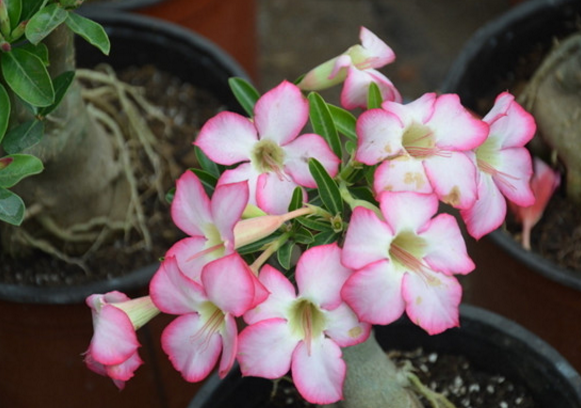
Is the desert rose poisonous?
1. Is it poisonous?
Many flower enthusiasts grow their own desert roses. The more beautiful the flower, the more toxic it tends to be, and this saying fits the desert rose best of all: the desert rose is poisonous.
The entire desert rose plant is toxic, and the sap within the plant is highly toxic.
2. Treating desert rose poisoning
Desert rose poisoning can cause symptoms affecting the cardiovascular system, such as a rapid heartbeat and irregular heart rhythm. When it strikes, it is more likely to trigger other complications. If poisoning occurs, it is advisable to seek prompt treatment immediately and call the emergency number.
3. Points to note when growing desert roses
The sap of the desert rose is not strongly tempting, and it tastes bitter, so accidentally touching it will not make anyone want to try it. When growing it, you need to place it somewhere at home where children cannot reach it.
What to do if the leaves turn yellow
1. Yellowing leaves caused by environmental changes in the desert rose
The desert rose is commonly classified as a succulent. Its stem is relatively thick, allowing it to survive in arid environments. The desert rose is not tolerant of damp conditions, so if it is watered too much, or left out in too much rain during the rainy season, and on top of that the air cannot circulate and the light is weak, the desert rose will develop yellowing leaves. In severe cases, the entire desert rose plant may rot and die.
Solution:
In our day-to-day care, we need to understand its growth habits and provide reasonable care according to its condition to prevent this from happening.
2. Yellowing leaves caused by overwatering the desert rose
Overwatering is also an important cause of yellowing leaves. The desert rose is not tolerant of damp conditions, so the amount of water given must not be excessive; otherwise, water will accumulate around the roots, causing root rot, which in turn makes the leaves turn yellow and drop off, or even wither.
Solution:
Cut away the rotten roots and pay attention to watering the desert rose sensibly. Do not give too much water; water sparingly. The desert rose is drought-tolerant, so it does not need much water.
3. Yellowing leaves caused by fertilizing the desert rose at low temperatures
In winter the climate is cold and temperatures are low. At this time the desert rose enters its dormant period, and it may dry out and drop its leaves in order to reduce its own water evaporation and protect itself. At this time, fertilizer must not be applied too much or too concentrated; otherwise, it will cause the leaves to turn yellow or even die.
Solution:
Maintain a suitable temperature and fertilize in reasonable amounts, not too much. It is best to place the desert rose in a greenhouse for cultivation.
4. Yellowing leaves caused by poor ventilation for the desert rose
The desert rose likes warm, well-ventilated growing environments. Poor ventilation will cause the plant's roots to rot and its leaves to turn yellow.
Solution:
Place the potted desert rose in a ventilated spot indoors, such as a balcony or windowsill, for cultivation.
5. Yellowing leaves caused by pests and diseases in the desert rose
Pests and diseases are also an important cause of yellowing leaves in the desert rose. Its main pest is the scale insect. When the infestation is severe, it can cause all the leaves to drop, halt growth, and eventually lead to death.
Solution:
If scale insects are found, promptly use a 40% omethoate emulsifiable concentrate solution diluted 2000 times for spraying and control.
Friends who want to grow desert roses, take note: this is a poisonous plant, so be sure to place it in a safe spot at home or in the office.
Desert rose Adenium obesum Desert rose profile: how to grow the desert rose / how to propagate the desert rose
Desert rose fact fileDesert rose Adenium obesum
Other names: Tianbao flower, small oleander, wealth flower, Shahongji flower, Adam's flower, dwarf frangipani
Classification: succulent and fleshy plant
Family and genus: Plantae, Angiosperms, Dicotyledons, Gentianales, Apocynaceae, Adenium
Bloom period: spring and autumn
The desert rose (scientific name: Adenium obesum) is a perennial succulent plant, and the plant can reach 2 m in height. It has several other names, such as: Tianbao flower, wealth flower, Shahongji flower, Adam's flower, dwarf frangipani, and small oleander. In Europe and America it is often called the desert rose or desert azalea. It is a small tree, and in its place of origin it can grow to 2 m tall. The desert rose has a swollen base, and its fleshy stem is short and thick. Its needle-shaped or obovate leaves grow alternately at the tips of the stem's branches. The upper surface of the leaf is dark green, while the underside is pale green and rather rough. Its bloom period runs from late spring to autumn, and the flowers are pink to red, forming umbel-like clusters, 2 to 10...
How to grow the desert rose and points to note: an introduction to the desert rose
The desert rose (scientific name: Adenium obesum) is a perennial succulent plant, and the plant can reach 2 m in height. It has several other names, such as: Tianbao flower, wealth flower, Shahongji flower, Adam's flower, dwarf frangipani, and small oleander. In Europe and America it is often called the desert rose or desert azalea. It is a small tree, and in its place of origin it can grow to 2 m tall. The desert rose has a swollen base, and its fleshy stem is short and thick. Its needle-shaped or obovate leaves grow alternately at the tips of the stem's branches. The upper surface of the leaf is dark green, while the underside is pale green and rather rough. Its bloom period runs from late spring to autumn, and the flowers are pink to red, forming umbel-like clusters, with 2 to 10 blooms shaped like five-pointed funnels gathered at the branch tips.
The entire plant is poisonous. If livestock or young children accidentally eat the stems, leaves or milky sap, it can cause heart conditions such as a rapid heartbeat and irregular heart rhythm.
The desert rose is a crystalline formation of gypsum that grows in low-lying desert areas. Its shape closely resembles a rose, and it grows in the desert. Its roots are swollen into fleshy roots, its stems are thick and sturdy, it is much branched, and its leaves are emerald green. It gets the name desert rose because its place of origin is near the desert and it is as red as a rose. Hence it is called the desert rose. According to its growth form, it can be divided into single, clustered, branched and bushy types. As for size, a single one is generally 1.5 to 10 cm in diameter, while clustered ones are 10 to 50 cm or larger. It is one of the few flower-like minerals among natural stones, with very high ornamental value. Thanks to the unique climatic conditions in the Inner Mongolian desert, this unique desert flower - the desert rose - grows there, and its shape closely resembles a blooming bouquet of roses. It not only has a distinctive ornamental quality, but also represents love that never fades. There are also places in China where it is found, such as in the Gobi Desert of the Alxa League in Inner Mongolia.
In botany, the desert rose is also known as the Tianbao flower. It is a succulent plant in the genus Adenium of the family Apocynaceae, native to Kenya and Tanzania in Africa. It likes high temperatures, dry conditions and a sunny environment. It tolerates intense heat but not cold, and it gets the name desert rose because its place of origin is near the desert and it is as red as a rose. In mineralogy, desert rose is a type of gypsum crystal, born in the desert, shaped like a blooming rose, in a thousand forms and marvelously beautiful. Its main component is limestone, and because the geographical conditions for its formation are special, its output is scarce. It is a purely natural ornamental stone. Desert rose is also the title of a popular pop song sung by Hong Wei, with lyrics by He Houhua and music by He Qiaoli.
The morphological characteristics of the desert rose
The flowers of the desert rose are shaped like small trumpets, rose red and very beautiful. The umbel-like clusters form in groups of three to five, brilliant as brocade, and the plant blooms continuously through the four seasons. It gets the name desert rose because its place of origin is near the desert and it is as red as a rose.
The desert rose has alternate simple leaves, obovate, with an acute tip, 8 cm to 10 cm long and 2 cm to 4 cm wide, leathery, glossy, dark green on the upper surface and greyish green on the underside, with entire margins. The raceme is terminal, bearing more than 10 flowers, trumpet-shaped, 6 cm to 8 cm long; the corolla has 5 lobes, in colors such as rose red, pink, white and bicolors. May to December is the bloom period of the desert rose, and the flowers come in red, rose red, pink, white and other colors. In southern greenhouse cultivation it sets seed relatively easily. The seeds have white fine hairs that help them fly and disperse.
The Tianbao flower is commonly known as the "desert rose", with the scientific name Adenium obesum, and its place of origin is northeastern Africa. The "flower of Baimal City" belongs to the same family but a different genus. Its flowers are bright red, and the multi-flowered variety is red outside and white inside; both are shaped like small trumpets. The flower is about four centimeters across, and the flower color is very delicate and gorgeous. The sap in its stem is slightly toxic, so those growing it as a potted plant at home should be careful not to let children and pets swallow it. Its growth habits are similar to those of the commonly grown "bottle palm". Its leaves are like long teaspoons, growing in whorls near the top, like a small umbel; the leaves lower down the stem drop off, leaving a series of marks. The Tianbao flower is a succulent plant in the family Apocynaceae, and they all have arched tubers or tuberous roots, thick and fleshy, storing a large amount of water and nutrients, and therefore tolerant of drought and poor soil. The Tianbao flower likes heat and fears cold; sometimes it drops its leaves in winter to reduce water evaporation, which helps it withstand the cold. The plant itself then enters a "hibernation" state, so it should not be watered or fertilized much.
The ecological habits and growing environment of the desert rose
In the south, the bloom period runs from May to August on the Gregorian calendar. It loves light and warmth, so during the warm, humid growing season it must have sunlight to promote photosynthesis. If kept in shade for a long time, the branches and leaves tend to droop limply, and it becomes very difficult for it to bud again. Sufficient sunlight allows the flower buds to differentiate normally. It likes high temperatures, dry conditions and a sunny environment. It tolerates intense heat but not cold, tolerates drought, and dislikes waterlogged conditions. A sandy loam rich in calcium and with good drainage is ideal. In winter the temperature should not fall below 10°C.
It is a perennial succulent plant, and the plant can reach 2 m in height. It likes a dry, high-temperature, well-ventilated and sunny environment. It tolerates intense heat but not cold. It tolerates drought but not waterlogged conditions, so each watering must not be too much; if there is too much moisture, it very easily causes root rot, and the branches also grow leggy. A good sunlight environment actually helps the desert rose bloom. Its roots are swollen into fleshy roots. Its stems are thick and sturdy, and its leaves are emerald green.
Ferns
The desert rose is a fern known as "Selaginella", which is very drought-tolerant. In the dry season it turns yellow and withered, wilting like clumps of dried grass, and when water is plentiful the branches and leaves stretch out and turn green again, which is why it is also called the "resurrection plant", but in fact it cannot bloom. This fern was first named in Long Yingtai's essay collection "Desert Rose", in which it is introduced: "Yes, in his eyes, it was not a rose, just a kind of lichen! However beautiful lichen may be, how beautiful can it be? What he saw was an ugly, damp-smelling lower plant, sitting in a big bowl." In fact, the name comes from its resemblance, rather than any real ability to produce flowers like a rose.
Cultivation techniques for the desert rose
During cultivation, the branches of the desert rose tend to grow leggy, which affects the beauty of the plant's shape. Grafting can be used to change its shape. At a certain height on the plant, all the branches can be cut off in a certain shape, then the upper ends of the cut branches can be taken and grafted using the cleft grafting method. Plants treated by grafting have a beautiful shape, and after blooming the flowering branches are compact and highly ornamental.
The desert rose is relatively drought-tolerant, so each watering must not be too much. If there is too much moisture, it very easily causes root rot, and the branches also grow leggy, making pruning rather troublesome. In summer, when temperatures are high, water according to the condition of the soil. Generally water once every two or three days, and water must not accumulate in the pot. In winter, when temperatures drop, the desert rose also enters a semi-dormant period. At this time, watering should be appropriately controlled, and care should be taken to keep the soil dry; watering once a week is enough. Appropriate drought is very beneficial to the growth of the desert rose. (When the desert rose enters its dormant period in winter, its leaves gradually drop. This is normal leaf drop, so there is no need to worry about it.)
The desert rose relatively likes phosphorus and potassium fertilizers, so generally top it up about once a month. In the vigorous summer growing season it needs plenty of fertilizer and water, so that the flowers it produces can be lush and vivid. In addition, along with repotting once a year, you can also appropriately apply some slow-release base fertilizer in the pot, such as decomposed soybean cake and bone meal.
The art of pruning
Pruning the desert rose is also very important. If you do not pay attention to regular pruning and let it grow leggy, it easily loses its ornamental value. After the bloom period is the best time to prune, and you can make choices according to your personal preference. Note: the more branches, the more flowers; if you want more flowers, you need to find ways to keep more divisions.
Cultivation points
Potted plants need plenty of sunlight and good drainage. A fertile, loose mix of sand and leaf mold is best. During the growing season it should be kept dry rather than wet. In summer, when temperatures are high, water once a day; at other times, water once every 2 to 3 days. Fertilize 2 to 3 times a year. In the dry dormant period of winter it drops its leaves normally. Plant in spring, or repot in spring. In southern regions it can be grown in the ground and overwinter outdoors. In northern regions it should be grown in pots and overwintered indoors. For the potting soil, a mix of equal parts leaf mold and coarse sand with a small amount of decomposed dry bone meal can be used. Before planting, put some broken tiles in the bottom of the pot to help drainage. Repot every spring and replace the growing medium. Newly planted and newly repotted plants can be kept indoors or in a shaded place for care, watered sparingly, and brought into normal management once they have recovered.
Light and temperature
During the growing season it should be placed outdoors in a sunny spot, or it can be grown in a greenhouse; it needs sufficient light. In winter it needs to be brought indoors and kept in a sunny spot, and it is better if it can be grown in a greenhouse. In winter, keep the indoor temperature above 12°C. If the potting soil is dry, it can also overwinter safely at 7-8°C.
Watering and fertilizing
Spring and autumn are the vigorous growing seasons, so water thoroughly and keep the potting soil moist, but not overly wet. Water according to the principle of letting the soil dry before watering and watering thoroughly when dry. In early spring and late autumn, when temperatures are lower, watering should be restrained. In winter, reduce watering and keep the potting soil dry, but water it if it becomes too dry. It does not need much fertilizer; during the growing season apply a dilute liquid fertilizer 1 to 2 times a month, and stop fertilizing in winter.
The desert rose relatively likes phosphorus and potassium fertilizers, so generally top it up about once a month. In the vigorous summer growing season it needs plenty of fertilizer and water, so that the flowers it produces can be lush and vivid. In addition, along with repotting once a year, you can also appropriately apply some slow-release base fertilizer in the pot, such as decomposed soybean cake and bone meal.
Potting soil and repotting
Just like other succulent plants, the desert rose likes sandy soil with good drainage. Therefore, when repotting, it is best to add more river sand or small gravel to ordinary potting soil, which can improve the drainage of the potting soil. Generally this is only needed when the plant has already grown quite lush. Desert roses at the seedling stage, however, should be repotted every year. The repotting method is very simple. First, before repotting, stop watering, then after the potting soil has completely dried, tip the plant out, remove the old potting soil and prune the root system, then replant it.
How to grow the desert rose: care points
The desert rose likes a dry, sunny environment. It tolerates drought but not waterlogged conditions, and tolerates heat but not cold. The optimum growing temperature is 20 to 30°C. When grown at home, it should be placed in a spot with plenty of direct or scattered light, and a fertile, loose, well-drained sandy loam rich in calcium should be used. May to December is its bloom period, and the flowers come in red, rose red, pink, white and other colors. In southern greenhouse cultivation it sets seed relatively easily.
Sunlight
Do not assume that the seemingly delicate desert rose cannot take strong sunlight. In fact, a good sunlight environment actually helps the desert rose bloom. Apart from the vigorous growing season, even during the dormant period the desert rose still needs sufficient sunlight to get through the winter.
Temperature
The desert rose likes to grow in a hot, well-ventilated environment. In the summer in the south, which is the growing season for the desert rose, the average temperature is around 30°C, making it very well suited to growing in the south. By winter, because the desert rose has poor cold tolerance, it should be moved indoors for cultivation and kept dry; only then can the desert rose bloom again with those beautiful flowers in spring and summer.
Watering
The desert rose should be grown in an environment that avoids dampness. Even during the growing period, water must not be excessive. Before each watering, you must make sure the surface of the potting soil is completely dry before proceeding. Never water during the plant's dormant period, as doing so will only make the plant more susceptible to cold damage and withering.
During the growing season it should be kept dry rather than wet. In the high-temperature summer period, water once the surface soil is dry, according to the condition of the soil. Generally water once every 3 days, and water must not accumulate in the pot; otherwise, the roots easily rot. In the vigorous spring growing season, apply nitrogen fertilizer 2 to 3 times, and before flowering apply a compound fertilizer containing calcium and phosphorus twice. In the dry winter season the plant enters its dormant period. If the temperature falls below 10°C, it drops its leaves; at this time watering should be controlled and the soil kept dry.
Fertilizing
The spring and summer rainy seasons each year are the growing season for the desert rose. Therefore, at this time a little fertilizer should be added to supplement the nutrients consumed during its growth. However, because the growth rate of the desert rose varies, it is best to use slow-release fertilizers, such as decomposed compost. As for autumn and winter, these are the dormant period for the desert rose, when it grows very slowly or even stops, so fertilizer must not be applied during this time.
Indoor potted cultivation
In summer the potting soil should be kept moist, otherwise the leaves easily dry out and curl. In the other seasons it is better to keep it dry rather than wet; in winter, watering thoroughly once a week or once every ten days is enough.
During cultivation, the branches of the desert rose tend to grow leggy, which affects the beauty of the plant's shape. Grafting can be used to change its shape. At a certain height on the plant, all the branches can be cut off in a certain shape, then the upper ends of the cut branches can be taken and grafted using the cleft grafting method. Plants treated by grafting have a beautiful shape, and after blooming the flowering branches are compact and highly ornamental. The more branches, the more flowers; if you want more flowers, you need to find ways to keep more divisions.
Propagation methods for the desert rose
The desert rose is commonly propagated by cuttings, grafting and layering, and can also be grown from seed. The main methods used to propagate the desert rose are sowing and cuttings.
Cuttings
Summer is best. Select 1- to 2-year-old branches, preferably the top branches, cut them into 10 cm lengths, and after the cut surface has dried, insert them into a sand bed. They root about 3 to 4 weeks after insertion. For grafting, use oleander as the rootstock and use the cleft grafting method in summer; once established, the plant grows vigorously and blooms easily. For layering, air layering is often used in summer. Cut two-thirds of the way through a vigorous branch, first fill it with moss, then wrap it with plastic film. It roots in about 25 days, and after 45 days it can be cut off and potted. Sow in summer; the germination temperature is 21°C.
Whether it is the flowers, leaves or stems, or its overall form, all are elegant and distinctive, natural and generous, and uniquely styled, making it especially suitable for home interiors and balcony decoration. When in full bloom, most of the leaves have dropped and the branches are covered with flowers, with a graceful posture. During cultivation, the branches of the desert rose tend to grow leggy, which affects the beauty of the plant's shape. Grafting can be used to change its shape. At a certain height on the plant, all the branches can be cut off in a certain shape, then the upper ends of the cut branches can be taken and grafted using the cleft grafting method. Plants treated by grafting have a beautiful shape, and after blooming the flowering branches are compact and highly ornamental. The more branches, the more flowers; if you want more flowers, you need to find ways to keep more divisions.
Sowing
Spring is best. Use the spot sowing method to make management easier after the seedlings emerge. Before sowing, the growing medium must be sterilized. After the seedlings emerge, take care that the medium in the sowing tray does not become too wet; otherwise, the roots may rot and cause the death of large numbers of seedlings. Cuttings are best taken in the vigorous growing season. Cut the branch sections to about 10 cm, soak the lower ends in water, and dilute the sticky sap at the cut surface to prevent it from congealing and affecting root development. They can be inserted into a sand bed or directly into a sterilized growing medium, and they root in about 15 to 30 days. When propagating, it is recommended to use the sowing method, so that the plant's root crown can naturally swell and form a good shape. Cutting-grown plants cannot do this, and their ornamental value is also greatly reduced.
Pest and disease control for the desert rose: pest and disease control
Sometimes it is affected by leaf spot disease, which can be sprayed with a 50% thiophanate wettable powder solution diluted 500 times. Pests include scale insects and leaf-rolling caterpillars, which can be sprayed with a 50% fenitrothion emulsifiable concentrate solution diluted 1000 times. The main pest is the scale insect. When the infestation is severe, it causes all the leaves to drop, the growing points of the plant to die, and even the plant to die. When growing it at home, pay attention to observation, and once it is found, immediately wipe it off with a cotton swab dipped in water. You can also spray 1 to 2 times during the egg-laying and hatching periods with 40% omethoate emulsifiable concentrate diluted 1000 to 2000 times, or 50% fenitrothion emulsifiable concentrate diluted 1000 times. When carrying out pest and disease control, pay attention to the safety of the chemicals used.
Control techniques for soft rot
Desert rose soft rot is one of the main diseases harming the desert rose. The desert rose has gorgeous flowers and blooms profusely, and the plant is short and sturdy; in particular, the root crown has an ancient, vigorous posture, making it an excellent succulent for tropical regions. It was introduced into China more than 10 years ago and grows well, but the occurrence and damage of its soft rot often causes the death of the entire plant.
1. Symptoms: soft rot is one of the main diseases of the desert rose. The desert rose develops water-soaked softening near the soil surface, initially white or pale yellow, and finally turning dark brown. Under damp conditions it splits and rots and has a foul smell, and the internal tissue is black, feeling sticky and soft to the touch.
2. Causes: desert rose soft rot is mainly caused by high summer temperatures and stuffiness, poor ventilation, or water accumulating in the pot.
① High summer temperatures and stuffiness together with poor ventilation, or being left out in the rain, are the key factors causing the occurrence of this disease.
② During the growing period, watering too much leaves the tubers and roots in a suffocated state, and the roots' ability to absorb declines.
③ When potting or transplanting seedlings, planting too deep or mounding too much soil around the root crown favors the onset of the disease. High humidity at the base of the stem favors the reproduction and invasion of the pathogen, promoting the occurrence of the disease.
3. Control methods:
① When cultivating, choose a sandy loam with good drainage and medium fertility. You can use 3 parts coarse sand and 1 part leaf mold, plus a small amount of plant ash. Do not use garden soil as the seedling growing medium.
② In order to prevent soft rot early, starting from the planting of the seedlings, first sterilize the potting soil for the flowers. The soil must be sterilized with a 0.5% to 1% formalin solution to prevent it from spreading to one another. As for depth, generally it is best for the neck of young seedlings to be slightly exposed above the surface, for the stem neck of mature plants to be exposed about 1/3 above the surface, and for old tubers to be exposed 1/2 above the surface.
③ Watering: ordinarily do not water too much, to avoid the potting soil becoming too wet. Especially in the early stage after potting, take care to water less. In hot weather, slightly moist is best, and from early September you can water somewhat more.
④ Chemical control: about every 1 month, spray with agricultural streptomycin diluted 1000 times or Bordeaux mixture diluted 150 to 200 times.
The distribution range of the desert rose
The desert rose is native to Kenya and Tanzania in Africa. It is now distributed in North African countries such as Tunisia, Algeria and Morocco.
The role and uses of the desert rose: ornamental value
Whether it is the flowers, leaves or stems, or its overall form, all are elegant and distinctive, natural and generous, and uniquely styled, making it especially suitable for home interiors and balcony decoration. When in full bloom, most of the leaves have dropped and the branches are covered with flowers, with a graceful posture.
Whether it is the flowers, leaves or stems, or its overall form, the desert rose is elegant and distinctive, natural and generous, and uniquely styled, making it especially suitable for home interiors and balcony decoration, and an excellent choice for indoor cultivation.
In the south, the desert rose can bloom twice, in spring and autumn. If cared for properly, flowers can be seen in all three seasons of spring, summer and autumn. When in full bloom, most of the leaves have dropped and the branches are covered with flowers, with a graceful posture and an ancient, vigorous tree form, elegant and distinctive. The roots, stems, leaves and flowers all have high ornamental value, making it a currently popular high-end choice for indoor cultivation.
Landscape uses of the desert rose: garden design
The desert rose plant is short, with an ancient, vigorous tree form, and its root crown is swollen like a bottle. It blooms twice a year, in April-May and September-October. The flowers are bright red and gorgeous, shaped like trumpets, extremely distinctive, and deeply loved by people. In the south it can be planted in the ground to furnish a small courtyard, simple and dignified, natural and generous. Grown in pots for viewing, it decorates interiors and balconies in a uniquely stylish way.
The cultural background of the desert rose: a beautiful legend
Legend has it that in the vast Gobi Desert there is a kind of stone that has grown for tens of millions of years. It is the crystalline formation of a plant. The seeds of this plant are naturally paired, and after flowering the roots and stems remain connected, with flowers like roses; if one of them dies, the other no longer blooms and slowly withers... After countless years, their bodies and the sand crystallize into a peculiar flower, without life but never fading, becoming the "desert rose" that symbolizes everlasting love.
Legend has it that in desert regions roses do not survive easily, so young locals often give desert rose stones instead on Valentine's Day.
Mineral species and genus: an overview of the species and genus
The desert rose is also called "Gobi stone", "wind-carved stone" and "wind-polished stone". It is mainly found in the vast Gobi. The desert rose is born in the riverbed of the ancient Ruo Shui. Most are formed after volcanic magma cooled and then underwent long-term natural changes and sun and wind erosion, or are formed from quartz sand condensed over tens of millions of years. Because of the special geological conditions, it has formed into a flower among stones in a thousand forms and marvelously beautiful. The geographical conditions for the formation of the desert rose are special, so its output is scarce, and among them those whose flower shape closely resembles a rose and which completely display floral characteristics are even rarer. The formation of the desert rose bears witness to history. It can not only be treasured for a lifetime, but also passed down to later generations, becoming a witness to the happiness of a family for generations. Those petal after petal of rose stone petals open realistically; it is a masterpiece formed by fine sand weathered through thousands of years of wind and rain sculpting. There are also scattered grains of fine sand inlaid in the middle of the petals. It has no rose leaves or thorns, only flowers, silently blooming in the Gobi Desert. The shape of this rock is similar to a rose, so it is called the "desert rose". Desert rose: it carries an aesthetic sentiment, strengthens the appreciation of beauty, promotes association and imagination, is beneficial to artistic creators, and can also serve as a gift for young men and women to express their affection and convey love.
The desert rose is a rare gemstone and commemorative stone. It is born in the desert, and its main components are calcium carbonate and quartz. It is a type of gypsum crystal, a flower among stones. Because the geographical conditions for its formation are special, its output is scarce. The desert rose is shaped like a blooming rose, in a thousand forms and marvelously beautiful. It is a purely natural ornamental stone that can purify water and air, and has extremely high collection and ornamental value.
Main components
Desert rose is a symbiosis of calcite, quartz and hard selenite.
Origin and distribution
Countries near the Sahara Desert, including Algeria, Libya and others. It is also produced in the desert regions of the United States, Mexico, Morocco, Canada and other countries. There are also production sites in China, such as in the Gobi Desert of Alxa League in Inner Mongolia.
Development and utilization
Because desert rose is difficult to mine, scarce in output and peculiar in shape, it occupies a special position in the natural rare stone market and has extremely precious research and collection value. It has petal after petal of rose-like stone, blooming true to life. It is formed by fine sand weathered through tens of millions or even hundreds of millions of years of wind and rain sculpting. There is also scattered fine sand inlaid in the middle of the petals. It has no leaves or thorns like a rose, only flowers silently blooming in the Gobi Desert, yet it will never wither and never fade.
Desert rose pictures
A complete guide to desert rose cultivation methods
A complete guide to desert rose cultivation methods Desert rose pictures
Although the name desert rose contains "rose", the desert rose has nothing at all to do with the large flower buds of a rose. Desert rose is a perennial succulent plant. It has several other names, such as: Tianbao flower, wealth flower, Shahongji flower, Adam's flower, dwarf frangipani, and in Europe and America it is often called desert rose or desert azalea. The desert rose originates from the desert regions of Kenya and Senegal in Africa through to the Arabian region of the Middle East.
The desert rose is a newly emerging indoor potted ornamental plant in recent years. It is relatively drought tolerant, so cultivating it is not difficult. So what are the cultivation methods for desert rose?
Planting
The desert rose is native to dry desert regions and can withstand scorching weather. When the temperature is too low or water is lacking, the desert rose will drop its leaves and go dormant. Proper pruning can promote branching and flowering; when the branches of the desert rose grow longer than 30 cm, they can be pruned, usually once every two years. The desert rose needs sufficient sunlight; insufficient sunlight will cause the plant to grow leggy, become thin and weak and prone to disease, and make it difficult to flower. However, seedlings or plants that have just been repotted should not be exposed to strong sun; at noon in the dry, scorching heat of midsummer they need a little shading (25-30% shading). The flowering temperature of the desert rose is 20-35°C, and in tropical regions it can flower all year round. The optimum growth temperature is 22°C-30°C; above 38°C it stops flowering, and it can withstand high temperatures of 40°C. Below 12°C it enters dormancy, and the overwintering temperature is 10°C.
Propagation
The desert rose can be propagated by cuttings, sowing, rootstock grafting or air-layering of branches. The most suitable time for sowing is spring, when growth will also be relatively fast; summer and autumn are also fine, but sowing in winter and the rainy season should be avoided. After the seeds are harvested, they should be sown as soon as possible to maintain their freshness. If they cannot be sown within a short time, they should be sealed well and stored in the refrigerator, then taken out when it is time to sow. The longer the seeds are kept, the lower the germination rate; it is best not to store them in the refrigerator for more than 3 months.[2]
As for the air-layering method, it is best carried out on warm, humid days from spring to summer. Since the sap of the desert rose is toxic, wear rubber gloves when doing this and avoid the sap contacting the eyes and mouth. First select a mature, robust branch, and use a sterilized small knife to cut a ring around the branch at the spot where you plan to detach it in the future; the cut must go through the bark to the woody layer, but the branch must not be cut through; at a distance of about 2 cm, cut another ring in the same way. Between the two rings, make another straight cut, also going through the bark to the woody layer; the straight cut serves as an opening. Peel off the bark layer between the two rings until the woody layer is exposed. If the bark layer is not completely peeled off, it will affect rooting. Then let the wound air-dry for one day. After the wound has air-dried, place sphagnum moss in clean water to soak thoroughly, then squeeze out the excess water and set aside. Cut open a transparent plastic bag, sized appropriately to wrap the peeled part and the sphagnum moss. Use thin string to tie one end of the plastic bag about 1 to 2 cm below the first cut, then wrap the sphagnum moss around the wound, completely covering the wound. Then about 1 to 2 cm above the second cut, use thin string to tie the other end of the plastic bag securely; the plastic bag must not have an exposed opening, so that moisture does not escape. Usually after 20 to 30 days, the cut area will begin to root. If during this period the sphagnum moss is found to be dry, the upper thin string can be untied, an appropriate amount of water injected at the opening, and then tied again, but do not water too much; the standard is that there is no standing water at the bottom of the plastic bag. After roughly another 30 to 50 days, new root growth will be seen; at this point the plastic bag and sphagnum moss can be removed, and the rooted branch cut off and transplanted. When transplanting, first lay crushed stone or clay pebbles at the bottom of the pot as a drainage layer, then add about one third soil on top, then spread the grown roots out as much as possible in all directions flat inside the pot, add the remaining soil, and place it in a bright spot; only water after the wound has healed in 3 to 7 days. The placement position should avoid the strong sunlight of midsummer, or a shade net should be added at midday in midsummer; the pot soil should not be allowed to become too dry, and no fertilizer should be applied until the young plant begins to produce new leaves and normal management can begin.
Watering the desert rose
The desert rose likes a relatively dry environment, so it must not be watered too much; watering too much over a long period will cause water to accumulate in the pot soil, leading to root rot, and will also make the branches prone to leggy growth, ruining the original ornamental value.
Watering should be considered comprehensively according to differences in weather conditions and the growing medium and other factors. Generally, in spring and autumn water about once every 3 days; in summer water more, once every 1-2 days; in winter water less, once a week is enough.
Fertilizing the desert rose
During the growing period of the desert rose, apply more phosphorus and potassium fertilizer and less nitrogen fertilizer, because nitrogen fertilizer can cause leggy growth of branches and leaves and inhibit the plant's growth. When the plant enters the growth and reproduction period, mainly use phosphorus and potassium fertilizer and stop using nitrogen fertilizer.
Generally, stop fertilizing during the flowering period. The desert rose flowers for a relatively long time, so it consumes a large amount of its own nutrients; an appropriate amount of quick-acting fertilizer can be supplemented, but the concentration should not be too high. During the vigorous growth period, fertilize once every 2-3 weeks; stop fertilizing during the winter dormancy period.
Light for the desert rose
The desert rose is suited to growing in a warm, light-abundant growing environment and generally does not need shading. The desert rose can be placed in a spot with sufficient light for care, but summer light in the south is relatively strong; pay attention to observing the leaves and care for them carefully, and appropriate shading can be provided.
How to water-cultivate the desert rose?
The desert rose does not actually grow in desert regions, and of course it has nothing to do with roses either. The reason the desert rose is called desert rose is that its place of origin is close to the desert, and when it blooms its color is red and beautiful, like a rose, and so it is called desert rose. So how do you water-cultivate the desert rose? Let's take a look!
Other names for desert rose
Tianbao flower, dwarf frangipani
Ecological habits of the desert rose
Likes a warm, humid environment with plenty of sunlight; not tolerant of shade; drops its leaves in winter
Ornamental characteristics of the desert rose
The base of the desert rose is swollen and succulent, sending out many thick branches to form a shrub shape. The leaves are elliptical. They mostly cluster at the ends of the branches; the leaves are dark green and glossy. The flower shape is like a funnel, growing at the ends of the branches; set off by the green leaves, the red flowers are delicate and charming. The flower colors are rich.
Uses of the desert rose
The desert rose is elegant and distinctive, natural and generous, and is one of the best indoor ornamental plants. It can be placed on a balcony with bright light, a desk, a computer desk, or a sunny windowsill.
Flower language
Messenger of love
Water-cultivation methods for the desert rose
1. In spring and summer, choose a mini plant with a good plant shape for water cultivation; after cutting off the old roots, fix it in place with granules
2. In summer, change the water about once a week on average; in other seasons the water-changing interval can be extended
3. In winter the leaves fall off, so it should be placed in a warm spot with sufficient light; after new leaves grow in spring, switch to nutrient solution for water cultivation
What to do when desert rose leaves turn yellow
Many flower lovers have grown their own potted desert roses, but during the growing process all kinds of troublesome problems often appear, such as desert rose leaves turning yellow and so on. So what should be done when desert rose leaves turn yellow?
Desert rose leaves turning yellow due to environmental changes
We often classify the desert rose as a succulent plant. Its stem is relatively large and it can survive in dry environments. The desert rose is not tolerant of damp environments, so if it is watered too much, or left out in too much rain during the rainy season, and on top of that the air cannot circulate and the light is weak, it will cause the desert rose's leaves to turn yellow; if severe, it can also cause the whole desert rose plant to rot and die.
Solution
We need to understand its growth habits in daily care and care for it reasonably according to its condition, to prevent this from happening.
Desert rose leaves turning yellow due to overwatering
Overwatering is also an important cause of leaves turning yellow. The desert rose is not tolerant of dampness, so the amount of water must not be too much; otherwise it will cause water to accumulate at the roots, leading to root rot, which makes the leaves turn yellow and fall off, or even wither.
Solution
Cut away the rotted roots and pay attention to reasonable watering of the desert rose; do not water too much. Water sparingly; the desert rose is drought tolerant, so it does not need too much water.
Desert rose leaves turning yellow due to low temperature and fertilizing
In winter the climate is cold and the temperature is relatively low; the desert rose enters dormancy at this time, and it will have dry, falling leaves, in order to reduce its own water evaporation and protect itself. At this time fertilizer must not be applied too much or too concentrated, otherwise it will cause the leaves to turn yellow or even die.
Solution
Maintain a suitable temperature and a reasonable fertilizer amount, not too much; it is best to place the desert rose in a greenhouse for cultivation.
Desert rose leaves turning yellow due to poor ventilation
The desert rose likes warmth and a well-ventilated growing environment; poor ventilation will cause the plant to rot at the roots and the leaves to turn yellow.
Solution
Place the potted desert rose in a ventilated spot indoors, such as a balcony, windowsill and similar positions for cultivation.
Desert rose leaves turning yellow due to pests and diseases
Pests and diseases are also an important cause of desert rose leaves turning yellow. Its main pest and disease is scale insects; when the infestation is severe it can cause the whole plant to drop leaves, growth to stagnate, and eventually death.
Solution
If scale insects are found, promptly use a 40% omethoate emulsifiable concentrate 2000-fold solution for spraying control.
Desert rose seeds
The desert rose always opens five petals, and its seeds are also uniquely shaped.
Desert rose seeds
The desert rose flowers are beautiful when they bloom, and even the seeds grow very delicate and peculiar. The long, horn-like things are the fruit of the desert rose, and the seeds are wrapped inside the hard shell.
Just like dandelion seeds, the thin seeds have fuzz on both sides and look just like dandelion seeds. They can likewise fly far with the wind, and having fuzz on both sides is even more helpful for their dispersal. The spread-out seeds look even more like little bow ties.
Sowing method for desert rose
Many flower lovers like to grow flowers from seeds, because this way they can raise them step by step from small seedlings into beautiful flowers, which is very fulfilling. The desert rose can also be propagated from seeds.
Desert rose seeds can be stored refrigerated, so if you cannot sow them all at once, or are worried that you will not grow them well, you can sow them in several batches. As long as the seeds are stored well at low temperature, there is no problem within one to two years, though the seedling emergence rate will still gradually decrease!
When the temperature is in the twenties, you can sow. Mix the flower soil until moist and put it in a flower pot, spread the seeds flat on top, then cover with about 1 cm of seedling soil or vermiculite. Place it in a ventilated spot, and in about a week you can see the desert rose seeds sprout!
Is the desert rose toxic?
Many flower lovers have grown their own desert roses. The more beautiful the flower, the more toxic it is; this saying fits the desert rose best. Is this flower, native to the desert regions of Africa, really toxic?
The desert rose is toxic
The whole desert rose plant is toxic, and the sap inside the plant is strongly toxic.
Handling desert rose poisoning
Desert rose poisoning causes symptoms affecting the cardiovascular system such as accelerated heartbeat and irregular heartbeat. When it occurs it is more likely to trigger other complications. If poisoned, it is recommended to seek timely treatment immediately and call the emergency number.
Points to note when growing desert rose
The sap of the desert rose is not strongly tempting and tastes bitter, so accidentally touching it will not lead people to try it. When growing it, place it somewhere at home that children cannot reach.
Desert rose knowledge extension
Landscape value of the desert rose
The desert rose plant is relatively short and unique in shape. Every year in April-May and September-October it flowers a second time; the flowers are red and beautiful, bright and attractive, and deeply loved by people. Therefore it is mostly planted in gardens and courtyards and beside parks and streets, appearing very dignified and natural. Placed indoors on a balcony for viewing, it can also show a distinctive character.
Medicinal value of the desert rose
The desert rose can be used as medicine taken internally; it can treat common and relatively serious diseases such as hematemesis and dysentery, and can also be used externally to treat boils and swellings.
Disease control for the desert rose
The desert rose grows beautifully and blooms brightly, but many desert roses grown by flower lovers suffer from diseases due to improper cultivation. So how should diseases be controlled when they occur on the desert rose?
Desert rose leaf spot disease
The most common problem for the desert rose is leaf spot disease. When leaf spot disease occurs, brown spots appear on the plant's leaves and gradually expand to form clumped lesions, causing the plant to wither and the leaves to fall.
Control method
Pay more attention to observation when potted. When leaf spot disease occurs, you can use a 50% thiophanate wettable powder 500-fold solution for spraying to control the harm caused by leaf spot disease and protect the plant's ornamental value.
Desert rose soft rot
Soft rot is another common disease of the desert rose. The characteristic of soft rot is that it can produce water-soaked softening near the desert rose's growing environment, initially white or pale yellow, later gradually turning dark brown.
The main cause is that when the desert rose is under high summer heat, it does not get good ventilation and suitable watering is not maintained, so water accumulates in the pot, leading to root rot and soft rot.
Control method
For potting desert rose, choose a sandy loam with good drainage and fertile soil. Do not water too much ordinarily; water about once every 1 month, and pay attention to spraying a 200-fold Bordeaux mixture to control the disease.