Signs of Clivia Blooming and Solutions for When It Won't Bloom
Clivia is one of the most ornamental flowering plants. It not only has visual appeal, but is also seen by Chinese people as a good omen. What good omens are these? Today let's learn about Clivia together.
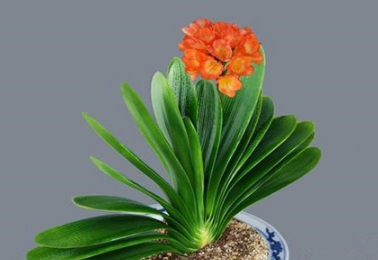
What are the signs of Clivia blooming
1. The feng shui meaning of Clivia blooming
Clivia can sense people's thoughts. If family members are not harmonious enough, then Clivia will be reluctant to bloom; on the contrary, if a happy event is approaching in the family, Clivia will also bloom early to “announce the good news.”
Plants can generally be linked to the five elements. Clivia belongs to the wood category, which means people whose five elements are associated with wood are very suitable for growing a Clivia, and it can create a good feng shui environment.
If a sun-loving plant is placed in a damp, shady environment, its growth will weaken. Clivia is a yang-type plant and can distinguish yin and yang, so Clivia can be used to test for yang positions.
2. The cultural meaning of Clivia blooming
The flower language of Clivia is “nobility” and “preciousness,” implying a gentleman-like character and moral quality. It is a flower of noble character.
In China, the junzi (gentleman) itself is a representative of high moral quality, and the Clivia plant is even more loved by people, possessing elegant style and refined temperament.
What to do if Clivia won't bloom
1. The blooming period of Clivia
The peak blooming period of Clivia is from New Year's Day to the Spring Festival, mainly in spring and summer. It can bloom year-round, sometimes in winter as well, and some bloom in summer between June and July. The length of the Clivia blooming period varies according to different care environments. Generally, a single flower can stay open for 15 to 20 days, and the entire blooming period can last more than 45 days.
2. Reasons why Clivia won't bloom
Excessive sunlight. Although Clivia is a yang-type plant, direct summer sunlight can scorch the leaves and inhibit plant growth, thus causing Clivia not to bloom.
Temperature too high and the environment too dry. The suitable growing temperature for Clivia is 15 to 25°C. Too high a temperature and failure to ventilate in time will both affect the normal growth of Clivia.
Compacted potting soil. Soil is the direct source of nutrients for plant growth. If the pot and soil are not changed for a long time, nutrients in the soil are lost, the potting soil becomes compacted, and drainage is poor. The plant cannot get enough oxygen for growth, leaf growth is affected, and this in turn affects the normal blooming of Clivia.
Lack of fertilizer. Clivia likes fertilizer, so failing to fertilize in time will certainly affect its growth. If there are not even enough nutrients for Clivia to grow, where would it find the extra energy to bloom?
Growing space too large or too small. If the flowerpot is too small, the Clivia root system cannot spread out, less nutrients are produced through photosynthesis, and Clivia will not bloom; if the flowerpot is too large, the Clivia root base grows unsteadily and feels insecure, so of course it will not bloom either.
3. What to do if Clivia won't bloom
In terms of light, from May to September each year, place Clivia in a shed or in a semi-shaded place without direct sunlight for care.
In terms of temperature, keep the temperature at 15 to 25°C, ventilate in time, and spray around the Clivia's environment to maintain air humidity.
In terms of soil, change the pot and replace the soil in time to ensure that Clivia has sufficient nutrients for growth.
In terms of the flowerpot, choose a suitable pot according to the specific size of the Clivia plant, and avoid one that is too large or too small.
If you have a Clivia blooming at home, hehe, maybe good fortune is coming to you soon.
What are the signs of Clivia blooming? Why won't Clivia bloom?
Clivia is an ornamental flower of the genus Clivia in the Amaryllidaceae family and has long been widely cultivated. So what are the signs of Clivia blooming? Why won't Clivia bloom when grown? Let's take a look below.
What signs does Clivia blooming indicate?
Clivia blooming implies family harmony and the approach of a happy event.
That Clivia blooming is a happy event is a widely spread feng shui meaning that everyone is surely very familiar with. Generally, in a harmonious family, in a festive atmosphere, or when a happy event is about to arrive, Clivia will bloom early to announce the good news. But in a family with a disharmonious atmosphere, Clivia generally does not like to bloom.
When does Clivia bloom?
The blooming period of Clivia is from February to April. After blooming, the blooming period can be extended by appropriately lowering the temperature, ventilating, and reducing light. Clivia has a long growth cycle. Generally, it must be cultivated for four or five years and grow to 20 to 25 leaves before it can bloom. Well-cultivated ones can also send up a stalk and bloom in two or three years, and some even bloom in less than two years. At the same time, most Clivia can only send up one stalk and bloom once a year, while some, due to good cultivation methods, will send up two or three stalks in a year. However, some Clivia have been grown for six or seven years without sending up a stalk or blooming, and some bloom once and then never bloom again.
Why won't Clivia bloom?
1. Improper nutrition: After Clivia enters the reproductive stage, part of its nutrients must be supplied to the reproductive organs for flower bud differentiation. At this time, if too much nitrogen fertilizer is used and phosphorus fertilizer is lacking, the plant will grow excessively, preventing normal flower bud differentiation and thus affecting normal blooming.
2. Water imbalance: The life activities of Clivia require water, and nutrients in the soil can only be absorbed by root hairs after being dissolved in water. Therefore, watering should be reasonable so that the plant's vegetative growth is good, and after entering the reproductive growth stage it can carry out normal flower bud differentiation and bloom in time.
3. Improper light: Clivia is a day-neutral flower. Under long-day conditions, it can only grow and cannot carry out flower bud differentiation, so it is slow to bloom. To make Clivia bloom, it must be moved at night into a room where the lights are not turned on. Once the flower scape has emerged, it no longer matters.
4. Improper temperature: Clivia stops growing when the temperature is below 10°C or above 30°C. If the room temperature is too high or too low, it will cause poor plant growth and further affect bud formation and blooming. Therefore, the room temperature for cultivating Clivia should preferably be 11 to 17°C.
What are the benefits of growing Clivia?
1. Distinguishing yin and yang: Clivia is a 100 percent yang-type plant and cannot grow normally when there is insufficient light. Therefore, Clivia can be grown to test whether light is sufficient, playing a role in distinguishing yin and yang.
2. Matching the five elements: Clivia is very compatible with people whose five elements are associated with wood. For these people, growing Clivia not only adds a beautiful indoor landscape, but also allows Clivia's feng shui role to be well brought into play.
3. Folk culture and cultural lineage: Clivia is a high-grade, precious flower of noble character and restrained standing. The reason it is so deeply loved is inseparable from its feng shui role in warding off evil and transforming negative energy, and in bringing wealth and prosperity.
What are the signs of Clivia blooming?
Clivia blooming implies family harmony and the approach of a happy event.
Clivia can sense people's thoughts. If family members are harmonious, then Clivia will bloom, and bloom beautifully. It also means that a happy event may occur at home. In a festive atmosphere, Clivia will announce the good news by blooming early. If family members are not harmonious enough, Clivia will be reluctant to bloom, and even if it does bloom, the flowers will be listless.
It seems that Clivia blooming is a good omen! But some flower lovers encounter the situation of bud clamping during cultivation, so let's look at the causes of Clivia bud clamping and the solutions.