Is Philodendron 'con-go' toxic? Home cultivation methods and precautions
Philodendron 'con-go' is a fairly common indoor foliage plant, with broad, emerald-green leaves that give a very lively, energetic impression, and it also has a good beautifying effect when placed in the home. Today, the editor will take everyone to look at this Philodendron 'con-go'.
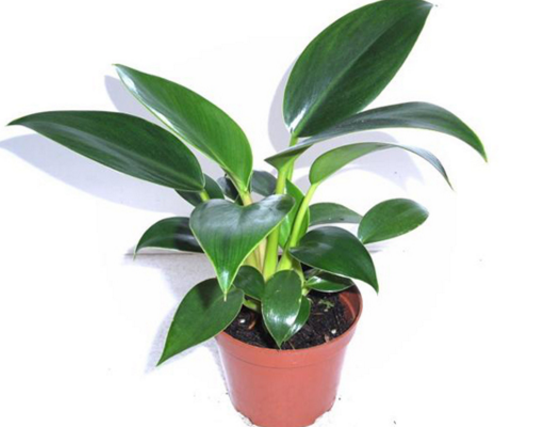
Is Philodendron 'con-go' toxic?
1. Philodendron 'con-go' is toxic.
Its leaf sap is poisonous if ingested, and the rhizome, stems and leaves are toxic. Accidentally touching or eating its sap can cause discomfort in the throat and mouth, and in severe cases can also cause suffocation, leading to cardiac paralysis, and even death.
Skin contact with its sap can cause itching or strong irritation, and eye contact with the sap can cause severe conjunctivitis, and even blindness, so families with children had best not grow it.
In addition, Philodendron 'con-go' belongs to the philodendron type of plants, and the sap of such plants is toxic, such as Philodendron bipinnatifidum and Philodendron 'Florida Beauty'. Therefore, when trimming leaves or repotting, it is best to wear gloves to avoid causing discomfort to the hands.
2. Can Philodendron 'con-go' be kept in the bedroom?
It can be placed in the bedroom. During the day it releases oxygen, absorbs carbon dioxide and other harmful substances, and purifies the air. However, Philodendron 'con-go' has lush branches and leaves, and the leaf tips consume a large amount of oxygen. To avoid competing with people for oxygen and affecting sleep, it is recommended to move it outside at night for care.
In fact, another important reason many flower lovers do not like keeping Philodendron 'con-go' in the bedroom is——it is unsanitary. Although Philodendron 'con-go' can purify the air, fallen leaves, fertiliser, soil and other odours affect the bedroom environment.
If, when keeping Philodendron 'con-go' in the bedroom, you can do the following: keep the potting soil clean, apply fertiliser deeply, do not apply unrotted organic fertiliser, promptly remove withered flowers and fallen leaves, keep ventilation, and the bedroom space is still large enough, then you can safely keep it in the bedroom.
Home cultivation methods and precautions
1. Cultivation methods for Philodendron 'con-go'
Loose soil:
Philodendron 'con-go' is not strict about soil requirements for cultivation; a sandy loam rich in humus and with good drainage is better, and for potting it is generally made by mixing peat and perlite.
Water in time:
Philodendron 'con-go' originates from tropical rainforests and likes a humid environment, and its leaves are broad, so it has relatively large water requirements. Therefore, during the growing season keep the potting soil moist, especially during the high-temperature period in summer when it must not lack water. But do not water too much either; water accumulation in the potting soil can easily cause the root system of Philodendron 'con-go' to rot and the plant to die.
Proper shading:
Philodendron 'con-go' is shade-tolerant and not strict about light, but if it grows in a shaded environment for a long time, otherwise it will cause the leaf colour of Philodendron 'con-go' to become lighter, the petioles to lengthen, the leaves to droop, and the ornamental value to decrease. During care, also avoid direct strong light, otherwise the leaves are prone to dry leaf tips, scorched leaf margins, whitened leaf colour and loss of lustre. Therefore, to ensure robust growth of Philodendron 'con-go', the potted plant should be placed in an environment with semi-shade or sufficient scattered light for care.
Sufficient fertiliser:
Philodendron 'con-go' likes fertiliser, and during the vigorous growth period it needs to be provided with sufficient fertiliser, preferably mainly nitrogen fertiliser, while also noting that too much fertiliser must not be applied at one time, and it is best to apply light fertiliser frequently. Usually pay attention to the growth of Philodendron 'con-go' and apply fertiliser reasonably; if leaf yellowing is caused by lack of fertiliser, nitrogen fertiliser should be supplemented in time.
After entering autumn, pay attention to controlling the amount of fertiliser to facilitate overwintering; when the temperature is below 20°C, stop fertilising.
Proper pruning:
After being cultivated for a period of time, Philodendron 'con-go' will show withered and yellowed, scorched leaves. At this time, if factors such as improper care or pests and diseases are ruled out, it can be determined to be normal metabolism of Philodendron 'con-go', and the old leaves need to be pruned in time. When pruning, cut off the yellowed leaves and overly dense, thin branches to reduce the loss of plant nutrients. When pruning, note to use sharp tools to reduce wounds on the plant.
2. Precautions for cultivating Philodendron 'con-go'
Temperature and humidity should be suitable:
Philodendron 'con-go' likes a warm climate, and during cultivation the temperature needs to be kept at around 20°C, not lower than 10°C, and it should also avoid being hit by heating, air conditioning and cold wind.
Philodendron 'con-go' originates from tropical rainforests and has relatively large water needs. Generally, the air humidity should be kept between 50~75%; below 50% it is prone to yellow leaves and dry edges, and air humidity can be increased by spraying water or sprinkling water.
Watering Philodendron 'con-go' is best done when the surface of the potting soil is dry. During the high-temperature period in summer it can be kept moist; in winter, if the ambient temperature is below 15°C, watering needs to alternate between dry and wet.
Likes light but fears strong light:
Philodendron 'con-go' likes light, but also avoids direct strong light. The care environment is best in a place with semi-shade or sufficient scattered light, and it must not be kept in a shaded environment for a long time, otherwise the leaves are prone to yellowing. Light also must not be too strong, lest the leaves whiten and lose lustre.
Cultivation methods and precautions for Philodendron 'con-go'
Chinese scientific name: Philodendron 'con-go'Latin scientific name: Philodendron 'con-go'Also known as: Philodendron 'con-go', Philodendron 'con-go', Emerald GemKingdom: PlantaeDivision: AngiospermsClass: MonocotyledonsOrder: AralesFamily: AraceaeGenus: PhilodendronSpecies: Philodendron 'con-go'Philodendron 'con-go', also known as Philodendron 'con-go', is a foliage plant native to South America and a common ornamental plant in tropical and subtropical regions. It is a perennial evergreen herbaceous plant, and its leaf sap is poisonous if ingested, and the rhizome, stems and leaves are toxic. Accidentally touching or eating its sap can cause discomfort in the throat and mouth, and in severe cases can also cause suffocation, leading to cardiac paralysis, and even death. Skin contact with its sap can cause itching or strong irritation, and eye contact with the sap can cause severe conjunctivitis, and even blindness, so families with children had best not grow it. It has extremely strong vitality; it has an air-purifying effect and is suitable for homes, office buildings, guesthouses, hotels and other places. Philodendron 'con-go' likes a warm, humid, semi-shaded environment, fears cold, avoids strong light, and is suitable for growing in sandy loam rich in humus and with good drainage.1. Morphological characteristics
A medium-sized species, with a short stem, and mature plants have aerial roots; the leaves are oblong, about 30 cm long, and glossy. The apex is pointed, leathery, green. The leaves are broad, palm-shaped, thick, pinnately parted, and glossy; the petioles are long and thick, and the aerial roots are extremely developed and thick, hanging down profusely. Placing it indoors is elegant and refined, rich in tropical rainforest atmosphere. It is a good foliage plant, and is now widely cultivated in the central and southern provinces of China. Cold-tolerant and tolerant of being placed around, dual-purpose for potting and cut leaves, the domestically produced Philodendron 'con-go' Philodendron 'con-go' is currently a very best-selling shade-grown potted foliage plant on the American market. Its leaves are evenly matched, with moderate spread, thick and emerald-green leaf texture, and a rigid lustre on the leaf surface; the lifespan of each leaf is as long as 30 months.2. Ecological characteristics
Chinese Philodendron 'con-go' is a perennial evergreen foliage plant. It likes a warm, humid, semi-shaded environment, fears severe cold, avoids strong light, and is suitable for growing in a substrate rich in humus and with good drainage. It originates from the tropical rainforests of the Americas, likes high temperature, high humidity and a relatively shaded environment, and is not demanding about light; it can grow relatively well in darker indoor places and under spring and autumn sunlight. It is not cold-tolerant, and the winter overwintering temperature should preferably be above 10°C. It grows fastest at a temperature of 25-32°C and a suitable humidity of 70%. It has strong adaptability and is not demanding about environmental conditions; it begins to grow at around 10°C. During the growing period it should be placed in semi-shade, and in summer direct scorching sunlight should be avoided.3. Ecological habits
Philodendron 'con-go' is a foliage plant and does not bloom. Philodendron belongs to the Araceae family, Philodendron genus, and is a perennial evergreen herbaceous plant. It likes a warm, humid, semi-shaded environment, fears severe cold, avoids strong light, and is suitable for growing in sandy loam rich in humus and with good drainage. It is cold-tolerant and tolerant of being placed around, and dual-purpose for potting and cut leaves.4. Planting techniques
Substrate preparation: use loose imported peat or pond mud with good drainage and aeration in the 10-30 specification, domestic peat, and Chinese fir sawdust in a ratio of (1:1.5:2). Break up the peat, add water and mix well (standard for adding water: after adding water and mixing well, squeeze a handful of peat tightly, and water seeps out from between the fingers). Wait until it is put into cups for planting.Potting: for old pots that are reused, they must be soaked in 1000-fold potassium permanganate solution for more than half an hour, then rinsed with clean water and dried for later use; new pots can be used directly. When planting, first place about 3 cm of substrate at the bottom of the cup, then move the screened seedlings into the cup. For planting small seedlings, it is appropriate to keep the plant base level; the substrate should be moderately firm and loose, filled to 9 parts full of the cup.
Is Philodendron 'con-go' toxic? Does Philodendron 'con-go' absorb formaldehyde?
The sap of most potted plants contains a certain amount of toxins. Although during normal growth they do not cause any harm to people, once mistakenly eaten they may cause poisoning. So does Philodendron 'con-go' belong to this kind of plant? Come and learn about it together with the editor!
Is Philodendron 'con-go' toxic?
Philodendron 'con-go' is toxic.
Its leaf sap is poisonous if ingested, and the rhizome, stems and leaves are toxic. Accidentally touching or eating its sap can cause discomfort in the throat and mouth, and in severe cases can also cause suffocation, leading to cardiac paralysis, and even death.
Skin contact with its sap can cause itching or strong irritation, and eye contact with the sap can cause severe conjunctivitis, and even blindness, so families with children had best not grow it.
In addition, Philodendron 'con-go' belongs to the philodendron type of plants, and the sap of such plants is toxic, such as Philodendron bipinnatifidum and Philodendron 'Florida Beauty'. Therefore, when trimming leaves or repotting, it is best to wear gloves to avoid causing discomfort to the hands.
Does Philodendron 'con-go' absorb formaldehyde?
Philodendron 'con-go' can remove formaldehyde. Philodendron 'con-go' has an air-purifying effect. It can not only absorb sulfur dioxide, sulfur trioxide and nitric oxide as its own nutrients, but can also remove toxic gases such as ammonia, acetone and formaldehyde.
Why is Philodendron 'con-go' called the “King of Warding Off Evil”
Its leaves are very thick and very emerald green, and its petioles are very long and very robust. Its roots are very strong and its vitality is very vigorous, allowing it to grow in relatively harsh environments. In addition, its air-cleaning ability is very strong, and it can very well help us absorb harmful gases in the air, such as sulfur dioxide, making the air in our rooms fresher, so it is very suitable to be kept indoors.
Precisely because it not only has a simple appearance and tenacious vitality, but can also absorb bad gases such as sulfur trioxide and nitric oxide, it has been given the title “King of Warding Off Evil” by us.
Four-season care methods for Philodendron 'con-go'
1. Spring
1. Repot in time
In spring, Philodendron 'con-go' is in the transitional stage from dormancy to the growing period, in a recovery period, with slow metabolism and new roots not yet developed, so it is suitable for repotting. Philodendron 'con-go' is usually repotted once every 2~3 years, carried out from February to March, and at the latest in April. It can be repotted with ordinary new soil and an sufficient amount of base fertiliser added. This stores nutrients for the growing period.
2. Moderate watering
The plant has just resumed growth, so it should not be watered too much; keep the potting soil slightly moist. Water once every 10~15 days, choosing the morning or evening for watering.
3. Sufficient sunlight
In early spring, the temperature is slightly low, so pay attention to keeping Philodendron 'con-go' warm. The plant can be moved to the balcony or windowside for full-day sunlight care every day. At night, move the plant indoors. If there is continuous rainy weather, artificial supplementary light can be used.
2. Summer
1. Water in time
Midsummer is the vigorous growth stage of Philodendron 'con-go', requiring relatively high air humidity and sufficient water, which is very beneficial for promoting its growth. At this time, the principle of watering is to keep the soil moist while avoiding water accumulation. Usually spray water on the leaves more often, which can both clean the leaf surface and create a good microclimate.
2. Avoid direct sunlight
Philodendron 'con-go' likes sufficient scattered light and avoids strong summer light. When sunlight is strong in summer and autumn, proper shading is needed. If it has been kept in a shaded indoor place for too long, it needs to be regularly taken to a place with sufficient light, otherwise the leaves will grow poorly and are prone to yellowing and withering.
3. Autumn
After autumn when the weather turns cool, Philodendron 'con-go' can be placed in a bright and relatively warm place for care, and watering should be controlled. If it is waterlogged for a long time plus low temperature, the leaves are prone to yellowing, and in severe cases root rot can cause the plant to die.
4. Winter
1. Raise the temperature
Philodendron 'con-go' is not cold-tolerant. In winter, the room temperature should preferably be kept above 10°C, and must not be lower than 5°C, otherwise the leaves are prone to damaged spots, yellowing and falling off, reducing the ornamental value.
2. Reduce watering
When the winter room temperature is relatively low, watering should be controlled and fertilising stopped. Winter watering should adhere to rather dry than wet. Philodendron 'con-go' is in the dormant period; if watered too much, it is prone to root rot, leading to slow growth or stopped growth.
The sap of Philodendron 'con-go' does indeed contain a certain amount of toxins, so be sure not to eat it by mistake and do not place it where children can reach it, so as to avoid poisoning. In addition, when touching and pruning Philodendron 'con-go', it is best to wear gloves to avoid causing discomfort to the hands.