Use the right cutting method and in one month your String of Pearls, spider plant, and pothos will fill their pots
The biggest dream of every plant lover is to grow any flower into a pot-busting display! Look at it and you see only flowers, no pot! But not every plant can easily be grown into a pot-busting display. However, once you learn this cutting method, filling a pot is a matter of minutes.
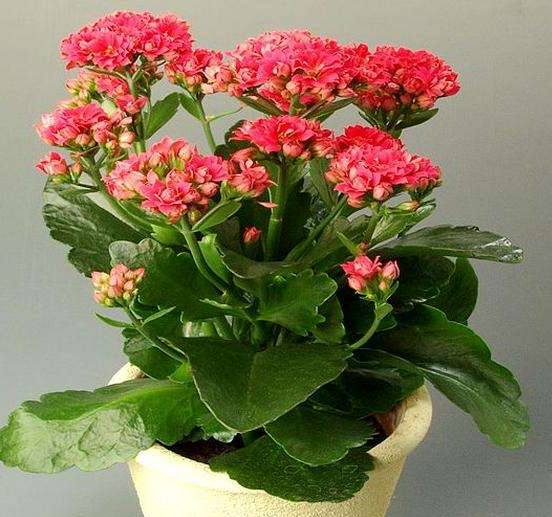
1. Kalanchoe
Kalanchoe can be propagated by leaf cuttings or by stem cuttings. Today we will mainly show you how to propagate kalanchoe using leaf cuttings.
First, the leaves chosen for cuttings should be thick and strong. Carefully cut off the leaf stalk with scissors and leave it in a cool, ventilated place to dry for a while. The cutting medium is generally not soil, because kalanchoe has fleshy leaves and cuttings in soil rot very easily.
For cuttings, sand is generally chosen as the medium, and you must make sure the sand is clean; it is best to wash it. When inserting the cutting, push the leaf diagonally into the medium, just covering the leaf stalk part.
After inserting the cutting, pay attention to keeping it moist. The leaves take root and sprout very slowly, so you must be patient enough. To help the plant grow more healthily, you can apply a dilute liquid fertilizer once every two weeks, which can promote flower bud differentiation, and the leaf cuttings will soon fill a pot.
2. Peperomia
Peperomia can also be propagated by leaf cuttings or stem cuttings. The leaf cutting method is the same as for kalanchoe above. Below, Huahua mainly introduces the stem cutting method for peperomia. Likewise, kalanchoe can also be propagated this way.
The best time to take peperomia cuttings is April and May. Cut strong branches 4 to 5 cm long, remove the lower leaves, and let the cut dry to avoid infection by pathogens.
For the cutting medium, you can mix peat soil, garden soil, and perlite in a 3:1:1 ratio. Insert the part going into the medium about 2 to 3 cm deep.
After inserting the cuttings, place the pot in a shady spot for care, keep the medium moist, and if conditions allow, mist appropriately every day. Roots will form in about two weeks. Once the peperomia has rooted, it can be moved to a spot with scattered light for normal care.
3. String of Pearls
The stems and vines of String of Pearls very easily produce aerial roots, so cuttings can also quickly make it fill a pot.
The suitable time for taking String of Pearls cuttings is spring and autumn. In winter and summer, it is not suitable for rooting, and the survival rate is relatively low. When taking cuttings, cut a stem of String of Pearls, preferably one with aerial roots, and remove a few beads from the lower part of the stem to make insertion easier.
For the cutting medium for String of Pearls, you can mix peat soil, vermiculite, and perlite in a 1:1:1 ratio. Bury half of the cutting in the medium, keep it moist, but there must be no standing water. New roots will soon grow.
After inserting the cuttings, String of Pearls should also be placed in a cool, ventilated place for care, avoiding exposure to strong sun. After the plant has recovered from transplanting and new buds appear, it can be placed in scattered light for care. String of Pearls grows very fast, and its small oval leaves will soon hang down below the pot.
4. Aptenia cordifolia
Aptenia cordifolia can be propagated by cuttings in spring and autumn, and it roots very easily.
Cut mature branches and let them dry slightly for a moment.
Choose well-drained sandy soil, insert the cuttings into the pot, water thoroughly, place in a cool, ventilated place, and keep the soil moist. After a few days, you will see the branches standing upright, which shows the branches have begun to root.
The new branches that grow out must receive sufficient light for flower bud differentiation. Insufficient light tends to cause it to grow only leaves and no flowers. Such a full, large pot really gives a sense of accomplishment, doesn't it?
5. Pennywort
Pennywort is the easiest plant to divide. As long as there are roots and water, new leaves will grow before long, and then with proper care, filling a pot is just too easy!
Take the pennywort out of the pot, then divide it into two or several portions, as long as each portion has roots.
Plant the divided pennywort into new pots respectively, water thoroughly, place in a spot with sufficient light, and after a few days new stems will emerge.
When repotting and replanting, you can cut off the upper leaves again, so that the newly grown leaves are fuller and more beautiful. Pennywort must get plenty of sun, otherwise it will immediately grow leggy on you.
6. Pothos
If you want a large pot of pothos quickly, you must learn how to take cuttings!
First, choose semi-lignified pothos stems, which have a high survival rate. Cut the stems into cuttings about 10 cm long, keeping one or two leaves at the top.
Prepare loose, breathable, well-drained sandy soil or vermiculite. Insert the cutting about one half into the soil, water thoroughly, and let the cutting and medium fit closely together.
After inserting the cuttings, keep the soil moist and the air humidity relatively high, and place in scattered light, which helps the leaves on the cuttings carry out photosynthesis and helps rooting. Generally, roots form 20 days after cuttings are taken, and then you can increase light and care for them normally.
7. Spider Plant
Spider plant can be propagated by cuttings from spring to autumn, and it is simple and easy to do.
Select strong, pest-free plants, cut off the spider plant's runners, preferably those with aerial roots underneath.
Cut the clustered leaves on the runner, that is, the small spider plant plantlets, off the runner. The soil for planting spider plant cuttings can be a mix of garden soil and nutrient soil. Water thoroughly, place in a shady spot for care, and it will soon fill a pot.
Note: when inserting cuttings, do not bury them too deep, as this easily causes the plant's center to rot.
Friends, now you know the method for filling a pot, so hurry up and get started. Just wait for your pots to be full!
Propagate pothos, spider plant, and pennywort this way, and in 1 month the pots will be full
★ Pothos ★
Pothos is grown by almost every plant lover, so now let's turn it into two pots! No flower is easier to propagate by cuttings than pothos. Here are the detailed steps!
Step 1: Prepare the cutting soil
Overall, the soil just needs to be loose, breathable, and permeable. Huahua recommends using vermiculite or coconut coir mixed with perlite.
(Photo by: Baodie 1010 Source: Pothos World Tieba)
Step 2: Cut the stems for cuttings
Make sure the stems are growing strongly and are free of pests and diseases.
(Photo by: Baodie 1010 Source: Pothos World Tieba)
Step 3: Prepare the stems
Use scissors to cut the collected stems into nodes, with each node keeping one leaf and one bud point.
(Photo by: Baodie 1010 Source: Pothos World Tieba)
Step 4: Insert the cuttings
Insert the prepared cuttings into the prepared soil, leaving one third of the cutting exposed, water thoroughly so the cutting and soil fit closely together, and if conditions allow, cover with a plastic bag.
(Photo by: Baodie 1010 Source: Pothos World Tieba)
Care management after taking cuttings
After inserting the cuttings, be sure to keep the soil moist, often mist the cuttings, and maintain relatively high air humidity. You can already see the small buds emerging.
▼
(Photo by: Baodie 1010 Source: Pothos World Tieba)
The newly planted pot should be protected from sun exposure and kept in scattered light. This way the leaves can carry out photosynthesis and rooting of the cuttings is also promoted.
▼
(Photo by: Baodie 1010 Source: Pothos World Tieba)
Many new leaves have already grown. Now you can give the pothos sufficient light to enhance photosynthesis, and it will soon fill the pot.
(Photo by: Baodie 1010 Source: Pothos World Tieba)
How is it? Isn't it great?
▼
(Photo by: Baodie 1010 Source: Pothos World Tieba)
★ Spider Plant ★
Spider plant can send out new runners from the plant, and at the end of each runner is a small plantlet. Just cut it off and put it in soil and it will live.
Step 1: Cut off the spider plant runner
(Photo by: yaohengrui0710 Source: Hua Tieba)
Step 2: Cut the clustered leaves on the runner, that is, the small spider plant plantlets, off the runner.
(Photo by: yaohengrui0710 Source: Hua Tieba)
The prepared small plantlets for cuttings
▼
(Photo by: yaohengrui0710 Source: Hua Tieba)
The soil for planting spider plant cuttings can be a mix of garden soil and nutrient soil.
▼
(Photo by: yaohengrui0710 Source: Hua Tieba)
Step 3: Insert the cuttings into the soil and grow them.
(Photo by: yaohengrui0710 Source: Hua Tieba)
Step 4: Water thoroughly and place in a shady spot for care.
(Photo by: yaohengrui0710 Source: Hua Tieba)
Note: when inserting cuttings, do not bury them too deep, as this easily causes the plant's center to rot.
(Photo by: yaohengrui0710 Source: Hua Tieba)
★ Pennywort ★
Keep pennywort at home and wealth will roll in. Pennywort is loved for its auspicious meaning of attracting gold and bringing treasure, and it is simple to care for. As long as there is sufficient light and enough water, it will grow very lushly. When propagated, it also fills a pot in no time.
Step 1: Dig out a few stems of pennywort from the original pot, preferably with roots, so they root easily.
(Photo by: Blue Xiaoya Source: Baidu Experience)
Step 2: Prepare a container for the cuttings. A cup or a pot without drainage holes is fine.
(Photo by: Blue Xiaoya Source: Baidu Experience)
Step 3: Put one third to one half soil into the prepared container. The more fertile the soil, the better.
(Photo by: Blue Xiaoya Source: Baidu Experience)
Step 4: Plant the prepared pennywort stems into the prepared soil, press firmly, and fix them in place.
(Photo by: Blue Xiaoya Source: Baidu Experience)
Step 5: Pour water into the pot until it covers the soil. Be careful not to let the pennywort float up.
(Photo by: Blue Xiaoya Source: Baidu Experience)
Next, just place the planted pennywort in a sunny spot. Pennywort loves the sun very much, so you must ensure sufficient light and add water to the container in time. Once it lacks water, pennywort will quickly wilt.
(Photo by: Blue Xiaoya Source: Baidu Experience)
As long as the environment is suitable, pennywort will grow very fast and soon fill the pot.
★ String of Pearls ★
String of Pearls, also known as pearl spider plant, has round little leaves just like pearls, crystal clear and delightful. It can be hung by the window, in the bedroom, or in the study, refined and elegant. So how do you turn one pot of String of Pearls into two?
Step 1: Choose strong-growing String of Pearls stems and cut off a few nodes. It is best if the nodes have small bumps, like the things inside the red circles in the picture below.
(Photo by: Ermu Source: Sina Blog)
Step 2: Lay the cut String of Pearls flat on sand or another loose medium, then sprinkle a layer of soil over the String of Pearls and bury all the stems. It does not matter if the beads are buried too.
(Photo by: Ermu Source: Sina Blog)
Step 3: After planting, water appropriately and roots will form quickly.
(Photo by: Ermu Source: Sina Blog)
★ Plectranthus amboinicus ★
Gently touch Plectranthus amboinicus with your finger and you can smell a fresh, pleasant fragrance that refreshes the mind. Plectranthus amboinicus can also be used to make tea and cook dishes. Such a good plant is surely better the more you have.
Step 1: Cut strong branches 4 to 5 cm long as cuttings.
(Photo by: Big Bowl Mashed Potato Source: Sina Blog)
Step 2: Use tweezers or your hands to gently remove the lower leaves of the cuttings.
(Photo by: Big Bowl Mashed Potato Source: Sina Blog)
Step 3: Prepare the cutting soil. It should be loose, permeable, and breathable. You can mix vermiculite, perlite, kanuma soil, nutrient soil, etc.
(Photo by: Big Bowl Mashed Potato Source: Sina Blog)
Step 4: Carefully plant the prepared Plectranthus amboinicus cuttings. Note that after planting, do not water immediately, otherwise the cuttings rot very easily.
(Photo by: Big Bowl Mashed Potato Source: Sina Blog)
After about two weeks, the cuttings will grow new roots, and at that point you can water and care for them normally.
Flower friends, have you grown all these plants?
Hurry up and propagate them from your own plants.
How do you take cuttings from potted plants? Common methods for propagating potted plants by cuttings
Growing flowers not only beautifies the environment but also adds pleasure to life, so more and more people are starting to grow flowers. The source of flowers is of course buying them from flower shops, but many flower shops act out of selfish interests, leading many friends to report that the flowers they bought did not last long. So what should you do? You can take cuttings yourself! These 6 potted plants have a high survival rate from cuttings, and it is very simple. Hurry to a friend's home, snap off a branch, and give it a try!
Image: Pothos
● Pothos cutting method
1. Choose strong pothos stems and cut stems 15 to 25 cm long as cuttings. It is best to choose ones with aerial roots, and keep 3 leaves on each section.
2. Prepare a large pot and fill it with soil, but do not firm it down. It is best to choose soil with good air permeability; adding some vermiculite or perlite works quite well.
3. The aerial roots of pothos are at the junction of the leaf stalk and the stem. When taking cuttings, insert the end of the stem downward into the soil at an angle, making sure at least 2 nodes are inserted into the soil, as this makes it easier for the pothos to survive.
4. After taking cuttings, place them in a shady spot for care, and water again after 2 to 3 days. Before they have taken root, do not water too frequently; let the soil dry out completely and then water thoroughly, so as to avoid stem rot. Once they have taken root, you can water normally. Pothos likes water, so you do not need to wait until the soil is completely dry; just water once the surface soil is dry.
Image: Kalanchoe
● How to take cuttings of kalanchoe
1. For selecting kalanchoe cuttings, bigger stems are not always better. Generally, keeping two to three pairs of leaves is enough.
2. It is best to let the cut kalanchoe stems dry for a day before taking cuttings; planting them directly may lead to infection.
3. For the cutting soil mix, peat : garden soil : perlite = 6:2:2. If they are small seedlings, it is best to use a slightly higher proportion of peat.
4. Cutting method: insert them neatly into the container, then use a spray bottle to moisten the surface soil. Then use plastic wrap to increase humidity, leaving holes on both sides. This is optional; choose according to your own location. Ventilation and humidity are both very important for cuttings.
Image: Peperomia
● How to take cuttings of peperomia
1. In April to May, cut about 5 cm of top bud stems as cuttings.
2. Before taking cuttings, let the cut surface dry to avoid infection and increase the success rate of cuttings.
3. Choose relatively breathable soil for cuttings. You can use a ratio of peat : garden soil : perlite = 6:2:2.
4. Before taking cuttings, lightly moisten the cuttings and the growing medium, then place the potted peperomia in a dark spot for care. As long as the medium is not excessively dry, roots can form in about 15 days.
Image: String of Pearls
● How to take cuttings of String of Pearls
1. Choose healthy stems and cut according to the root nodes of String of Pearls. Generally, one root node makes one plant. Remove a few beads to make insertion easier.
2. For the cutting soil, you can use peat, vermiculite and perlite, with 1/3 of each medium.
3. Then place the potted String of Pearls in a dark spot for care. Generally, String of Pearls with root nodes roots more easily, so it is best to choose stems like this.
Image: Aptenia cordifolia
● How to take cuttings of Aptenia cordifolia
1. Generally choose healthy stems, then cut them into stems about 10 cm long as cuttings.
2. For the soil, you can choose the same cutting soil as for other flowers.
3. Water thoroughly, place in a shady spot for one day, then it can be placed in the sun. At first, water once every 3 days, and afterward, depending on whether the pot soil is dry or moist, appropriately increase the frequency of watering. It likes water and light, and is very easy to keep alive.
Image: Pennywort
● How to take cuttings of pennywort
Pennywort is the easiest plant to take cuttings from. As long as the rhizome is kept, remove the unwanted leaves, then throw it into water or soil, and before long new leaves will grow. Then with proper care, filling the pot is all too easy.