Lipstick Flower Blooming Time, Cultivation Methods and Precautions
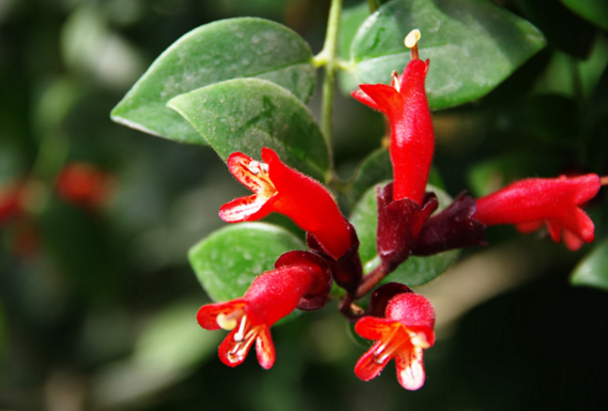
Lipstick flower, also called lipstick trailing plant, is an evergreen vine in the family Gesneriaceae and the genus Aeschynanthus, with alternative names flower vine grass and large red bristle-flowered gesneriad. Lipstick trailing plant is an excellent trailing plant only introduced to China in recent years, and both its flowers and leaves have high ornamental value.
When does the lipstick flower bloom
The greatest ornamental value of the lipstick flower lies in its bright flowers, but during care, because people do not know the cultivation methods, it can easily go for a long time without blooming.
1. The blooming period of the lipstick flower
The blooming period of the lipstick trailing plant is generally from November of the current year to June of the following year, but in some places the flowers last only until February. In short, the blooming period falls within the range of November to June, and due to differences in local environments, the times of blooming and fading will vary.
2. Reasons for differences in the blooming period of the lipstick flower
The differences in the blooming period of the lipstick flower are mainly shown in the climate differences between north and south; differences in temperature, humidity and light will affect the blooming time of the lipstick flower. In addition, the ability to artificially change the environment is also very strong; most potted lipstick flowers are kept on balconies at home, and each household's environment is different, so naturally the blooming time is also different.
3. What to pay attention to during the blooming period of the lipstick flower
The lipstick flower has a relatively long blooming time and blooms in summer and autumn, so sufficient fertilizer and water must be ensured, and enough fully decomposed organic fertilizer should be applied when planting. If the air is relatively dry, water should be sprayed on the leaves to increase the humidity of the leaves and the surrounding environment.
If slight bud drop occurs during the blooming period, it is considered normal; if many buds drop, then there is a problem in care. Generally, plants are fertilized before blooming, and no fertilization is needed during the bud stage. If heavy fertilizer is applied during the bud stage, it will cause buds to drop over a large area.
Cultivation methods and precautions for the lipstick flower
1. Soil selection for the lipstick flower
The lipstick flower likes acidic soil, so the potting soil for growing it is best chosen slightly acidic; you can choose peat soil, sand and vermiculite to make a growing medium. An appropriate amount of calcium phosphate can be added to the soil. Or choose leaf mold and coarse sand mixed at a ratio of 8:2, then add a small amount of fully decomposed animal manure or compound fertilizer for cultivation.
2. How to water the lipstick flower
From March to September each year is the growing period of the lipstick flower, and this period also has relatively high temperatures; the plant's water demand is relatively large, so it needs frequent watering or spraying to increase air humidity. In summer, open windows frequently for ventilation as much as possible. After autumn, gradually reduce the amount of watering to improve the plant's cold resistance.
3. Temperature requirements for the lipstick flower
The growing temperature for the lipstick flower is 18-30°C, with the optimum temperature around 25°C. Its cold tolerance is relatively poor, and the overwintering temperature should be above 12°C. In winter, the potted plant needs to be moved indoors in time for care, and direct cold wind must be avoided.
4. Light requirements for the lipstick flower
Red trailing plant likes to grow in a semi-shady environment. Throughout the year, except that strong light at noon in midsummer should be properly shaded, sufficient light should be given at other times. If during care the leaves of the lipstick flower are found to turn red, it is mainly caused by too low room temperature or too strong light; at this time you need to raise the room temperature in time. Being in an environment with too low a temperature for a long time can easily cause leaf drop and dry, withered branches.
5. Fertilization methods for the lipstick flower
The lipstick flower usually needs a relatively small amount of fertilizer; apply some fully decomposed liquid fertilizer every two weeks, and prefer dilute over concentrated.
When potting, add an appropriate amount of livestock hoof and horn pieces and crushed bone pieces as base fertilizer, which can make it grow well. During the vigorous growth period of the lipstick flower, apply fully decomposed organic fertilizer liquid once every 15-20 days; after summer, apply more phosphorus and potassium fertilizers, such as a 0.1% solution of potassium dihydrogen phosphate and a 20-times solution of fully decomposed fish internal organ water, bone water, etc.
6. Precautions for cultivating the lipstick flower
After potting the lipstick flower, keep the soil moist, but it should not be too wet; if water accumulates, the roots are prone to rot or leaf drop. Frequently spray water mist on the leaves to keep the air humidity at around 80%.
In the hot summer, shading is needed, with a shading degree of around 50%. Or hang the lipstick flower under the trellis on the balcony and use bamboo blinds for shade, or hang the pot on the inner side of a south-facing door or window where scattered light is abundant.
The lipstick flower should avoid wind blowing its branches and tendrils, so that the drooping stems are not worn and broken by the rim of the flower pot. In autumn, as the weather gradually turns cool, gradually reduce the amount of watering and fertilization.
Cultivation methods of the lipstick flower When does the lipstick flower bloom
Soil
The lipstick flower likes acidic soil, so the potting soil for growing it is best chosen slightly acidic; you can choose peat soil, sand and vermiculite to make a growing medium. An appropriate amount of calcium phosphate can be added to the soil. Or choose leaf mold and coarse sand mixed at a ratio of 8:2, then add a small amount of fully decomposed animal manure or compound fertilizer for cultivation.
Watering
From March to September each year is the growing period of the lipstick flower, and this period also has relatively high temperatures; the plant's water demand is relatively large, so it needs frequent watering or spraying to increase air humidity. In summer, open windows frequently for ventilation as much as possible. After autumn, gradually reduce the amount of watering to improve the plant's cold resistance.
Temperature
The growing temperature for the lipstick flower is 18 to 30°C, with the optimum temperature around 25°C. Its cold tolerance is relatively poor, and the overwintering temperature should be above 12°C. In winter, the potted plant needs to be moved indoors in time for care, and direct cold wind must be avoided.
Light
Red trailing plant likes to grow in a semi-shady environment. Throughout the year, except that strong light at noon in midsummer should be properly shaded, sufficient light should be given at other times. If during care the leaves of the lipstick flower are found to turn red, it is mainly caused by too low room temperature or too strong light; at this time you need to raise the room temperature in time. Being in an environment with too low a temperature for a long time can easily cause leaf drop and dry, withered branches.
Fertilization
The lipstick flower usually needs a relatively small amount of fertilizer; apply some fully decomposed liquid fertilizer every two weeks, and prefer dilute over concentrated. When potting, add an appropriate amount of livestock hoof and horn pieces and crushed bone pieces as base fertilizer, which can make it grow well. During the vigorous growth period of the lipstick flower, apply fully decomposed organic fertilizer liquid once every 15 to 20 days; after summer, apply more phosphorus and potassium fertilizers, such as a 0.1% solution of potassium dihydrogen phosphate and a 20-times solution of fully decomposed fish internal organ water, bone water, etc.