When Does Malus micromalus Bloom? Detailed Guide to Cultivation Methods and Precautions
Malus micromalus is a plant in the Rosaceae family, genus Malus, and is a plant unique to China. Malus micromalus grows best in northern regions and has excellent landscaping value. Let's take a look at this plant.
Cultivation Methods and Precautions for Malus micromalus
1. Light and Temperature
The growing environment for Malus micromalus requires sufficient light and appropriate temperature.
Place Malus micromalus in a well-ventilated environment with scattered light, which helps it absorb sunlight and promote growth. The suitable temperature for Malus micromalus growth is around 20 degrees; just keep it balanced.
Precautions:
Do not expose to strong direct sunlight, to avoid damaging the leaves. In winter, place it in a sunny, wind-sheltered spot for care. In summer during dry and hot seasons, pay attention to ventilation and shade; do not expose it to sunlight all the time.
3. Watering and Fertilizing
For watering Malus micromalus, keeping the potting soil moist is the optimal state. High air humidity is beneficial for growth, so appropriately spray water on the leaf surface and surrounding ground to maintain moisture.
Fertilizing Malus micromalus is done during the growing period, roughly once every 10 days with diluted cake fertilizer water.
Precautions:
For watering Malus micromalus, just keep the potting soil moist; do not let water accumulate, otherwise the roots will rot. In winter, control watering and reduce the amount of water.
When fertilizing, be careful not to spray the fertilizer liquid onto the leaves, to avoid damaging the leaves. Be sure not to fertilize during each blooming season or in the winter and summer seasons.
3. Staking and Repotting
Because Malus micromalus plants are tall and prone to tipping over, thin bamboo or other supports are needed to prop up the branches, preventing lodging that would hinder growth.
Every spring, repot, change the soil, and prune. Just cut off weak branches, overlapping branches, and damaged roots.
Precautions:
When staking Malus micromalus, use thin branches; do not use thick branches that would affect the development and growth of buds. When repotting, pay attention to adding new soil to increase nutrients, and just don't damage the roots.
When Does It Bloom
1. The Blooming Period of Malus micromalus
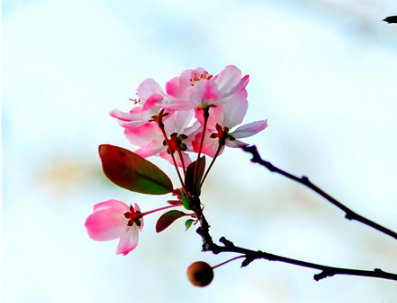
The blooming period of Malus micromalus is generally in spring, usually starting from February and lasting until May. However, the specific blooming time varies slightly depending on climate, environment, and other factors. Generally, the blooming period of Malus micromalus in the north is later than in the south. Malus micromalus blooming typically lasts about one week.
2. Regulating the Blooming Period of Malus micromalus
In today's highly developed technology, the blooming period of Malus micromalus can also be regulated artificially; it can be delayed or advanced, both of which can be achieved. Regulating the blooming period of Malus micromalus mainly involves controlling the care temperature.
Place Malus micromalus in a low-temperature environment to let it go dormant. About one month before the desired blooming period, gradually begin to raise the temperature and spray water daily, which will cause Malus micromalus to grow flower buds. At this point, maintain the temperature at 10°C, increase light, and the buds will color up, then bloom normally.
Note: if the buds appear relatively late at this point, you can appropriately increase the temperature or spray potassium dihydrogen phosphate to promote blooming.
Cultivation Methods and Precautions for Malus micromalus
Cultivation Methods and Precautions for Malus micromalus
The cultivation methods for Malus micromalus are very simple; just follow its growing environment requirements.
Light and Temperature
The growing environment for Malus micromalus requires sufficient light and appropriate temperature.
Place Malus micromalus in a well-ventilated environment with scattered light, which helps it absorb sunlight and promote growth.
The suitable temperature for Malus micromalus growth is around 20 degrees; just keep it balanced.
Precautions:
Do not expose to strong direct sunlight, to avoid damaging the leaves.
In winter, place it in a sunny, wind-sheltered spot for care. In summer during dry and hot seasons, pay attention to ventilation and shade; do not expose it to sunlight all the time.
Watering and Fertilizing
For watering Malus micromalus, keeping the potting soil moist is the optimal state. High air humidity is beneficial for growth, so appropriately spray water on the leaf surface and surrounding ground to maintain moisture.
Fertilizing Malus micromalus is done during the growing period, roughly once every 10 days with diluted cake fertilizer water.
Precautions:
For watering Malus micromalus, just keep the potting soil moist; do not let water accumulate, otherwise the roots will rot. In winter, control watering and reduce the amount of water.
When fertilizing, be careful not to spray the fertilizer liquid onto the leaves, to avoid damaging the leaves. Be sure not to fertilize during each blooming season or in the winter and summer seasons.
Staking and Repotting
Because Malus micromalus plants are tall and prone to tipping over, thin bamboo or other supports are needed to prop up the branches, preventing lodging that would hinder growth.
Every spring, repot, change the soil, and prune. Just cut off weak branches, overlapping branches, and damaged roots.
Precautions:
When staking Malus micromalus, use thin branches; do not use thick branches that would affect the development and growth of buds.
When repotting, pay attention to adding new soil to increase nutrients, and just don't damage the roots.
Cultivation Methods for Malus micromalus and Propagation Methods for Malus micromalus
Malus micromalus, also known as "zimu crabapple," is one of China's traditional famous flowers. Today we will share the cultivation methods and propagation methods for Malus micromalus.
Cultivation Methods for Malus micromalus:
1. Planting. Malus micromalus is generally planted in the ground, with the best time being before bud break in early spring or after leaf drop in early winter. Keeping the root system of the seedlings intact when leaving the nursery is key to survival. Generally, large seedlings should be balled and burlapped, while small seedlings should retain some native soil depending on the situation. After planting, strengthen tending and management, and keep the soil loose and fertile.
2. Pruning. Perform one pruning after leaf drop and before bud break in early spring, cutting off dead and weak branches and diseased or pest-infested branches, to keep the canopy open and allow ventilation and light penetration. To promote vigorous blooming, vigorous water sprouts must be shortened to reduce nutrient consumption during sprouting. Fruiting branches and spurs do not need pruning. During the growing period, if you can pinch back in time to limit vegetative growth early, the effect will be even more remarkable.
3. Watering and Fertilizing. To make Malus micromalus flowers beautiful in color, plant it in well-drained, fertile, moist soil. The planting time should be before buds swell in early spring, and apply decomposed organic fertilizer before planting. Each autumn after leaf drop, dig a ring-shaped trench around the root zone, apply decomposed organic fertilizer, cover with soil, and water thoroughly; this will make the branches lush and the flowers abundant and beautiful. During the seedling stage, water frequently to keep the soil moist, but do not let water accumulate. During the rainy season, drain water promptly, and every 2-3 weeks loosen the soil around the roots once to improve aeration.
Propagation Methods for Malus micromalus:
There are generally three propagation methods for Malus micromalus: grafting, division, and root burial. Malus micromalus cuttings are difficult to root successfully.
1. Grafting method: Malus micromalus grafting is divided into bud grafting and scion grafting, and the rootstock is mostly seedlings of the same genus. Bud grafting for Malus micromalus should be done in August, and scion grafting should be done in spring.
2. Division method: Division of Malus micromalus is suitable in early spring in March, before bud break. Around older Malus micromalus plants, small seedlings will sprout; cut the small seedlings off from the mother plant with roots and transplant them. After watering the small Malus micromalus seedlings thoroughly, provide appropriate shade and keep the soil moist; after 15 days, they enter normal management.
3. Root burial method: In early spring from February to March, cut the roots of mature crabapple into sections about 15 cm long, lay them flat and bury them in soil, cover with 7-8 cm of soil, water thoroughly, and keep the soil moist thereafter. In early spring of the following year, cut them away from the mother plant and plant them separately.
More information