Fig Planting Methods, Causes of Fruit Drop, and Solutions
When it comes to figs, many people love growing them, and figs can be grown as potted plants. Let's take a look at how to grow figs, and the causes of fig fruit drop and what to do about it:
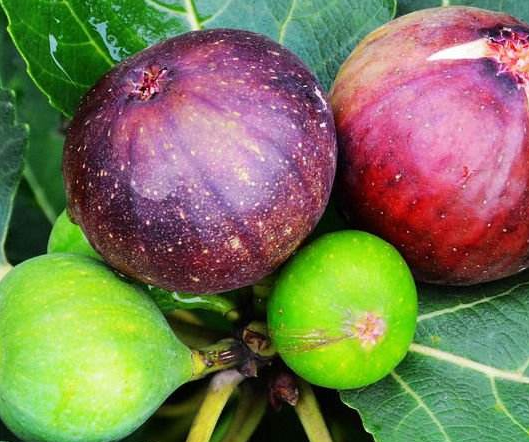
How to grow figs:
1. The soil should be slightly alkaline.
2. When new branches grow to four or five leaves, pinch off the growing tip; for side branches, also pinch after five leaves. Keep two side branches per new branch and remove all the rest.
3. Start topdressing only after the plant has set fruit.
4. Before the fruit ripens, provide plenty of water and fertilizer. During the fruit growth and development period, foliar fertilizers such as 0.2% monopotassium phosphate can be sprayed on the leaves to increase fruit size and boost yield.
5. Figs need fruit thinning, so don't be reluctant to do it; at the same time, remove secondary shoots.
6. When the fruit is ripe, each time you pick a fruit, also remove the leaf adjacent to it, so that the other fruits can continue to grow larger and sweeter.
7. Watering
Figs are not tolerant of waterlogging and are relatively drought-tolerant. For routine watering, follow the principle of “dry then wet” (“dry then wet” is a common term in flower growing, meaning water thoroughly once, then wait until the soil is slightly dry before watering a second time; its purpose is to prevent root rot caused by overwatering and pests and diseases caused by excessive moisture).
In spring and autumn, figs can be watered a little more to keep the soil moist. During the fruit-swelling period in summer, water 1 to 2 times a day, and in dry seasons appropriately increase the number of waterings.
8. Fertilizing
The ratio is calcium:nitrogen:potassium:phosphorus = 1.43:1.00:0.90:0.30. For the ratio of the three elements nitrogen, phosphorus, and potassium, young trees do best with 1.0:0.5:0.7; mature trees do best with 1.00:0.75:1.00. For base fertilizer, organic fertilizer is best, generally applied during the dormant period after leaf fall, requiring 1.0—1.5 kg of organic fertilizer per 1 kg of yield. Apply it in strip trenches or ring trenches below the spread of the branches. On the basis of applying sufficient base fertilizer, topdressing (soil application or foliar spray) should be done 5 to 6 times each year. In the early growth stage, nitrogen fertilizer is the main type; in the later fruit-ripening period, phosphorus and potassium fertilizers are the main types, with calcium fertilizer supplemented (either soil-applied or foliar-sprayed). Soil topdressing should be carried out together with watering: open a trench to apply fertilizer, cover with soil, and water. Broadcasting fertilizer on the soil surface is not recommended. Figs like fertilizer, so focus on applying three good fertilizer applications: the first is the early-spring branch-promoting fertilizer, mainly nitrogen fertilizer; when budding begins, scatter a big handful of nitrogen fertilizer on the ground and immediately water it in to wash the nitrogen fertilizer into the soil. After that, apply nitrogen fertilizer once a month, for a total of three applications until fruiting begins. The second is the fruit-preserving fertilizer, timed during the swelling period of the first batch of fruit, preferably applying nitrogen and phosphorus together; dig 3~4 holes 30~40 cm deep at a distance of 50 cm from the main trunk and place the fertilizer in them. The third is the overwintering fertilizer, applied before winter arrives, mainly potassium fertilizer; simply cover the base with plant ash.
Water must be replenished promptly according to soil moisture conditions. The main water-demand periods for figs are the bud-break period, the rapid new-shoot growth period, and the fruit growth and development period. In addition to traditional furrow irrigation and hole irrigation, drip irrigation and sprinkler irrigation can be used where conditions permit. A single irrigation of figs should not be too heavy, especially during the fruit ripening and harvest period; avoid excessive changes in soil dryness and wetness, and always maintain stable and suitable soil moisture to prevent increased fruit cracking. In addition, figs have strong drought resistance and weak tolerance of waterlogging, so during the plum rain season special attention should be paid to timely drainage, and after rain, hoe and loosen the soil promptly.
10. Pruning and training
In the eastern United States, fig cultivation in the open field is extensive; mature trees need no special management, and vigorous branch and leaf growth can naturally form a large canopy, but fruiting is late and sparse, and often the autumn fruit is not yet ripe before the weather turns cool, resulting in production without harvest. Therefore, timely pinching of the growing tips is needed to stop them from continuing to extend, so that the fruit set on the lower part of the branches can ripen early and the second crop of fruit can mature. The timing, amount, and fruit retention of pinching must all be moderate, benefiting both the current year's fruiting and the next year's tree growth and fruiting. Pinching can inhibit new shoot growth, reduce branch length, promote bud break and branching, and increase branching at the base of large branches or scaffold branches. Therefore, pinching during the period of vigorous new shoot growth can promote secondary branches, which helps expand the canopy and is mostly used on young trees. In addition, to promote the growth, maturity, and fullness of the current year's new shoots, pinching during the slow growth period of new shoots can promote flower bud differentiation, help the fruit ripen earlier, and increase single fruit weight. The pinching period is generally best from mid-July to early August. Also cut off branches that do not bear fruit, and when the fruit is about to ripen, promptly remove the lower leaves to increase sunlight and concentrate nutrients for supplying the figs. Figs have the characteristic of fruiting on new branches; as soon as a new branch emerges from the ground it begins to bear fruit, producing one fruit at each leaf node all the way to the top. Therefore, the current year's new branches should generally all be retained, and even unwanted branches should be cut off only after they have fruited. Aged branches are best renewed once every five years, during the period from late autumn to early spring before bud break. In winter, the branch tips bear the buds for next year's summer crop, so be careful not to cut them off, to avoid affecting the summer crop yield. Bud removal means removing lateral buds from the branches during the growing season. The main purpose of bud removal is to reduce nutrient consumption and prevent shoots sprouting from buds in unfavorable positions from affecting canopy light. Bud removal should be done early, as it can reduce the consumption of stored nutrients. Trees with medium or weak vigor should have buds removed as much as possible, so that stored nutrients are concentrated to supply the retained buds and produce strong shoots. Trees with strong vigor break bud slightly later, and often unevenly, so bud removal can be appropriately delayed; after they have grown for a period, remove overly vigorous buds and retain buds that grow uniformly and are moderately to slightly strong.#p#Subheading#e#
Causes of fig fruit drop and what to do about it:
1. Water
Fig leaves are large and transpire vigorously, and especially during the rapid growth periods of new shoots and fruit they need large amounts of water. Therefore, if the soil is too dry, it will affect plant development, making the fruit flesh coarser and the fruit smaller, degrading quality, and may even cause the fruit to shrink prematurely and drop before ripening.
2. Pests and diseases
1. Nematodes: Nematodes parasitize fig roots, damaging the young root tissues of the root system, causing them to become nodular, leading to rot and swelling, shrinking of the root system, and further causing stunted plants, yellowing leaves, and symptoms such as premature fruit drop.
2. Longhorn beetles: Longhorn beetle damage; the longhorn beetles first tunnel and feed in all directions beneath the bark, then bore into the xylem deep into the center of large trunks. Affected plants weaken, leading to leaf and fruit drop, are easily broken by wind, and in severe cases may even die.
3. Pest mites: Adult mites and nymphs gather on the undersides of leaves and suck leaf sap, causing the leaves to lose their green color and turn yellow-white, and causing leaf drop. After fruit is damaged, the skin becomes rough and the fruit shrivels and drops because it cannot swell properly.
3. Fertilizer (nutrient deficiency)
1. Nitrogen deficiency: With nitrogen deficiency, the number of differentiated flower clusters decreases. Early fruit shape is still fairly normal, but fruit width decreases, and the ripening period comes earlier with good quality. However, because with nitrogen deficiency many nutrients in the leaves are transferred to the fruit, leaf discoloration is obvious, and fruit drop on the upper part of fruiting branches is severe. After topdressing, branch growth recovers, but the fruit is prone to browning and dropping.
2. Potassium deficiency: Severe potassium deficiency causes leaf scorch, stops shoot growth, and often produces gourd-shaped fruit. Potassium deficiency leads to poor root growth, with blackening, peeling, and rot, which in turn causes fruit drop.
3. Magnesium deficiency: Magnesium deficiency first causes chlorotic symptoms on vigorously growing leaves, with fewer symptoms on upper and lower leaves. As symptoms worsen, the leaves turn yellow-white except at the petiole, with large brown spots appearing. As symptoms intensify, root growth is inhibited, and premature fruit drop occurs.
4. Calcium deficiency: Figs have a very high calcium requirement. With calcium deficiency, the topmost expanded leaf suddenly turns white and develops brown spots, causing leaf drop, while lower leaves grow normally. The branches become dark brown and shrivel. In severe cases, root elongation is obviously hindered, the roots are prone to rot and have a special strong organic acid odor, and the fruit blackens and drops prematurely.
5. Iron deficiency: When it occurs, new shoots elongate slowly, and new buds turn white and die. If it occurs in the early growth stage, all young fruit turns white and drops; if symptoms appear in the late growth stage, fruit from the early and middle stages can still ripen normally.
That covers fig planting methods and the causes and treatment of fruit drop. Hurry and grow a potted fig.
Methods to prevent fig fruit drop
Pay attention to rational fertilization
Rational fertilization can reduce fig fruit drop to a certain extent. Fig branches grow continuously, and flowering and fruiting occur at the same time, so we should pay attention to rational fertilization. In the young stage of the fruit tree, apply some nitrogen fertilizer to promote branch and leaf growth; do not apply too much fertilizer, as long as it can keep the fig growing healthily. Fruit trees aged three or four years no longer need organic fertilizer, and some urea can be applied before the fig fruit rapidly swells.
Pay attention to drainage
The fig is a drought-tolerant plant with a very strong root system, but it is not tolerant of waterlogging, so when growing fig trees we must pay attention to drainage. Because fig leaves are very large, their transpiration capacity is also very strong, so in summer pay attention to providing sufficient water to figs. In dry seasons or after fertilizing, water promptly, and before overwintering in winter also water an appropriate amount of freezing water.
Rational watering and rational drainage can make fig trees healthier and stronger and less prone to fruit drop. In addition, during the rainy season and when the fruit is about to ripen, pay attention to rational drainage; too much water increases the weight of the figs and makes fruit drop more likely.
Pay attention to pest and disease control
Pests and diseases weaken fig trees and affect their absorption of nutrients, and malnourished fig trees are very prone to fruit drop. Therefore, we should frequently observe fig trees to see whether there are pests. Once pests occur, deal with them immediately, use the relevant insecticides, and promptly kill the pests according to the instructions to prevent fig fruit drop.
Spray growth regulators rationally
When temperatures suddenly drop, the ripening time of figs is delayed, which causes fig fruit drop. In this situation, we can spray the relevant growth regulators to promote the fig fruit to ripen at a reasonable time. Doing so can not only prevent fig fruit drop but also improve the quality of the fig fruit.
Is the fig an ominous tree or an auspicious tree? What is going on with fruit drop?
The fig is also one of the fruits, and very many people know about it. So, is the fig an ominous tree or an auspicious tree? What is going on with fruit drop:
Is the fig an ominous tree or an auspicious tree:
1. Affects feng shui
In fact, in feng shui, many trees cannot be planted in the home, such as willow, poplar, pagoda tree, and the fig tree we are discussing; they are all ominous trees. The wood of the fig tree is considered ominous wood; planting it at home will affect feng shui and bring bad feng shui fortune, so it is best not to grow it in the home or courtyard.
2. Attracts ghosts
Many people do not know whether the fig is an ominous tree or an auspicious tree, and they grow fig trees in their homes. Over time they find that the home becomes a little “unclean”. This is because the fig tree is too yin-cold; it is a plant that carries yin energy, and after being planted for a long time it will attract ghosts.
3. Affects health
Ominous trees are very unlucky, and planting them at home will produce evil energy. Moreover, the taller the tree, the heavier the evil energy. This tree evil energy will reverse the fortunes of the home and damage the health of family members, especially making children's bodies become very weak because of the evil energy.
What is going on with fig fruit drop:
1. With nitrogen deficiency, the number of differentiated flower clusters decreases. Early fruit shape is still fairly normal, but the fruit becomes smaller, and the ripening period comes earlier with good quality. However, because with nitrogen deficiency many nutrients in the leaves are transferred to the fruit, leaf discoloration is obvious, and fruit drop on the upper part of fruiting branches is severe. After topdressing, branch growth recovers, but the fruit is prone to browning and dropping.
2. Severe potassium deficiency causes leaf scorch, stops shoot growth, and often produces gourd-shaped fruit. Potassium deficiency leads to poor root growth, with blackening, peeling, and rot, which in turn causes fruit drop.
3. Magnesium deficiency first causes chlorotic symptoms on vigorously growing leaves. As symptoms worsen, the leaves turn yellow-white except at the petiole, with large brown spots appearing. As symptoms intensify, root growth is inhibited, and premature fruit drop occurs.
4. Figs have a very high calcium requirement. With calcium deficiency, the topmost expanded leaf suddenly turns white and develops brown spots, causing leaf drop, while lower leaves grow normally. The branches become dark brown and shrivel. In severe cases, root elongation is obviously hindered, the roots are prone to rot and have a special strong organic acid odor, and the fruit blackens and drops prematurely.
That is all for the introduction to figs. Now you know the causes of fruit drop, right!