Is the Calathea insignis (cat-eye prayer plant) toxic? A detailed guide to growing it
The Calathea insignis has broad leaves, and the round black spots on the leaves look just like a panda's eyes, full of interest, making it suitable for indoor decoration and beautification. But many people worry about whether its colors are toxic, so let's explore it together.
Is the Calathea insignis toxic?
Gardeners are quite concerned about the safety of the plant itself during cultivation, and whether living together in the same room for a long time might harm human health. So, is the Calathea insignis toxic?
Although the Calathea insignis looks colorful, it is actually a “safe” plant, so don't be fooled by its appearance. Not only is the Calathea insignis non-toxic, but it also absorbs toxic gases such as formaldehyde and ammonia, achieving the effect of purifying the air, making it suitable for placing in a newly renovated house or a bathroom.
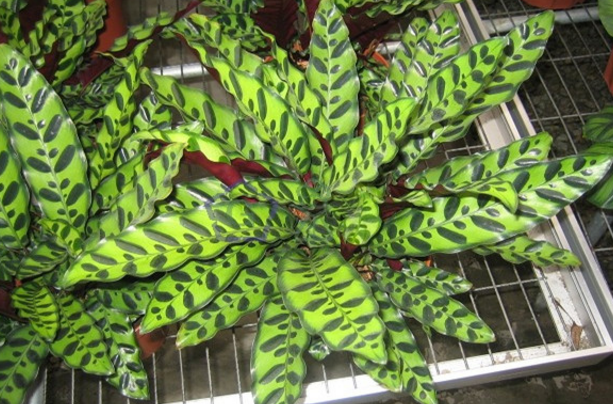
Can the Calathea insignis be placed in the bedroom?
According to the above, the Calathea insignis is not only non-toxic, but also a high-quality foliage plant that purifies the air and absorbs formaldehyde, evergreen all year round, and can be grown in the bedroom, not only adding greenery to the bedroom and playing a beautifying role, but also purifying the living environment. However, it is best not to place it at the head of the bed, because placing the plant at the head of the bed will reduce the oxygen content nearby, which is not conducive to the respiration of the human body during deep sleep. This is because plants also carry out respiration at night and will “compete” with people for oxygen. However, the Calathea insignis is not large in size and does not consume much oxygen, so there is no need to worry too much; generally, just keep it away from the head of the bed.
How to grow the Calathea insignis:
1. Temperature
The Calathea insignis is native to tropical and subtropical regions and is tolerant of high temperatures. It is suitable for a growing environment of 20-30°C. In winter, the growing temperature should be maintained at around 16-18°C, which is most ideal.
2. Light
A shade-tolerant plant, it prefers semi-shade and is best placed in a bright spot indoors. Avoid direct sunlight and exposure to strong sun, so as to avoid scorching the leaves. In summer, do a good job of shading and ventilation.
3. Watering
During the growing period of the Calathea insignis, water it thoroughly to keep the potting soil moist, while also taking care to avoid water accumulation in the soil, to prevent root rot and even the death of the plant. Because the leaves of the Calathea insignis are relatively large and water evaporates quickly, it is necessary to maintain a relatively high air humidity around it. You can frequently mist the leaves to keep the air around the leaves moist, which is beneficial to the growth and spreading of its leaves. Once the leaves are found to be curled or shriveled, it indicates that the plant is in a state of water deficiency.
4. Fertilizer
Follow the principle of “frequent application and light application.” During the winter dormant period and under continuous high temperatures in summer, stop fertilizing.
Precautions for growing the Calathea insignis:
1. Repotting
Repot once every other year, and it is best to choose fertile, loose, well-aerated and well-drained, slightly acidic soil rich in humus.
2. Pest control
Common pests mainly include scale insects and red spider mites. For scale insects, depending on the severity of the infestation, you can spray 40% omethoate 1000x solution, or 50% dichlorvos 1000x solution, or 2.5% deltamethrin 3000x solution for control. For red spider mites, control is generally carried out during the adult stage after the eggs hatch; you can use 20% dicofol emulsifiable concentrate 1000x solution, or spray with 40% omethoate emulsifiable concentrate 1000x solution.
3. Disease control
Common diseases mainly include southern blight and leaf spot. For southern blight, you can add 70% quintozene at 0.2% of the soil weight to the soil to disinfect it, while removing the diseased plants and diseased soil, adding new soil, and ensuring good ventilation. For leaf spot, promptly remove the diseased leaves, apply more base fertilizer, and strengthen disease resistance.
Is the Calathea insignis toxic? Propagation methods of the Calathea insignis
The Calathea insignis is very much loved by people, but many friends do not know: is the Calathea insignis toxic? What are the propagation methods of the Calathea insignis? Today we will explain the answers to everyone.
Is the Calathea insignis toxic?
Regarding this question, the editor can tell everyone with certainty that the Calathea insignis is non-toxic. Not only is the Calathea insignis non-toxic, but it can also purify the air and absorb harmful gases such as formaldehyde and ammonia. The formaldehyde-removal effect of the Calathea insignis is half that of the spider plant, but it is still much higher than that of ordinary plants, so placing the Calathea insignis in a newly renovated house is more than ideal.
The Calathea insignis is also an expert at removing ammonia pollution from the air. Within 10 sq m, the Calathea insignis can remove 0.86 mg of formaldehyde and 2.19 mg of ammonia, so placing the Calathea insignis in the bathroom is also a good choice. The Calathea insignis is a common indoor foliage plant, evergreen all year round, with high ornamental value. The Calathea insignis is non-toxic, so everyone can grow it with peace of mind.
Propagation methods of the Calathea insignis
The Calathea insignis is generally propagated by division. Division propagation of the Calathea insignis is generally carried out in late spring and early summer when the temperature is around 20°C, in combination with repotting and soil changing. When the temperature is too low, division of the Calathea insignis easily damages the roots, affecting survival or causing weak growth. When dividing the Calathea insignis, take the mother plant out of the pot, remove the old soil, and use a sharp knife to cut the densely growing plant along the direction of underground rhizome growth, so that each clump has 2-3 buds and strong roots. After cutting, immediately pot the Calathea insignis and water thoroughly, place it in a cool place, and after a week gradually move it to a place with better light. In the early stage, control water appropriately, and only water thoroughly after new roots have developed.
The Calathea insignis requires loose soil rich in humus and well-drained. For potted Calathea insignis, it is best to use loose, fertile, well-drained, slightly acidic loam rich in humus. Generally, it can be mixed with 3 parts leaf mold, 1 part peat or sawdust, and 1 part sand, with a small amount of soybean cake added as base fertilizer. Avoid using heavy garden soil. When potting the Calathea insignis, first place a 3 cm thick layer of coarse sand at the bottom of the pot as a drainage layer to facilitate drainage. When repotting the Calathea insignis, add new culture soil, and cut off the residual roots and withered leaves of the Calathea insignis, then replant, to facilitate the growth of the Calathea insignis.
More informationIs the Calathea insignis toxic? Can the Calathea insignis be placed indoors in the bedroom?
The Calathea insignis is a plant mainly grown for its foliage, with very rich and colorful leaf colors, very suitable for ornament and decoration. However, its leaves have round black spots, which many friends unfamiliar with it mistake for the Calathea insignis being a toxic plant. In fact, these black spots are its unique scenery. As for whether it is toxic, the editor will reveal it to everyone.
Is the Calathea insignis toxic?
Although the Calathea insignis looks colorful, it is actually a “safe” plant, so don't be fooled by its appearance. Not only is the Calathea insignis non-toxic, but it also absorbs toxic gases such as formaldehyde and ammonia, achieving the effect of purifying the air, making it suitable for placing in a newly renovated house or a bathroom.
Can the Calathea insignis be placed indoors in the bedroom?
According to the above, the Calathea insignis is not only non-toxic, but also a high-quality foliage plant that purifies the air and absorbs formaldehyde, evergreen all year round, and can be grown in the bedroom, not only adding greenery to the bedroom and playing a beautifying role, but also purifying the living environment.
However, it is best not to place it at the head of the bed, because placing the plant at the head of the bed will reduce the oxygen content nearby, which is not conducive to the respiration of the human body during deep sleep. This is because plants also carry out respiration at night and will “compete” with people for oxygen. However, the Calathea insignis is not large in size and does not consume much oxygen, so there is no need to worry too much; generally, just keep it away from the head of the bed.
How to grow the Calathea insignis and precautions
I. How to grow the Calathea insignis
1. Temperature
The Calathea insignis is native to tropical and subtropical regions and is tolerant of high temperatures. It is suitable for a growing environment of 20-30°C. In winter, the growing temperature should be maintained at around 16-18°C, which is most ideal.
2. Light
A shade-tolerant plant, it prefers semi-shade and is best placed in a bright spot indoors. Avoid direct sunlight and exposure to strong sun, so as to avoid scorching the leaves. In summer, do a good job of shading and ventilation.
3. Watering
During the growing period of the Calathea insignis, water it thoroughly to keep the potting soil moist, while also taking care to avoid water accumulation in the soil, to prevent root rot and even the death of the plant. Because the leaves of the Calathea insignis are relatively large and water evaporates quickly, it is necessary to maintain a relatively high air humidity around it. You can frequently mist the leaves to keep the air around the leaves moist, which is beneficial to the growth and spreading of its leaves. Once the leaves are found to be curled or shriveled, it indicates that the plant is in a state of water deficiency.
4. Fertilizer
Follow the principle of “frequent application and light application.” During the winter dormant period and under continuous high temperatures in summer, stop fertilizing.
II. Precautions for growing the Calathea insignis
1. Repotting
Repot once every other year, and it is best to choose fertile, loose, well-aerated and well-drained, slightly acidic soil rich in humus.
2. Pest control
Common pests mainly include scale insects and red spider mites. For scale insects, depending on the severity of the infestation, you can spray 40% omethoate 1000x solution, or 50% dichlorvos 1000x solution, or 2.5% deltamethrin 3000x solution for control.
3. Disease control
Common diseases mainly include southern blight and leaf spot. For southern blight, you can add 70% quintozene at 0.2% of the soil weight to the soil to disinfect it, while removing the diseased plants and diseased soil, adding new soil, and ensuring good ventilation. For leaf spot, promptly remove the diseased leaves, apply more base fertilizer, and strengthen disease resistance.
What to do if the leaves of the Calathea insignis curl
1. Cause: Too little watering and insufficient humidity. The Calathea insignis is native to tropical and subtropical regions and likes a moist growing environment. In addition, its leaves are relatively large and water evaporates quickly, so if the surrounding air humidity is insufficient, the leaves react sensitively and may become curled. Insufficient watering can also easily cause the leaves of the Calathea insignis to curl and turn yellow, with some leaves dying.
Solution: Increase watering, frequently mist the leaves to keep the air around the leaves moist, and be careful to water thoroughly, while preventing water accumulation in the pot, otherwise root rot will also cause the leaves to curl and shrivel.
2. Cause: Unsuitable temperature and humidity. The Calathea insignis likes high temperatures, and especially in winter when the temperature is too low and the air is dry, the leaves are prone to curling and shriveling.
Solution: Strengthen the water and fertilizer management and heat preservation of the Calathea insignis. When the winter temperature is too low, you can move the Calathea insignis to a warm place indoors, cover it with a plastic bag, and poke some small holes in it for ventilation.
3. Cause: Improper fertilization. If the fertilizer concentration is too high, or if heavy fertilizer or raw fertilizer is applied, it will cause the nutrient fibrous roots of the Calathea insignis to rot and the leaves to curl.
Solution: Stop fertilizing immediately. In severe cases, replace the potting soil and wash off the residual fertilizer on the Calathea insignis plant.
The Calathea insignis is native to tropical regions, so it is not very difficult to grow. You can grow a pot and place it in a bright spot indoors, where it can serve as an ornament and at the same time achieve the effect of purifying the air. Truly, you can have your cake and eat it too.