Asparagus Fern: How to Grow It, Key Precautions, and the Best Places to Put It
Asparagus fern, also known as tian dong cao, is a perennial semi-trailing green herbaceous plant in the lily family. It has spindle-shaped tuberous roots, linear leaf-like branches that grow in clusters, white or pale red flowers, and bright red berries. It is a perennial herbaceous plant with a fairly wide distribution in our country. Asparagus fern has a certain medicinal value.
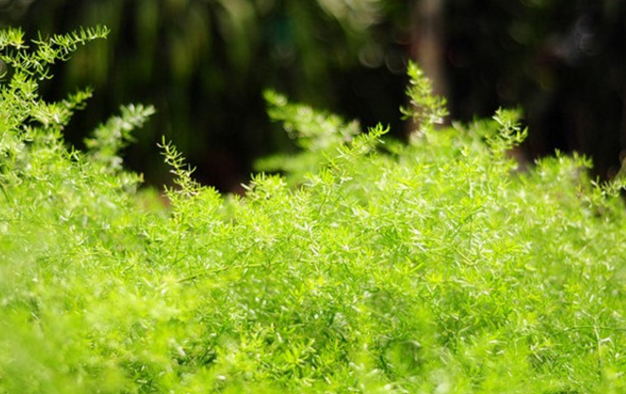
How to Grow Asparagus Fern and Key Precautions
1. Soil requirements for asparagus fern
It likes a warm, humid environment, likes sunlight, tolerates partial shade, and fears direct strong light. A loose, fertile, well-drained sandy loam is ideal. In the north, asparagus fern is usually repotted in mid-to-late April. When repotting, cut away some of the old roots and add a growing mix blended from 4 parts leaf mold, 4 parts garden soil, and 2 parts river sand.
2. How to water asparagus fern
In spring, water thoroughly once every 2 to 3 days. If the air is dry at this time, spray water on the plant every day and sprinkle water on the ground around the sunny side of the growing area; in summer, spray water every day, water once every 2 to 3 days, and increase air humidity. Asparagus fern has fleshy roots and fears waterlogging, so do not water too much at ordinary times; in summer, water thoroughly once a day.
3. How to fertilize asparagus fern
From May to September is its vigorous growth period, and it can be given decomposed cake fertilizer water once every 15 to 20 days. If indoor light is insufficient, it is best to place it outdoors for a period of care in spring and autumn; in winter, place it in a spot indoors with ample light, keep room temperature above 5°C, water once every 10 to 15 days, and spray and wash the branches and leaves once every 3 to 5 days.
4. How to propagate asparagus fern
Asparagus fern is mostly propagated by division, which can be done together with repotting in spring. The mother plant should be one that is more than 3 years old. When dividing, take the mother plant out of the pot and, according to the size of the clump, divide it into several pots, water thoroughly, and place in semi-shade for 10—15 days. The seeds mature at the end of December; after harvesting, soak them in water, rub off the fruit skin, and dry them in the sun. Sow in spring; indoor temperature should not be lower than 15°C, and they will germinate in about one month. When the seedlings are about 4—5 cm long, divide and plant them, with several plants per pot.
Where it can be placed
Asparagus fern, also called wu zhu, is a beautiful emerald-green plant with slender, dense, vivid green leaves that are very lovely. It is very suitable for placing indoors. If, when growing asparagus fern in a pot, you do not prune it and instead let it grow naturally, the main branches can extend at least about several meters, so it can make the home environment feel even fresher and more elegant.
When growing asparagus fern indoors, you can place it on a windowsill and let the branches and leaves extend freely along the windowsill, decorating the windowsill with fresh green. With fresh green on the windowsill, the whole home will feel a bit fresher.
When growing asparagus fern indoors, you can also grow it in a flowerpot and hang it on the wall in the living room or elsewhere in a wall-mounted way, letting the branches of the asparagus fern droop gently. It looks especially elegant and also has the beauty of a hanging plant.
The role and symbolic meaning of placing asparagus fern at home
Asparagus fern has dense branches and leaves, and its leaves look like pine needles, very pleasing to the eye. It symbolizes a flourishing career and prosperous and thriving wealth. Placing such a beautiful plant at home is a good wish for career and wealth.
Asparagus fern also has the effect of purifying the air. It can purify carbon dioxide from the air, and growing it indoors can also produce unexpected effects.
How to Grow Foxtail Asparagus Fern and Key Precautions
Chinese name: foxtail asparagus fernLatin scientific name: Asparagus densiflorasOther name: foxtail wu zhuKingdom: PlantaeDivision: AngiospermsClass: MonocotyledonsOrder: LilialesFamily: LiliaceaeGenus: AsparagusFoxtail asparagus fern gets its name because the plant looks like a fox's tail. It is a perennial herbaceous evergreen vine foliage plant in the lily family and asparagus genus, and a famous ornamental plant. The roots of asparagus fern are slightly fleshy, the stems are soft and clustered, and the elongated stems are climbing; the green leaves commonly seen are not actually true leaves, but leaf-like branches, while the true leaves have degenerated into scales, light brown, growing at the base of the leaf-like branches; the leaf-like branches are slender and clustered, spreading horizontally in a triangular feather-like form; each leaf-like branch has 6-13 branchlets, and the branchlets are 3-6 mm long and green.1. Basic information
Plant name: foxtail asparagus fern, foxtail wu zhuScientific name: Aspragus densiflorus cv.Myers
Latin name: Asparagus densifloras
Family: Liliaceae
Genus: Asparagus
2. Morphological characteristics
The plant is clustered, with stems growing upright, 30 cm to 60 cm tall, slightly curved but not drooping; the leaves are small and scale-like or stalk-like, growing in a radiating pattern in groups of 3 to 4, and both leaves and stems are bright green; the small flowers are white and lightly fragrant; the berries are small and round, initially green and bright red when mature, with a glossy surface and black seeds inside. Foxtail asparagus fern is often grown as a foliage flower and can be placed in halls, bedrooms, balconies, and other places, with quite a distinctive look.3. Growth habits
Foxtail asparagus fern is native to South Africa and likes a warm, humid environment. It can grow normally in both partial shade and full sunlight. It can be placed in a bright indoor spot for long-term viewing, and from April to October it can be placed outdoors for care. In summer, when temperatures are high, it should be properly shaded to prevent scorching by the blazing sun. The optimum growing temperature is 15°C to 25°C. During the growing period, it should be watered thoroughly. Because its root system is thick and well developed, with considerable nutrients and moisture stored inside, it has a certain drought resistance, and occasionally forgetting to water it will not have a major effect on plant growth. However, it cannot be short of water for a long time, otherwise the leaves will turn yellow and fall off, and air that is too dry is also an important cause of yellowing and leaf drop. Therefore, it is necessary to regularly spray water on the plant to keep the air humid and make the leaf color a pleasant emerald green.4. Cultivation techniques
Foxtail asparagus fern likes fertilizer, and during the growing season it should be given decomposed dilute liquid fertilizer once a week. In winter, it requires ample sunlight. When the minimum temperature is not lower than 12°C, it can be watered and fertilized normally so the plant continues to grow. If watering is restricted and fertilizing is stopped to let the plant go dormant, it can overwinter at 8°C to 10°C. Repot once every year in early spring. When repotting, cut off some of the tuberous roots and cut away from the base any stems with too many yellow leaves or that are too old, to encourage healthy and attractive new growth. The potting soil should be loose and fertile, with decomposed cake fertilizer mixed in as a base fertilizer. When planting, do not fill the pot too full with soil; leave more of the rim exposed, so that rapid root growth does not make the roots protrude above the pot surface and affect watering.Propagation of foxtail asparagus fern can be done by division together with repotting. It can also be propagated by sowing, and the seeds should be sown as soon as they are collected, otherwise the germination rate will be affected.
How to Grow Asparagus Fern and Key Precautions How to Grow Asparagus Fern and Key Precautions [Photos]
Asparagus fern, also known as yun pian song, ci tian dong, yun zhu, and so on, is a climbing plant whose plant can reach several meters tall. Because asparagus fern is a potted foliage plant, its ornamental value is very high. It can be placed in the living room, study, and other places for growing, and it can also purify the air. The root of asparagus fern is a medicinal material and has the function of moistening the lungs and stopping coughs for acute bronchitis. Today, let us look at what the growing methods and precautions for asparagus fern are.
Potting soil for growing asparagus fern
Asparagus fern likes to grow in loose, fertile, well-drained sandy loam rich in humus, so when growing it, you can use garden soil, leaf mold, compost soil, and sand mixed in a 4:2:2:1 ratio to prepare the growing medium. When growing it, you must change the soil and add fertilizer for asparagus fern regularly. If too much fertilizer is applied, it can easily burn the roots, so you should tip out the pot to remove the fertilizer, rinse the soil ball with clean water, and then replace it with fresh growing soil.
Watering methods for growing asparagus fern
Asparagus fern is a plant that cannot tolerate drought, but when watering, if you water too much, it can easily cause its roots to rot. If you water too little, it will cause its leaf tips to wither and turn yellow. So in the process of watering, you must water according to the weather and the dryness of the potting soil, and follow the rule of not watering when not dry, and watering thoroughly when you do water. Especially in hot, dry conditions, use water to spray the leaf surface to increase humidity and lower temperature; in winter, water less.
Fertilizing methods for growing asparagus fern
Asparagus fern does not have a very large demand for fertilizer, but it also cannot lack fertilizer. Because it is limited by being grown in a pot, during cultivation you should supplement nutrients in time to meet its growth needs. When fertilizing asparagus fern, you must follow the rule of frequent applications in small amounts, and you cannot apply concentrated fertilizer, otherwise it will cause yellow leaves. Generally, applying decomposed thin liquid fertilizer once a month is enough. During its growing period, apply a thin fertilizer containing nitrogen and phosphorus 1-2 times a month to encourage lush branches and leaves.
Light for growing asparagus fern
Asparagus fern cannot be exposed to strong light, especially in summer, when it should be placed in a cool, ventilated place for growing. Asparagus fern is also rather afraid of wind and rain, so during cultivation you should not only pay attention to good ventilation, but in suitable weather you can place it in a bright spot to receive sunlight. Because asparagus fern likes to grow in a clean environment with circulating air, when placing it, it must be placed in a clean, ventilated spot for growing.
Pruning methods for growing asparagus fern
During cultivation, in order to make the shape of asparagus fern look better, we can prune it appropriately. When the small leaf-like branches on its main branches grow in an unsatisfactory position or are missing for some reason, you can shorten and prune the main branch at an appropriate position to force the dormant buds there to sprout. You can also prune during its growing season, because pruning during the growing season generally makes it easy to produce new branches, but after pruning you should appropriately reduce the amount of watering, and absolutely must not let the potting soil become too wet, otherwise pruning can easily fail.
Precautions for growing asparagus fern
1. When watering asparagus fern, you cannot water too much or too little. Although asparagus fern likes moisture, it hates being too wet. If the potting soil is too wet and drainage is poor, the roots will rot. If you water too little or do not water, then because asparagus fern evaporates a lot and absorbs little, the leaves will scorch and the tips will drop.
2. Asparagus fern likes to grow in a clean and ventilated place. If it is harmed by harmful gases such as smoke dust, coal gas, and pesticides, its leaves will turn yellow, curl, and even die.
3. After pruning asparagus fern, reduce the amount of watering, and do not let its potting soil become too wet.
Summary: Asparagus fern is a plant with slender branches and leaves, upright and elegant, with sparse and dense emerald green growth and a free and easy posture. It is also a good accompanying plant for cut flowers, bouquets, and flower baskets. Whether used as an accompaniment or grown in a pot, it has very high ornamental value. The above is the introduction to how to grow asparagus fern and the key precautions brought to you by the editor. After reading the editor's introduction, I believe everyone has a fairly good understanding of it.