Physostegia Care Guide and Complete List of Common Varieties
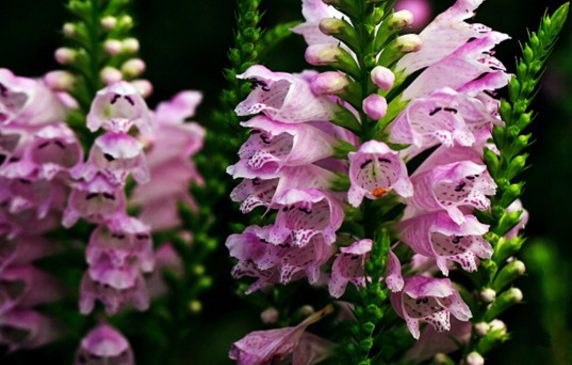
Physostegia, also called sesame flower, false dragonhead, and tiger-tail flower, comes in white, deep peach red, rose red, and snow blue, making it an excellent ornamental plant. It is widely distributed in East China. Today, let's take a look at Physostegia.
Physostegia Care Methods
1. Alternative Names of Physostegia
Physostegia is also called false dragonhead, obedient plant, shellflower, cotton boll flower, sesame flower, tiger-tail flower, and yipinxiang.
2. Growth Habits of Physostegia
Physostegia prefers a warm, sunny growing environment, and loose, fertile sandy soil is generally best. Physostegia is cold-tolerant, heat-tolerant, and tolerant of partial shade; it is fairly robust by nature and also has a strong tolerance for fertilizer.
Physostegia has a very strong ability to self-propagate. It can reproduce on its own, and can also be grown from seed or propagated by division and cuttings.
3. Flower Language of Physostegia
The flower language of Physostegia is a sense of accomplishment.
4. Care Methods
Soil for Physostegia:
Physostegia has low soil requirements and prefers loose, fertile, well-drained sandy soil. For ground planting, deep soil is required; for container growing, fertile, loose potting soil can be used.
Light for Physostegia:
Physostegia prefers a growing environment with ample light, so give it plenty of light during care. However, during high summer temperatures it should not be exposed to direct blazing sun; appropriate shading can be provided. Be careful not to keep it too shaded, as this will cause the plant to grow leggy and bloom poorly or sparsely.
Temperature for Physostegia:
Physostegia prefers a warm environment. The suitable growing temperature is around 18-28°C, and it is fairly cold-tolerant. During high summer temperatures, pay attention to cooling and moisture retention, misting the plant 1-2 times a day. After temperatures drop in autumn, place the pot at a south-facing, wind-sheltered window for care, keeping the soil merely moist. In winter, place Physostegia somewhere indoors with good light for care; especially in northern China, pay attention to cold protection and warmth, and the indoor temperature must not fall below 5°C.
Watering Physostegia:
Physostegia prefers a moist environment and is not drought-tolerant; dry summer weather will lead to poor growth. During the growing season, keep the soil moist and water more, providing fairly ample moisture; do not let the potting soil become too dry.
Pest and Disease Prevention for Physostegia:
Physostegia is prone to rhizome rot, leaf spot, and rust. If rhizome rot occurs, promptly pull up and burn the affected plants to prevent it from spreading downward. Other diseases can be controlled with 65% zineb wettable powder.
Fertilizing Physostegia:
Use decomposed compost as a base fertilizer. Apply nitrogen, phosphorus, and potassium once a month, with a slightly higher proportion of phosphorus and potassium fertilizer to promote flowering. Be careful to control the amount of fertilizer to prevent the plant from growing leggy. When the flower spikes are emerging, apply 1-2 additional rounds of phosphorus fertilizer or a specialized fertilizer.
Complete Variety List
Physostegia has many names and many varieties, and there are many cultivars in China.
1. Snow Crown
Plant height is 75-80 cm, and the flower color is white.
2. Pink Rose
Plant height is 90-120 cm, and the flower color is rose red.
3. Summer Snow
Plant height is 80 cm, and the flower color is white.
4. Flower Ball
Plant height is 90 cm, and the flower color is pink. It has green and white variegated leaves.
How to Grow Physostegia: Planting Methods and Precautions
Physostegia, just hearing the name makes many people wonder whether this is a very easygoing plant, and it attracts many people. Yet the flowers Physostegia produces are not easygoing at all; their shape closely resembles a person's mouth, and the flowers grow densely, with each small bloom standing in neat rows along the flower spike, extremely orderly. Many people have fallen for these beautiful flowers. Let's learn about its planting methods and some precautions together.
How to Grow Physostegia
1. Soil
It has low requirements for the growing medium, but grows best in well-drained, fertile sandy loam. For ground planting, choose a site with deep, fertile soil and ample sunlight; for container growing, fertile, loose potting soil is commonly used.
2. Temperature
The growing site needs good sunlight; in shaded spots the plant easily grows leggy and blooms poorly. During the growth period of new plants, be sure to provide ample sunlight and place the pot at a south-facing window. If light is insufficient for a long time, the branches and leaves will grow leggy and the internodes will become too long, affecting the plant's attractive shape.
3. Watering
For cut-flower cultivation, the spacing between plants is 30 cm. Spring to summer is the peak growing period, and the growing site should maintain sufficient humidity; never let it dry out, which would affect growth and flowering. During the growing season, keep the soil moist and supply fairly ample water; do not let the potting soil become excessively dry.
4. Fertilizing
When preparing the ground, mix in decomposed compost beforehand as a base fertilizer. After the plants are established, pinch out the growing tips once to encourage more branching. For topdressing, apply nitrogen, phosphorus, and potassium once a month, with a slightly higher proportion of phosphorus and potassium fertilizer, which can promote flowering. Fertilize once every half month, but control the amount of fertilizer to prevent the plant from growing leggy.
Physostegia Planting Methods and Precautions
I. Physostegia Planting Methods
1. Soil
Physostegia has low soil requirements and prefers loose, fertile, well-drained sandy soil. For ground planting, deep soil is required; for container growing, fertile, loose potting soil can be used.
2. Light
Physostegia prefers a growing environment with ample light, so give it plenty of light during care. However, during high summer temperatures it should not be exposed to direct blazing sun; appropriate shading can be provided. Be careful not to keep it too shaded, as this will cause the plant to grow leggy and bloom poorly or sparsely.
3. Watering
Physostegia prefers a moist environment and is not drought-tolerant; dry summer weather will lead to poor growth. During the growing season, keep the soil moist and water more, providing fairly ample moisture; do not let the potting soil become too dry.
4. Fertilizing
Use decomposed compost as a base fertilizer. Apply nitrogen, phosphorus, and potassium once a month, with a slightly higher proportion of phosphorus and potassium fertilizer to promote flowering. Be careful to control the amount of fertilizer to prevent the plant from growing leggy. When the flower spikes are emerging, apply 1-2 additional rounds of phosphorus fertilizer or a specialized fertilizer.
5. Temperature
Physostegia prefers a warm environment. The suitable growing temperature is around 18-28°C, and it is fairly cold-tolerant.
II. Precautions for Growing Physostegia
1. Pruning
Prune old plants once in winter or early spring, and plants over 3 years old should be replanted for renewal. For container growing, use a large pot, planting 2-3 plants per 8-inch pot; more potting soil helps the roots spread, and after 1-2 years the plants should be forcibly divided and repotted. Tall plants tend to lodge; for cut-flower cultivation, set up stakes when necessary or use nylon netting to support the branches.
2. Pest and Disease Control
Physostegia is often harmed by rhizome rot, leaf spot, and rust. If rhizome rot occurs, promptly pull up and burn the affected plants to prevent it from spreading.
How to Propagate Physostegia
I. Division Propagation
1. Timing
Division propagation is carried out before sprouting in spring. Spring and autumn are the most suitable seasons for division.
2. Selecting Plants
Generally, Physostegia plants around 3 years old are used for division.
3. Specific Method
Simply cut young plants or underground rhizomes from the mature plant and plant them separately. Alternatively, in autumn, cut strong new shoots and insert them into a well-drained sand bed, then transplant after they root.
II. Cutting Propagation
1. Timing
Cuttings can be taken throughout Physostegia's growing season, but are generally taken from April to May each year.
2. Selecting Plants
From April to May, take new shoots of about 10 cm that sprouted that year.
3. Specific Method
Insert the cuttings directly into the potting soil, 2-3 per pot. After inserting, pay attention to moisture retention; they will root in about 2 weeks. After new shoots appear, fertilize about once every 10 days. When the new shoots grow to about 10 cm, keep only 2 nodes and pinch off the top shoot to control plant height and encourage branching.
4. Cutting Care
During the growing season, provide ample sunlight, and provide appropriate shade in summer. Pay attention to moisture retention; when the weather is dry, mist the leaves to keep them moist. First; after the flowers fall, apply manure fertilizer twice to promote new shoot growth. In winter, move Physostegia to a wind-sheltered spot.
Complete Variety List of Physostegia
1. Snow Crown
Plant height is 75-80 cm, and the flower color is white.
2. Pink Rose
Plant height is 90-120 cm, and the flower color is rose red.
3. Summer Snow
Plant height is 80 cm, and the flower color is white.
4. Flower Ball
Plant height is 90 cm, and the flower color is pink. It has green and white variegated leaves.
Physostegia Picture Gallery: Flower Language and Symbolism
Doing as one pleases is the ideal state many people pursue in life. Being able to live as one pleases seems simple, but is in fact extremely difficult; what life offers us is often more constraints and confinement. Truly free-spirited people are actually few, yet there is a plant that people can call "as one pleases." Just how free and unrestrained is it?
Physostegia Flower Language and Symbolism
Its flower language is "emotion moves with the heart, the heart moves with feeling." It gives people an upright and elegant posture, robust by nature, yet makes people feel like a carefree and nimble sprite. When the wind blows, it sways freely along with it, graceful and varied, making people feel free and unrestrained; it seems to be dancing for itself.
So using "emotion moves with the heart, the heart moves with feeling" as its flower language is the most fitting choice.
Physostegia Varieties
1. Snow Crown
Plant height is 75-80 cm, and the flower color is white.
2. Pink Rose
Plant height is 90-120 cm, and the flower color is rose red.
3. Summer Snow
Plant height is 80 cm, and the flower color is white.
4. Flower Ball
Plant height is 90 cm, and the flower color is pink. It has green and white variegated leaves.
Physostegia Blooming Period
This plant blooms in summer. Its spike-like inflorescences gather into a panicle-like form, growing at the very top of the plant; the corolla is lip-shaped, and the lower flowers open first, gradually opening toward the top, with the flowers very densely packed. If we push its flowers to one side, they will not return to their original position, which is also the origin of its name.
The flowers come in many colors, including light purple, white, pink, and so on, and among the varieties there are also those with markings. The overall impression is fresh and elegant. It is very suitable for planting in courtyards or flower beds, and planting it in large drifts is also a good option.
Physostegia Care Methods
1. Soil for Physostegia
Physostegia has low soil requirements and prefers loose, fertile, well-drained sandy soil. For ground planting, deep soil is required; for container growing, fertile, loose potting soil can be used.
2. Light for Physostegia
Physostegia prefers a growing environment with ample light, so give it plenty of light during care. However, during high summer temperatures it should not be exposed to direct blazing sun; appropriate shading can be provided. Be careful not to keep it too shaded, as this will cause the plant to grow leggy and bloom poorly or sparsely.
3. Temperature for Physostegia
Physostegia prefers a warm environment. The suitable growing temperature is around 18-28°C, and it is fairly cold-tolerant. During high summer temperatures, pay attention to cooling and moisture retention, misting the plant 1-2 times a day. After temperatures drop in autumn, place the pot at a south-facing, wind-sheltered window for care, keeping the soil merely moist. In winter, place Physostegia somewhere indoors with good light for care; especially in northern China, pay attention to cold protection and warmth, and the indoor temperature must not fall below 5°C.
4. Watering Physostegia
Physostegia prefers a moist environment and is not drought-tolerant; dry summer weather will lead to poor growth. During the growing season, keep the soil moist and water more, providing fairly ample moisture; do not let the potting soil become too dry.
5. Pest and Disease Prevention for Physostegia
Physostegia is prone to rhizome rot, leaf spot, and rust. If rhizome rot occurs, promptly pull up and burn the affected plants to prevent it from spreading downward. Other diseases can be controlled with 65% zineb wettable powder.
6. Fertilizing Physostegia
Use decomposed compost as a base fertilizer. Apply nitrogen, phosphorus, and potassium once a month, with a slightly higher proportion of phosphorus and potassium fertilizer to promote flowering. Be careful to control the amount of fertilizer to prevent the plant from growing leggy. When the flower spikes are emerging, apply 1-2 additional rounds of phosphorus fertilizer or a specialized fertilizer.
Matching the name Physostegia is its flower language: "emotion moves with the heart, the heart moves with feeling." Perhaps Physostegia always keeps a dashing, upright, free and easy appearance that makes people deeply envious, hoping they too could sway in the wind like Physostegia, which is why it is called Physostegia!