A Detailed Guide to Propagating Duranta erecta by Cuttings and Its Benefits
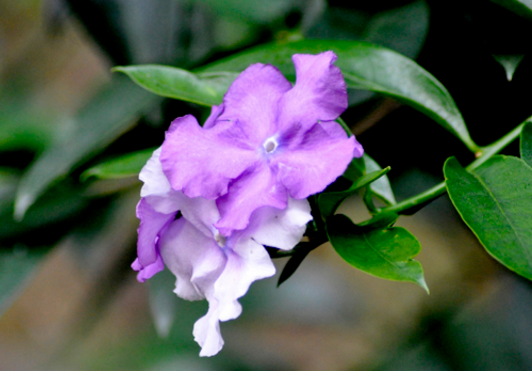
Having just one pot of Duranta erecta at home can feel a bit lonely! The two-child policy has already been relaxed, so why not put a few more plants and flowers on your balcony to keep each other company, and the flowers will grow healthier too. Don't you want to see the peculiar sight of two colors blooming on a single plant?
How to propagate Duranta erecta by cuttings
1. The cutting soil for Duranta erecta
Nutrient soil, river sand, peat soil and other materials are commonly used for rooting Duranta erecta cuttings. Because it is difficult to obtain ideal soil at home, it is recommended that you buy sterilized cutting substrate. For beginners at cutting propagation, this can increase the survival rate.
Ordinary coarse river sand can also be used, but it must be rinsed clean with water before use. Try not to use sea sand or soil from saline-alkali land, as it will affect the rooting of the branches.
2. Selecting branches of Duranta erecta
Generally, softwood branches are chosen for cuttings. In early spring or early autumn, when the plant grows vigorously, cut branches of the current year's growth to use as cuttings. When cutting the branches, note that the upper cut should be about 1 cm from the topmost leaf node, and the lower cut should be about 0.5 cm from the leaf below, not too close to the leaves and branches, so as not to affect later rooting and sprouting.
3. How to propagate Duranta erecta by cuttings
Before inserting the cuttings, wet the soil, then according to the number of branches, poke an equal number of small holes in the soil surface, place the branches into them, cover with soil, and press firm. Be careful not to break the branches that have been inserted into the soil during the process. Then water thoroughly and maintain a certain humidity; you can cover with plastic film to retain moisture.
4. After cutting Duranta erecta
After cutting, keep the temperature at 20-30°C. Below 20°C, rooting is rather difficult; above 30°C, the cut is prone to infection, and the higher the temperature, the greater the chance of rot. If low temperatures occur after cutting, take good measures to keep warm.
Mist promptly to retain moisture, 3-5 times a day, and appropriately increase the frequency on sunny days. For those covered with plastic film to retain moisture, uncover the plastic film every day to let in air.
Cuttings also cannot do without sunlight; sufficient sunlight is beneficial for the accumulation of nutrients. But the more sufficient the sunlight, the higher the temperature, so shade promptly, and gradually restore light after rooting.
What benefits does it have
1. The ornamental value of Duranta erecta
Duranta erecta has brilliantly colored flowers and a fragrant scent, with high ornamental value. Planting it in garden scenic areas works well, and it can also be grown as a potted plant for viewing. More importantly, Duranta erecta is easy to care for and propagate. Grown at home, it can usually be placed on a balcony, windowsill or corridor, where it serves a very good beautifying function.
2. The air-purifying effect of Duranta erecta
Duranta erecta is very suitable for growing at home. Although the flowers are small, they have a rich fragrance that adds a touch of scent to your room. In addition, the respiration of Duranta erecta can absorb carbon dioxide and other harmful gases from the air and release the oxygen the human body needs, thereby purifying the air. Although the purifying effect cannot be perceived by the eye, the body cannot lie.
3. The special characteristics of Duranta erecta
Duranta erecta is an evergreen flower, with a height between 50-100 cm. As a potted plant, its form can be kept at around 40 cm. The flowers are borne singly, one flower per branch. The corolla of Duranta erecta has a unique butterfly-like shape on a long tube. The flowering period is fairly long, opening between April and October, and a single flower stays open for about 5 days.
When Duranta erecta first opens, it is purple-blue, then slowly turns snow-blue, and finally becomes white. This gradual color change is also what makes Duranta erecta special.
After reading all this, the editor still feels that the most peculiar thing about this plant is its "face-changing."
How to grow Duranta erecta. What benefits does Duranta erecta have?
Nowadays people like to grow all kinds of plants at home, which can not only beautify the environment and cultivate the mind, but also play a unique role in home decoration. There are quite a few plants suitable for growing at home right now, and Duranta erecta is one of them. Duranta erecta is a precious variety. Just think, seeing two different colors of flowers on the same plant, isn't that strange? Of course, growing Duranta erecta is not easy either. So what exactly are the methods for growing Duranta erecta? What benefits does Duranta erecta have? Let's take a look together with the editor.
Methods for growing Duranta erecta:
When it comes to the methods for growing Duranta erecta, indoor plants in general all require special attention during cultivation to their soil, temperature, light, watering, fertilizing, pruning and so on. For specifics, let's look at the detailed introduction below:
1. Soil requirements:
Duranta erecta is generally cultivated in East China and North China, and is suited to slightly acidic soil with good drainage and air permeability.
2. Light and temperature requirements:
The suitable temperature for the growth of Duranta erecta is 20-30°C. At this temperature, the branches and leaves are lush and growth is vigorous. When the temperature drops to 12°C, it becomes dormant. It is not cold-tolerant, so in winter take care to move it indoors in time to avoid cold damage.
Duranta erecta likes a sunny, humid environment and avoids harsh sun exposure, so proper shading is needed in summer. With excessive exposure, the flowers and leaves easily curl. The daily light duration must not be less than 4 hours, which ensures abundant flowering.
3. Watering method:
Duranta erecta likes humidity and fears waterlogging. Watering should follow the principle of watering when dry and stopping when wet. Watering in summer requires attention: not only must the plant's growth needs be met, but the air must also be kept humid. Spray the leaves with clean water 2-3 times a day. In winter, keep the potting soil dry to prevent cold damage.
4. Fertilizing method:
During the growing period, water promptly with alum fertilizer water, which not only prevents the soil from becoming alkaline and avoids yellowing leaves, but also increases soil fertility and promotes plant growth. After the flowers of Duranta erecta fade, apply a thin cake fertilizer water once, then 10 days later apply a liquid fertilizer mainly of phosphorus and potassium, and along with watering spray a potassium dihydrogen phosphate solution on the leaves to promote flower bud differentiation.
5. Pruning:
In routine care, promptly cut off yellowing and withered leaves to avoid affecting the overall ornamental appearance. After the flowers fade, promptly cut off the spent flowers and cut back the branches by 1/3-1/2. At the end of autumn, cut off weak branches, inward-growing branches and diseased or pest-infested branches to ensure vigorous growth of Duranta erecta the following year.
The above is a brief introduction to the methods for growing Duranta erecta. It is believed that through the above introduction, everyone will have a further understanding and awareness of growing Duranta erecta. Of course, like other indoor plants, Duranta erecta also has some benefits of its own. So what exactly are the benefits of Duranta erecta? Let's take a look at the introduction below:
What benefits does Duranta erecta have:
1. The ornamental value of Duranta erecta:
Duranta erecta has brilliantly colored flowers and a fragrant scent, with high ornamental value. Planting it in garden scenic areas works well, and it can also be grown as a potted plant for viewing. More importantly, Duranta erecta is easy to care for and propagate. Grown at home, it can usually be placed on a balcony, windowsill or corridor, where it serves a very good beautifying function.
2. The air-purifying effect of Duranta erecta:
Duranta erecta is very suitable for growing at home. Although the flowers are small, they have a rich fragrance that adds a touch of scent to your room. In addition, the respiration of Duranta erecta can absorb carbon dioxide and other harmful gases from the air and release the oxygen the human body needs, thereby purifying the air. Although the purifying effect cannot be perceived by the eye, the body cannot lie.
3. The special characteristics of Duranta erecta:
Duranta erecta is an evergreen flower, with a height between 50-100 cm. As a potted plant, its form can be kept at around 40 cm. The flowers are borne singly, one flower per branch. The corolla of Duranta erecta has a unique butterfly-like shape on a long tube. The flowering period is fairly long, opening between April and October, and a single flower stays open for about 5 days. When Duranta erecta first opens, it is purple-blue, then slowly turns snow-blue, and finally becomes white. This gradual color change is also what makes Duranta erecta special.
How to propagate Duranta erecta by cuttings
The cutting soil for Duranta erecta
Nutrient soil, river sand, peat soil and other materials are commonly used for rooting Duranta erecta cuttings. Because it is difficult to obtain ideal soil at home, it is recommended that you buy sterilized cutting substrate. For beginners at cutting propagation, this can increase the survival rate.
Ordinary coarse river sand can also be used, but it must be rinsed clean with water before use. Try not to use sea sand or soil from saline-alkali land, as it will affect the rooting of the branches.
Selecting branches of Duranta erecta
Generally, softwood branches are chosen for cuttings. In early spring or early autumn, when the plant grows vigorously, cut branches of the current year's growth to use as cuttings. When cutting the branches, note that the upper cut should be about 1 cm from the topmost leaf node, and the lower cut should be about 0.5 cm from the leaf below, not too close to the leaves and branches, so as not to affect later rooting and sprouting.
How to propagate Duranta erecta by cuttings
Before inserting the cuttings, wet the soil, then according to the number of branches, poke an equal number of small holes in the soil surface, place the branches into them, cover with soil, and press firm. Be careful not to break the branches that have been inserted into the soil during the process. Then water thoroughly and maintain a certain humidity; you can cover with plastic film to retain moisture.
After cutting Duranta erecta
After cutting, keep the temperature at 20-30°C. Below 20°C, rooting is rather difficult; above 30°C, the cut is prone to infection, and the higher the temperature, the greater the chance of rot. If low temperatures occur after cutting, take good measures to keep warm.
Mist promptly to retain moisture, 3-5 times a day, and appropriately increase the frequency on sunny days. For those covered with plastic film to retain moisture, uncover the plastic film every day to let in air.
Cuttings also cannot do without sunlight; sufficient sunlight is beneficial for the accumulation of nutrients. But the more sufficient the sunlight, the higher the temperature, so shade promptly, and gradually restore light after rooting.