Why Are the Leaves of the Calathea Lancifolia Turning Yellow, and How to Fix It? Does It Bloom?
Calathea lancifolia can be used for landscaping, planted in courtyards or parks for ornamental viewing. It is also a very valuable plant. Do you know about it? If not, come and take a look at the beauty of Calathea lancifolia.
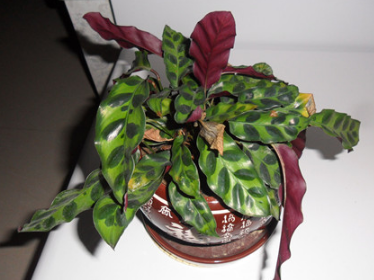
What to Do When Calathea Lancifolia Leaves Turn Yellow
Causes and Solutions for Yellowing Leaves in Calathea Lancifolia
1. Improper Lighting
Calathea lancifolia prefers shade. Too much light may cause the leaves to scorch, with yellow spots appearing on the leaf surface, causing the leaves to wither and turn yellow. In this case, move the Calathea lancifolia to a shaded spot indoors.
If there is too little light, the leaves cannot get enough light to form chlorophyll, causing the leaves to turn yellow and drop. In this case, supplement with appropriate sunlight.
2. Improper Watering
Calathea lancifolia has large leaves and evaporates water quickly. If the old leaves begin to scorch yellow and drop, and the leaf tips and edges wither and curl, it means the Calathea lancifolia is being watered too little. Water more, mist more, and keep the potting soil and surrounding air moist.
When the young leaves of Calathea lancifolia are dull and lusterless, and the stems and new shoots shrink, becoming thin and yellow-green, it may be caused by overwatering. In this case, place the Calathea lancifolia in a well-ventilated spot, dry out the soil ball, and reduce watering frequency, watering less but thoroughly.
3. Improper Fertilizing
During the cultivation of Calathea lancifolia, if the leaf tips of new leaves turn yellow-brown and the old leaves scorch yellow and drop, it is because the fertilizer concentration is too high, causing the plant to turn yellow. Stop fertilizing immediately. In severe cases, replace the potting soil and wash off the residual fertilizer from the roots and leaf surfaces of the Calathea lancifolia.
If you usually fertilize very little or not at all, the yellowing leaves may also be due to a lack of nutrients. Repot in time and apply thin fertilizer frequently.
Does Calathea Lancifolia Bloom?
Although Calathea lancifolia is a foliage plant, it can also bloom, and its flowers are elegant with a rich fragrance. Next, let's take a look at a blooming Calathea lancifolia.
Don't be fooled by the appearance of Calathea lancifolia and assume it is only a foliage plant. Calathea lancifolia can indeed bloom, it's just that blooming is relatively rare and uncommon. It can only bloom in a good environment with suitable temperature and humidity, combined with careful maintenance.
In northern regions, due to lower temperatures and drier conditions, Calathea lancifolia is not easy to bloom under such climate conditions, while the humid and warm environment of the south is relatively easier to encourage Calathea lancifolia to bloom.
1. Flower Shape and Color of Calathea Lancifolia
The flowers of Calathea lancifolia are pure white, with a fresh and elegant color. Each flower has 3-4 petals of varying lengths.
The flowers of Calathea lancifolia have a rich fragrance, somewhat like the scent of gardenia, and are harmless to the human body.
2. Precautions for Calathea Lancifolia Blooming
The ornamental value of Calathea lancifolia mainly lies in its leaves, and blooming consumes the plant's nutrients. Therefore, to avoid nutrient loss reducing the beauty of the leaves, you can appropriately remove the flower buds of Calathea lancifolia.
The flowers of Calathea lancifolia have a rich fragrance and are harmless to the human body. However, if there are people in the home who are allergic to floral scents, take care, and it is best to place the blooming Calathea lancifolia in a well-ventilated area or outdoors.
Calathea Lancifolia Propagation Methods and How to Care for Calathea Lancifolia
Calathea lancifolia is a perennial evergreen herbaceous plant, mainly grown for its foliage, and is usually potted indoors to beautify the home environment. Most plant propagation methods involve cuttings, which are not only simple to do but also have a relatively high survival rate. I wonder if Calathea lancifolia uses the same method? And what are the precautions?
Calathea Lancifolia Propagation Methods
I. Division Propagation
1. Timing of Division
Generally choose late spring to early summer when the temperature is around 20°C, though as long as the temperature and humidity are suitable, it can be done year-round.
2. Division Method
First, take the mother plant of Calathea lancifolia out of the pot, and use a sharp knife to cut apart the root blocks that have stems, leaves, or leaf buds.
After dividing, immediately pot and water, place in a shaded area, control temperature and humidity in the early stage, and once new roots grow, normal care can begin.
II. Cutting Propagation
1. Timing of Cuttings
Can be done when the temperature is not lower than 20°C.
2. Cutting Method
Generally use the tender tips at the top, with cuttings about 10-15 cm long, and depending on the leaf size, keep one-third or one-half of the leaves.
Cuttings can be treated with indoleacetic acid, indolebutyric acid, or ABT rooting powder, and the cuttings will root in about 30-50 days.
After treatment, insert the cuttings into the seedbed, with a plant-to-row spacing of 5×10 cm being optimal, and cover with a plastic film arched shed.
How to Care for Calathea Lancifolia
1. Temperature
Calathea lancifolia is native to tropical and subtropical regions and is heat-tolerant. It is suitable for growing in an environment of 20-30°C. In winter, the optimal growth temperature should be maintained at around 16-18°C.
2. Light
A shade-tolerant plant that prefers partial shade, it should be placed in a bright spot indoors. Avoid direct sunlight and exposure to strong sun to prevent leaf scorch. In summer, do a good job of shading and ventilation.
3. Watering
During the growing period of Calathea lancifolia, water thoroughly to keep the potting soil moist, while also taking care to avoid waterlogging in the soil, which can cause root rot and even plant death. Since Calathea lancifolia has large leaves and evaporates water quickly, maintain high air humidity around it. You can frequently mist the leaves to keep the air around the leaves moist, which helps the leaves grow and spread. Once the leaves are found to be curling and shrinking, it means the plant is in a state of water shortage.
4. Fertilizer
Follow the principle of "apply frequently and thinly." Stop fertilizing during the winter dormant period and during sustained high temperatures in summer.
What to Do When Calathea Lancifolia Leaves Turn Yellow
1. Improper Lighting
Calathea lancifolia prefers shade. Too much light may cause the leaves to scorch, with yellow spots appearing on the leaf surface, causing the leaves to wither and turn yellow. In this case, move the Calathea lancifolia to a shaded spot indoors.
If there is too little light, the leaves cannot get enough light to form chlorophyll, causing the leaves to turn yellow and drop. In this case, supplement with appropriate sunlight.
2. Improper Watering
Calathea lancifolia has large leaves and evaporates water quickly. If the old leaves begin to scorch yellow and drop, and the leaf tips and edges wither and curl, it means the Calathea lancifolia is being watered too little. Water more, mist more, and keep the potting soil and surrounding air moist.
When the young leaves of Calathea lancifolia are dull and lusterless, and the stems and new shoots shrink, becoming thin and yellow-green, it is very likely caused by overwatering. In this case, place the Calathea lancifolia in a well-ventilated spot, dry out the soil ball, and reduce watering frequency, watering less but thoroughly.
3. Improper Fertilizing
During the cultivation of Calathea lancifolia, if the leaf tips of new leaves turn yellow-brown and the old leaves scorch yellow and drop, it is because the fertilizer concentration is too high, causing the plant to turn yellow. Stop fertilizing immediately. In severe cases, replace the potting soil and wash off the residual fertilizer from the roots and leaf surfaces of the Calathea lancifolia.
If you usually fertilize very little or not at all, the yellowing leaves may also be due to a lack of nutrients. Repot in time and apply thin fertilizer frequently.
Does Calathea Lancifolia Bloom?
Don't be fooled by the appearance of Calathea lancifolia and assume it is only a foliage plant. Calathea lancifolia can indeed bloom, it's just that blooming is relatively rare and uncommon. It can only bloom in a good environment with suitable temperature and humidity, combined with careful maintenance.
In northern regions, due to lower temperatures and drier conditions, Calathea lancifolia is not easy to bloom under such climate conditions, while the humid and warm environment of the south is relatively easier to encourage Calathea lancifolia to bloom.
That's all for the propagation methods and care tips for Calathea lancifolia. We hope it helps everyone. Although many plants are usually propagated by cuttings, for Calathea lancifolia, the editor still recommends division propagation, because the survival rate of cuttings is far lower than that of division.
Why Do Potted Plants Frequently Develop Yellow Leaves? 7 Common Mistakes in Plant Care
Flower and Bonsai Network introduction: Today, Flower and Bonsai Network will introduce an article about why potted plants frequently develop yellow leaves and the 7 common mistakes in plant care. Flower lovers who are interested, come and take a look.
If you are the kind of friend who gets yellow leaves on every potted plant you grow, then you definitely need to reflect on yourself, and also exchange plant care experience with experienced growers to see where you went wrong. Correcting it in time can still save many plants.
1. Overwatering Out of Restlessness
Some friends' plants always have wet potting soil. Except for plants like copper grass and bowl lotus that like to grow soaking in water, other green plants in such an environment easily develop yellow leaves, and over time, root rot.
The first symptom is yellowing of the tender leaves at the top, along with water-soaked patterns. This means the roots are waterlogged, and you need to control watering and dry out the potting soil in time.
2. Frequently Forgetting to Water
Like the Calathea lancifolia below, it is originally a plant that loves warm and humid conditions. If you often forget to water it, its leaves will become dry and yellow, the leaf edges will turn brown, and the leaves will not only be dry but also somewhat wilted. This is a sign of frequently forgetting to water.
Besides watering, also note that each watering should be thorough, until water drips from the bottom of the pot. Watering thoroughly when the potting soil is dry is a very common technique.
3. The Importance of Reasonable Fertilizing
If plants are fertilized improperly, they will not grow well. If you often forget to fertilize, the leaves easily become pale yellow, the newly grown leaves are very tender and basically difficult to grow strong, and the plant will certainly not bloom.
At this time, you need to supplement nutrients. Appropriate nutrients can make the plant's branches and leaves grow thicker and stronger. Only with sufficient nutrients in the soil can the plant thrive and be encouraged to bloom.
4. What to Do About Overfertilizing?
If too much fertilizer is applied, water with clear water to dilute the fertilizer concentration, otherwise it will burn the plant's roots.
What are the symptoms of overfertilizing? Like the dumb cane below, when the fertilizer concentration is too high, the leaves become uneven and bumpy, the newly grown leaves are especially thick and fleshy, and the old leaves suddenly turn yellow.
5. What to Do When the Soil Is Too Alkaline?
Most flowering plants prefer slightly acidic soil. If the soil is watered frequently, it easily becomes alkaline, and the plant's growth state will change, showing up as yellowing leaves, with the leaves easily turning yellow.
At this time, what is most needed is to improve the soil's pH. You can buy some ferrous sulfate at a flower shop, dilute it with water, and water with it. This is a relatively effective method.
7. Appropriate Light
Plants need appropriate light to grow better. Proper photosynthesis not only increases the plant's resistance but also encourages blooming.
Like the Christmas cactus below, it needs about 3~8 hours of scattered light each day, making it easier for it to develop flower buds. If there is no light at all, even if it has flower buds, they will quickly drop off.
Before caring for a plant, of course you should first understand its sunlight requirements. If you don't know, you can ask fellow plant lovers. After that, care will become very simple. If you only know how to bury your head in plant care without communicating, it will be hard to grow beautiful plants.