Monkey Face Orchid (Dracula simia) Growing Methods and Main Value
The Monkey Face Orchid, also called the monkey-faced orchid, is another masterpiece of nature's uncanny workmanship. It not only resembles our senior brother Sun Wukong, but also has a faint floral fragrance, making people really want to get a pot and admire it every day!
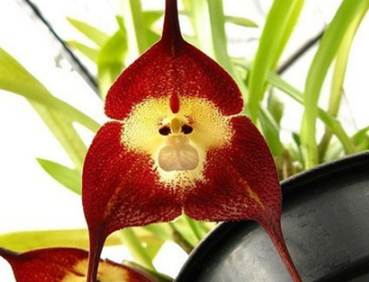
Monkey Face Orchid Growing Methods
The Monkey Face Orchid (Dracula simia) is named for its petals and sepals, whose shape closely resembles a monkey. It is mainly distributed in Ecuador and Colombia.
Monkey Face Orchid growing methods:
1. Soil
The Monkey Face Orchid prefers a slightly acidic substrate that is loose, breathable and well-draining, able to keep the roots moist without waterlogging. Generally, an orchid cultivation substrate can be used.
2. Water and fertilizer management
It does not require much fertilizer or water, and is also afraid of indiscriminate fertilizing, concentrated fertilizer and one-sided application of nitrogen, phosphorus or potassium fertilizer. It requires following the fertilizing (watering) principle of “light fertilizer applied frequently, small amounts with more applications, complete nutrition”.
3. Temperature and humidity
Temperature: The Monkey Face Orchid likes a cool climate and fears intense heat, making summer difficult to get through; it is not tolerant of frost and cold, and when the temperature drops below 10 °C it enters dormancy. The most suitable growing temperature is 15-28°C.
Humidity: The Monkey Face Orchid likes a relatively dry air environment; if rainy days last too long, it is susceptible to pathogen infection. It fears rain, and the leaves should be kept dry at night. The most suitable relative air humidity is 40-65%.
4. Light conditions
In the three seasons of late autumn, winter and early spring, since the temperature is not very high, it should be given direct sunlight to help it carry out photosynthesis and form flower buds, bloom and set seed. If high-temperature weather occurs or in summer, about 50% of the sunlight needs to be shaded for it.
If it is kept indoors for ornamental cultivation after flowering, it should be placed near a southeast-facing door or window, so as to prolong the flowering period and increase the number of flowers as much as possible.
5. Propagation methods
The Monkey Face Orchid can be propagated by methods such as sowing and division.
Notes on keeping the Monkey Face Orchid at home:
1. Care of the Monkey Face Orchid during the flowering period
The flower of the Monkey Face Orchid is the origin of its name, so during the flowering period you must take good care of the monkey's face! During the flowering period, watering should not be excessive, to prevent root rot, and do not water the leaves and petals, to prevent the flower shape from being damaged.
2. Common pests and diseases of the Monkey Face Orchid
There are quite a few common diseases of the Monkey Face Orchid: wilt disease, anthracnose, southern blight, leaf blight, tiller rot, root rot, etc.,
Common pests of the Monkey Face Orchid: scale insects, aphids, snails and slugs, etc.
Main value of the Monkey Face Orchid
1. Main value of the Monkey Face Orchid: ornamental
The Monkey Face Orchid is a small epiphytic orchid with short creeping stems, 30-40 cm tall, with thick, hollow stems. The leaves are opposite, broadly ovate. Roots form at the nodes where it lies on the ground. Broadly ovate, length and width nearly equal, slightly narrower in the upper part. Leaves obovate-lanceolate.
Sparse raceme, flowers opposite within the leaf axils, funnel-shaped, yellow, usually with purplish-red blotches or spots; the pedicel grows from the base, the sepals and petals combine into three lobes, with the lip in the center. Seeds are tiny. It blooms in April-May. Often grown as a 1-2 year crop.
The peculiar appearance of the Monkey Face Orchid is well known to the vast number of flower lovers, and this orchid can bloom in any season, and the scent it gives off is similar to that of a ripe orange. Besides the monkey face, this orchid has two other strange features, namely two long spines and two long sepals. So it has extremely high ornamental value.
At present, the cultivation of the Monkey Face Orchid in China is still relatively rare, because it has relatively high environmental requirements, with high demands for temperature and humidity control. If there is no sunroom at home and no temperature and humidity control equipment, it is very difficult to grow our senior brother well. Although senior brother's ornamental value is extremely high, old pig here is simply too lazy!
2. Main value of the Monkey Face Orchid: garden use
The Monkey Face Orchid usually has purplish-red blotches or spots, which are very beautiful, and can be used for potted plants and for arranging flower beds. However, this monkey-faced orchid is very rare; those that can be used to arrange flower beds and flower borders are all very exquisite estates. In some small gardens in Japan, carefully cultivated lovely senior brothers can be seen.
3. Main value of the Monkey Face Orchid: no orchid seen but orchid fragrance smelled
Friends who like orchids are all attracted by both the noble character and the fresh, elegant form of orchids. At night, lying quietly in bed, listening to the breeze brushing past the screen window, stirring a corner of the curtain so it flutters up slightly and sends in a faint, delicate fragrance, is truly the most beautiful experience.
The fragrance of the Monkey Face Orchid is different from that of other orchid varieties; what it gives off is the scent of ripe oranges, making people feel as if they are in an orange grove, enjoying the fruity fragrance and enjoying the elegance.
How to grow the Monkey Face Orchid: growing methods for the Monkey Face Orchid
The Monkey Face Orchid mainly grows in the cloud forests of southeastern Ecuador and Peru, and is also cultivated artificially. Because it has a monkey face, it is vividly called the "monkey-faced orchid". This flower can bloom in any season, and the scent it gives off is similar to that of a ripe orange. It has two strange features, namely two long spines and two long sepals. So how do you grow the Monkey Face Orchid? Below is an introduction to the growing methods for the Monkey Face Orchid!
Growth habits of the Monkey Face Orchid
The Monkey Face Orchid requires a cool growing environment, fears intense heat, has difficulty getting through summer, and is not tolerant of frost and cold either. 10-25°C is the suitable cultivation temperature. In the warmer regions of the south, it can be placed outdoors in semi-shade all year round or cultivated in plastic greenhouses. In the Yangtze River basin or regions to the north, it should be cultivated in a moderate-temperature or high-temperature greenhouse. In the three seasons of late autumn, winter and early spring, the temperature is not very high, so give it direct sunlight to help the plant form flower buds, bloom and set seed. If high-temperature weather occurs or in summer, humidity should be increased and a shade net should be used to lower the temperature; when the temperature is below 10°C, it should be kept warm and heated.
Propagation methods of the Monkey Face Orchid
1. Division: The Monkey Face Orchid is generally divided before new shoots sprout in early spring. First take the mother plant out of the pot, remove excess substrate, separate the tangled root system as much as possible, and cut it open from the base of the stem with a sharp knife. Each new plant should keep two or more shoots and carry a certain root system, and use a writing brush dipped in sulfur powder or carbendazim powder to apply to the wound, to prevent the wound from being infected by pathogens. After division, the new plants can bloom in the same year.
2. Sowing: The Monkey Face Orchid can self-pollinate, but the seeds scatter easily, so they should be harvested in batches at the right time. Because monkey face orchid seeds are tiny, greenhouse cultivation usually sows in autumn, using flat trays or plug trays for seedlings; the seeds do not need to be covered with soil, and after sowing they should receive sufficient light. Generally, seedlings emerge in about 25 days. During the seedling stage, do not water too frequently; just keep the substrate moist. At the same time, spray a fungicide once a week. When 2-3 true leaves have grown, transplant once; when the seedlings are more than 10 cm tall, plant them in pots. Seed-grown plants can bloom in 1-2 years.
Growing methods for the Monkey Face Orchid
1. Substrate: The Monkey Face Orchid prefers a slightly acidic substrate that is loose, breathable and well-draining, able to keep the roots moist without waterlogging. Generally, an orchid cultivation substrate can be used. When potting small seedlings, first place a 2-3 cm thick layer of coarse-grained substrate or ceramsite at the bottom of the pot as a drainage layer, sprinkle some Osmocote granular controlled-release fertilizer on it as a base fertilizer, applying 2-3 grams per pot, and cover with a layer of substrate about 1-2 cm thick, then place the plant in, so as to separate the fertilizer from the root system and avoid burning the roots.
2. Water: The native environment of the Monkey Face Orchid is relatively dry, and if rainy days last too long it is easily infected by pathogens. Therefore, during the growing period the relative humidity should preferably be kept between 50-75%. When the temperature is around 20°C, maintaining the indoor natural environment is enough. When the summer temperature reaches above 25°C, carry out artificial humidification, generally using fans and cooling pads or a high-pressure misting system, but avoid spraying water on the leaf surface. When humidity is too high, ventilate more, otherwise pests and diseases are likely to occur. The water needed by the monkey face orchid generally depends on the substrate used; if water moss is used, water less, and when the substrate is 70% dry, water promptly.
3. Fertilizer: The Monkey Face Orchid needs relatively little fertilizer; generally the fertilizer concentration is a 3000-fold solution, and during the growing season from May to October, fertilize once every two weeks. It is best to use liquid fertilizer to water the root zone and spray the leaf surface. During the growing period, the monkey face orchid mainly uses nitrogen fertilizer and balanced fertilizer, commonly a mixed fertilizer with N:P:K=30:10:10 or 20:20:20. During the flowering period, a mixed fertilizer with N:P:K=10:30:10 is commonly used. Fertilizing is best done in the evening, then water once with clean water early the next morning. At the same time, during the flower bud stage, spray the leaves once a week with orchid-specific flowering fertilizer, Huabao No. 3, monopotassium phosphate and other phosphorus-potassium fertilizers, to make the flower spikes thicker and the flowers more brilliant.
How to grow the Monkey Face Orchid? Growing methods for the Monkey Face Orchid
The Monkey Face Orchid, also called the monkey-faced orchid, is named for its peculiar flower shape that resembles a monkey face. It originally mainly grew in the cloud forests of southeastern Ecuador and Peru, but since artificial cultivation succeeded, it has become a choice for decorating and greening the home, very suitable for indoor positions such as in front of windows and on balcony walls. So, how should the Monkey Face Orchid be grown? Let's take a look.
Image: Monkey Face Orchid
I. Growth habits
The Monkey Face Orchid requires a cool growing environment, fears intense heat, has difficulty getting through summer, and is not tolerant of frost and cold either. 10-25°C is the suitable cultivation temperature. In the warmer regions of the south, it can be placed outdoors in semi-shade all year round or cultivated in plastic greenhouses. In the Yangtze River basin or regions to the north, it should be cultivated in a moderate-temperature or high-temperature greenhouse. In the three seasons of late autumn, winter and early spring, the temperature is not very high, so give it direct sunlight to help the plant form flower buds, bloom and set seed. If high-temperature weather occurs or in summer, humidity should be increased and a shade net should be used to lower the temperature; when the temperature is below 10°C, it should be kept warm and heated.
II. Growing methods
1. Substrate:The Monkey Face Orchid prefers a slightly acidic substrate that is loose, breathable and well-draining, able to keep the roots moist without waterlogging. Generally, an orchid cultivation substrate can be used. When potting small seedlings, first place a 2-3 cm thick layer of coarse-grained substrate or ceramsite at the bottom of the pot as a drainage layer, sprinkle some Osmocote granular controlled-release fertilizer on it as a base fertilizer, applying 2-3 grams per pot, and cover with a layer of substrate about 1-2 cm thick, then place the plant in, so as to separate the fertilizer from the root system and avoid burning the roots.
2. Water:The native environment of the Monkey Face Orchid is relatively dry, and if rainy days last too long it is easily infected by pathogens. Therefore, during the growing period the relative humidity should preferably be kept between 50-75%. When the temperature is around 20°C, maintaining the indoor natural environment is enough. When the summer temperature reaches above 25°C, carry out artificial humidification, generally using fans and cooling pads or a high-pressure misting system, but avoid spraying water on the leaf surface. When humidity is too high, ventilate more, otherwise pests and diseases are likely to occur. The water needed by the monkey face orchid generally depends on the substrate used; if water moss is used, water less, and when the substrate is 70% dry, water promptly.
3. Fertilizer:The Monkey Face Orchid needs relatively little fertilizer; generally the fertilizer concentration is a 3000-fold solution, and during the growing season from May to October, fertilize once every two weeks. It is best to use liquid fertilizer to water the root zone and spray the leaf surface. During the growing period, the monkey face orchid mainly uses nitrogen fertilizer and balanced fertilizer, commonly a mixed fertilizer with N:P:K=30:10:10 or 20:20:20. During the flowering period, a mixed fertilizer with N:P:K=10:30:10 is commonly used. Fertilizing is best done in the evening, then water once with clean water early the next morning. At the same time, during the flower bud stage, spray the leaves once a week with orchid-specific flowering fertilizer, Huabao No. 3, monopotassium phosphate and other phosphorus-potassium fertilizers, to make the flower spikes thicker and the flowers more brilliant.
Image: Monkey Face Orchid
III. Propagation methods
1. Division:The Monkey Face Orchid is generally divided before new shoots sprout in early spring. First take the mother plant out of the pot, remove excess substrate, separate the tangled root system as much as possible, and cut it open from the base of the stem with a sharp knife. Each new plant should keep two or more shoots and carry a certain root system, and use a writing brush dipped in sulfur powder or carbendazim powder to apply to the wound, to prevent the wound from being infected by pathogens. After division, the new plants can bloom in the same year.
2. Sowing:The Monkey Face Orchid can self-pollinate, but the seeds scatter easily, so they should be harvested in batches at the right time. Because monkey face orchid seeds are tiny, greenhouse cultivation usually sows in autumn, using flat trays or plug trays for seedlings; the seeds do not need to be covered with soil, and after sowing they should receive sufficient light. Generally, seedlings emerge in about 25 days. During the seedling stage, do not water too frequently; just keep the substrate moist. At the same time, spray a fungicide once a week. When 2-3 true leaves have grown, transplant once; when the seedlings are more than 10 cm tall, plant them in pots. Seed-grown plants can bloom in 1-2 years.
The above is an introduction to the growing methods for the Monkey Face Orchid. I hope it can be helpful to everyone!