Propagation, Cultivation and Care of Golden Bullet (Diospyros armata) Bonsai, with a Detailed Guide to Rare Fruiting Varieties
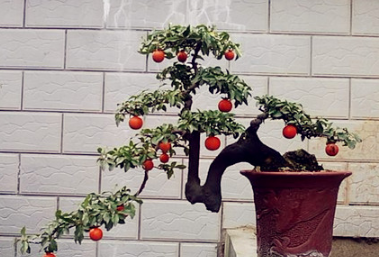
The Golden Bullet is a highly auspicious fruiting plant. Especially from New Year's Day to the Spring Festival each year, the fruits of the Golden Bullet turn from green to red among the green leaves, with red and green setting each other off, iron-hard trunks and gnarled branches full of life. So now let's follow the editor's footsteps and get to know the Golden Bullet!
1. Origins and Variety Differences of the Golden Bullet
The Golden Bullet is distributed and cultivated in East China, South China and Central China. Those currently on the market and exhibited are mainly Golden Bullets from Sichuan and Hubei, but the Golden Bullets from the two places differ.
Sichuan Golden Bullets have small leaves and abundant fruit; as long as they have reached the cultivation age, even very small trunks (miniature and micro bonsai) can bear fruit in a pot.
Hubei Golden Bullets are divided into three types: large-leaf, medium-leaf and small-leaf; large-leaf bears small fruit, medium-leaf bears large fruit, and small-leaf bears medium fruit. Some small trunks fail to flower and fruit even after many years of cultivation. The most distinctive feature of Hubei Golden Bullets is that they do not drop their leaves in winter.
2. How to Identify Male and Female Plants of the Golden Bullet
Because the Golden Bullet is dioecious, potted Golden Bullets fall into two types: those that bear fruit and those that do not.
Analysis of tree form, trunk bark color, leaf shape, leaf color and leaf veins cannot accurately determine the sex of a stump; only by observing the flowers of the Golden Bullet can male and female be accurately distinguished.
A male plant bears more than two flowers beneath each leaf bud; the flowers look like small lanterns, the flower base has no claws, and when the flower opens the male stamens and pollen are visible.
A female plant bears only one to two flowers beneath each leaf bud; they are larger than male flowers, with four leafy claws wrapping the flower center in a triangular shape. After the flower opens, the claws spread out like a persimmon flower, and young fruit can be seen inside the flower.
3. Propagation, Cultivation and Care of the Golden Bullet
Seed propagation:
After the 15th day of the first lunar month, pick the ripe fruits, take out the seeds, wash them clean and dry them.
In early April, soak them in hot water at about 30°C for 48 hours, then take them out and place them in a container that can drain water, cover with double-layer gauze, and water the seeds once a day with clean water just like growing bean sprouts, until the seeds split open and germinate; then sow them in a prepared seedbed.
After routine management, three years later the seedling plants can be used to make small bonsai.
Cutting propagation:
Cuttings taken from female plants, whether new growth of the current year or old branches, can all root successfully. The key to successful rooting is paying attention to the season, that is, mid-April each year.
Secondly, the cutting bed environment must be kept moist and the cuttings fresh. If conditions permit, the cutting bed can be placed in full sun, misted during the day and left alone at night.
If conditions do not permit, the cutting bed can be placed in a bright, ventilated spot with half shade and half sun; misting four times a day with a sprayer can ensure the survival of Golden Bullet cuttings. Small bonsai made from cuttings can bear fruit after three years.
4. Digging Old Stumps from the Wild
This can be done from November of the previous year to April of the following year.
On the premise of protecting the natural ecological environment, professionals may go up the mountains to dig in a planned way.
Freshly collected old stumps should first be soaked in clean water for two hours, then buried about 1/2 deep in sandy soil, watered thoroughly to settle the roots; afterward, as long as the environment is kept moist, the branches can grow to one meter in the same year. In March of the following year they can be dug up, potted, pruned and shaped, and in three to four years they can become a basically formed stump bonsai.
5. Routine Maintenance and Care
For shaping the Golden Bullet, metal wire can be used to set the form of the trunk and main branches. In later management, pruning is the main method and tying is supplementary.
For potting, a mix of river sand, leaf mold and loess in a 4:4:2 ratio can be used. After planting, water thoroughly once and keep in a shaded place for half a month, after which normal management can resume.
After new buds emerge, apply decomposed liquid fertilizer once a month, with a fertilizer-to-water ratio of 1:10. Apply more fertilizer in spring and autumn, less in summer, and none in winter.
Watering should keep the potting soil on the moist side; in summer, water thoroughly every evening. In spring, autumn and winter, do not water unless the potting soil is dry, and when you do water, water thoroughly.
6. Fruit-Bearing Cultivation
Because the Golden Bullet is dioecious, during its flowering period you should try to ensure that a male plant is flowering near the female plant, so as to allow natural pollination and increase the fruit-setting rate.
If no male plant is flowering near the female plant, manual pollination can be carried out. When the female flowers fall, the fruit is already attached to the flower base; at this time, spray 1:800 potassium dihydrogen phosphate twice at half-month intervals to increase the fruit-setting rate.
In the ninth lunar month, similarly spray 1:600 urea water twice; this can make the fruit large and glossy.
Golden Bullets cultivated and managed by this method have lush branches and leaves and branches full of red fruit from October of the previous year to February of the following year, giving people a feeling of harvest, joy, peace and beauty.
Rare Fruiting Golden Bullet Bonsai
The Golden Bullet, scientific name Diospyros armata, also known as Pinglan, Thorn Persimmon and Pinglan Flower, is a semi-evergreen or evergreen shrub of the genus Diospyros in the family Ebenaceae. The stems of the Golden Bullet are sturdy and upright, naturally gnarled, and iron in color, making it suitable for making stump bonsai. The Golden Bullet blooms in April with pale yellow flowers shaped like bottles and fragrant as orchids, hence the name "Pinglan Flower"; after flowering it sets fruit in May, and after October the green fruit turns orange-red or orange-yellow, shaped like a pellet, hence the name "Golden Bullet". The fruit persists into the following spring without falling; the leaves are dark green, leathery and glossy. It is an ornamental flower and fruit plant beautiful in fruit, flower and leaf alike. The stump bonsai of the Golden Bullet has very high economic value.
I. Origins and Variety Differences of the Golden Bullet
The Golden Bullet is distributed and cultivated in East China, South China and Central China. Those currently on the market and exhibited are mainly Golden Bullets from Sichuan and Hubei, but the Golden Bullets from the two places differ. Sichuan Golden Bullets have small leaves and abundant fruit; as long as they have reached the cultivation age, even very small trunks (miniature and micro bonsai) can bear fruit in a pot. Hubei Golden Bullets are divided into three types: large-leaf, medium-leaf and small-leaf; large-leaf bears small fruit, medium-leaf bears large fruit, and small-leaf bears medium fruit. Some small trunks fail to flower and fruit even after many years of cultivation. The most distinctive feature of Hubei Golden Bullets is that they do not drop their leaves in winter. From New Year's Day to the Spring Festival each year, the fruits of the Golden Bullet turn from green to red among the green leaves, with red and green setting each other off, iron-hard trunks and gnarled branches full of life.
II. How to Identify Male and Female Plants of the Golden Bullet
Because the Golden Bullet is dioecious, potted Golden Bullets fall into two types: those that bear fruit and those that do not. Through years of observation and study, the author found that analysis of tree form, trunk bark color, leaf shape, leaf color and leaf veins cannot accurately determine the sex of a stump; only by observing the flowers of the Golden Bullet can male and female be accurately distinguished. A male plant bears more than two flowers beneath each leaf bud; the flowers look like small lanterns, the flower base has no claws, and when the flower opens the male stamens and pollen are visible. A female plant bears only one to two flowers beneath each leaf bud; they are larger than male flowers, with four leafy claws wrapping the flower center in a triangular shape. After the flower opens, the claws spread out like a persimmon flower, and young fruit can be seen inside the flower.
III. Propagation, Cultivation and Care of the Golden Bullet
1. Seed propagation: After the 15th day of the first lunar month, pick the ripe fruits, take out the seeds, wash them clean and dry them. In early April, soak them in hot water at about 30°C for 48 hours, then take them out and place them in a container that can drain water, cover with double-layer gauze, and water the seeds once a day with clean water just like growing bean sprouts, until the seeds split open and germinate; then sow them in a prepared seedbed. After routine management, three years later the seedling plants can be used to make small bonsai.
2. Cuttings taken from female plants, whether new growth of the current year or old branches, can all root successfully. The key to successful rooting is paying attention to the season, that is, mid-April each year. Secondly, the cutting bed environment must be kept moist and the cuttings fresh. If conditions permit, the cutting bed can be placed in full sun, misted during the day and left alone at night. If conditions do not permit, the cutting bed can be placed in a bright, ventilated spot with half shade and half sun; misting four times a day with a sprayer can ensure the survival of Golden Bullet cuttings. Small bonsai made from cuttings can bear fruit after three years.
3. Digging old stumps from the wild: This can be done from November of the previous year to April of the following year. On the premise of protecting the natural ecological environment, professionals may go up the mountains to dig in a planned way. Freshly collected old stumps should first be soaked in clean water for two hours, then buried about 1/2 deep in sandy soil, watered thoroughly to settle the roots; afterward, as long as the environment is kept moist, the branches can grow to one meter in the same year. In March of the following year they can be dug up, potted, pruned and shaped, and in three to four years they can become a basically formed stump bonsai.
4. Routine maintenance and care. For shaping the Golden Bullet, metal wire can be used to set the form of the trunk and main branches. In later management, pruning is the main method and tying is supplementary. For potting, a mix of river sand, leaf mold and loess in a 4:4:2 ratio can be used. After planting, water thoroughly once and keep in a shaded place for half a month, after which normal management can resume. After new buds emerge, apply decomposed liquid fertilizer once a month, with a fertilizer-to-water ratio of 1:10. Apply more fertilizer in spring and autumn, less in summer, and none in winter. Watering should keep the potting soil on the moist side; in summer, water thoroughly every evening. In spring, autumn and winter, do not water unless the potting soil is dry, and when you do water, water thoroughly.
5. Fruit-bearing cultivation: Because the Golden Bullet is dioecious, during its flowering period you should try to ensure that a male plant is flowering near the female plant, so as to allow natural pollination and increase the fruit-setting rate. If no male plant is flowering near the female plant, manual pollination can be carried out. When the female flowers fall, the fruit is already attached to the flower base; at this time, spray 1:800 potassium dihydrogen phosphate twice at half-month intervals to increase the fruit-setting rate. In the ninth lunar month, similarly spray 1:600 urea water twice; this can make the fruit large and glossy. Golden Bullets cultivated and managed by this method have lush branches and leaves and branches full of red fruit from October of the previous year to February of the following year, giving people a feeling of harvest, joy, peace and beauty.
Responsible Editor: Yuhuagu