Is Dracaena Poisonous? Feasibility of Keeping It at Home and Analysis of Why the Leaves Turn Yellow
Dracaena, also called the bleeding tree, the holy herb for blood activation, and the longevity plant. It is the precious Yunnan red medicine——dragon's blood, also known as qilin jie, and is as famous as Yunnan Baiyao. Li Shizhen praised it in the Compendium of Materia Medica as the “holy herb for blood activation”! So is this plant actually poisonous? Let's find out.
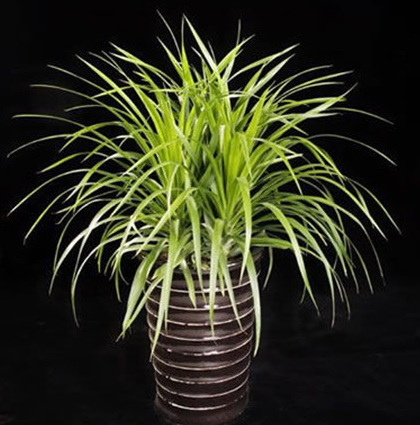
Is Dracaena Poisonous and Can It Be Kept at Home
Dracaena, just hearing the name makes it feel as if a primordial force is about to burst forth. With such a distinctive plant, could it be poisonous, and is it okay to keep it at home?
1. Is Dracaena poisonous?
Dracaena is poisonous, because Dracaena can be used as a medicinal material. These days, any medicine without a single side effect is too embarrassed to call itself medicine; it can only be called banlangen, okay!
Dracaena can treat pain in the muscles and bones. It can activate blood and dissolve stasis, and it is a very precious medicinal material. For such a precious medicinal material, having a little bit of toxicity is totally normal.
If you accidentally cut the bark of Dracaena, it will flow out a liquid like blood. This liquid is actually its resin, dark red, and it can not only treat illness, but also be used as a preservative and as paint. A little plant all-rounder, that is our Dracaena!
2. Can Dracaena be kept at home?
Dracaena is a common indoor ornamental plant, so it is very suitable for keeping at home. However, during cultivation, there are some points to pay attention to.
Dracaena can be used as a medicinal material, and the so-called toxicity of Dracaena only applies to its medicinal use. So when kept at home, the toxicity of Dracaena can be ignored.
However, for the sake of safety, it is best to place Dracaena in the living room, on the balcony, and similar locations. It is not recommended to put it in the bedroom, because the sap of Dracaena can cause allergic reactions in some people.
Placed in the living room or on the balcony, Dracaena can also absorb dust from the air and such, purifying the air and making your breathing cleaner, so it is very suitable for keeping at home.
Of course, friends who faint at the sight of blood should not keep it. If by some careless chance it gets scratched or bumped and a bit of dark red resin flows out, wouldn't you have to call an ambulance!
What are the reasons Dracaena leaves turn yellow
1. No repotting for a long time
Although Dracaena is a long-lived elder with very strong vitality, if you keep treating it like a picked-up child for a long time, it will also suffer!
If it is not repotted for a long time, the plant's root system does not have enough space to grow, its ability to absorb nutrients declines, the plant's condition worsens, and yellowing leaves become a completely natural outcome.
2. Roots were damaged during repotting
Many times, some damage cannot be avoided. Who can guarantee that when I dig down with a hoe I will dig out a complete potato?
Repotting is the same. You always try your utmost to be careful, yet it is of no use, and the roots still get damaged. After the roots are damaged, the newly potted Dracaena cannot undergo normal care and needs to wait for it to recover from transplant shock.
During the recovery process, yellowing leaves, or even leaf drop, will occur.
3. Improper water and fertilizer management
If the new leaves of Dracaena turn yellow, it is due to insufficient water; if the old leaves turn yellow, it is due to insufficient nutrients. Dry air can also cause the leaves to lack water and turn yellow.
4. Interference from pests and diseases
The appearance of large-scale leaf drop may be due to root rot or pest interference. At this time, check the condition of the root system, then check whether there are insect eggs on the leaves.
What should be done when Dracaena leaves turn yellow?
1. Repotting
Dracaena can be repotted once every 2-3 years. Choose a pot that is slightly larger if possible, to give enough growing space. With restraint, there will never be a plant that grows vigorously.
When repotting, do not merely try your best to avoid damaging the roots, but do your utmost to avoid damaging the roots. If you have done your duty and the roots are still damaged, then let it recover from transplant shock on its own. It is fine, it is very strong!
2. Watering and fertilizing go hand in hand
Apart from winter, when no fertilizing is needed, Dracaena can be given light but frequent applications in spring, summer, and autumn. Keep the potting soil moist, and when necessary spray water on the leaf surface and mist above the plant to increase air humidity.
Dracaena kept in a shaded place for a long time can also be given some appropriate sun exposure to carry out photosynthesis and smell the scent of sunlight.
3. The appearance of pests and diseases cannot be tolerated
When pests and diseases appear, be sure to check promptly, spray medicine promptly, and promptly save those leaves that have not yet turned yellow.
Dracaena cultivation methods and precautions, the symbolic meaning of Dracaena, types of Dracaena
Dracaena
The Latin name of the genus Dracaena comes from Greek (δράκαινα), meaning "female dragon," and includes about 40 species of plants, including trees, shrubs, and succulent plants. According to the APG II classification, it is merged into the Ruscaceae, and there are also classification methods that list it separately as the Dracaenaceae or merge it into the Agavaceae.Dracaena cultivation methods and precautions
1. Dracaena cultivation methods:
1. Soil: Dracaena prefers loose, fertile, well-aerated sandy soil. A suitable amount of organic fertilizer and ferrous sulfate can also be added to the nutrient soil.
2. Watering: Dracaena has a relatively strong drought resistance, so it should not be watered too much, to prevent the trunk from rotting. It can be watered once every ten days or half a month, keeping the potting soil slightly dry and moist.
3. Light: Dracaena likes light but fears scorching sun exposure. Dracaena likes a warm, humid environment with sunlight, and is tolerant of partial shade and dryness. With sufficient light, the leaf color is vivid and beautiful.
The symbolic meaning of Dracaena
When Chinese people congratulate the elderly on their birthdays, they especially like to say: "May your fortune be as boundless as the East Sea's long-flowing water, and your life as long as the Southern Mountain's ageless pine!" The Southern Mountain mentioned here refers to Nanshan in Hainan. In fact, the ageless pine of Nanshan is Dracaena.
Therefore, its symbolic meanings include: longevity, abundant fortune, and peace and health.
Types of Dracaena
1. Red Dracaena (dragon's blood)
Red Dracaena is famous worldwide for producing red Dracaena resin, called dragon's blood in China. There are about 150 species worldwide, distributed in the tropical and subtropical regions of Africa, Asia, and Australia. In 1973, China discovered the dragon's blood resource plant "Cambodian Dracaena." To date, 8 varieties of Dracaena have been discovered within China, distributed in Guangxi, Hainan, Yunnan, and Taiwan, China. Dragon's blood is often used in medicine and preservation, and has the effects of stopping bleeding, activating blood, and nourishing blood, for both internal and external use, and is revered by people as a "holy medicine." Dracaena has extremely high ornamental value; for example, Dracaena fragrans has become an important foliage plant in the world.
Dracaena leaf tips turn yellow
The main causes of yellow leaf disease in Dracaena are the following: (1) insufficient light; (2) temperature too low; (3) pests and diseases; (4) unsuitable soil pH.
Prevention and control of pests: Because the environment is dry, keeping Dracaena on a balcony or indoor windowsill for a long time makes it easy for red spider mites to grow. When Dracaena is harmed by them, the leaves fade, chlorophyll is destroyed, dense small yellow spots and small yellow patches appear on the surface, and they gradually shrink, yellow, and wither, and in severe cases fall off, losing their proper ornamental value.
Prevention and control methods: Red spider mites often hide on the back of branches and leaves or in places where the leaves are dense, spinning webs to hide, and manual capture is relatively easy. If chemical agents are used for control, 20% dicofol emulsion can be used, added to 800-**** times water to make a solution for spraying. This medicine has a good killing effect on adults, nymphs, and eggs.
Dracaena pruning
Dracaena has two pruning and shaping methods
1. Prune into a "T" shaped plant form
The "T" shaped plant form means the leaves only grow at the top of the main stem, with no leaves kept below the top, and the whole plant shape resembles the English letter "T," hence the name.
Specific operation: Make the lower part of the main stem, which has lost its leaves, into the main stem of a "T" shaped form, cut it flat at an appropriate height of the plant, retain the newly grown side branches and leaves at the top of the main stem, and remove the side buds on the main stem at any time. After a period of time, it can take shape.
The functions of Dracaena
The feng shui function of Dracaena
1. If the family's front door faces south, Dracaena has a positive effect in feng shui. A front door facing south belongs to fire, so it is suitable to plant plants belonging to fire and wood. Planting Dracaena increases the positive energy of fire. At this time, placing one Dracaena at the living room entrance, in a hall corner, or beside the stairs is beneficial for adjusting people's heart and stomach health, and also has a regulating effect on negative personality traits in some household members, such as being introverted and timid, melancholic, and lacking courage and confidence in life.
Is Dracaena poisonous
Dracaena is a common indoor flowering plant. Dracaena can be used as a medicinal material, and the so-called toxicity of Dracaena only applies to its medicinal use. Therefore, when kept at home, it can be ignored, but Dracaena is best placed in the living room, on the balcony, and similar locations. It is not recommended to put it in the bedroom, because its sap can cause allergic reactions in some people.
Related encyclopedia
Pocket scale non-woven bag lamp grass moso bamboo shoot crab claw redmi note 3 ykk zipper ybs zipper Prunus sargentii climbing rose wild senna wintersweet green pine wristwatch Omega Longines famous watch children's building blocks flint Cremastra appendiculata curling iron soursop
Is Yemen iron flowering poisonous_Complete collection of Yemen iron pictures
Yemen iron is a green plant belonging to the Liliaceae family, genus Dracaena. Its leaf posture is very elegant, and it is suitable as an excellent plant for various home decorations. It is suitable for placement in the living room, study, office, and so on. It can absorb harmful substances such as formaldehyde and toluene, and is an indoor plant with relatively good shade tolerance. Its ability to handle light is very strong, and it is suitable for placement in relatively dark places, with very good ornamental value. Below let us take a look at whether Yemen iron flowering is poisonous, and have a simple appreciation of the complete collection of Yemen iron pictures.
[Complete collection of Yemen iron pictures—morphological characteristics]
Yemen iron is an evergreen small tree plant. Its plant height is generally 4 cm, and its leaves are very wide, linear, relatively leathery, oval or oblong in shape, with a heart-shaped base, growing on the upper half of the stem. In the middle of Yemen iron there is a wide yellow stripe, and the leaf edges are green, with edges that are gradually pointed and slightly blunt, curved and bow-shaped. The plant height of Yemen iron is 60-120 cm, and it is a very popular indoor potted flowering plant. It is generally cultivated in studies, living rooms, home interiors, and so on, looking very elegant and plain, giving people a sense of exotic charm. Its plant shape is very graceful and regular, and it is a very famous indoor foliage plant in the world.
[Complete collection of Yemen iron pictures—growth habits]
Yemen iron likes to grow in an environment with sufficient sunlight, humidity, and good ventilation, and its tolerance of partial shade is very good, but it also cannot grow in a relatively dark environment for a long time. It can be given some scattered light exposure, otherwise the plant will become leggy. In summer, avoid direct sunlight, otherwise it will scorch the leaves, and the leaves will turn yellow or white. Under insufficient light, the leaves of Yemen iron are gray-green, with not particularly good gloss, and the basal leaves are yellow, thus losing ornamental value. When Yemen iron is growing, do not water excessively; keep it alternating between dry and wet, which is more beneficial to the growth of Yemen iron. Also maintain the cleanliness of Yemen iron, and combine the amount of fertilizer with the amount of watering. Apply some water-soluble decomposed fertilizer, preferably cake fertilizer. Especially during the growth period, sufficient fertilizer and water must be given, which is more beneficial to the growth of Yemen iron.
[Complete collection of Yemen iron pictures—cultivation methods]
When cultivating Yemen iron, choose relatively superior varieties, plants that grow relatively robustly and have not been harmed by pests and diseases, for cuttings propagation. After cutting, keep the soil moist and loose, with relatively good air circulation, and cover the plant with plastic film to maintain humidity and temperature. At the same time, also use tiles or similar materials for drainage and air circulation. In spring, summer, and autumn, place it in a dark place during the day and outdoors at night. In winter, it needs to be placed indoors to maintain the temperature and humidity of the environment. The suitable growth temperature for Yemen iron is 20-30°C. In winter, the temperature cannot be lower than 10°C, otherwise the leaves will wither or turn yellow. Under insufficient light, place it in a semi-shaded environment and give some scattered exposure, which is more beneficial to growth. Also keep the leaf surface clean, otherwise it will bring pests and diseases, thereby reducing ornamental value.
[Is Yemen iron flowering poisonous]
Yemen iron is a foliage plant with very good ornamental value. It is suitable for indoor cultivation and can help absorb harmful gases such as formaldehyde and toluene from the air. It is one of the indoor plants with relatively good shade tolerance. It does bloom, and when the flowers are in full bloom they give off a fragrance, as well as pollen and secreted mucus. Many people have doubts about whether Yemen iron flowering is poisonous. Yemen iron flowering is not poisonous, but if some people have a relatively sensitive constitution, they may experience allergies or trigger allergic diseases and other symptoms when Yemen iron blooms. So everyone can rest assured when cultivating Yemen iron; Yemen iron flowering has no toxicity at all.
More related information Dianthus flower pictures Dianthus plumarius pictures Cultivation methods of rubber tree Cultivation methods of peace lily