What to Do If Winter Cherry Does Not Bear Fruit? Detailed Guide to Growing Methods and Precautions
Winter Cherry is a fairly popular ornamental-fruit potted plant. Keeping a pot of Winter Cherry at home, with its round, very cute fruits, is believed to be a good choice for flower lovers who enjoy fruit-bearing ornamental plants. Winter Cherry, also called Coral Cherry, Auspicious Fruit, Coral Seed, Coral Bean, Jade Coral, Red Coral, Wild Chili, Wild Sea Pepper, Look Cherry, and Four-Season Fruit.
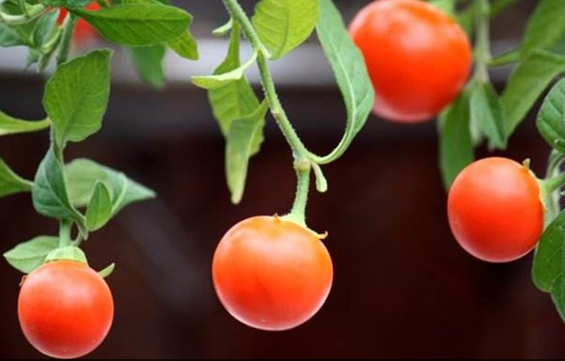
Growing Methods and Precautions for Winter Cherry
Growing Methods for Winter Cherry:
1. Soil
For potted Winter Cherry, choose a flower pot of suitable size. When potting, choose loose, fertile soil with good drainage, and you may appropriately add a little base fertilizer.
2. Light and Temperature
Winter Cherry likes a warm growing environment and likes sunlight, and is suitable for growing in sunny places. Its suitable growing temperature is between 18°C——25°C. In winter, when the temperature is lower, it is necessary to ensure that the temperature of its living environment is not lower than 5°C, so that it can overwinter safely. In addition, Winter Cherry likes sunlight, so it is best not to shade it. When the summer temperature is high and the sunlight is strong, Winter Cherry can be kept in a well-ventilated and brightly lit place for care.
3. Watering and Fertilizing
Winter Cherry is not drought-tolerant, and it is rather afraid of waterlogging, so it is taboo to have standing water in the pot. During cultivation, the soil needs to be kept moist, with appropriate watering; it should not be too dry or too wet. For fertilizing, apply a thin liquid fertilizer once every half month. Note that before flowering, some phosphorus fertilizer needs to be applied to make the flowers abundant and the fruits numerous. During flowering, water and fertilizer need to be controlled to avoid flower and fruit drop. When the fruits grow to the size of mung beans, water and fertilizer can be resumed, and some phosphorus and potassium fertilizer can be appropriately applied to make the fruits brightly colored.
Precautions for Growing Winter Cherry:
1. Propagation Methods
Winter Cherry is mostly propagated by sowing or cuttings. Sowing is done in spring, and cuttings can be done in either spring or autumn.
2. Pests and Diseases
For potted Winter Cherry, when the summer temperature is relatively high, it is prone to anthracnose, which harms the stems and leaves, and the condition is relatively serious. When the disease occurs, the diseased leaves can be cut off and burned, and pesticides need to be sprayed. The main pest is aphids, and insecticides can be sprayed to kill the insects.
3. Flowering Period Management
The management of Winter Cherry during the flowering period is mainly water and fertilizer management. Fertilizing needs to be suspended and watering controlled. After the fruits grow, water and fertilizer can be resumed.
What to Do If Winter Cherry Does Not Bear Fruit
1. Reasons Why Winter Cherry Does Not Bear Fruit
Some people grow Winter Cherry, and the Winter Cherry also grows very well, with luxuriant branches and leaves, and even the flowers bloom very well, but the bright and charming red fruits, which are the most ornamental part of Winter Cherry, are slow to appear. What exactly is going on? Winter Cherry does not have very high environmental requirements, but if there is too much water, it will cause Winter Cherry root rot and withered branches and leaves, and such a weak Winter Cherry will find it very hard to bear fruit. Also, during the flowering period, if Winter Cherry cannot be watered regularly, causing the soil to alternate between dry and wet, and fertilizing is also irregular, then it is very easy for Winter Cherry not to bear fruit. Another reason is that the flowers of Winter Cherry have not been pollinated, which will also cause Winter Cherry not to bear fruit.
2. Solutions for Winter Cherry Not Bearing Fruit
Winter Cherry is actually quite easy to grow, and there are no very cumbersome care methods. As long as we care for it according to the growth patterns of Winter Cherry, we can make Winter Cherry have luxuriant branches and leaves and bloom and bear fruit. In order to enable Winter Cherry to bear fruit, we must first ensure that the Winter Cherry plant is robust. During the flowering period of Winter Cherry, watering must be regular, and the soil must not be wet for a few days and dry for a few days. Fertilizing must also be done regularly to ensure that Winter Cherry can get sufficient nutrients. If Winter Cherry is usually cared for very well but still does not bear fruit, then this may be a problem of the flowers not being pollinated, and we can artificially pollinate Winter Cherry. Since Winter Cherry is monoecious, we only need to use a clean moist cotton swab to gently dab each flower.
How to Grow Winter Cherry, Growing Methods and Precautions for Winter Cherry / Not Afraid of Strong Light Exposure
As a beautiful indoor potted plant, flower lovers should be familiar with Winter Cherry. It bears fruit all year round, so it is also called Four-Season Fruit. In daily life, many people choose to keep a pot of Winter Cherry at home, so how do you grow Winter Cherry? For this, the editor has carefully compiled the growing methods and precautions for Winter Cherry, which are very comprehensive. Friends who want to grow it should definitely take a look~
I. How to Grow Winter Cherry, Understand Its Habits
Winter Cherry likes sunny and warm environments, and it is tolerant of high temperatures, with no sunscald above 35°C. It is also tolerant of direct light, and even under the strong summer sun there is no need to shade it. Therefore, when growing it indoors, it should be placed in a bright place, and warmth measures should be taken in winter. So how to grow Winter Cherry is very simple: just satisfy its growth habits. For specific requirements, let us continue reading below.
II. Growing Methods and Precautions for Winter Cherry
1. Pot and Soil Requirements
For how to grow potted Winter Cherry, the first thing is naturally choosing the pot and soil. Although when buying Winter Cherry at a flower shop there are existing pots and soil, if you want to grow it well, it is very necessary to choose the flower pot and soil yourself again.
Flower pot: any pretty one will do, but note that the size must be suitable. Soil: although Winter Cherry does not have high soil requirements, if you want to grow it well, it is best to choose fertile, loose, well-drained slightly acidic or neutral soil. When adding soil, you may appropriately add a little base fertilizer to the soil.
2. Light
In the growing methods for Winter Cherry, light is indispensable. Winter Cherry likes light and is not afraid of strong light exposure, so even under the strong summer sun, it can be placed outside.
Precautions: Winter Cherry needs sufficient light for growth, at least 4 hours of direct light every day, and does not need shading. It is best to place it in front of a bright southeast-facing window or on a balcony.
3. Temperature
During the growth process of Winter Cherry, temperature also needs to be regulated accordingly. Winter Cherry likes warmth and is tolerant of high temperatures. Its most suitable growing temperature is between 18-25°C, so if you want it to grow well, it is best to maintain the temperature at this level.
Precautions: Winter Cherry is not cold-tolerant. In winter, when the temperature is low, it should be placed indoors for care. Also, the ambient temperature must not be lower than 5°C, otherwise it will be frostbitten and unable to overwinter safely.
4. Watering
For how to grow Winter Cherry, watering is naturally indispensable. It is understood that Winter Cherry is not drought-tolerant, but it is afraid of waterlogging, so standing water in the pot is taboo. When growing it indoors, everyone should water appropriately and just keep the pot soil moist; it should not be too dry or too wet.
Precautions: When Winter Cherry is flowering, attention should be paid to controlling watering to avoid flower and fruit drop. Wait until the fruits grow to the size of mung beans, then normal watering can be resumed.
5. Fertilizing
After watering, let us talk about fertilizing, which is also very important in the growing methods for Winter Cherry. Winter Cherry likes fertilizer, and flower lovers can apply a thin liquid fertilizer to it once every half month.
Precautions: Before the flowering period of Winter Cherry, some phosphorus fertilizer should be applied to it, so that Winter Cherry can have abundant flowers and numerous fruits.
6. Pests and Diseases
During the growing process, beginners often encounter some problems, such as when the temperature is high, the plant suffers from anthracnose, which harms the stems and leaves, and the condition is relatively serious. In addition, due to improper care, Winter Cherry can also be attacked by aphids. These will seriously affect the ornamental value of Winter Cherry, so when pests and diseases are found, prevention and control should be carried out immediately. For this, everyone can refer to the pest and disease control for Winter Cherry.
Overall, Winter Cherry is still quite easy to grow, but if you want abundant flowers and numerous fruits, everyone needs to put in a bit more effort and pay attention to water and fertilizer, so that Winter Cherry can bloom beautiful flowers. Regarding the growing methods for Winter Cherry, the editor will introduce them here. Interested flower lovers might as well try growing it. Finally, may everyone's Winter Cherry bloom beautiful flowers.
Growing Methods and Precautions for Winter Cherry
Chinese scientific name: Winter CherryLatin scientific name: Solanum pseudocapsicum L. var. diflorum (Vell.) BitterOther names: Coral Cherry, Auspicious FruitKingdom: PlantaeDivision: AngiospermsClass: DicotyledonsSubclass: SympetalaeOrder: TubifloraeFamily: SolanaceaeTribe: SolaneaeGenus: SolanumDistribution area: native to Europe and the subtropics; wild in Yunnan, ChinaWinter Cherry, now named Coral Bean (Solanum pseudocapsicum L. var. diflorum (Vell.) Bitter). It is an erect small shrub, much branched and clump-forming, cultivated as a 1-2 year plant. Plant height 30-60 cm. Leaves alternate, narrowly oblong to oblanceolate. It blooms in summer and autumn; the flowers are small, white, and axillary. Berry deep orange-red, spherical, 1-1.5 cm in diameter. It bears fruit after flowering, and the fruits do not fall for a long time, and can remain on the branches until after the Spring Festival. At present, there is also a dwarf variety under cultivation, with a short, much-branched plant form. Berry with small seeds, fruit shape broadly ellipsoid, pointed at the front end. Other names include: Coral Cherry, Auspicious Fruit, Coral Seed, Coral Bean, Jade Coral, Red Coral, Wild Chili, Wild Sea Pepper, Look Cherry, and Four-Season Fruit.1. Morphological Characteristics
Coral Bean (Beijing), Jade Coral (Japan); Thorn Pomegranate (Mian County, Shaanxi); Foreign Sea Pepper (Leibo, Sichuan); Winter Cherry (Anjiang, Hunan). (Variety)Erect branched small shrub, 0.3-1.5 m tall; branchlets when young covered with dendritic stellate hairs, later gradually falling off. Leaves paired, unequal in size, elliptic-lanceolate, 2-5 cm long or slightly longer, 1-1.5 cm wide or slightly wider, apex obtuse or shortly acute, base cuneate and decurrent into a short petiole, leaf surface glabrous, leaf underside along the veins often with dendritic stellate hairs, margin entire or slightly wavy, midrib prominent on the underside, lateral veins 4-7 on each side, obvious on the underside; petiole about 2-5 mm long, when young covered with dendritic stellate hairs, later gradually falling off. Inflorescence short, axillary, usually 1-3 flowers, solitary or in a scorpioid cyme, peduncle short and almost absent, pedicel about 5 mm long, flowers small, about 8-10 mm in diameter; calyx green, deeply 5-parted, lobes ovate-lanceolate, apex obtuse, about 5 mm long; corolla white, tube hidden within the calyx, about 1.5 mm long, limb about 6.5-8.5 mm long, deeply 5-parted, lobes ovate-round, about 4-6 mm long, about 4 mm wide, apex acute or obtuse; filaments about 1 mm long, anthers oblong, about twice the length of the filaments, apical pores slightly inward; ovary nearly round, about 1.5 mm in diameter, style about 4-6 mm long, stigma truncate. Berry solitary, spherical, coral-red or orange-yellow, 1-2 cm in diameter; seeds flat, about 3 mm in diameter. Flowering period April-July, fruit ripening period August-December.
2. Related Species
Coral Cherry (original variety)var. pseudo-capsicum
Erect branched small shrub, up to 2 m tall, the whole plant smooth and hairless. Leaves alternate, narrowly oblong to lanceolate, 1-6 cm long, 0.5-1.5 cm wide, apex acute or obtuse, base narrowly cuneate and decurrent into the petiole, margin entire or wavy, both surfaces smooth and hairless, midrib prominent on the underside, lateral veins 6-7 pairs, more obvious on the underside; petiole about 2-5 mm long, not clearly separated from the leaf blade. Flowers mostly solitary, rarely in a scorpioid cyme, without peduncle or nearly without peduncle, extra-axillary or nearly opposite the leaves, pedicel about 3-4 mm long; flowers small, white, about 0.8-1 cm in diameter; calyx green, about 4 mm in diameter, 5-parted, lobes about 1.5 mm long; corolla tube hidden within the calyx, less than 1 mm long, limb about 5 mm long, lobes 5, ovate, about 3.5 mm long, about 2 mm wide; filaments less than 1 mm long, anthers yellow, oblong, about 2 mm long; ovary nearly round, about 1 mm in diameter, style short, about 2 mm long, stigma truncate. Berry orange-red, 1-1.5 cm in diameter, calyx persistent, fruit stalk about 1 cm long, enlarged at the tip. Seeds disc-shaped, flat, about 2-3 mm in diameter. Flowering period early summer, fruiting period late autumn.
3. Growth Habits
It is especially often seen at field edges, roadsides, in thickets, or by ditches, common in areas at an altitude of 1350-2800 m, and also distributed in areas at 600 m.Winter Cherry likes sunlight and warmth and is tolerant of high temperatures, with no sunscald above 35°C. It is not shade-tolerant, nor cold-tolerant, nor drought-tolerant, and in the hot summer it is afraid of rain and waterlogging. It is not strict about soil, but grows vigorously in fertile, loose, well-drained slightly acidic or neutral soil. It has strong sprouting ability. It is not cold-tolerant, and potted plants for ornamental purposes in the north need to be moved into a greenhouse to overwinter.