Elm Bonsai: Detailed Guide to Making Methods and Care Techniques
Although the elm is a tall tree, it can also be made into bonsai for viewing. Elms grow and are distributed in the northern regions, mostly growing in valleys, hills and other places. Elms like sunlight and do not fear cold or drought. Their root systems are very developed, so their growth vigor is extremely strong.
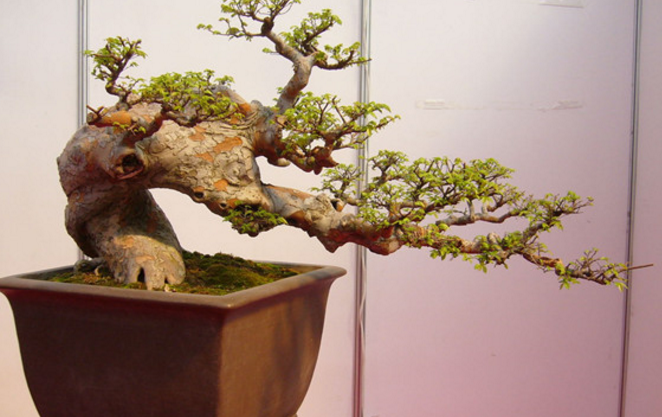
How to correctly make elm bonsai
1. Preparation for making elm bonsai
When making elm bonsai, preparation work must first be done, including cultivating the stump and pruning. Stump cultivation needs to be carried out from late autumn to early spring. The newly dug old elm stump is planted in the ground in plain sand, or planted in a clay pot, for stump cultivation.
Before making elm bonsai, it also needs to be pruned, trimming the roots and branches. However, note that when pruning, sticky sap will flow from the cut. If there is too much sap, it may affect the plant's survival. So it is necessary to apply some erythromycin ointment to the cut and then sprinkle on some fine sand.
The treated elm plant can then be potted. After potting, care for it reasonably according to the elm's condition.
2. How to shape elm bonsai
In order to be more ornamental, elm bonsai needs pruning and shaping. When shaping, it can be done according to the plant's basic form. Generally, elm bonsai are made in forms such as straight-trunk style, slanting-trunk style, curved-trunk style, cascade style, forest style, root-over-rock style, and so on. When pruning the crown, the crown can be pruned into an elegant, naturally sparse shape, or into a large rounded-tree form, or into rounded-pad shaping. When pruning, metal wire can first be used to bind the basic shape, and then pruning can be carried out. In addition, during the growing period, overly long and messy branches also need to be cut off to make the shape more beautiful.
What are the care methods for elm bonsai?
Elm is a good material for creating stump bonsai
Stump bonsai cultivated from elm have vigorous, ancient-looking trunks, and clear, elegant branches and leaves, making them very lovable. Elm is a deciduous tree in the Ulmaceae family.
It is extremely widely distributed in our country, especially in the Jiangnan area, where it can be said that “where there is a village, there must be an elm.” There is wild distribution in the mountainous areas of Liaoning, and home cultivation is also extremely common. Elm leaves are alternate, elliptical, with pointed tips. The leaves are 3-6 cm long and 1-3 cm wide, with neat obtuse serrations along the edges. The bark splits vertically, and the small branches are gray and soft, spreading widely.
The flowers are small and yellow-green, and the samaras are round like small coins. The leaves, branches, and trunk stems of the elm all have a certain ornamental value.
Its leaves are fine and dense, thick and hard, and the new leaves are fresh and tender∃the bark is irregular like scales, speckled and lovely∃the branches are soft and drooping, dancing in the wind, lingering like willow∃although the stem is half decayed and rotten, or full of holes, it still stands strong and upright, and even when old it does not die. It is precisely because it has the above characteristics that when used as bonsai, it appears vigorous and ancient-looking, and is highly praised in the bonsai world.
When choosing elm for bonsai, it is best to dig up old stumps in the mountains, first cultivate them on the ground, and then transplant them into pots. Small bonsai can also be cultivated by air layering. Elm is a very ordinary tree species, seen everywhere in mountain forests and open fields.
In winter and spring, you can go into the mountains to dig up stumps. Note to choose stumps whose base shape is angular and crooked, or whose split surfaces have grown deformed, whose stems have holes, and whose branch cross-sections have formed galls. Those with mottled, moist bark and postures should not be neglected just because of their inherently “rough and wild” nature and strong vitality. Because the stump is, after all, old and weak, and the nutrients in the pot are limited, care must be strengthened.
1. Light for elm bonsai
Strengthen the plant's light exposure. Elm likes a growing environment with sufficient light. If there is insufficient sunlight, its branches will grow leggy, the leaf color will be unattractive, and it will also easily breed various pests and diseases.
2. Watering elm bonsai
Keep the elm's potting soil moist, but it must not become waterlogged. Elm likes to grow in moist places, but it also fears waterlogging. Therefore, in summer, water thoroughly once each in the morning and evening. If water accumulates, it needs to be remedied as soon as possible.
3. Fertilizing elm bonsai
Elm should be fertilized appropriately. Liquid fertilizer should be applied. Peanut cake can also be crushed into thumb-sized pieces and buried in the soil, and it is suitable to use some compound flower fertilizer together. Fertilization should be applied once each in early spring and early autumn, and should not be applied too much.
4. Pruning elm bonsai
Maintain a good tree shape for the elm and prune frequently. Elm has extremely strong growth ability. If branches and buds are not pruned, the stump bonsai will lose its ornamental value. Pruning and shaping can be carried out in autumn. First cut off useless branches and diseased branches, then prune the whole plant according to the formed or post-formation posture.
5. Pests of elm bonsai
Aphids and scale insects are the pests elms most often suffer from. When these two pests occur, a 1000-times omethoate solution can be used for spraying and killing. Elm can be used as bonsai for viewing, and can also be used to decorate courtyards. But when transplanting large stumps, they must be given native soil, and it must be done before leaf sprouting in winter and spring. After planting, wrap the stem with rice straw mixed with yellow mud water, and water frequently to keep the soil and rice straw moist.
[Elm Bonsai] Elm bonsai care pictures, elm bonsai making methods
Elm is a plant that likes light, tolerates cold, resists drought, and does not tolerate waterlogging. It can adapt to dry and cool climates, likes fertile, moist, and well-drained soil, and can also grow in arid, barren, and mildly saline-alkaline soil. It is a relatively fast-growing plant. In particular, using elms grown in the wild to make bonsai is very good, because old elm stumps grown in the wild, after years of wind and rain or animal gnawing, gradually form postures of different shapes. The bonsai made are also very unique. So then, what are the methods for making elm bonsai? Today, let's take a look with the editor at the making methods and picture appreciation of elm bonsai.
Introduction to elm bonsai making methods
The newly dug old elm stump should be planted in plain sandy soil in the ground or in a clay pot for stump cultivation for a period of time. It is generally done from late autumn to spring (the survival rate is highest in the two or three months before sprouting) for care. Before planting, the root system and branches must first be pruned. When pruning, sticky tree sap often flows from the cut. If too much sticky tree sap seeps out, it will seriously affect the survival rate of the elm. At this time, we can use paint or wax to seal the cut, or apply a layer of erythromycin ointment or sulfonamide ointment, and then sprinkle on fine sandy soil to prevent too much sticky tree sap from flowing out. After the old elm stump is planted in the pot, press the soil as firmly as possible. There is no need to water it. Just spray clean water on the branches 1-2 times a day, and after 3-4 days water thoroughly once. After that, simply water when dry, but elm bonsai must strictly avoid soil waterlogging, because that easily makes the roots rot.
When shaping elm bonsai, according to the basic form of the old elm stump, make bonsai in different forms such as straight-trunk style, curved-trunk style, slanting-trunk style, waterside style, cascade style, wind-swept style, forest style, and root-over-rock style through wiring, pruning, and so on. During the shaping period, do it during the dormant period after the elm sheds its leaves, or it can be done during the growing period, but do not do it during the sprouting period.
After the elm bonsai has taken shape, it can be planted before spring budding into a fine pot such as a purple clay pot for viewing, using loose, breathable, well-drained sandy soil rich in humus for planting. Usually place it in a well-ventilated place with sufficient light for care, and keep the potting soil moist without waterlogging. In summer, when the temperature is high and the air is relatively dry, you can sprinkle water on the ground around the plant, but it is not suitable to spray water directly on the leaves, so as to avoid the leaves becoming larger and losing their beauty. Generally, apply a fully decomposed dilute liquid fertilizer to elm bonsai about once every 20 days.
Elm has very strong sprouting ability and grows relatively quickly. During the growing season, prune the elm frequently, cutting off overly long and messy branches to maintain the beautiful shape of the potted plant. The best viewing period for elm bonsai is when the new leaves have just emerged. Generally, in the upper and middle ten days of August, remove all the leaves, then strengthen water and fertilizer management. By late September, new leaves will grow again, improving the ornamental value. In winter, elm potted plants should be moved to a bright, cool indoor room, or the whole pot can be buried in the ground outdoors in a wind-sheltered, sunny place, reducing watering so that the elm plant can fully enter dormancy. During the care of elm potted plants, repot once every 2-3 years to make the bonsai grow vigorously and full of vitality.
Summary:The above is the related information the editor has introduced to everyone. After reading the editor's introduction, I believe everyone has gained a certain understanding of the making methods of elm potted plants. In fact, elm is a relatively fast-growing plant that can also grow in arid, barren, and mildly saline-alkaline soil. Its lifespan can reach several hundred years, and elm also has strong resistance to toxic gases such as smoke dust and hydrogen fluoride.
[Related recommendations]
☑Garden balsam ☑African daisy ☑Flower arranging techniques ☑Shell wind chimes
☑Forget-me-not ☑Cherry tree ☑Creative space ☑Wallpaper collection
Making elm bonsai, care of elm bonsai
The elm's tree posture is elegant and upright, and its bark is rough with many vertical fissures appearing dark gray, but its small branches are soft and suitable for interlacing and climbing. Old elm stumps are even more varied in bearing. Although they seem to have long been decayed by the years, their branches and leaves still grow normally, giving people the sense of an old tree meeting spring. Some elm bonsai made from them have twisted roots and gnarled branches, and some even turn decay into something magical, with a distinctive charm.
Making elm bonsai:
1. Prepare a clay pot filled with plain sandy soil, used for planting the newly dug old elm stump, also called “stump cultivation.” Stump cultivation is generally carried out from late autumn to spring, and the survival rate is highest about three months before the elm sprouts.
2. When transplanting large stumps, they must be given native soil, and it must be done before leaf sprouting in winter and spring. After planting, wrap the stem with rice straw mixed with yellow mud water, and water frequently to keep the soil and rice straw moist.
3. Before planting, prune the root system and branches. Sticky tree sap often flows from the cuts. At this time, note that too much sticky tree sap must not seep out, otherwise it will seriously affect the survival rate. To prevent this from happening, we can seal the cuts with wax, then sprinkle on fine sandy soil, and in this way it can be effectively avoided.
4. After planting, press the soil firmly. At this time there is no need to water, then spray clean water on the branches 1-2 times a day, and later water once after 3-4 days. Finally, as long as it is not dry, do not water, and never let the soil become waterlogged.
5. According to the basic form of the old stump, shape the elm bonsai, making different forms of bonsai through wiring, pruning, and other methods. There is no particular period to note for shaping time. It can be done during the dormant period after leaf fall, or during the growing period, but shaping must definitely not be done during the sprouting period.
Care of elm bonsai:
1. Light: Strengthen the light exposure of elm bonsai. Elm bonsai likes sunlight and has poor shade tolerance, so the finished bonsai should be placed in a place with sufficient sunlight. With insufficient sunlight, it will only grow branches and the leaf color will be very unattractive, and it will also easily cause pest damage.
2. Watering: Although elm likes to grow in moist places, it also fears waterlogging. So each watering should be thorough. In midsummer, water once each in the morning and evening, and be sure to keep the potting soil moist but not waterlogged.
3. Fertilizing: Elm bonsai does not need excessive fertilization. It is enough to apply fertilizer once each in early spring and early autumn every year.
4. Pruning: Because elm has extremely strong growth ability, we need to prune diligently to maintain the ornamental value of the elm bonsai. Pruning and shaping can be carried out in autumn. Cut off useless branches and diseased branches, then prune the whole plant.
5. Pests and diseases: Elm bonsai is often harmed by aphids, scale insects, and so on. We can dilute omethoate with 1000 times water and spray it to kill them.
Conclusion: Elm stumps are not only used for bonsai viewing, but can also be used as courtyard decorative trees. A single tree forms a scene, with excellent effect. In the Jiangnan area, it can truly be said that “where there is a village, there must be an elm.” The above is the editor's introduction. After reading it, do you know how to make elm bonsai? How much do you understand about its care? Friends who like bonsai, hurry up and plant one!