Chinese Sweet Plum Bonsai: How to Make It and How to Solve Common Pest Problems
Chinese sweet plum bonsai has a unique form; it is one of China's bonsai “Seven Sages” and one of the five famous trees of Lingnan bonsai in China. Other names for Chinese sweet plum include "broken rice seed," "thorny wintergreen," and "opposite thorn."
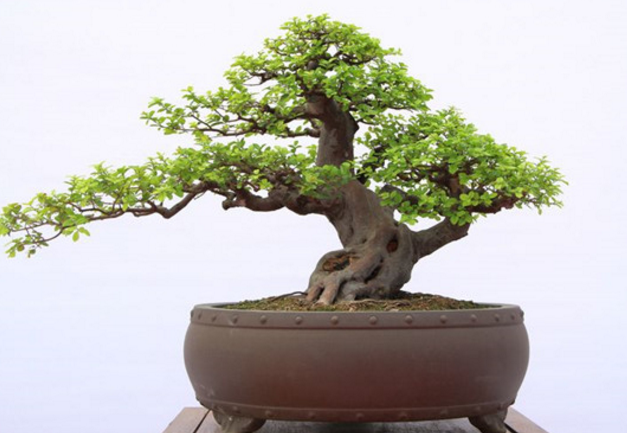
What are the methods for making Chinese sweet plum bonsai?
1. The time for making Chinese sweet plum bonsai
The time for making Chinese sweet plum bonsai is in March each year and during the plum rain season.
2. Sourcing materials for Chinese sweet plum bonsai
When making Chinese sweet plum bonsai, you need to choose branches more than one year old for cutting propagation or seed propagation to obtain materials. Layering can also be used, and digging up old stumps or young plants is also acceptable, depending on your own actual situation.
3. Choosing a pot for Chinese sweet plum bonsai
For Chinese sweet plum bonsai, you can choose purple clay pots and glazed ceramic pots, and relatively shallow or medium-deep rectangular pots are suitable for growing it. The time for potting is in February to March.
4. Preparation for potting Chinese sweet plum bonsai
Before potting, the roots of the Chinese sweet plum should be pruned. Some broken tiles can be placed at the bottom of the pot to maintain soil breathability and drainage.
5. Shaping Chinese sweet plum bonsai
Chinese sweet plum bonsai tolerates pruning, so you can keep trying in order to create the best ornamental shape. The soft small branches of the Chinese sweet plum should be wired and bent; generally, the method of thick wiring and fine pruning is used. The shapes can be slanting trunk style, dead trunk style, curved trunk style, double trunk style, cascade style, exposed root style, and lying trunk style.
What are the common pests and what should be done?
Common pests of Chinese sweet plum:
Common diseases and pests of Chinese sweet plum include rust disease, longhorn beetle pests, red spider mites, and so on.
2. Rust disease of Chinese sweet plum
The pathogen of Chinese sweet plum rust disease is a fungus caused by Pucciniastrum, which produces rust spores, making the leaves turn yellow, or the lesions on the front of the leaves initially become orange-yellow. The lesion tissue slowly thickens and swells, and the back of the leaf bulges, affecting its appearance.
As time goes on, the lesions will expand, possibly becoming round and black, and eventually causing the leaves to wither and fall off.
3. Longhorn beetle pests of Chinese sweet plum
When Chinese sweet plum suffers from longhorn beetle pests, the female longhorn beetle will bite through the bark and then lay eggs on the branches. The newly hatched larvae will bore and feed under the bark, and as they grow they gradually bore into the trunk and roots, gradually hollowing out the branches of the Chinese sweet plum until they die.
4. Red spider mite pests of Chinese sweet plum
Red spider mites are reddish-brown and oval in appearance. Red spider mites spin webs on the plant's leaves and lay eggs, using their mouthparts to pierce the branches and leaves and suck the sap, causing the chlorophyll in the leaves to be destroyed, making the leaf color gradually turn yellow. Grayish-yellow spots also appear on the leaf surface, until the leaves dry up and fall off.
Prevention and control of common pests of Chinese sweet plum:
1. Prevention and control of rust disease of Chinese sweet plum
Rust disease of Chinese sweet plum can be treated by pruning: before the spring rain, completely cut off the branches and buds carrying the fungus on the Chinese sweet plum tree.
In addition, before the spring rain, spray Bailiutai agent or sodium pentachlorophenate 350 times solution plus 1.01 kg to reduce the disease.
2. Prevention and control of longhorn beetle pests of Chinese sweet plum
You can directly insert a suitable iron wire into the insect hole to pierce the larvae to death.
3. Prevention and control of red spider mite pests of Chinese sweet plum
You can directly spray dichlorvos or dimethoate 1000 times solution to 1500 times solution.
How to make Chinese sweet plum bonsai and how to care for it
Because the roots and trunk of the Chinese sweet plum are naturally peculiar and its tree form is vigorous and antique, it has extremely strong adaptability and is not very demanding about soil, so many people like to make Chinese sweet plum into bonsai and place it at home for viewing. So how do you make Chinese sweet plum bonsai, and how do you usually care for it? Below, I will introduce the methods for making Chinese sweet plum bonsai and the methods for caring for Chinese sweet plum bonsai.
How to make Chinese sweet plum bonsai
1. Sourcing materials:
To make Chinese sweet plum bonsai, you can choose one-year-old branches in March or during the plum rain season for cutting propagation; you can also carry out layering propagation from April to June; you can also sow seeds as they are collected when the fruit is ripe or sow them in a seedbed after drying in the shade to cultivate seedlings; in the provinces south of the Yangtze River, you can also dig up wild old root stumps or young trees in mountain areas, and after they survive through field planting to "nurse the stump," process them and pot them.
2. Shaping:
Chinese sweet plum has extremely strong growth vigor, a long lifespan, is easy to shape, has very strong sprouting ability, tolerates pruning, has soft small branches, and is easy to wire. The method of thick wiring and fine pruning is often used for processing, and the complete pruning method (that is, the "storing branches and truncating trunks method") can also be used for shaping. You can also use wiring as the main method and pruning as the supplement for processing and shaping. The tree forms are often made into slanting trunk style, lying trunk style, curved trunk style, dead trunk style, double trunk style, cascade style, exposed root style, and so on. The leaves are mostly pruned into a natural style, and can also be processed into cloud-layer or steamed-bun shapes.
3. Potting:
It is suitable to transplant and pot in spring from February to March before budding. Choose a lighter-colored purple clay pot or glazed ceramic pot, and pot shapes such as relatively shallow or medium-deep rectangular pots and oval pots are suitable. The potting soil should be prepared by mixing loose, fertile, slightly acidic leaf mold soil, river mud, and pond mud with sand. When planting in soil pots, the root system should be properly trimmed, the lateral roots and fibrous roots should be banked with loose fertile soil, and the bottom of the pot should be lined with tiles to facilitate drainage and air permeability.
Methods for caring for Chinese sweet plum bonsai
1. Water must be sufficient
The water used is best natural water such as river water, pond water, and rainwater. If tap water is used, it needs to be stored for one or two days so that the chlorine in it escapes before use, which is more appropriate. Soapy laundry water, as well as water with oil stains and salt, must never be used.
2. Fertilizing must be done carefully
If Chinese sweet plum is fertilized too much, the branches and leaves grow excessively; if it lacks fertilizer, the branches become thin and weak, the leaf color turns yellow, and it is susceptible to pests and diseases. Therefore, fertilizing must follow principles: newly planted, newly potted, just repotted, or root-damaged plants must not be fertilized within one month. In spring and summer, during the peak growth season of the potted tree, more fertilizer must be applied. After autumn begins, if the potted tree grows slowly, apply less. In winter, when the potted tree enters dormancy, fertilizing can be stopped. Fertilizing is not suitable on rainy days or around noon in midsummer. It is best to apply liquid fertilizer on cloudy days or in the evening. When the potting soil is slightly dry, loosen the soil to help fertilizer water penetrate into the soil. To speed up the decomposition of the fertilizer, be sure to water the next morning.
3. The potting soil must be good
The Chinese sweet plum stump originally grew in wild areas, with developed roots, tolerant of drought and waterlogging. Once dug up by people and planted in a shallow pot only a short distance across, its growing conditions are restricted, and if not cared for properly it is easy for it to die, so it must be cared for with special attention. Choose flower soil with good drainage. During the care period, the potting soil is best placed a bit thicker. Replace the soil with new soil every two years, apply some base fertilizer, and protect the fertility of the soil so that the stump landscape can grow normally.
4. Pruning must be timely
The general pruning time is best in late spring and early autumn; in these two seasons the Chinese sweet plum stump has the strongest sprouting ability and the most vigorous growth. Water shoots, overlapping branches, crossing branches, radiating branches, dead branches, and pest- and disease-damaged branches should be cut off at any time. But note that in hot weather, new buds are easily scorched, causing leaves to curl. Therefore, after pruning, it is best to place it in a cool place and only expose it to strong light after it has sprouted normally.
5. Pay attention when growing new stumps
Growing new stumps on a balcony is different from growing them in the ground. Planting too early or too late will bring a lot of trouble to care and management, and the survival rate is relatively low, so the time for digging or purchasing and potting must be timely. The best time should be 15 to 20 days before the local Chinese sweet plum buds, around March 10. At this time the weather is gradually warming, the rainfall is also slowly increasing, the air humidity is high, and there will not be major freezing damage. The newly dug stumps have already revived and begun to stir, have accumulated nutrients, heal wounds quickly after potting, have strong regenerative ability, and a high survival rate; after half a month they will sprout and grow leaves.
Because the balcony has unfavorable factors such as strong wind, dryness, and small space, it is not suitable to plant new stumps in autumn. The most important thing when selecting stumps is to pay attention to whether the stump material is fresh; choose small and medium-sized stump material that grows robustly and has more fibrous roots. Large stump material is not suitable for growing on a balcony.
The above are the methods for making Chinese sweet plum bonsai and the methods for caring for Chinese sweet plum bonsai introduced to everyone. I hope it can help everyone. For more home knowledge, please pay attention.
What are the methods for making and caring for Chinese sweet plum bonsai?
Chinese sweet plum bonsai is a highly ornamental plant and has long received widespread attention. Next, let us take a look at what methods there are for growing Chinese sweet plum bonsai, so that by learning about Chinese sweet plum bonsai knowledge we can better apply it in real life.
What are the methods for making and caring for Chinese sweet plum bonsai?
Origin and distribution:
Chinese sweet plum is native to China's Yangtze River basin and the coastal provinces of the southeast. It is also distributed in Japan and India, and is a suitable tree species for subtropical zones.
Chinese sweet plum is also called opposite-node thorn, Sageretia thea, sour fruit, and sour-fruit sapling tree. It is a deciduous climbing shrub of the genus Sageretia in the Rhamnaceae family. Its roots and trunk are naturally peculiar, and its tree form is vigorous and antique. It is one of the main tree species for Chinese stump bonsai. Chinese sweet plum is a main bonsai tree species of the Lingnan school and the Su school, and is also often used in other regions. It is one of the five famous trees of Lingnan bonsai, and is also one of the bonsai plants exported to the United States.
Chinese sweet plum: Rhamnaceae family, Sageretia genus. A climbing shrub, with thorns on the stems, and after artificial cultivation its thorns gradually degenerate. The leaves are opposite, green in color, leathery and glossy, with small serrations at the edges. The flowers are pale yellow and bloom in winter, and after flowering they bear fruit. The ripe fruit is black, edible, and tastes sour with sweetness. Chinese sweet plum has three types: large-leaf, medium-leaf, and small-leaf. Among them, bonsai made from small-leaf Chinese sweet plum are superior bonsai.
Growth habits:
It likes a warm, humid climate and is not very cold-tolerant. It has strong adaptability and is not strict about soil quality; it can adapt to acidic, neutral, and calcareous soils. It is drought-tolerant, waterlogging-tolerant, and barren-tolerant. It likes sunlight and is also relatively shade-tolerant. Its root system is developed, its sprouting ability is strong, and it tolerates pruning. It often grows on hillsides, roadsides, and in shrub thickets.
How to grow Chinese sweet plum bonsai
1. Watering
Although Chinese sweet plum is a drought-tolerant plant, attention must still be paid to the moisture level of its soil. Potted Chinese sweet plum should often maintain the moisture of the potting soil. Especially in midsummer high temperatures and dry weather, pay attention to frequent watering and misting to prevent the potting soil from drying out.
2. Fertilizing
Although Chinese sweet plum bonsai tolerates barren soil, when cultivating it, the nutrients in its soil cannot be ignored. During the growth period of Chinese sweet plum, apart from the plum rain season, thin cake fertilizer water or manure water should also often be applied, so that the branches and leaves are emerald green and glossy and the growth is vigorous.
3. Pruning
Chinese sweet plum is very tolerant of pruning. After autumn each year, a shaping and pruning can be carried out to remove some overly dense branches and leaves and cut off various messy branches or water shoots, so as to maintain a certain shaped posture and promote lush branches and leaves. The sprouting ability of Chinese sweet plum is extremely strong, so pinching should be carried out in time to make the axillary buds sprout lateral branches. The more times you pinch, the denser the branches and leaves.
4. Repotting
When cultivating and managing Chinese sweet plum as a bonsai, in addition to paying attention to the above conditions, regular repotting treatment is also required, once every 2 to 3 years, and the best time is before budding in spring from February to March. While replacing the previous compacted old soil, place base fertilizer at the bottom of the pot so that it can grow better.
5. Pest and disease control
The main factor harming Chinese sweet plum is insect pests. Longhorn beetles harm the branches and trunk of Chinese sweet plum; this pest can be removed by applying lime sulfur mixture. Scale insects suck the sap of Chinese sweet plum and can be removed by manual brushing. Therefore, during the cultivation and management of Chinese sweet plum bonsai, more attention should be paid to whether these two pests appear, so as to prevent trouble before it happens.
Appreciation and care tips for Chinese sweet plum bonsai
1. Water must be sufficient. The water used is best natural water such as river water, pond water, and rainwater. If tap water is used, it needs to be stored for one or two days so that the chlorine in it escapes before use, which is more appropriate. Soapy laundry water, as well as water with oil stains and salt, must never be used.
2. Fertilizing must be done carefully. If fertilized too much, the branches and leaves grow excessively; if lacking fertilizer, the branches become thin and weak, the leaf color turns yellow, and it is susceptible to pests and diseases. Therefore, fertilizing must follow principles: newly planted, newly potted, just repotted, or root-damaged plants must not be fertilized within one month. In spring and summer, during the peak growth season of the potted tree, more fertilizer must be applied. After autumn begins, if the potted tree grows slowly, apply less. In winter, when the potted tree enters dormancy, fertilizing can be stopped. Fertilizing is not suitable on rainy days or around noon in midsummer. It is best to apply liquid fertilizer on cloudy days or in the evening. When the potting soil is slightly dry, loosen the soil to help fertilizer water penetrate into the soil. To speed up the decomposition of the fertilizer, be sure to water the next morning.
3. The potting soil must be good. The Chinese sweet plum stump originally grew in wild areas, with developed roots, tolerant of drought and waterlogging. Once dug up by people and planted in a shallow pot only a short distance across, its growing conditions are restricted, and if not cared for properly it is easy for it to die, so it must be cared for with special attention. Choose flower soil with good drainage. During the care period, the potting soil is best placed a bit thicker. Replace the soil with new soil every two years, apply some base fertilizer, and protect the fertility of the soil so that the stump landscape can grow normally.
4. Pruning must be timely. The general pruning time is best in late spring and early autumn; in these two seasons the Chinese sweet plum stump has the strongest sprouting ability and the most vigorous growth. Water shoots, overlapping branches, crossing branches, radiating branches, dead branches, and pest- and disease-damaged branches should be cut off at any time. But note that in hot weather, new buds are easily scorched, causing leaves to curl. Therefore, after pruning, it is best to place it in a cool place and only expose it to strong light after it has sprouted normally.
5. Pests and diseases must be controlled. Common pests and diseases of Chinese sweet plum stumps include longhorn beetles, commonly known as "heart-boring worms." The female longhorn beetle bites through the bark and lays eggs on the branches. The newly hatched larvae bore and feed under the bark, and when grown they bore into the trunk and roots. The affected plants are often hollowed out and die. When controlling them, you can judge the location of the pest based on the excrement and insert a suitable iron wire into the insect hole to pierce the larvae to death. You can also use dichlorvos 200 times solution to soak a cotton ball, plug the bore hole, poison the larvae with the pesticide, and then seal it with wet mud. Red spider mites, also called fire spiders, are also common pests of Chinese sweet plum stump landscapes. They are small, less than 1 mm, and orange-red or reddish-brown oval in shape. Red spider mites spin webs on the plant's leaves, pierce their mouthparts into the branches and leaves to suck sap, and the chlorophyll of the damaged leaves is destroyed. The color becomes pale yellow, fine grayish-yellow spots appear on the leaf surface, and the leaves gradually wither, yellow, and fall. Some even have all the leaves on the whole plant drop off and die. You can spray dichlorvos or dimethoate 1000 times solution to 1500 times solution to eliminate them.
The above is the relevant introduction in this article. I believe that after reading it you also have a simple understanding of this. If needed, you can continue to follow No. 1 Home Network to learn more information.