Fiddle-Leaf Fig Growing Methods and Precautions: Teaching You to Propagate It Correctly
The fiddle-leaf fig is an evergreen tree, very tall and large, suitable as a foliage plant for display in halls. It is mainly produced in the southeastern coastal areas and is a plant that especially loves humidity.
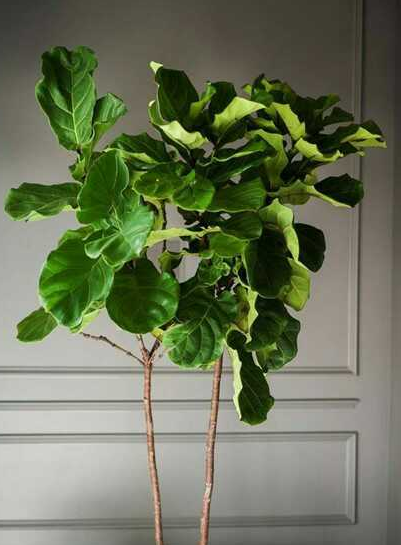
Fiddle-Leaf Fig Growing Methods and Precautions
1. Basic requirements for growing fiddle-leaf fig
Light:
The fiddle-leaf fig likes an environment with sufficient light; if the light is too weak, it is not conducive to the plant's growth, but in summer, avoid direct strong sunlight, otherwise the leaves will lose their luster or even be scorched. In winter, the light can be appropriately increased. The fiddle-leaf fig can grow very well under bright scattered light, and it is best to receive about 4 hours of light per day.
Temperature:
The most suitable temperature for the fiddle-leaf fig is 25°C-35°C. Its cold resistance is relatively weak, and in winter it is best to keep it above 5°C, so that it can safely overwinter.
Soil:
The fiddle-leaf fig likes loose, breathable soil with relatively good drainage, such as peat soil, and adapts to acidic to slightly acidic soil. The potting soil is best mixed with leaf mold, culture soil and coarse sand, and a small amount of decomposed base fertilizer can also be added.
Watering:
The fiddle-leaf fig likes a humid environment and has relatively high water requirements. Follow the principle of watering when dry and letting it dry between waterings: wait until the potting soil is completely dry before watering, and water thoroughly when watering. In spring and summer, the water demand is high, and the soil should be kept moist, but when it is in a low-temperature environment for a long time, do not water too much, otherwise it can easily cause the plant to die.
Fertilizing:
The fiddle-leaf fig has a high fertilizer requirement, which can be seen from its large, plump leaves, so during the growing season it should be given liquid fertilizer once every one to two weeks to ensure healthy growth. In winter, fertilizing generally stops.
2. Precautions for growing fiddle-leaf fig
Choosing a flower pot:
Choose a suitable flower pot, not too large. For small plants, a pot with a diameter of 20-25 cm can be chosen, and for larger plants, a pot with a diameter of 30-35 cm can be chosen. Note that the bottom of the flower pot needs holes so that drainage can be maintained well.
The issue of moving the pot:
Actually, the fiddle-leaf fig is very much a homebody and does not like running around, so be sure not to move the flower pot frequently. When growing it as an indoor potted plant, you can rotate it 90 degrees every week so that it can fully receive the sunlight.
Leaf care:
The most ornamental part of the fiddle-leaf fig is none other than its peculiar leaves, so they must be well protected. Usually, pay more attention to cleaning to avoid dust accumulation; even a thin layer is not okay, as it can easily block sunlight. You can spray some water to clean the leaves.
Pruning management:
Every year when repotting or after moving it indoors in late autumn, pruning is needed. Different shapes can be created according to different ornamental needs, making it more classical and beautiful.
Diseases of the fiddle-leaf fig:
After the fiddle-leaf fig plant becomes diseased, it should be quickly moved to a place with sufficient sunlight and good ventilation. Be careful not to sprinkle water on the leaf surface, and we need to cut off the diseased leaves.
That is all for the fiddle-leaf fig growing methods and precautions. It is not very complicated, is it? It feels like it is time to grow a beautiful fiddle-leaf fig at home.
How can the fiddle-leaf fig be propagated correctly?
1. Cutting propagation of the fiddle-leaf fig
Choose a 1-2 year old branch, cut it off about 20-30 cm from the surface of the potting soil, and cut the stem into 3-4 node segments to use as cuttings. Keep one leaf on each cutting segment, and at the same time cut off about 2/3-3/4 of the leaf to reduce water evaporation.
First, the wound of the cutting needs to be immersed in water or lightly dabbed with something like plant ash to avoid the outflow of sap. Then prepare a cutting bed made with river sand or perlite, insert the cutting into it, and be careful to maintain a suitable temperature and relatively high surrounding air humidity. Generally, at a temperature of 25-30°C, it can take root after about one month. For the plant after stem truncation, because its apical dominance has been broken, new shoots sprout from the latent buds at the stem nodes, and a forked tree shape can be formed. After the new shoots age, cuttings can be taken again for propagation.
2. Layering propagation of the fiddle-leaf fig
Choose a sturdy semi-lignified branch growing on the lower part of the plant, gently bend it downward and bury it in the soil, being careful to avoid separating the branch from the mother plant or causing damage or breakage. The branch tip needs to be exposed above the soil surface, and at the same time tied with a small bamboo stick, which is conducive to its upright growth. Before layering, the stem segment to be buried in the soil needs to be ring-barked, with a bark removal width of about 1 cm. It is best to use an auxiliary object to fix the part of the surface branch buried in the soil, preventing the branch tip from springing up. After the layering work is completed, remember to keep the soil moist frequently and ensure good ventilation. After about 3-4 weeks, it can take root. At this time, it can be cut away from the mother plant and then planted separately.
How to grow the fiddle-leaf fig, fiddle-leaf fig growing methods and precautions / likes light but avoids strong light
The fiddle-leaf fig is an ideal indoor potted plant. Its leaves are large and good-looking, and growing it indoors can also improve home feng shui, so it is deeply loved by flower enthusiasts. In daily life, when people discover the benefits of the fiddle-leaf fig, many want to grow it. So how do you grow the fiddle-leaf fig? Below is a carefully compiled set of fiddle-leaf fig growing methods and precautions, very detailed. Friends who want to grow it should definitely take a look~
1. How to grow the fiddle-leaf fig: understand its habits
The fiddle-leaf fig likes a warm, humid and sunny environment. It avoids strong light and is not cold-tolerant. When growing it indoors, it should be placed in a semi-shaded place, watered frequently but not too much, and kept warm in winter. As for the culture soil, it is best to give it loose, breathable, well-drained slightly acidic soil. So how do you grow the fiddle-leaf fig? It is very simple, just satisfy its growth habits.
2. Fiddle-leaf fig growing methods and precautions
1. Potting soil
How to grow the fiddle-leaf fig? First of all, you should reselect the potting soil. Nowadays, the potted plants of flower enthusiasts are basically bought online, very cheap, but this also has disadvantages. Because the flower pots and soil are very cheap, normal care can ensure the plant's growth, but if you want the fiddle-leaf fig to grow well, it is best to reselect the flower pot and soil.
Choosing a flower pot: The flower pot for the fiddle-leaf fig must be suitable. First, the bottom of the flower pot must have holes to ensure good drainage; second, the flower pot cannot be too large. For small plants, choose a pot with a diameter of 20-25 cm, and for large plants, choose a pot with a diameter of 30-35 cm.
Choosing soil: According to the growth habits of the fiddle-leaf fig, we know that it likes loose, breathable, well-drained slightly acidic soil. For this, the editor recommends using soil mixed with leaf mold, culture soil and coarse sand, and it is best to add a small amount of decomposed base fertilizer to it.
2. Light
As a foliage plant, the fiddle-leaf fig has a high demand for light. Under normal circumstances, we should place it in a ventilated place with bright scattered light, and it is best to receive about 4 hours of light per day.
Precautions: The growth of the fiddle-leaf fig requires sufficient light. Once the light is insufficient, it is not conducive to the plant's growth. In winter, the light can be appropriately increased; but the fiddle-leaf fig avoids direct strong light. If it is exposed to the strong sun in summer, its leaf surface will be scorched.
3. Temperature
How to grow the fiddle-leaf fig? Adjusting the temperature in a timely manner is also very important. The fiddle-leaf fig likes a warm environment, and its suitable growth temperature is 25-35°C. It is not cold-tolerant. In order to let it overwinter safely, the indoor temperature in winter should be kept above 5°C.
4. Watering
Water is the source of life, so in the fiddle-leaf fig growing methods and precautions, watering is a very important part. The fiddle-leaf fig likes a humid environment, especially in spring and summer, when its water requirement is particularly high, and the soil should be kept moist at all times.
Precautions: Although the fiddle-leaf fig likes water, it avoids waterlogging, so watering should follow the principle of watering when dry and letting it dry between waterings: wait until the potting soil is completely dry before watering, and water thoroughly when watering. In addition, if the temperature is relatively low, watering cannot be too much, and it is best to keep the soil slightly dry, otherwise it can easily cause the plant to die.
5. Fertilizing
After watering, let's talk about fertilizing. It is also indispensable in the growth process of the fiddle-leaf fig. Looking at the large leaves of the fiddle-leaf fig, we know that it likes fertilizer. If it is the growing season, we should give it liquid fertilizer once every 2 weeks. However, in winter, the fiddle-leaf fig will be in a dormant state, and fertilizing should be stopped at this time.
6. Do not move the pot
When growing the fiddle-leaf fig indoors, many flower enthusiasts like to move it everywhere. In fact, this is a wrong practice. Because the fiddle-leaf fig is a relatively homebody plant, it does not like running around, so once you place it in a bright scattered-light spot, do not move it again. However, when growing it, we can rotate it 90 degrees every week so that it can fully receive the sunlight.
7. Pruning
Since it is a foliage plant, timely pruning is certainly indispensable. In order to maintain the beauty of the fiddle-leaf fig, we should prune it once a year, cutting off rotten roots, dead leaves and old diseased branches along with repotting, and cutting out various shapes according to our own preferences.
Fiddle-Leaf Fig Growing Methods and Precautions
Chinese scientific name: Fiddle-Leaf FigLatin scientific name: FicuspandurataHanceAlso known as: Fiddle-Leaf Rubber TreeBinomial name: FicuspandurataKingdom: PlantaePhylum: AngiospermsClass: DicotyledonsSubclass: ArchichlamydeaeOrder: UrticalesFamily: MoraceaeSubfamily: ArtocarpoideaeTribe: FiceaeGenus: FicusSubgenus: FicusSpecies: Fiddle-Leaf FigDistribution area: China, VietnamFiddle-leaf fig, also known as: fiddle-leaf rubber tree, Latin name: Ficus pandurata Hance, a plant of the Moraceae family and Ficus genus, named because the leaf tip is enlarged and violin-shaped. It is an evergreen tree of the Moraceae family and Ficus genus. The fiddle-leaf fig can reach 12 m in height, with an upright stem and very few branches. The leaves grow densely, are thick and leathery, dark green, glossy, with sunken veins and relatively short internodes. The fiddle-leaf fig has relatively high ornamental value and is an ideal foliage plant for halls.1. Morphological characteristics
Fiddle-leaf fig (original variety), small shrub, 1-2 m tall; branchlets. Young leaves covered with white pubescence when young. Leaves papery, violin-shaped or obovate, 4-8 cm long, apex acute with a short point, base rounded to broadly cuneate, constricted in the middle, hairless on the surface, with sparse hairs and small tubercles on the veins on the back, basal lateral veins 2, lateral veins 3-5 pairs; petiole sparsely covered with rough hairs, 3-5 mm long; stipules lanceolate, tardily deciduous. Figs solitary in leaf axils, bright red, elliptical or spherical, 6-10 mm in diameter, with an umbilical protrusion at the top, basal bracts 3, ovate, total peduncle 4-5 mm long, slender, male flowers pedicellate, born at the mouth of the inner wall of the fig, perianth segments 4, linear, stamens 3, rarely 2, of varying lengths; gall flowers pedicellate or sessile, perianth segments 3-4, oblanceolate to linear, ovary nearly spherical, style lateral, very short; female flowers perianth segments 3-4, elliptical, style lateral, slender, stigma funnel-shaped. Flowering period June-August.2. Growth habits
It likes a warm, humid and sunny environment. The suitable growth temperature is 25°C to 35°C, it goes dormant at about 15°C, and it can safely overwinter above 5°C. Its water requirement is that it is better to be wet than dry. It is native to lowland tropical rainforests from Sierra Leone to Morocco in West Africa, and is widely cultivated in the tropics and subtropics, and also cultivated indoors and in greenhouses in temperate regions. Without the introduction of the specific pollinating fig wasp, it will not become an invasive plant.3. Distribution
Produced in Guangdong, Hainan, Guangxi, Fujian, Hunan, Hubei, Jiangxi, Anhui (southern part), Zhejiang. It grows in mountainous areas, open fields or under shrub forests. It is also distributed in Vietnam. The Yunnan Seed Plant List record based on Forrest 8354 is obviously a misidentification.4. Variety classification
Entire-leaved fiddle-leaf fig (variety) Whole-leaf fig (Supplement to the Illustrated Handbook of Higher Plants of China)In this variety, the leaves are obovate-lanceolate or lanceolate, the apex is acuminate, and the middle is not constricted; the figs are elliptical, 4-6 mm in diameter, with a slightly umbilical top. Flowering and fruiting periods are the same as above.
Common in the provinces of southeastern China, occasionally seen in Guangdong and Guangxi, and transitioning to var. pandurata.
Linear-leaved fig (Supplement to the Illustrated Handbook of Higher Plants of China)
In this variety, the leaves are linear-lanceolate, up to 16 cm long, the apex is acuminate, and the lateral veins are 8-18 pairs.
Common in the provinces of southeastern China (west to Yichang, Hubei).
5. Cultivation techniques
Cultivation management
The fiddle-leaf fig is mostly propagated by cuttings, layering and other methods. With the development of tissue culture technology, large-scale production of tissue-cultured fiddle-leaf figs has been achieved, and the quality is much better than that of cuttings and layering, with strong resistance and fast growth. The fiddle-leaf fig is generally propagated by cuttings or air layering. When taking cuttings, choose a 1-2 year old branch, cut it off 20-30 cm from the potting soil surface, and cut the stem into 3-4 node segments as cuttings. Keep one leaf on each cutting, and cut off 2/3-3/4 of the leaf to reduce water evaporation; first soak the cutting wound in water or dab it with plant ash, etc., to prevent sap from flowing out; insert the cutting into a cutting bed made of river sand or perlite, and be careful to maintain the bed temperature and relatively high surrounding air humidity. At a temperature of 25-30°C, it can take root in about one month. For the plant after stem truncation, because its apical dominance has been broken, latent buds at the stem nodes can sprout new shoots and form a forked tree shape; after the new shoots age, cuttings can be taken again for propagation. The air layering propagation method is also a commonly used method for propagating the fiddle-leaf fig. For the specific operation method, see weeping fig.For potting the fiddle-leaf fig, a mixture of 1 part peat soil, 1 part garden soil and 1 part river sand is commonly used as the base, and a small amount of decomposed base fertilizer is added at the same time. Because its leaves are broad and its fertilizer requirement is relatively large, during the growing season it generally needs liquid fertilizer or granular compound fertilizer once every 1-2 weeks to promote plant growth and dark green leaves; in late autumn and winter, fertilizing is generally not done. In spring and summer, the fiddle-leaf fig grows relatively heavily and needs more water, so sufficient water must be given, and foliar spraying should be increased at the same time. The fiddle-leaf fig is suitable for growing in a semi-shaded environment. In summer, avoid direct sunlight to prevent scorching the leaves and causing them to lose their luster. But if the light is too weak, the plant will grow thin and weak, so it must be given relatively bright light to promote robust growth. During the growing season, it generally grows better under 50% shading. Compared with other Ficus plants, the fiddle-leaf fig has relatively weaker cold resistance, and its overwintering temperature is 8°C. In order to improve its cold resistance, in addition to controlling the amount of watering in late autumn and winter, phosphorus and potassium fertilizer can be applied about one month before winter arrives.
Water and fertilizer management
It likes moist soil and has a relatively wide range of water requirements. It has no strict requirements for soil and no strict requirements for fertilizer. For production, Peters Professional 20-20-20 can be used together with calcium and potassium fertilizer for irrigation. The Fairy fiddle-leaf fig grows relatively fast. In the first month, the seedlings are relatively small and the fertilizer requirement is not large, so use Peters Professional 20-20-20 diluted 1000 times for irrigation; in the following four months, the plant shape is already relatively compact and large, and the fertilizer requirement gradually increases. Peters Professional 20-20-20 diluted 800 times + 5000 times calcium nitrate + 5000 times potassium nitrate can be used together for irrigation. Combining calcium and potassium fertilizer can enhance stem lignification.The suitable growth temperature is 25°C to 35°C, it goes dormant at about 15°C, and it can safely overwinter above 5°C. In winter, double-layer insulation facilities can be used. In winter afternoons, when the temperature drops to 22-24 degrees, the greenhouse should be sealed in time. In summer, it can be grown in a simple shed.
The leaves of the fiddle-leaf fig are relatively leathery and have no strict requirements for humidity; keeping humidity at about 60% is sufficient.
The fiddle-leaf fig has relatively strong adaptability to light and can grow well under bright scattered light. In summer, direct sunlight should be avoided. If placed outdoors, it must be shaded. In winter, light should be increased. In spring, light should be controlled at 20000-25000 Lx; in summer, due to higher temperatures and high temperature and humidity, shading and ventilation should be strengthened, and light controlled at 15,000-20,000 Lx is relatively ideal; in autumn and winter, temperatures are lower, and light should be controlled at 25000-30000 Lx or full sunlight. Too much shading will cause serious leggy growth and weak stems, affecting the ornamental effect.
Pest and disease control
Harm:Phytophthora rot occurs to varying degrees in cultivation and introduction areas of the fiddle-leaf fig. It harms the leaves and stems of the fiddle-leaf fig, causing leaf death or death of the whole plant.Symptoms:After the leaf area is infected, water-soaked gray lesions appear, rapidly enlarge, and develop into dark brown and rotting. After the stem is infected, dark brown lesions appear. If the lesion girdles the stem, the part above it dies.
Control:
1. Strengthen cultivation management and enhance plant disease resistance. For planting the fiddle-leaf fig, sandy loam or loam should be selected, with good drainage, full sun or half sun, requiring good ventilation and relatively high temperature, not lower than 10°C in winter. Avoid continuous cropping in nursery land. Apply compound organic fertilizer and prevent excessive nitrogen fertilizer. In summer, place it outdoors in a semi-shaded place or in a humid place with relatively sufficient light. For indoor viewing, it should be placed in a place with light and ventilation, and the time should not be too long. In winter, it should be placed indoors in a warm, ventilated and sunny place. Do not water too much; just keep the soil moist. Pay attention to removing dust from the leaf surface and keep the leaf surface clean and dry.
2. After the potted plant becomes diseased, it should be quickly moved to a ventilated, sunny place with sufficient light. Do not spray water on the leaf surface, and remove severely diseased leaves. For lightly diseased leaves, the lesions can be cut off together with part of the healthy tissue, then spray Bordeaux mixture for protection, or spray 80% zineb wettable powder 500 times solution, 25% metalaxyl wettable powder 500-800 times solution, etc. Be careful to rotate the agents.
3. After the dead and diseased plants are removed, the soil should be watered with 1% copper sulfate or sprinkled with quicklime powder, etc., for disinfection.