How to propagate the money tree correctly? And how to deal with root rot
Money tree, also known as Zamioculcas zamiifolia and golden pine. The money tree is a perennial evergreen herbaceous plant, and is a very rare foliage plant with underground tubers, native to tropical Africa.
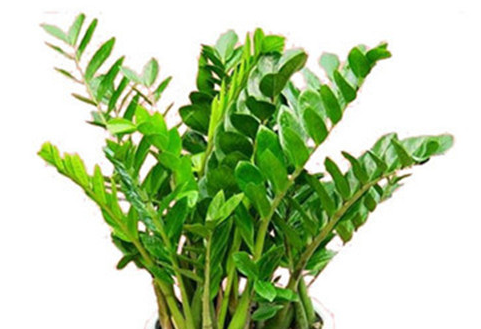
How to propagate the money tree correctly
Money tree division propagation:
1. Preparations
One pot of a vigorously growing money tree
2. Specific method
In April, when the outdoor temperature reaches above 18°C, take the entire large money tree plant out of the pot, shake off most of the old soil, pull it apart at the weak points where the tubers join, apply sulfur powder or plant ash to the wounds, and transplant it into another pot. When planting, do not bury the roots too deep; keep them 1.5-2cm below the soil surface.
Money tree cutting propagation:
1. Preparations
For cuttings, you can use a single small leaf, a section of leaf rachis with 2 leaves, or a single section of leaf rachis. Use the leaf rachis or the leaf rachis with leaves.
2. Specific method
Use fine sand, or a substrate mixed with peat ash, perlite and river sand in a 3:1:1 ratio, insert it into the soil to a depth of 1/3-1/2, leaving only the leaves outside the substrate, spray thoroughly with water and place it in a shaded spot, keep the ambient temperature at 25°C-27°C, mist the leaf surface 1-2 times a day according to how dry or wet the substrate is, and just keep the substrate slightly moist.
When the cuttings have formed a certain root system, the middle of the roots will gradually swell to form small spherical tubers, and the tubers will gradually enlarge. Some of the more tender green cutting leaves will wither and die after potting due to high temperatures or poor water management, but the tubers can survive, and old mature leaves and cuttings with leaf stalks can also remain green and vigorous. A small number of tubers can sprout and grow new leaves in the same year, but the growth vigor is weak and growth is slow; the next year the tubers will grow thick new shoots and can grow normally.
Special reminder:
From the perspective of rooting results, cuttings made from leaf rachis with leaves root faster and have a higher sprouting rate, and more easily form larger tubers. Insert a single leaf into a mixed substrate of river sand and vermiculite; after 10-14 days, a small rooted spherical stem can form at the base of the leaf, and after 2-3 months of cultivation it can grow into a small plant, but under normal conditions the seedling formation rate is not high.
What should be done if the money tree has root rot
Causes of money tree root rot:
1. Improper watering
Usually, when the money tree is watered too much, it will cause root rot. The money tree itself likes slightly moist soil, and the potting soil cannot be too dry, but if it is watered too much, it will cause the harm of root rot. This is because when watered too much, the potting soil is very likely to become waterlogged, the roots find it hard to breathe, and a large number of pathogens breed, causing root rot.
2. Improper fertilizing
Improper fertilizing is also one of the causes of money tree root rot. This is basically because when fertilizing the money tree, the fertilizer is too concentrated; when the root system has not grown well, too concentrated fertilizer will burn the money tree's roots and can cause root rot.
3. Temperature too low
In fact, there are also some other factors that cause money tree root rot, such as low temperature and cold, especially when the winter temperature is very low, frost damage may even occur, causing the money tree plant to freeze and then develop root rot.
4. Invasion by pathogens
In addition, there is the invasion of pathogens. If pathogens are accidentally brought into the water when it rains or when watering, the plant will be infected by pathogens, which may lead to root rot.
What to do about money tree root rot:
1. Reasonable care
Reasonable care of the money tree requires more effort in daily life, basically including watering, fertilizing and keeping it warm. Watering should follow the plant's growth needs; do not water too much, and also avoid waterlogging. When fertilizing, remember not to use too concentrated or too frequent fertilizer; light applications of fertilizer given frequently are best, which can avoid root rot.
2. Replanting
If the money tree still shows symptoms of root rot, then it needs to be replanted. Take out the plant with root rot, remove the soil, and it is best to remove all the soil, cut off the rotten roots, soak them in carbendazim solution or sprinkle on some charcoal, leave them in a cool place to dry, and then repot and plant them. You can cut off some branches and leaves so that it survives better; after that, be sure to care for it carefully and properly!
White orchid: how to grow white orchid, white orchid pictures
WhiteOrchid is obtained by natural hybridization of two plants, Michelia champaca and Michelia figo, and is a common plant in southern China. In the Sichuan region, local people may be more used to calling it "huangjuelan", which is actually the white orchid. The beauty of the white orchid does not rely on verbal description; just look at white orchid pictures and you will know.
White orchid: how to grow white orchid, white orchid pictures
——————————————————————————————————————————————
[Plant profile]
——————————————————————————————————————————————
Chinese name:White orchid
Scientific name:Michelia x alba
Aliases:Baimianhua, white orchid, mianguihua, called huangjuelan in Sichuan
Family:Magnoliaceae
Genus:Michelia
Origin and distribution:Native to the temperate and tropical regions of Asia and North America, distributed in South China, Southwest China and Southeast Asia.
Morphological characteristics:The young branches and buds of the white orchid are green, the leaves are light green, alternate, long elliptical and rather pointed at the tip. The flowers are solitary in the leaf axils of the current year's branches, and the buds look like the tip of a writing brush. White or slightly yellow, extremely fragrant. The white orchid generally blooms twice, the first time in summer and the second time in autumn, with the summer bloom being the fullest; the lanceolate perianth segments number 10 and are 3-4cm long.
How to grow the white orchid
——————————————————————————————————————————————
▲ Habits: The white orchid likes an environment with ample light, warm heat, humidity and good ventilation. It is not cold-tolerant, not shade-tolerant, and not tolerant of high temperatures and strong light. It is suited to well-drained, loose, fertile, slightly acidic soil, and most dislikes smoke, typhoons and waterlogging.
▲ Propagation: The white orchid can be propagated by grafting, layering, cuttings, sowing and other methods, with grafting and layering being the two most commonly used. For layering, use the aerial layering method in June-July, keep it moist, and it will root after about 2 months. For grafting, use a two-year-old Magnolia liliflora as rootstock, select a white orchid branch in the plum rain season with the same thickness as the rootstock, and after grafting it will heal in 60-70 days, and can be cut from the mother plant to become a seedling.
▲ Pot and soil: For a home potted white orchid, choose loose soil with strong air permeability and relatively rich humus content. For the pot, choose a tile pot or purple clay pot with good air permeability; the soil should preferably contain a certain amount of granular soil of varying sizes to facilitate water seepage and air flow.
▲ Placement: Every year in March-April, move the white orchid outdoors to a place with ample sunlight. In summer, use a shade net as appropriate so that the white orchid avoids the strong light of the afternoon. When encountering continuous autumn drizzle or heavy summer rain, put the white orchid in a rain-sheltered place in advance to avoid root rot. In winter, choose a position indoors that sunlight can reach, and wrap the potted white orchid with plastic film to prevent the roots from freezing.
▲ Temperature: The white orchid is not cold-tolerant. Except in South China, it must be brought indoors for care in winter in all other regions, and the minimum room temperature should be kept above 5°C. The best time to move it outdoors is from Qingming to Guyu.
▲ Watering: The correct way to water the white orchid is to thoroughly wet the soil in the pot all at once; when it is slightly dry, there is no need to water. Do not water every day, but you can often mist the leaves. In summer, water thoroughly no fewer than three or four times a month. In autumn, water thoroughly two or three times a month, and in winter, water thoroughly once or twice a month.
▲ Fertilizing: During the vigorous growth period of the white orchid from May to August, apply flower fertilizer once every half month. The specific operation is: first use a small iron shovel to draw several vertical and horizontal small furrows in the soil in the pot, then slowly sprinkle the fertilizer into the furrows, then cover it with the surface soil in the pot, and water a little. Let the fertilizer gradually penetrate to the white orchid's roots with each watering. Apply light fertilizer frequently, with cake fertilizer being best; do not apply it in winter. From after the white orchid sprouts new buds until June, apply fertilizer water once every 3-4 days; from July to September, apply fertilizer water once every 5-6 days, and after applying fertilizer several times, stop once.
▲ Pruning: For a potted white orchid, cut off the terminal bud and shorten some side branches to maintain a suitable height. After the terminal bud is cut off, it helps to grow more side branches, more flower buds and more flowers.
▲ Pest and disease control: The white orchid commonly develops leaf spot disease, fungal rot, aphid infestation and so on. For leaves showing disease symptoms, spray diluted carbendazim or methamidophos solution to sterilize.
" Conclusion:Growing a white orchid is a process that requires a great deal of energy and thought, but for people who love flowers, the more skill it requires, the more they can enjoy the pleasure of growing flowers and feel a sense of achievement. How to grow the white orchid, have you learned it?
[More plant encyclopedia]
Aloe jasmine radiation-absorbing plants pennywort potted plants bonsai making drug plants mistletoe indoor flowers money tree lucky bamboo
Hydroponic lucky bamboo potted plant making anthurium mint lithops geranium garden Christmas cactus peace lily snake plant Kunlun snow chrysanthemum
Water lily flower pot stock magnolia winter jasmine mimosa blue enchantress hydroponic cyclamen dumb cane peace tree lucky bamboo
Peperomia osmanthus Chinese rose money tree blooming serissa hydrangea bamboo fern mosquito repellent plant rubber tree podocarpus fuchsia
Ivy cymbidium jade plant bowl lotus orange jasmine
Plants always fail to survive, 99% of the time because they are not watered correctly
Plants always fail to survive, 99% of the time because they are not watered correctly! How to water these common flowers, be sure to save this!
Pothos
Pothos, also known as golden pothos and golden vine, is an evergreen perennial herbaceous plant. Pothos is a shade-loving plant, avoids direct sunlight, likes shade, and is a flower more suitable for indoor placement. Pothos has tenacious vitality and is also called the "flower of life"; few people fail to keep it alive. However, most pothos deaths are due to "root rot".
Pothos likes water relatively much and will not have problems from being watered too much, but watering also has key points: wait until it is dry before watering, water thoroughly at one time, and do not water just a little every day. The correct watering method: water once every three or four days, soak the soil thoroughly, and do not add more water normally. Try not to let pothos receive direct sunlight; just place it in a place with light.
Money Tree
The "money tree" has always been loved by many flower growers because of its homophonic name, but it is also widely known that the money tree is easy to kill. So how should the money tree be grown?
Correct watering method: never let the money tree's pot have standing water at any time, as it is very prone to root rot. In summer you can be a little more diligent, watering a small amount once every 1-2 days; in winter, water once every 20 days, and do not soak thoroughly. You can use a spray bottle with some water to wipe the leaves.
Begonia
With graceful posture, bright flowers and a fresh fragrance, the four-season begonia has always been very popular. It has a long flowering period, beautiful colors, and is tolerant of cold and heat, making it a very good indoor and outdoor decorative plant. So how should the four-season begonia be grown?
Correct watering method: water once every one to 10 days, thoroughly at one time. Give it little sun, but it is best to place it in a bright spot.
Snake Plant
The snake plant is also a common ornamental plant in homes now. Its leaves are firm and upright, with a resolute posture and a peculiar, interesting look. Grown at home, it is a scenic view wherever it is placed. So how should the snake plant be grown?
Correct watering method: water once every half month, and do not soak it completely through. Right after watering, it is best to put it on a balcony without strong sunlight to air dry, otherwise the roots will rot from being too wet. But do not expose it to blazing sun.
Spider Plant
The spider plant counts as a very common plant; many people may not have others at home, but they definitely have this one! It has strong vitality, is easy to propagate, and a large lush patch looks very beautiful! Spider plants generally will not die, but they prefer a drier environment. Water once every 10 days, thoroughly at one time, and there is no need to water more!
Money Tree
The money tree, also called Zamioculcas zamiifolia, is very popular to grow because of its homophonic name and appearance. The money tree's leaves are thick in texture and deep green in color, glistening in the sunlight, and truly very attractive! It also has the effect of absorbing toxic gases and purifying the air.
Correct watering method: the money tree extremely dislikes water; spraying a small amount of water once every half month or pouring a little water into the saucer is enough.
Ginseng Ficus
The ginseng ficus is also much loved for its unique shape. So how should the ginseng ficus be cared for? The ginseng ficus likes water relatively much, and can be watered once a week, thoroughly, with more sun exposure. However, it should not have long-term standing water in the pot either, as that will cause root rot.
Clivia
Clivia is also a plant much loved by everyone. Whether for its thick, glossy leaves or its beautiful flowers, it looks very nice grown at home! However, clivia is a plant especially prone to root rot. It is better to let it lack water than to water it too much! Clivia can be watered once every half month, and do not soak it thoroughly; after watering, let it dry in the balcony to prevent root rot from standing water.
Christmas Cactus
The Christmas cactus has beautiful flowers, a long flowering period, and very strong vitality, and many families grow it. The watering method for the Christmas cactus is to water once every half month, not too much at one time, and do not let standing water remain in the pot.
The Christmas cactus is drought-tolerant and afraid of waterlogging. During high summer temperatures, fertilizing should be stopped and watering controlled to avoid problems for the Christmas cactus. When it is budding and blooming, it is best not to move the pot, as it will be affected and drop flowers.
Aloe
Beautiful and easy to grow, aloe can be said to be a flower every household has grown. Aloe has strong vitality and generally does not die easily; the only cause of withering and death is also root rot. As long as you learn how to water it, it will not die no matter what!
Aloe itself rather likes a moist environment, but it is relatively drought-tolerant and will not die easily. When watering aloe, you can water more in summer, and control the amount in the other three seasons, watering about once every 10 days, thoroughly at one time. Never let standing water remain in the aloe pot at any time.
Peace Lily
The peace lily, also called "smooth sailing", has beautiful white flowers that could not be more lovely, and when it is not blooming, its leaves are also oily green and very attractive.
The peace lily rather likes moisture and cannot lack water. Watering needs to be done once every 3-4 days, half-soaking, so that the soil stays moist at all times.