How to properly water-propagate and prune a Money Tree? The methods explained clearly in one go
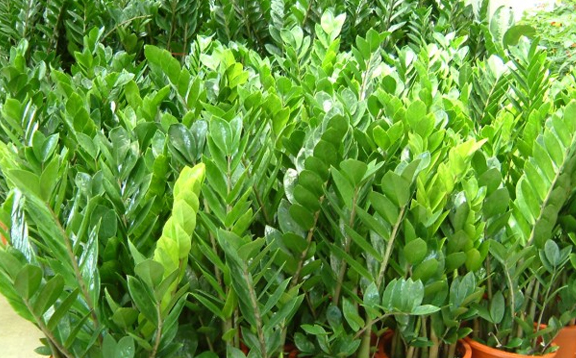
The Money Tree (Zamioculcas zamiifolia) is a perennial evergreen herbaceous plant, a rare foliage plant with underground tubers, native to tropical Africa.
How to properly water-propagate a Money Tree
Prepare the tools
A glass bottle with a narrow neck, tap water, and pre-prepared cuttings.
Specific steps
1. Prepare a bottle; the neck should be small so it doesn't tip over easily. Add tap water.
2. Cut a branch from the Money Tree and soak it in cool water for half a day; it cannot be placed in water immediately. Finally, insert it into the bottle.
3. After putting the branch in, pay attention to the water level; it must cover 5 to 6 cm. Don't worry about whether the branch has grown roots.
4. Once the branch has grown roots, it can be moved into soil for cultivation, because the Money Tree is not suited to long-term water cultivation.
5. A water-propagated Money Tree can be placed in offices, living rooms and other places, making it more ornamental.
How to properly prune a Money Tree
1. Precautions before pruning a Money Tree
Everyone has different preferences and aesthetics; we can prune according to the shape we want, but remember to water it a few days before cutting.
2. Specific methods for pruning a Money Tree
Pinching the Money Tree:
Remove the tender tips of the branches; this inhibits the branches from growing taller and encourages the surrounding branches to spread out flat.
Bud pinching of the Money Tree:
Promptly remove the irregular new buds at the base and along the trunk of the Money Tree to avoid consuming nutrients, but at the same time pay attention to protecting the strong buds in spots where branches are lacking, so they can be cultivated into useful branches.
Leaf removal of the Money Tree:
During the period when new leaves are budding, remove the old leaves so the whole plant looks vivid and dazzling, lush and green. Removing the old leaves can also allow new buds to grow again.
3. Pruning techniques for the Money Tree
Shaping:
Regularly prune the new shoots that keep growing. According to personal preference, it can be pruned into a natural shape, cloud shape, mushroom shape, etc. It can also be pruned into a shape resembling a melon seed. Avoid pruning it into a round shape, which looks rigid and tacky.
Branch pruning:
Clustered branches, crossing branches, inward-facing branches, overlapping branches, parallel branches and leggy branches should all be cut off. The central leader branch can also be considered for removal. Under special circumstances, one or two branches should be kept to lay the groundwork for future shaping.
Is it good to put a Money Tree in the office?
The branches and leaves of the Money Tree are lush and green, with a beautiful and elegant shape. Besides purifying the air, because it always sends out two compound leaves at a time, it is also called "Dragon and Phoenix Tree," carrying the fine meanings of good fortune and bringing in wealth, and it is also a fairly popular feng shui green plant. Today, the editor will teach everyone a few precautions for placing a Money Tree in the office. In this issuePlant feng shuitakes you to learn about it.
For keeping a Money Tree in the office, soil culture is best
The Money Tree (Zamioculcas zamiifolia) is a foliage plant with thick branches and leaves in deep, lush green; it can generally be grown in soil or water. But if kept in the office, in order to play a role in securing and retaining wealth, it is best to use soil culture, because water carries the meaning of flexible flow and does not play a role in gathering wealth and praying for blessings. At the same time, a soil-grown Money Tree feels more vibrant and fresh and lush.
The Money Tree is suitable for placement on a small balcony inside the office
The Money Tree is a sun-loving plant, so if your office has a small balcony, that will be the most suitable place to put it. With the added sunlight and fresh air, the Money Tree can grow better and exert a greater effect. If the office does not have better conditions, remember to still keep the Money Tree as close to sunlight as possible, or place it somewhere with light shining on it, to achieve the ideal wealth-boosting effect.
The Money Tree is not suitable for hanging placement
The above talked about suitable places to place the Money Tree in the office; next we will talk about the taboos. First, it cannot be placed suspended or in midair. The path to wealth needs backing and support, so in order to better gather wind and accumulate energy, and add fortune and wealth, be sure to place the Money Tree against a wall, leaning on the wall.
The placement area of the Money Tree must avoid sharp-corner sha
If the office area is limited, the wealth position for placing the Money Tree needs to be set reasonably. Generally speaking, the biggest taboo in feng shui is sharp-corner sha, so be sure to keep the Money Tree away from places with sharp-cornered furnishings around it, so as not to affect wealth luck. After choosing the placement position for the Money Tree, also pay attention to avoiding placing small furniture and decorative items with sharp corners around it.
The Money Tree should be pruned and cleaned promptly
After placing a Money Tree in the office, you also need to pay attention to timely care and cleaning. Dead branches and fallen leaves during the growth of the Money Tree should be pruned and removed promptly to ensure the health and vitality of the whole plant. At the same time, ensure the surrounding placement environment is clean and tidy, and remove dust and clean promptly. Only in this way can the Money Tree best play its wealth-benefiting role.
The several points introduced above are all aspects everyone needs to pay attention to when placing a Money Tree in the office. It is also hoped that readers can learn a few tricks and enjoy abundant wealth and added fortune in life.
Introduction to several common varieties of hydroponic flowers and methods of sourcing materials
Flowers cultivated directly with nutrient solution (or clear water) rather than soil or substrate are called hydroponic flowers. Hydroponic flowers have the characteristics of being clean, elegant, easy to care for and strongly vital, and can combine flower appreciation, root viewing and fish keeping in one, making them pleasing to the eye. They are not only excellent decorative ornamental items for greening and beautifying ordinary household life, but are also widely used in indoor decoration of various public places, and are even a most fashionable gift.1. Common types and varieties of hydroponic flowers.Plants generally suitable for hydroponics include plants of Araceae, Liliaceae, Agavaceae, Amaryllidaceae, Crassulaceae, Cactaceae, Commelinaceae, etc. Most of the original ecological environments where such plants grow are wet places or swamps, and most are easy to induce to sprout water-adapted root systems that can grow normally in water. Most quickly adapt to the aquatic environment, and their roots are white and highly ornamental, making them popular in the market.① Araceae plants: peace lily, Monstera deliciosa, Alocasia macrorrhizos, Caladium bicolor, pothos, Syngonium podophyllum, Money Tree, etc.
② Liliaceae plants: spider plant, Ophiopogon japonicus 'Argenteovariegatus', aloe, hyacinth, Aspidistra elatior, Haworthia fasciata, etc.
③ Agavaceae plants: Dracaena reflexa, Dracaena fragrans, Agave americana, Sansevieria trifasciata, Cordyline terminalis, Dracaena fragrans 'Massangeana', etc.
④ Amaryllidaceae plants: Clivia miniata, narcissus, Hippeastrum, etc.
⑤ Crassulaceae plants: Aeonium, jade plant, Bryophyllum pinnatum, etc.
⑥ Cactaceae plants: ball cactus, columnar cactus, Christmas cactus, etc.
⑦ Commelinaceae plants: Commelina communis, Tradescantia spathacea, Lophatherum gracile, Tradescantia zebrina, etc.
⑧ Other plant types: English ivy, parlor palm, Rhapis excelsa, etc.
2. Methods of sourcing materials for hydroponic flowers.According to the growth and reproduction characteristics of the flowers, hydroponic flowers can be sourced by three methods: the cutting water-insertion method, the division method and the unpotting and root-washing method.
① Cutting water-insertion method:This method is best carried out in spring and autumn, choosing varieties that root easily and take shape quickly, cutting nutrient-rich, robust aboveground parts or branches, and inserting them into water to induce rooting. After water-inserting the cuttings, pay attention to changing the water frequently and keeping the water clean. Once the new roots have grown to 1 to 2 cm, transfer them to nutrient solution for cultivation.
② Division method:The method of separating clustered plants with roots, or cutting apart the tiller buds, suckers, stolons, etc. of the flowers, for hydroponics.
③ Unpotting and root-washing method:After taking soil-cultured flowers out of their pots, remove the soil, rinse clean the substrate on the roots, and determine the amount of root pruning according to the characteristics of the variety. For most varieties, all the original soil-grown roots can be cut off, but some flowers' branches and leaves are extremely dependent on the roots; if the soil-grown roots are completely cut off, the aboveground part of the plant will quickly wilt or even die. Such plants should not have all their original soil-grown roots cut off; they can be pruned appropriately, keeping part of the soil-grown roots, to induce and cultivate new roots, and after new roots are produced, gradually prune the original old roots.
The introduction to several common varieties of hydroponic flowers and methods of sourcing materials ends here. Everyone is welcome to keep following Duorou Huapu to learn more about hydroponic flowers!