Does the Radermachera sinica bloom? Detailed guide to cultivation methods and precautions
Radermachera sinica is a common landscaping plant that purifies the air and lifts the mood, and families and offices alike enjoy growing it. Does planting this tree really bring happiness?
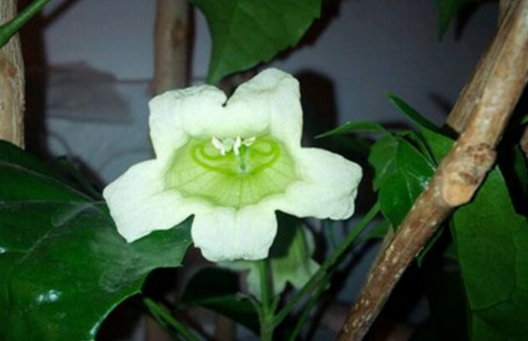
Does Radermachera sinica bloom?
Quite a few people who grow Radermachera sinica do not know that it can bloom, because growing it depends greatly on temperature and region, and the likelihood of it blooming when planted in the north is very small. In fact, Radermachera sinica can bloom; the key depends on your level of care.
Does Radermachera sinica bloom?
1. Blooming conditions
Radermachera sinica can bloom, but it must be cared for properly. To get it to bloom, you need suitable light, temperature and humidity, and the plant must have been grown for a fairly long time.
In everyday care, pay attention to the following points: keep the air circulating and create a ventilated environment; water only when the soil is dry and water thoroughly, and you can frequently mist the plant to maintain humidity; and let Radermachera sinica receive plenty of sunlight.
Radermachera sinica is a perennial plant, and with proper care it can bloom every year.
2. Blooming period
The blooming period differs in different environments. Radermachera sinica generally blooms from May to September each year, varying with differences in environment, and it does not often bloom in northern regions. Generally, a Radermachera sinica grown from seed takes relatively longer to reach blooming, while one propagated by cuttings or layering will bloom in 2-3 years. When Radermachera sinica blooms, the flowers are fairly small and elegantly pale, yellow or light yellow, with no fragrance. Yet they give people a feeling of closeness.
3. The meaning of Radermachera sinica blooming
Flower meaning:
Radermachera sinica, as the name suggests, has a flower meaning related to happiness. It represents: peace, happiness, and precious happiness.
Signs of blooming:
Radermachera sinica blooming carries a rather good meaning; when it blooms, it blooms the flower of happiness, a prayer for family harmony, happiness and joy. Radermachera sinica bears pale little yellow flowers that give a gently warm feeling - does it not make you feel happy too?
Radermachera sinica blooming is a good omen.
Cultivation methods and precautions for Radermachera sinica
Cultivation methods for Radermachera sinica:
1. Soil
Radermachera sinica likes loose, fertile, well-drained soil rich in humus. The soil mix for Radermachera sinica bought directly from outside is generally garden soil + leaf mold + decomposed organic fertilizer + river sand, mixed in a ratio of 5:3:1:1. Nowadays, however, perlite or vermiculite is mostly added to the soil to prevent it from compacting.
2. Water
Radermachera sinica likes a moist environment. During the growing period it not only needs relatively high ambient humidity but also a certain level of soil moisture; however, in spring, during the sprouting of new buds and the growth of new shoots, water should be appropriately controlled to prevent the branches from growing excessively.
In spring, water once every 2-3 days; in summer and autumn when temperatures are higher, water once every 1-2 days; in winter, control water appropriately and water once every 7 days. When watering, pay attention to the weather: choose a sunny day to water and do not water on cloudy days. In addition, in dry and hot seasons, mist the plant every day to maintain a certain humidity, so that the leaves do not turn yellow and drop from water loss.
3. Temperature
Radermachera sinica likes a warm, humid and hot environment, with an optimum growing temperature of 20 to 30°C. When the environment exceeds 30°C, provide appropriate shading, increase misting of the environment and leaf surfaces, or move it to a cool, ventilated place. When the temperature drops below 10°C, move Radermachera sinica into a shed. During overwintering, the indoor temperature should not be lower than 8°C, and at the very lowest must not fall below 5°C, to avoid cold damage or leaf drop.
4. Humidity
Radermachera sinica likes a moist environment, and air humidity is generally kept at 70-80%. A well-ventilated bathroom has great humidity! When placed indoors at home, you can frequently spray the plant with slightly warm clean water to keep the leaves fresh and also increase air humidity.
5. Light
Radermachera sinica likes light and tolerates slight shade; it can grow in either full sun or semi-shade.
Radermachera sinica performs differently at different growth stages. Seedlings tolerate shade relatively well and grow well only with shading; mature plants are best placed by a window indoors with ample light, sometimes in full light and sometimes in diffused light. If Radermachera sinica grows in a dark environment for a long time, it easily drops leaves.
6. Fertilizing
Every April, as temperatures rise, move Radermachera sinica outdoors to grow, and while repotting, add a certain amount of compound fertilizer to the soil; entering the peak growing season, apply decomposed liquid fertilizer once a month, and after the Mid-Autumn Festival apply a phosphorus-potassium fertilizer once to strengthen the plant's cold resistance and ensure it overwinters safely.
Note that when the summer temperature is above 32°C or the winter temperature is below 12°C, fertilizing should be stopped. At such temperatures Radermachera sinica grows slowly and has poor ability to absorb fertilizer, and fertilizer remaining in the potting soil for a long time easily causes fertilizer burn.
Small Radermachera sinica
Small Radermachera sinica and Radermachera sinica are the same plant, but people seem to prefer the mini version. The characteristic of small Radermachera sinica is that its leaves are glossy and bright, as if they were fake, and very beautiful.
The cultivation methods for small Radermachera sinica and large Radermachera sinica are no different; the environment is the same, only the amount of watering and fertilizing should be adjusted according to the size of the pot. Generally speaking, a smaller pot means water evaporates faster, so according to how dry or moist the potting soil is, appropriately shorten the watering interval.
Precautions for growing Radermachera sinica:
1. Avoid cold damage
Summer and winter are the most difficult times for Radermachera sinica - either hot or cold; heat is tolerable, but once it turns cold, the plant is easily frostbitten. So after winter begins, promptly move Radermachera sinica indoors for care and keep the temperature above 10°C. If insulation measures are improper and the temperature stays below 5°C for a long time, cold damage may occur and cause leaf drop.
2. Pests and diseases
Radermachera sinica fears freezing in winter and stuffiness in summer; a stuffy, hot environment easily leads to various pests and diseases. Do prevention work promptly. Once small insects appear on the leaves, immediately spray pesticide and strengthen ventilation. If leaves turn yellow and drop, promptly clean away the yellowed leaves and spray a fungicide.
Cultivation methods and precautions for Radermachera sinica, Radermachera sinica losing leaves, Radermachera sinica pictures, propagation methods for Radermachera sinica
Radermachera sinica
Many people may not know much about Radermachera sinica; in fact, it is a plant whose scientific name is Radermachera sinica, also called the bean tree. It can be said that Radermachera sinica is very easy to grow, and its growing requirements are not very high. It likes high temperatures, high humidity and a sunny environment. It tolerates high temperatures, fears cold, prefers moisture and avoids dryness. Radermachera sinica can basically be kept alive as long as there is water, so even people who have no time to care for it can grow it.Cultivation methods and precautions for Radermachera sinica
I. Cultivation methods for Radermachera sinica
Radermachera sinica likes warm, hot environments, with an optimum growing temperature of 20°C to 30°C. During the intense heat of midsummer, when the ambient temperature reaches above 30°C, provide appropriate shading with a shed, increase misting of the environment and leaf surfaces, or move it to a ventilated, cool place with filtered shade to spend the summer. When late autumn arrives and the ambient temperature drops to around 10°C, promptly move it into a shed or indoors. During overwintering, it is best to maintain a shed temperature of no less than 8°C, and at the very lowest not below 5°C, to avoid cold damage to the leaves or leaf drop. For home potted plants, move them indoors with air conditioning or an electric heater, ensuring the room temperature is no lower than 8°C so they can pass the winter safely.
Radermachera sinica losing leaves
Analysis of why Radermachera sinica loses leaves
1. Temperature causes: Radermachera sinica likes warm, hot environments, with an optimum growing temperature of 20°C to 30°C. During the intense heat of midsummer, when the ambient temperature reaches above 30°C, provide appropriate shading with a shed, increase misting of the environment and leaf surfaces, or move it to a ventilated, cool place with filtered shade to spend the summer. When late autumn arrives and the ambient temperature drops to around 10°C, promptly move it into a shed or indoors.
Radermachera sinica leaves turning yellow
What to do when Radermachera sinica leaves turn yellow?
Radermachera sinica is a sun-loving species that likes light, tolerates partial shade, and has strong drought resistance. The survival rate of planted seedlings is high, and large trees are also relatively easy to transplant successfully and take shape. In care, pay close attention to avoid problems such as yellow leaves. The main reasons for Radermachera sinica leaves turning yellow are as follows:
1. Too high a temperature causes yellow leaves and leaf drop. Many friends do not pay attention to the plant's comfort when placing Radermachera sinica, usually putting it quite close to an air conditioner or computer, and some even let the plant face the computer's air vent directly. This makes the plant very uncomfortable, and it certainly will not grow well and will drop leaves.
Propagation methods for Radermachera sinica
I. Layering propagation method for Radermachera sinica:
Layering propagation can be done between March and April. Below a node on a 2-year-old strong branch or stem, carry out ring-barking, with the bark removal width generally 2 to 3 times the diameter of the layered stem. Below the ring-bark cut, tie a 15 cm x 20 cm plastic film. Using clean, moist peat soil or sandy loam, shape a ball of soil 8 cm to 10 cm in diameter around the ring-bark site. Then wrap the soil ball well with plastic film, leave a water-catching opening at the top, and tie it against the thick main trunk to prevent it from drooping and being broken by wind. By late autumn, after the ring-bark site has grown relatively well-developed roots, cut it away from the parent plant and pot it separately.
Radermachera sinica pictures
I. About Radermachera sinica:
Radermachera sinica, namely Radermachera sinica. Radermachera sinica is also called: snake tree, bean tree, jiegu liangsan, niuwei tree, zhaoyang flower, mountain bean tree, kulingjiu (Taiwan, China), xiaoye niuweilian, gelu (Hainan Island), snakelet tree, honghua mu (Guangdong and Guangxi trees and shrubs directory), niuwei tree (Dendrology volume 2), cowpea tree (Funing, Yunnan), chili tree (Hekou, Yunnan), jiegu liangsan, senmu liangsan, zhaoyang flower, niuwei wood (Guangxi practical Chinese herbal medicine), bean wood, niuwei bean, snakelet bean, da zhaoyang (Guangxi Chinese veterinary medicinal plants), diesimao tree (Hainan) and so on. It has many names, and in the flower market it is also called by trade names such as Radermachera sinica and qilin ziwei.
Does Radermachera sinica bloom?
The scientific name of "Radermachera sinica" is Radermachera sinica. It likes high temperatures, high humidity and a sunny environment. It tolerates high temperatures, fears cold, prefers moisture and avoids dryness. For cultivation, use loose, fertile, well-drained loam and sandy loam rich in organic matter. The blooming period is from May to September, and the fruiting period is from October to December.
The uses of Radermachera sinica
Radermachera sinica is just such an ornamental plant. 1. It can remove odors. A potted Radermachera sinica can effectively absorb formaldehyde and benzene, making it the first-choice plant for a home after renovation. Through its leaves it can correct odors and has antibacterial properties, and it also has a certain ability to absorb harmful gases such as carbon monoxide in the air; of course, it also has a certain effect against waste gas produced by burning tobacco. Therefore, Radermachera sinica can serve as a "high-efficiency air purifier" in a newly decorated room.
Does Radermachera sinica purify the air?
Green plants play a very good role in beautifying the home, and they perform even more outstandingly in purifying the air. Radermachera sinica is just such an ornamental plant.
1. It can remove odors. A potted Radermachera sinica can effectively absorb formaldehyde and benzene, making it the first-choice plant for a home after renovation. Through its leaves it can correct odors and has antibacterial properties, and it also has a certain ability to absorb harmful gases such as carbon monoxide in the air; of course, it also has a certain effect against waste gas produced by burning tobacco. Therefore, Radermachera sinica can serve as a "high-efficiency air purifier" in a newly decorated room.
2. It can release oxygen at night. Besides purifying the air, Radermachera sinica can also absorb carbon dioxide and release oxygen at night, increasing the negative ion content in the air and raising air humidity. Because of this, Radermachera sinica is very helpful for improving indoor air quality. A small Radermachera sinica is also suitable for placing in the bedroom, where it can supplement oxygen, purify the air and benefit our sleep quality.
3. It displays a person's aesthetic style. As the saying goes, everyone has a love of beauty. Although Radermachera sinica is not as gorgeously charming and colorful as flowers, it reveals a resolute beauty within its plainness.
Related encyclopedia
pocket scale non-woven bag lamp wick bamboo shoot crab claw redmi note 3 ykk zipper ybs zipper Prunus sargentii climbing rose wild senna winter plum green pine wristwatch Omega Longines famous watch children's building blocks flint Cremastra appendiculata curling iron soursop
Does Radermachera sinica bloom? Radermachera sinica blooming pictures
Radermachera sinica is a very good large foliage-type potted plant. In the north it is generally grown indoors, but most often it is grown in homes and office environments. Its leaves are dense and verdant, full of vitality, and it can serve as a plant that boosts prosperity, bringing people a message of happiness. Now let us take a look at whether Radermachera sinica blooms!
Does Radermachera sinica bloom?
Radermachera sinica does bloom. In fact, quite a few people who grow it do not know that Radermachera sinica can bloom, because growing it depends greatly on temperature and region, and the likelihood of it blooming when planted in the north is very small. Whether Radermachera sinica blooms depends on strict environmental factors such as temperature, humidity and sunlight, and it must grow for a certain number of years. For example, pay attention to ventilation, pay attention to watering, and expose it to sunlight as much as possible; as long as it is cared for well, it may bloom every year.
The habits of Radermachera sinica
Radermachera sinica likes warm, hot environments, with an optimum growing temperature of 20°C to 30°C. During the intense heat of midsummer, when the ambient temperature reaches above 30°C, provide appropriate shading with a shed, increase misting of the environment and leaf surfaces, or move it to a ventilated, cool place with filtered shade to spend the summer. When late autumn arrives and the ambient temperature drops to around 10°C, promptly move it into a shed or indoors. During overwintering, it is best to maintain a shed temperature of no less than 8°C, and at the very lowest not below 5°C, to avoid cold damage to the leaves or leaf drop.
How to grow Radermachera sinica
1. Temperature: Radermachera sinica likes a warm, humid environment, and temperature is most important. Keeping the daytime temperature between 19°C-21°C and the nighttime temperature between 18°C-20°C is the most suitable growing temperature; too high or too low will affect its growth. In the hot midsummer, try to keep the temperature below 27°C. When the ambient temperature is very high, provide appropriate shading with a shed. Increase environmental humidity, thereby raising leaf-surface humidity. In winter, the temperature must not be below 8°C, and the humidity must not be below 5°C, otherwise it will be frostbitten below this temperature.
2. Humidity: Radermachera sinica prefers moisture in both its soil environment and indoor environment. Keep indoor humidity between 70-80%. In large banquet halls where humidity cannot be controlled, we spray the leaf surfaces once in the morning and once in the evening. If the humidity is too low or it stays in a dry environment for a long time, the leaves will curl and turn yellow, affecting its ornamental value.
3. Light: Radermachera sinica is a plant that likes sunlight and tolerates shade, and light is very important. Radermachera sinica likes to grow in a semi-shaded environment. In the north, we generally keep it indoors, so there is no problem of direct sunlight. It is, however, afraid of being placed in a dark place for a long time, where neither direct light nor diffused light reaches it; over time, it will certainly drop leaves. So in winter it should be placed on a balcony or by a window with ample sunlight to get enough light.
4. Watering: In summer, a potted Radermachera sinica should be watered once every 3 to 4 days, but this also depends on the individual situation. In winter, indoors in the north, Radermachera sinica almost stops growing, and watering should be controlled so that the potting soil simply does not dry out. If you water, water it thoroughly; if you do not water, do not pour a single drop into the pot. This is the principle, please remember it.
5. Pruning: The purpose of growing Radermachera sinica is for ornament and to complement the indoor environment. If the tree shape grows poorly, it will not be attractive, so prune it carefully, generally into a mushroom shape or a rounded mound shape. Cut away some old leaves and yellow leaves.
6. Soil: When Radermachera sinica is growing, soil is equally important. Choose a loose, breathable, well-drained and nutritious soil, usually mixed in the ratio of garden soil : leaf mold : decomposed organic fertilizer : river sand = 5:3:1:1. Persist in loosening the soil once a month during the growing season to ensure the roots are always in a well-aerated state. If water accumulates in the pot, drain it as soon as possible, and after the potting soil has dried out, repot and change the soil to keep Radermachera sinica growing better.
7. Fertilizing: During the growing period, fertilize Radermachera sinica diligently to ensure vigorous growth. Use compound fertilizer or a nitrogen-phosphorus-potassium 20:10:10 fertilizer or farmyard manure, etc.; in winter, fertilizing can be stopped.
8. Pest and disease prevention: Pests on Radermachera sinica generally include scale insects, mites and aphids. Use jiebisiding, methidathion, manjing, pyridaben, phoxim, omethoate and decis to control the insects. As long as you ventilate and change the air frequently, generally no pests will appear. Radermachera sinica's disease resistance is still quite strong. If the pest infestation is not severe, you may remove them by hand.