What to Do When a Potted Lemon Tree Loses Its Leaves? I'll Teach You the Correct Way to Prune
The lemon is a fruit people commonly use. It is a shrub plant with many uses and can be used for beauty care, so it is quite popular. That is why many people grow lemons as potted plants, keeping them at home to both beautify the space and provide something edible, killing two birds with one stone.
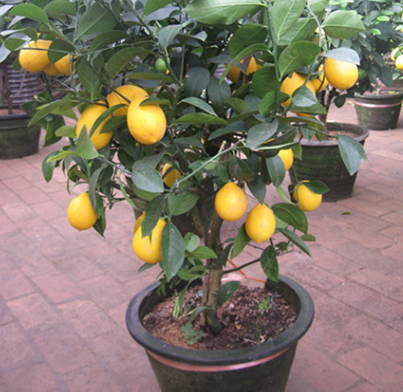
How to Prune a Potted Lemon Tree
Potted lemons need pruning, because pruning can promote high yields.
1. Basic Pruning Techniques for Lemons
When pruning lemons, the main techniques include pinching, heading back, thinning, renewal pruning, shoot twisting, bud removal, sawing off main branches and root pruning.
Pinching means removing the tip portion of new shoots that have not yet stopped growing during the lemon's growing season; heading back means cutting short part of a one-year-old shoot or a multi-year-old branch of the lemon; thinning means cutting off certain branches of the lemon from the base; renewal pruning means cutting off the terminal portion of a multi-year-old branch of the lemon to make it retract; shoot twisting means gripping some branches of the lemon tightly by hand at 3-5 cm from the base and twisting them with a large rotation or twisting them downward; bud removal means wiping off the tender buds in summer and autumn when the lemon's new shoots have grown to 1-2 cm; sawing off main branches means using a pruning saw to saw off the lemon's large branches that disrupt the tree shape, starting from the base; root pruning mainly refers to cutting off part of the lemon's large roots and lateral roots.
2. The Various Pruning Periods for Lemons
In fact, lemons can be pruned all year round; only the methods and purposes differ.
Pruning during the growth stagnation period mainly refers to winter; the pruning is mainly done after the fruiting period, and in areas with higher temperatures, dead leaves and diseased leaves can be cleaned up at the same time as pruning, while in areas with lower temperatures, pruning can be delayed until spring.
Pruning during the growing period mainly consists of summer pruning and flowering-period pruning. Summer pruning mainly involves bud removal, pinching and heading back, which can control branch growth and promote fruit development. Flowering-period pruning mainly involves cutting off some flowering branches; generally, flowering branches that do not grow leaves need to be cut off, which can reduce nutrient consumption. When pruning during the growing period, the main thing to pay attention to is disinfecting after cutting to avoid pests and diseases.
What to Do When a Potted Lemon Tree Loses Its Leaves
Many times, the green plants kept at home are brought back from the flower market. Experienced flower lovers all know that these potted plants need to go through an adaptation process when they are first brought home, and during this process, a large amount of leaf drop may occur.
Potted lemons do this too, but at this time there is no need to worry too much; this is a survival instinct of the lemon and it can recover. Generally, after the plant adapts to the new environment, the lemon can regain its vitality.
1. Overwatering a Potted Lemon
When growing lemons in pots, sometimes overwatering can cause the soil to become compacted and less breathable, and the soil easily becomes alkaline. When growing them, you can appropriately reduce watering, watering thoroughly only after the soil has dried out, and you can spray more water; in the north, you can also give it some ferrous sulfate solution.
You can regularly change the potting soil for the potted lemon.
2. Root Rot in Lemons
Another situation is that during daily care, watering too much or fertilizing too strongly causes the lemon to develop root rot. At this point, it will cause the lemon to drop a large number of leaves.
You can wipe off the lemon's flower buds, then cut off the rotten roots and replant it. After that, when growing it again, pay attention to watering.
3. Potted Lemons Infested by Red Spider Mites
Besides these care issues, it may also be the invasion of pests such as red spider mites that causes the lemon to drop leaves. At this time, you need to spray pesticide promptly for treatment and clean up the fallen leaves.
How to Prune a Potted Lemon Tree
Basic Pruning Techniques for Lemons
When pruning lemons, the main techniques include pinching, heading back, thinning, renewal pruning, shoot twisting, bud removal, sawing off main branches and root pruning.
Pinching means removing the tip portion of new shoots that have not yet stopped growing during the lemon's growing season; heading back means cutting short part of a one-year-old shoot or a multi-year-old branch of the lemon; thinning means cutting off certain branches of the lemon from the base; renewal pruning means cutting off the terminal portion of a multi-year-old branch of the lemon to make it retract; shoot twisting means gripping some branches of the lemon tightly by hand at 3-5 cm from the base and twisting them with a large rotation or twisting them downward; bud removal means wiping off the tender buds in summer and autumn when the lemon's new shoots have grown to 1-2 cm; sawing off main branches means using a pruning saw to saw off the lemon's large branches that disrupt the tree shape, starting from the base; root pruning mainly refers to cutting off part of the lemon's large roots and lateral roots.
The Various Pruning Periods for Lemons
In fact, lemons can be pruned all year round; only the methods and purposes differ.
Pruning during the growth stagnation period mainly refers to winter; the pruning is mainly done after the fruiting period, and in areas with higher temperatures, dead leaves and diseased leaves can be cleaned up at the same time as pruning, while in areas with lower temperatures, pruning can be delayed until spring.
Pruning during the growing period mainly consists of summer pruning and flowering-period pruning. Summer pruning mainly involves bud removal, pinching and heading back, which can control branch growth and promote fruit development. Flowering-period pruning mainly involves cutting off some flowering branches; generally, flowering branches that do not grow leaves need to be cut off, which can reduce nutrient consumption. When pruning during the growing period, the main thing to pay attention to is disinfecting after cutting to avoid pests and diseases.
How to Grow a Potted Lemon Tree
We have eaten strawberries, mint and kumquats grown in our own pots, so have you ever thought that when the hot summer comes, it would be so nice to have a lemon tree at home, so you could pick lemons anytime and make lemon water? This dream is not hard to achieve. Indeed, some people do grow potted lemons! So here comes the question: how do you grow a potted lemon tree?
How to grow a potted lemon tree? See below for details:
1. Generally, lemons bear fruit in two years, and three-year-old ones can bear more. First, you have to do this: since we are all growing them in pots, you must change the soil in spring and autumn. I use a very large foam box. Pull the whole lemon plant out, and except for the main root, cut off all the other fine roots with a shovel, then spread fertilizer soil on the bottom of the pot, add a layer of garden soil, and then plant it. This is very simple. If the seedling is not large, it is not hard physical work either. I only had my husband help pull it out this year.
2. After planting, just leave it alone after autumn and let it grow. When winter is almost over, around the Beginning of Spring, this is when friends should pay attention. If you want the lemon to bloom more and bear more fruit, this is the time: take some branches, whether thin and long or thick and sturdy, it does not matter. As much as possible, you must bend them downward as much as possible, forming an n shape with the branches at the bottom. When bending, be careful not to break them. Good, fix them with string, and try to make as many n shapes as possible along the whole lemon plant. This will promote nutrients moving downward, resulting in more flowers and more fruit.
3. The rest is simple. As long as you pay attention to pollination when it flowers, and add fertilizer when it fruits, preserving the flowers and fruit is basically no problem.
4. Some flower lovers mentioned that some lemons only grow leaves and do not bloom. This is also a common problem with lemons. Here, please note, flower lovers: lemons need pruning! It is unlikely that we can prune as often as fruit farmers do.
5. Lemon leaves, if it is a perfume lemon, do not throw away the leaves after cutting them; use them to steam fish. Once the fish is done, it will carry a lemony fragrance! If there are many leaves, wrap them in gauze, or put them in any box, and placing them in a room makes a natural fragrance.
6. Also, here comes the secret. In summer, you must get the timing right, around the end of August or the beginning of September, gradually... slowly stop watering the lemon. It is very hot where I am, so I generally give it just a small cup of water every day. Wait until the soil in the pot becomes dry, and you see the lemon's leaves all become very dry, almost GAME OVER. At this point, water it thoroughly all at once, then resume normal watering. You must control it well, do not let it dry out and die. I generally just go by feel for this process.