Heather Propagation Methods and Complete Variety Guide with Pictures
There is a unique and beautiful flower that represents loneliness, betrayal and despair, and it also has a lovely name: heather. Let us get to know it.
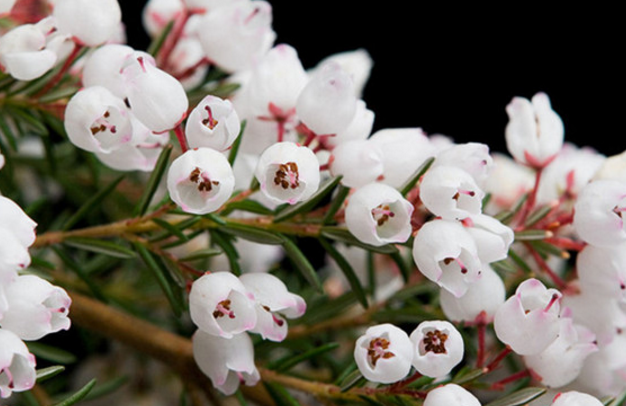
Heather propagation methods
1. Heather cutting propagation
Heather cutting propagation can be done in summer, though November is usually chosen for cuttings. Select relatively robust branches, generally cut to about 3——4cm. Treat the cuttings for rooting, then insert them into a propagation tray; the soil is best as a mix of sand and peat.
After heather cuttings are taken, they need to be kept in a shaded place for care, with the temperature maintained at 15℃——25℃; be careful not to let it get too high. About one month after cutting, they will root.
Once heather has rooted, normal care is all that is needed, but during the growing period the tips should be pinched back in time. In April, the heather seedlings can be transplanted into pots and kept in a greenhouse until the heather has grown enough roots.
2. Heather seed propagation
Heather seed propagation is mainly carried out in spring, using the indoor pot-sowing method. Sow the heather seeds and keep the germination temperature at 15℃ to 25℃; generally, they will sprout 10 to 15 days after sowing.
3. Heather layering propagation
Heather layering propagation is carried out in spring and summer, using the air-layering method. At a point 15cm from the heather's terminal bud, make a ring cut in the bark, then wrap it with soil and film, and the cut area will root. Once the heather has grown enough roots, in autumn the branch can be cut off together with the roots and planted.
4. Heather division propagation
Heather can be divided, and division is generally done after the flowers fade, and can be combined with layering.
Bury the heather branches to be layered with soil, control watering, and after about one month a large number of roots will grow; at this point division can be carried out.
Complete heather variety guide with pictures
1. Lily-of-the-valley heather
The form of lily-of-the-valley heather is very much like an urn-shaped bell, and it is named for its flowers resembling lily of the valley. When a breeze comes, strings of them sway in the wind, looking very cute. It combines the elegant lightness of lily of the valley and also blends in the refinement of azaleas. The plant is short, the leaves are smooth, and the flowers are small and numerous, white in color. It is very famous abroad and has high ornamental value.
2. Short skirt heather
Short skirt heather is an evergreen shrub plant, suitable for potted cultivation and also suitable for flower beds and flower borders. It can be made into flower tea to taste, and the nectar also has high medicinal value. The flowers are pink and also small and numerous, bell-shaped, really beautiful.
3. Christmas heather
Christmas heather is a relatively famous variety among heathers. In Japan it is called snake-eye heather, and its English name means “desolate land.” It also has bell-shaped flowers, small and numerous, pink with a slight purple tint; this color combination is very comfortable and pleasing to the eye.
4. Spring heather
Spring heather, also called winter heather, is a short plant with fine leaves and slow growth, abundantly produced in southern Europe. As a type of heather, the essential oil extracted from it has beauty and skincare benefits.#p#Subtitle#e#
5. White heather
White heather, an evergreen tree, symbolizes loneliness. It is not only beautiful in appearance but also highly useful; its roots and neck can be used to make smoking pipes.
6. Dense-leaved heather
The flower shape of dense-leaved heather is a slender tube and variable: sometimes hairy, sometimes smooth, sometimes dry, sometimes with mucus. The flower color is very vivid, rose red, and at the tip of the flower there are four short yellow or white sepals, very bright and beautiful.
7. Slender-necked heather
Slender-necked heather has very short leaves and relatively wide leaf blades. The flowers are about 1 inch long, opening downward, in a narrow elongated neck shape. The branches are crowded with fresh flowers, the calyx is entirely red, and it likes sunlight.
8. Berry heather
Berry heather has light green leaves and pure pink flowers gathered in umbel-like clusters. The flowers are small and numerous, forming terminal compound corymbs. The plant can grow to 2.5 m tall, and the flowering period is from September to November.
9. Glandular-haired heather
Glandular-haired heather has red elongated flowers, small and numerous, with many branches. Spring is its flowering period, and when the flowers bloom, the narrow leaves form three bract-like structures covering the sepals.
In addition to the heathers introduced above, there are also Scottish heather, slender heather, willow-leaf heather, tree heather and many other types. This unique flower is not only beautiful but also practical; it can both beautify and nourish the body, and has high economic value.
Heather cultivation methods
Heather cultivation methods
Soil
For heather cultivation, fertile acidic soil is generally best. The soil should be loose, airy and well-draining; peat soil can be used.
Light and temperature
Heather likes a cool climate and requires sufficient light. It can tolerate cold and fears high temperatures. Its growing temperature is between 15℃--35℃. In winter it should not be too cold, and in summer it is best not to exceed 35℃; shade should be provided in time. Natural light is generally required, but it must be sufficient.
Watering and fertilizing
Heather does not have high fertilizer requirements, and fertilizing is generally done together with watering. When watering, the water is best treated first, and the best time to water is in the morning. Its demand for fertilizer is not high, but sufficient nutrients and balanced elements need to be ensured. Fertilizing can promote heather flowering, but generally after August, fertilizing should stop.
Heather propagation methods
Heather propagation is generally mainly by cuttings, carried out in November, and can also be done in summer. In addition, seed propagation and layering propagation can also be used, and layering generally uses the air-layering method.
How does heather propagate? Heather propagation methods / sowing / cuttings / division / layering
Heather is a relatively common ornamental flower in people's lives, and it can be seen in many regions of our country. As more people grow it, questions about its propagation have also become a concern. How does heather propagate? What are the heather propagation methods? Below, the editor will guide everyone to learn about it.
1. How does heather propagate? Sowing / cuttings / division / layering
When it comes to how heather propagates, it is mainly divided into four methods: seed propagation, cutting propagation, division propagation and layering propagation. As long as we operate properly, the survival rates of these four propagation methods are relatively high. The specific operation methods are introduced in detail below, and interested friends can learn about them.
2. Heather propagation methods
Seed propagation
Seed germination: Before propagating heather by seed, it is best to soak the seeds in warm water at about 40℃ for 1-2 days. When the seeds begin to absorb water and swell, take them out. This can play a role in promoting germination and allow them to sprout more quickly after planting.
Sowing method: Among heather propagation methods, seed propagation is one of the more commonly used. First, evenly scatter the soaked seeds on the soil surface, then cover them with 1cm of soil and water them. When watering, it is best to use the immersion method: place the flower pot halfway into water and let the water slowly seep up. After that, they will sprout in about 10-15 days.
Cutting propagation
Selection of cuttings: Before propagating heather by cuttings, we must first select the cuttings. Generally, it is best to choose relatively robust branches free from pests and diseases as cuttings, as the survival rate will be higher. If we choose branches that already look frail, then it is basically very difficult for them to survive, so everyone should not be too casual when selecting.
Cutting method: Among heather propagation methods, cutting propagation is relatively simple. First, use chopsticks to poke a hole in the soil, then trim off the leaves at the bottom of the cutting, and afterward insert the cutting into the soil. This operation can prevent the cutting from being damaged and is very practical.
Layering propagation
When propagating heather by layering, we should choose robust long branches, then bend and bury them into the soil, or use serpentine layering. After they root, separate them from the mother plant. This method is generally best carried out only in spring, because the climate is more suitable for its growth, so the survival rate will be somewhat higher.
Division propagation
When carrying out division propagation, we can do it together with repotting, and the time can be chosen in spring and autumn. When dividing, we should lift the overly dense mother plant out of the pot soil, then cut it into several clumps and pot them separately, planting as we divide; they are extremely easy to establish. Generally, after potting, it is already a complete flowering plant.