How to grow Gold Berry? Cultivation methods, precautions and propagation techniques
Gold Berry is an ornamental fruit plant with a peculiar fruit shape and a very long fruiting period, making it highly ornamental. Gold Berry is widely used as a potted plant. Gold Berry prefers a warm and humid growing environment and requires sufficient light. The golden Gold Berry actually does not have very high environmental requirements, so this plant is relatively easy to grow.
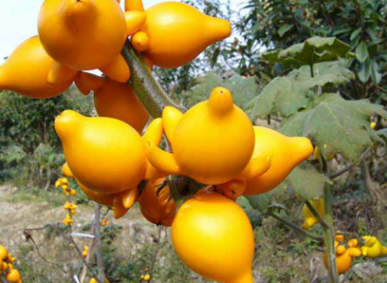
How to grow Gold Berry and precautions
Gold Berry cultivation methods:
1. Soil
Gold Berry prefers loose, fertile, well-drained, slightly acidic sandy soil. It can also grow in neutral or slightly alkaline soil and prefers deep soil layers.
2. Temperature and light
Gold Berry prefers a warm and sunny growing environment and is not cold-tolerant. The suitable growing temperature is 20°C to 30°C, and growth stops when the temperature falls below 0°C. Therefore, Gold Berry needs to be kept indoors for the winter, and the overwintering temperature should be above 10°C. In summer, it can tolerate high temperatures above 35°C, but cannot endure prolonged high temperatures. Gold Berry is more suitable for growing under strong light and cannot be kept in too much shade for a long time. Insufficient light will cause the plant to grow leggy, with leaves turning yellow and falling off.
3. Watering and fertilizing
Gold Berry has a relatively high demand for water and fertilizer, prefers a humid environment, and is averse to drought and waterlogging. Watering should be moderate. During hot and dry summer weather, it can be watered once or twice a day. In addition, when potting or repotting Gold Berry, sufficient base fertilizer should be applied. During the growing period, to promote better growth, more nitrogen fertilizer can be applied, with liquid fertilizer applied once every half month. During the flowering and fruiting periods, phosphorus and potassium fertilizers should be the main focus.
Precautions for growing Gold Berry:
1. Dwarfing and fruit thinning
To fully dwarf the Gold Berry plant, pinching can be done during the growing period, removing the terminal buds to encourage side buds to develop. After Gold Berry sets fruit, since the fruit yield is relatively large, supports can be set up to bear the weight, and fruit can be appropriately thinned to make the fruits larger.
2. Pest and disease control
Gold Berry commonly suffers from leaf spot disease, anthracnose, viral disease and other diseases. Pests include aphids, whiteflies and red spiders, which can be controlled by spraying chemicals.
How to propagate Gold Berry
1. Seed propagation of Gold Berry
Seed propagation is a commonly used propagation method for Gold Berry.
Seed propagation is generally carried out in spring, and seeds need to be collected in advance. After the Gold Berry fruits mature, remove the seeds and sow them on a sand bed. Keeping the temperature at 20°C——25°C gives a very high germination rate. Generally, germination occurs about two weeks after sowing.
Note that sufficient moisture must be maintained.
2. Cutting propagation of Gold Berry
In addition to sowing, Gold Berry can also be propagated by cuttings in summer. In summer, select the tender top shoots of Gold Berry for cuttings. Generally, the cuttings should be about 15 cm long. Insert the cuttings into a sand bed, and they will take root in about half a month. After rooting, transplant them.
3. Grafting propagation and layering propagation of Gold Berry
Gold Berry can also be propagated by grafting and layering.
Grafting is generally carried out in spring and autumn, mainly by bud grafting or cut grafting. Grafting propagation can bring earlier flowering and fruiting.
For layering propagation, generally select relatively robust 1-year-old or 2-year-old branches of Gold Berry, remove a ring of bark from the branch, usually by girdling, with a width of about 2 cm. Cover the treated branch with moist soil or sphagnum moss, and it will take root in about 2 months. When the root system has grown relatively well developed, remove it and replant it.
How to grow Gold Berry? Cultivation methods and precautions for Gold Berry
[Common question] How to grow Gold Berry?
[Expert answer]
Gold Berry cultivation methods:
1. Soil:Gold Berry grows well in deep, loose, fertile, well-drained, slightly acidic sandy loam soil, but it can also grow in neutral and slightly alkaline soil.
2. Fertilizing:Apply sufficient base fertilizer when potting or repotting. About 50 grams of hoof and horn pieces can be placed in each pot. Apply more nitrogen fertilizer during the seedling stage, and apply liquid fertilizer once every half month. After flowering and fruit setting, focus on phosphorus and potassium fertilizers, or spray a 0.2% potassium dihydrogen phosphate solution on the leaves to make the fruits plump and the seeds full.
3. Temperature:Gold Berry prefers warmth and is not cold-tolerant. It needs to overwinter indoors and should be kept at 10°C to 25°C. The optimal growing temperature is 20°C to 30°C. Growth is slow at 5°C to 10°C, stops below 5°C, and frost damage occurs below 0°C. In summer, it can tolerate high temperatures of around 35°C, but they should not last too long.
4. Light:It prefers sufficient sunlight and is averse to long-term shading. It is most suitable for growing under strong light. If light is insufficient, the plant will grow leggy, and the leaves will turn yellow and fall off.
5. Moisture:Gold Berry prefers humidity and is averse to drought and waterlogging. In summer, water once or twice a day to prevent excessive dryness and leaf drop, which affects growth. If the soil is too wet during the flowering period, flowers are prone to dropping, reducing the fruit set rate. During the fruit ripening period, the soil should be kept moist to prevent the fruits from drying, yellowing and losing their luster. Under high temperature and dryness, it is prone to flowering without fruiting.
6. Dwarfing and fruit thinning:To fully dwarf a tall plant, remove the terminal buds when its stems and branches grow to 50 cm high, so that the plant no longer grows taller and side buds grow instead. When the side buds reach an appropriate height, spray with paclobutrazol to inhibit height and promote flowering until the fruit ripens. After fruiting, if the plant has too many fruits, supports should be set up to prevent breakage and lodging. Fruit can be appropriately thinned without affecting ornamental value to ensure the fruits are large.
7. Pests and diseases:Leaf spot disease and anthracnose commonly occur and cause damage. Spray with a 1,000-fold dilution of 10% antibacterial agent 401 acetic acid solution. Pests include aphids and whiteflies, which can be killed by spraying with a 1,000-fold dilution of 2.5% rotenone emulsifiable concentrate. Gold Berry has relatively few pests and diseases during the growing period, with occasional damage from viral disease and red spiders, which can be controlled with 70% thiophanate-methyl and 40% omethoate respectively.
Precautions:
Choose fertile, loose, well-drained sandy loam soil for planting. If drainage is poor, the roots are very prone to rotting. Gold Berry likes fertilizer. Apply fertilizer once every half month during the growing period, and apply phosphorus and potassium fertilizers 2-3 additional times from bud formation to the young fruit stage. If the flowering period encounters high temperature and dryness, pollen does not easily disperse, affecting pollination and fruit setting. Pay attention to watering and shading. In autumn, cut 50-60 cm long fruiting branches as cutting material, mainly using stems and fruits, remove the leaves, and insert them in clean water to keep them fresh.
[Editor's review] Gold Berry is an ornamental fruit plant with a peculiar fruit shape and is also precious. The editor of First Agricultural Economics above introduced its cultivation methods and precautions for you. Its ornamental fruit period is very long. Friends who are interested can grow one themselves. We hope this article is helpful to you.
Cultivation methods and precautions for Gold Berry
Chinese scientific name: Gold BerryLatin scientific name: Solanum mammosum Linn.Other names: Five-fingered Eggplant, Five Generations Under One Roof Fruit, Nipple Eggplant, Frankincense Eggplant, Multi-headed Eggplant, Ox-head Eggplant, Ox-horn EggplantKingdom: PlantaePhylum: AngiospermsClass: DicotyledoneaeSubclass: AsteridaeOrder: SolanalesFamily: SolanaceaeGenus: SolanumCategory: Erect branching small shrubEnglish name: Gold BerryFlower meaning: as one wishes, auspiciousness, good fortune shining, five generations under one roofGold Berry, formerly known as: nipplefruit, also known as five-fingered eggplant, Latin name: Solanum mammosum L. English name: Abiu, also known as caimito. Solanaceae, Solanum, erect herb. The stem is covered with short pubescence and flat prickles; the branchlets are covered with nodal long pubescence, glandular hairs and flat prickles. The prickles are wax-yellow, glossy, pale purple at the base, pointed at the tip, subulate, straight or slightly curved. Native to the Americas, it has now been successfully introduced and cultivated in Guangdong, Guangxi and Yunnan. The fruit shape is beautiful, and it is mostly cultivated for ornamental purposes. It prefers warm, humid and sunny environments. The optimal growing temperature is 15-25°C. It has a certain degree of cold tolerance and is afraid of waterlogging and drought. It can tolerate low temperatures of 3-4°C. It is suitable for fertile, loose and well-drained sandy loam soil. The winter temperature must not be lower than 12°C. It can be propagated by sowing and cuttings, and is widely used in cut flowers and potted flowers. The fruit does not change color or shrink for a long time and is golden and bright, symbolizing good fortune shining, five generations under one roof, and auspiciousness as one wishes.1. Morphological characteristics
Erect herb, about 1 m tall. The stem has short pubescence and flat prickles. The branchlets are covered with nodal long pubescence, glandular hairs and flat prickles. The prickles are wax-yellow, glossy, pale purple at the base, 3-5 mm wide, pointed at the tip, subulate, straight or slightly curved, 4-12 mm long.