How to grow a horse chestnut? Care tips and general price guide
The horse chestnut is a deciduous tree. Its wood is fine and beautiful and can be made into many kinds of utensils, and its seeds can be used as medicine, soap and more. It is highly valuable and also a large ornamental plant. You might even see one by the roadside.
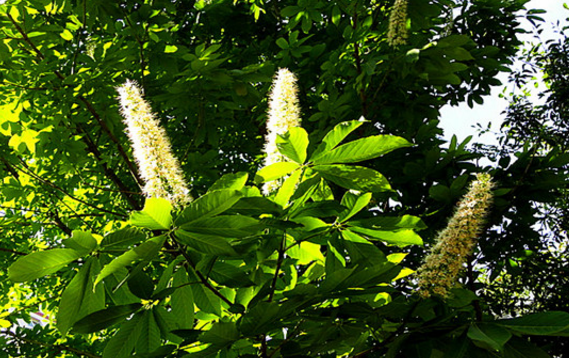
How to grow a horse chestnut correctly and what care tips to keep in mind
Horse chestnut growing methods:
1. Light and temperature
Growing a horse chestnut should follow its growth habits. First, the horse chestnut needs plenty of light, so place it in a sunny spot. Its growth requires fertile, deep, well-drained soil, and the growing temperature must stay warm. The horse chestnut is cold-resistant, but for normal growth in winter it must be moved indoors to a warm, sunny place so cold air does not freeze and damage it.
2. Watering and fertilizing
After planting the horse chestnut, water it immediately. Wait one week before the second watering, and the third watering should be done on the 10th day after the second watering. After these three waterings, water generously once a month, just until the soil is thoroughly soaked.
Once the plant enters its growing season, water sparingly in the rainy months of June to August. In late autumn, give one thorough watering each month, then one more thorough watering in early winter. After winter begins, stop watering, and water again in March of the following year to thaw the soil, so March requires a large amount of water. In spring, water frequently to keep the plant's growing environment moist.
Fertilizing: The horse chestnut likes fertilizer. During planting, apply cow or horse manure or leaf mold as a base fertilizer.
During the horse chestnut's growing period, in June of the first year you can apply urine fertilizer to promote the growth of branches and leaves. By the end of August, apply phosphorus and potassium fertilizer to increase the horse chestnut's ability to resist freezing damage. In autumn, add one application of leaf mold, and the amount applied should be large.
3. Propagation
Horse chestnut propagation generally uses the sowing method. First collect seeds from strong, healthy mother trees that are free of pests and disease, dry them in the sun until completely dry, then store the seeds while moist in moist, well-drained soil, taking care to leave ventilation holes.
By late March in spring, use the spot-sowing method and choose fertile, well-drained neutral sandy soil for planting. After planting, keep the soil moist, and weed and loosen the soil regularly.
Horse chestnut care tips:
1. Pests and diseases
During the growing period, pay close attention to pests and diseases of the horse chestnut. Common pests of the horse chestnut include: the green prominent moth (Thosea sinensis), the copper-green scarab beetle, the gold-haired caterpillar, and the mulberry longhorn beetle. Take care to prevent and control them.
2. Pruning
Be sure to prune the horse chestnut. Do this in winter after the leaves drop or before bud break in spring. Cut back long branches and prune it into a natural round-headed shape.
3. Repotting
Because the horse chestnut grows quickly and uses up a lot of nutrients, repot it once a year to ensure sufficient nutrition.
What is the general price of a horse chestnut?
Price one: Horse chestnut prices: (trunk diameter) 3 cm - 5 cm - 7 cm - 9 cm - 10 cm / horse chestnut prices 30 - 90 - 260 - 500 - 750 (yuan).
Price two: A horse chestnut with a trunk diameter of 3 cm costs 40 yuan, 5 cm costs 90 yuan, 7 cm costs 240 yuan, 9 cm costs 500 yuan, 10 cm costs 700 yuan, 12 cm costs 1500 yuan, and 15 cm costs 2000 yuan.
The above prices are all online reference prices; for actual prices, please refer to the specific purchase situation.
Introduction to Gerbera varieties, and how to grow Gerbera varieties
The Gerbera belongs to the Asteraceae family and is a perennial herbaceous plant. It is also called the African daisy or the Transvaal daisy. The methods mainly used to propagate it are sowing and division. Its rhizome is very short, surrounded by remaining leaf stalks, and most of its leaves are basal. Its flowers are large, and the flower colors include white, yellow, orange, purple, red and so on. In warm regions it can be supplied year-round, and it is also a relatively important material in modern cut flowers. Today, the editor will explain its growing methods and introduce some of its basic information.
Growth habits
The Gerbera likes environments that are warm in winter and cool in summer, with air circulation and plenty of sunlight. It is not cold-tolerant and dislikes hot weather. However, it likes fertile, loose, well-drained sandy loam rich in humus as the best option, and dislikes heavy clay soil for planting. It most likes to grow in slightly acidic soil.
The optimal temperature for its growth is between 20-25 degrees during the day, and around 16 degrees at night. The optimal temperature for its flowering must not be lower than 15 degrees, and in a growing environment where the daytime temperature does not exceed 36 degrees, it can flower year-round. In winter it also enters a dormant period, and the most suitable temperature is between 12-15 degrees. If it drops below 7 degrees, it will stop growing. Because it is a semi-cold-tolerant flower, it can also endure brief low temperatures of 0 degrees.
The Gerbera is a flower that likes light, and in winter it also needs full light, but in the hot summer season we should also shade it appropriately. Also strengthen ventilation for it, thereby lowering the air temperature and preventing high temperatures from causing it to go dormant. Its response to photoperiod is not sensitive, and the natural day length has little effect on the number of flowers and flower quality.
Growing methods
1. The production greenhouse must be equipped with ventilation, shading, and heating facilities. If conditions allow, it can also be equipped with raised beds, ground fabric, or an irrigation system, etc. The greenhouse must be airtight to prevent insects from entering.
2. In the greenhouse, we should best keep the temperature between 15-25 degrees. The highest should not exceed 30 degrees, and the lowest should not be below 13 degrees. Generally, in production the daily average temperature should be between 18-19 degrees. When it exceeds 19 degrees, we should ventilate it. At the same time, the nighttime temperature should not be too high, otherwise it will affect normal flower bud differentiation. The ideal nighttime temperature should be between 15-18 degrees.
3. Use an air-permeable and well-drained medium. We should best use a substrate mixed from peat and perlite, as this is more conducive to the absorption of trace elements.
4. Potted Gerberas are very sensitive to water, so we must ensure the correct timing for watering. Watering in the morning or evening is best. When the plant begins to grow roots, we must water from the bottom. Of course, bottom infiltration can also be used. During high temperatures, we can also water from above the plant, but we must also take care to prevent fungal mold from developing from the center of the plant.
5. During its growth process, we need to provide it with appropriate light. If the light duration is insufficient, we should also provide artificial supplemental light for it.