Is the potted white butterfly plant toxic? Learn the correct way to grow it
White butterfly, also known as arrowhead vine, is a plant in the genus Syngonium of the Araceae family. The white butterfly has an elegant form, varied leaf shapes, and a fresh, natural look. Along with pothos and philodendron, it is known as one of the shade-tolerant indoor foliage plants of the Araceae family. It is also a very popular indoor hanging-basket decorative material in Europe and America today.
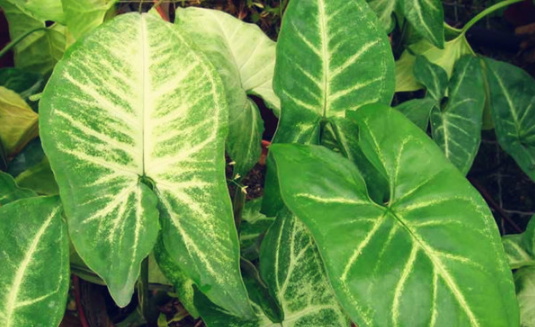
How to correctly grow potted white butterfly
In recent years, white butterfly has become a representative of household foliage plants, which has led many flower enthusiasts to grow it competitively. Growing potted white butterfly is not difficult,
1. Soil for white butterfly
For white butterfly, the soil should be a fertile, loose sandy loam with excellent drainage. It is best to use a potted soil mix made from the common leaf mold, garden soil, and coarse sand.
2. Watering white butterfly
White butterfly likes moist environments, so it is rather afraid of dryness. During the vigorous summer growth period of white butterfly, it needs to be given sufficient water to keep the potting soil moist, so the stems and leaves can grow and develop quickly.
Water should be sprayed around the leaf surfaces every day to keep the surrounding air humidity relatively high. If the leaves grow strong and healthy, they will have a very good ornamental effect. If water is insufficient or it suffers from drought, the leaves will become rough and smaller.
3. Light for white butterfly
White butterfly can quickly adapt to its growing environment and grow healthily, and it can also adapt to different levels of light. Stems and leaves growing in strong light will appear light purple, and the leaves will be relatively thick and large with a lighter color;
those growing in weak light will have narrow sepals and dark, dense leaf color. White butterfly is best grown in places with bright, scattered light, with 50% shading being most suitable. Variegated varieties will also show indistinct color patches when light is insufficient.
4. Temperature for white butterfly
White butterfly is not cold-tolerant. The growing temperature should be controlled within the range of 22-30°C. At 15°C it grows relatively slowly, at 10°C the stems and leaves stop growing, and in winter, frost damage may occur at around 5°C.
5. Fertilizing white butterfly
During the growing period, white butterfly needs to be fertilized once every 1-2 weeks. Pay attention to the care of white butterfly. If it is placed indoors, it does not need to grow too quickly, so control the amount of fertilizer. You can appropriately reduce the use of nitrogen fertilizer to increase the brightness of the leaves and make the white markings on the leaves more obvious.
6. Pests and diseases of white butterfly
Common pests and diseases of white butterfly include leaf spot and gray mold. When these occur, 70% zineb wettable powder can be sprayed for control. Pests of white butterfly include thrips and whiteflies, and so on. When pests occur, a 1500-fold solution of 40% omethoate can be sprayed to kill them.
Is white butterfly toxic?
1. White butterfly is toxic
White butterfly is a plant of the Araceae family. It is said that plants of the Araceae family are basically all toxic. The toxic parts are mainly the sap, the water that drips out, and the rhizome parts, and white butterfly is no exception.
White butterfly is toxic. The main toxic parts are its sap and rhizomes. During cultivation, if the sap accidentally contacts the skin, or enters the mouth, or splashes into the eyes, and so on, it may cause poisoning. If it enters the mouth, it may cause a burning sensation in the throat, numbness of the mouth and tongue, and symptoms such as edema.
If you accidentally come into contact with the sap of white butterfly, you should immediately wash it with plenty of clean water. You can also use some cooling liquids or licorice-type foods, and drink more boiled water to sweat and urinate more to help detoxify. If the condition is relatively serious, you need to seek medical treatment promptly.
2. Points to note when growing white butterfly indoors
White butterfly is a good indoor ornamental plant with strong foliage appeal, and it is deeply loved by people, so many people grow it. It is possible to grow it indoors, but there are several points to note.
First, when growing white butterfly, try to touch it as little as possible. In households with small children, it is best not to plant white butterfly. Small children are young and less careful, and they are very curious, liking to pick up things and eat them. If they accidentally eat the leaves or stems of white butterfly, and so on, it may cause poisoning.
Second, if white butterfly is grown indoors, then contact should be reduced as much as possible. Do not touch the sap of white butterfly, and do not try to eat it, so as to avoid poisoning.
Finally, when growing white butterfly, sometimes in order to make it grow well or keep the plant shape attractive, pruning and similar operations are always unavoidable. If pruning and so on are to be done, it will inevitably cause its sap to flow out, so at this time it is best to wear gloves for the operation, and after finishing the work, thoroughly wash both hands.
Phalaenopsis growing methods and precautions, Phalaenopsis potted plant prices
Phalaenopsis is an orchid shaped like a butterfly, and has the reputation of "Queen of Orchids." Would such a meaningful Phalaenopsis not stir your desire to grow it? If so, do you know the growing methods and precautions for Phalaenopsis? Do you know the price situation for Phalaenopsis? Below, the editor of Aiyouwo will introduce this knowledge to everyone.
[Plant recommendations]Indoor plants Plectranthus amboinicus Daphne odora Hydroponic plants Small potted plants Plants and flowers Plant feng shui Radiation-proof plants
Phalaenopsis growing methods and precautions, Phalaenopsis potted plant prices
[Plant profile]
Chinese name:Phalaenopsis
Scientific name:Phalaenopsis amabilis
Alternative name:Butterfly orchid
Family:Orchidaceae
Genus:Phalaenopsis
Place of origin and distribution:Most are produced in humid Asian regions, naturally distributed in Assam, Myanmar, the islands of the Indian Ocean, the Malay Peninsula, the South Sea Islands, the Philippines, and even low-latitude tropical islands such as Taiwan, China. The Phalaenopsis produced in the forests around Wusenyong in Taitung and on Green Island are the most famous.
Morphological characteristics:There are about 100 species of Phalaenopsis that can be found and recorded in the world. Among them, the two most famous Phalaenopsis species: Platanthera chlorantha has white flowers and is a relatively small plant; Platanthera hologlottis has larger flowers, greenish-white, and the plant form is also larger. Both have 5-15 flowers, fragrant, clustered into spikes.
[Phalaenopsis growing methods]
★ 1. Seed propagation method
This method can breed a large number of high-quality seedlings, and it is not easy to transmit viruses and other diseases. It can also use hybridization to cultivate new varieties that are better, more novel, and have more flower colors and flower shapes. The sowing methods can be broadly divided into two types: natural sowing and sterile sowing.
★ 2. Flower stalk bud forcing propagation method
After Phalaenopsis flowers fade, small plantlets with roots will grow on the flower stalk. These can be taken and cultivated into a new Phalaenopsis plant. The method is to first cut off the part of the flower stalk that has already finished blooming, then carefully use a blade or sharp knife to remove the bracts between the first to third nodes on the upper part of the flower stalk, exposing the buds in the internodes; use a cotton swab to evenly apply bud-forcing agents or hormones such as indolebutyric acid to the exposed internode nodes.
★ 3. Crown-cutting bud forcing propagation method
Remove the highest crown leaf at the top of the stem, and be careful to destroy the stem tip growing point so that it cannot grow upward; let the wound dry or apply a fungicide to disinfect and sterilize it. After a period of time, 2-3 new buds can grow from the stem nodes near the base; when the new buds grow larger and roots emerge from the base, they can be cut off and planted separately to become a new plant.
[Precautions for growing Phalaenopsis]
★ Watering should be moderate, and it must not be too frequent.
★ Maintain an appropriate temperature. Especially for home-grown Phalaenopsis, more attention should be paid to winter care.
★ Fertilizing should be moderate. The fertilization cycle is generally about once every 7-10 days.
★ Use a suitable flower pot. Do not use a small pot for a large plant or a large pot for a small plant, as both will give Phalaenopsis a poor growing environment.
[Phalaenopsis prices]
The prices of Phalaenopsis potted plants sold in different regions are not the same. Specifically, the editor can provide everyone with a little price reference. For example, in the Jiangsu region, the reference selling price of Phalaenopsis is 0.20 yuan/plant; in some areas of Shandong, the reference selling price is 0.05 yuan/plant.
"Conclusion: Today the editor's introduction to Phalaenopsis growing methods and precautions, as well as the knowledge about Phalaenopsis potted plant prices, ends here. If friends want to learn more plant growing methods, please continue to follow the updates of soft-decoration plant articles on the decoration website.
【More plant encyclopedia】
How to grow Pellionia pulchra How to grow sago palm Effects of cactus Characteristics of peony flowers How to grow wintersweet How to grow Aglaia odorata
Pothos growing methods and precautions Does cactus absorb radiation How to grow Guzmania Cyclamen leaves turning yellow Blue enchantress price
Lucky bamboo Sago palm pictures How to grow sago palm Is rubber tree toxic Sunflower flower language Peace lily Cyclamen Sansevieria with golden edges
Spider plant leaf tips turning yellow How to grow lilies Nine-child Cymbidium Anthurium Is flamingo flower toxic How to grow money tree Podocarpus bonsai pictures
Phalaenopsis growing methods and effects
Phalaenopsis is a plant suitable for indoor growing. Its flower shape resembles a butterfly, elegant and delicate, and it enjoys the reputation of "Queen of Orchids." Most Phalaenopsis are produced in humid Asia, which also determines the growth characteristics of Phalaenopsis. It must be ventilated, breathable, and moderate in temperature. An environment with high humidity can be called the perfect environment for growing Phalaenopsis. Below let us learn more about its specific growing methods and effects.
Moisture
Phalaenopsis is an epiphytic orchid. Its roots are exposed in the air and can absorb moisture from the humid air. When cultivated artificially, the roots are buried in the growing medium. If watered too much, the medium's aeration will worsen, and the fleshy roots will rot, so watering should be done according to humidity.
Temperature
When growing Phalaenopsis at home, the first thing to ensure is temperature. Phalaenopsis is native to tropical regions and likes a high-temperature, high-humidity environment. During the growing period, the minimum temperature should be kept above 15°C. When the daytime temperature is 27°C and the nighttime temperature is kept at around 18°C, Phalaenopsis grows well. At the turn of autumn and winter and winter and spring, and when winter temperatures are low, attention should be paid to raising the temperature. Generally, rooms with heating equipment in winter are fine. When summer temperatures are relatively high, cooling is needed, and attention should be paid to ventilation.
Light
Although Phalaenopsis prefers shade, the orchid plant still needs to receive some light. Especially before and after the flowering period, appropriate light can prompt Phalaenopsis to bloom earlier, and the flowers produced will be brilliant and long-lasting. Generally, it should be placed in a place with scattered indoor light, and never let direct sunlight hit it.
Nutrition
The fertilization principle for growing Phalaenopsis should be to fertilize less and apply dilute fertilizer. During normal growth, apply a 2000-fold solution of orchid-specific fertilizer for root fertilization, depending on growth conditions, once every 2-3 weeks. Before flowering, a 15-30-15 water-soluble high-phosphorus fertilizer at 1000-fold to 2000-fold solution can be used, sprayed about once every 10 days. Fertilization should be stopped during the flowering period and in seasons with relatively low temperatures.
Effects
The Phalaenopsis plant is very peculiar. It has neither creeping stems nor pseudobulbs. Each plant grows only several broad leaves as thick as spoons, alternately stacked above the base. The thick white aerial roots are exposed around the leaves, and some cling to the outer wall of the flower pot, full of natural wild charm. Moreover, Phalaenopsis is a flower that blooms during the Spring Festival. In this already cold and withering season, how could it not add a touch of vitality to people's homes? Its role in beautifying the environment is self-evident.
Conclusion:People often say that the more beautiful and gorgeous something is, the more toxic and harmful it is, but Phalaenopsis is exactly an exception. It is gorgeous in appearance, but in fact it is a non-toxic plant. For friends who want to choose a potted plant, this is a good choice. The above is the Phalaenopsis growing methods and its effects that I have brought to everyone. I hope it can bring a little help to all friends who love and cherish flowers.
[Learn more]
|Plants suitable for indoor growing|How to grow Christmas cactus|How to grow money tree|Effects and functions of Radix Aucklandiae|Formaldehyde-removing plants|
|Effects and functions of sophora flowers|When do peonies bloom|How to grow lucky bamboo in winter|What plants absorb formaldehyde|Dieffenbachia|
|How to grow narcissus|How to grow poinsettia|How to grow cyclamen|How to grow hydrangea|Benefits of bayberry|
|How to grow happiness tree|Effects and functions of reishi|Effects and functions of mint|How to grow gardenia|How to grow orchids|
|Effects and functions of mango|Effects and functions of platycodon|How to grow money tree|Symbolic meaning of lilies|Fruit preservative|