Podocarpus macrophyllus (Buddhist Pine) Cultivation Methods, Precautions and Value Explained in Detail
The seeds of Podocarpus macrophyllus are ovoid, about 1 cm in diameter, with a rounded apex; when ripe, the fleshy aril is purple-black with a white bloom, and the fleshy cylindrical receptacle is red or purplish-red, forming a very distinctive display together with the leaves.
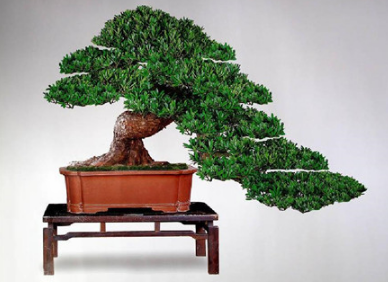
What cultivation methods and precautions are there for Podocarpus macrophyllus?
Cultivation methods for Podocarpus macrophyllus:
1. Soil selection
For pot cultivation, use humic acid soil, and never use alkaline soil. Podocarpus macrophyllus prefers loose, fertile, well-drained, slightly acidic soil, and is not tolerant of saline-alkaline or poor, thin soil.
2. Water and fertilizer management
Watering: Podocarpus macrophyllus is relatively drought-tolerant, so during the growing season watering should follow the principle of preferring dry over wet, keeping the potting soil alternating between dry and moist. If watered too much and the potting soil stays waterlogged for a long time, it will lead to root rot and yellow leaves, and in severe cases a large number of leaves will drop and the plant will die. In the high-temperature summer season, water evaporates quickly, so watering should be more generous; if the potting soil is too dry, the leaves are prone to scorching, which also affects the ornamental value.
Fertilizing: Potted Podocarpus macrophyllus also needs nutrient supplementation. Podocarpus macrophyllus does not like concentrated fertilizer; during the growing season, decomposed organic liquid fertilizer can be used at concentrations of 1:6, 1:8, and 1:10, applied once every ten days to half a month, and on the second day after fertilizing, water once, which helps the root system absorb it.
3. Temperature and light
Temperature: Podocarpus macrophyllus likes warmth and has weak cold tolerance. When the winter temperature drops to 13°C, it enters a dormant state, and at this time the minimum temperature should not be lower than 10°C.
Light: Podocarpus macrophyllus can tolerate shade, but during the growing season it should not be kept stuffy indoors for a long time. Because indoor light and air humidity are not as good as outdoors, and the growth and development of Podocarpus macrophyllus also need sunlight and rain and dew.
4. Propagation methods
Sowing propagation: Can be carried out in August. Generally done in an open-ground seedbed. Sow as soon as collected. Cover with rice straw, pay attention to shading, and keep the substrate moist. In winter, cover with plastic film to protect against frost.
Cutting propagation: Can be carried out in spring and autumn. For spring cuttings, in mid-March, select 1-year-old robust dormant branches as cuttings; for autumn cuttings, in July to August, select semi-lignified green branches as cuttings. The cuttings should all have a heel, and attention should be paid to shading. Transplanting in March is most suitable.
Precautions for keeping Podocarpus macrophyllus at home:
1. Prevent leggy growth
During the growing period, pay attention to pruning and pinching the already shaped plants to prevent leggy growth of branches and leaves and to maintain the graceful form of Podocarpus macrophyllus. When repotting, pay attention to cutting off excess roots and rotten fibrous roots, and also cut off overly dense branches and leggy branches.
2. Prevent frost damage
When the outdoor winter temperature drops to 5°C, it should be moved indoors; after moving indoors, control watering and stop fertilizing.
3. Prevent pests
For potted Podocarpus macrophyllus, usually place it on a high platform or stone pedestal, so as to reduce ants, earthworms and other insects crawling in through the drainage hole at the bottom of the pot and harming the plant.
What value does Podocarpus macrophyllus have?
1. The uses of Podocarpus macrophyllus: Enjoyable on its own
Because Podocarpus macrophyllus has an antique, elegant tree form and a peculiar combination of seed and seed stalk, it is very appealing. Podocarpus macrophyllus is often planted in temples and residences in the south. It can be planted in pairs at the gate, planted as a single specimen in the central courtyard, or placed in a corner of a wall together with rockery and lake stones.
The varieties of Podocarpus macrophyllus are rich and diverse, and each variety has its own unique beauty, so it can be grown as a specimen tree.
Variegated-leaf Podocarpus macrophyllus can be planted in flower platforms, and can also be used in flower beds or potted and displayed indoors for appreciation. Small-leaf Podocarpus macrophyllus can also be planted as a courtyard hedge.
2. The uses of Podocarpus macrophyllus: A fine medicinal material
Podocarpus macrophyllus can be said to be a treasure from head to toe; from roots, stems and leaves to bark and fruit pulp, all can be used as medicine, making it a plant very favored by herbal medicine families. If Xu Xian or Ning Caichen had encountered a wild variety on the mountain, they would have been overjoyed.
According to the records in "Gui Yao Bian", the fruit of Podocarpus macrophyllus can treat lung diseases and relieve cough.
The root bark of Podocarpus macrophyllus is sweet in taste and slightly warm. It activates blood circulation, relieves pain, and kills parasites; for external use, it treats traumatic injuries and scabies.
The leaves of Podocarpus macrophyllus can also be used as medicine and can stop bleeding.
The seeds and receptacle of Podocarpus macrophyllus are sweet in taste and neutral in nature; they tonify qi and the middle, tonify the kidneys, and benefit the lungs. They are used for heart and stomach pain, and for blood deficiency with sallow complexion.
3. The uses of Podocarpus macrophyllus: An economic crop
The wood of Podocarpus macrophyllus is fine and uniform, and easy to process. It can be used for furniture, utensils, stationery and farm tools, and is a superior timber. However, wild varieties are rare, so everyone can only look at the varieties they grow themselves and "quench thirst by looking at plums."
Podocarpus macrophyllus has an elegant, upright charm, with a majestic, vigorous and proud imposing manner; combined with meanings in Chinese culture such as "longevity" and "keeping wealth and bringing good fortune," owners pursuing high-grade courtyard landscaping often like to plant one or two Podocarpus macrophyllus, adding a finishing touch to their own "garden story."
Introduction to the cultivation methods and precautions of Podocarpus macrophyllus, and appreciation of Podocarpus macrophyllus pictures
Podocarpus macrophyllus is an evergreen coniferous tree, often made into potted plants for ornamental display. Of course, its ornamental value is also very high; the bark is grayish-brown or dark gray, the underside is yellow-green while the surface is deep green. It likes a warm and humid climate and can tolerate cold, but only weakly. While we appreciate pictures of Podocarpus macrophyllus, let us also learn about its cultivation methods and precautions together.
Growing environment
Podocarpus macrophyllus likes a warm and humid climate, and its cold tolerance is relatively weak. In North China it is used as a potted plant for ornamental display. It is strongly shade-tolerant and likes well-drained, moist sandy loam soil. It has strong adaptability to soil and can also survive well on saline-alkaline land. It also has strong resistance to various polluting gases such as sulfur dioxide, hydrogen sulfide and nitrogen oxides, and also has very strong resistance to pests and diseases.
Cultivation methods
For its cultivation, the methods we often use are sowing and cutting propagation. If sowing, we can sow after collecting seeds in August, and they will generally germinate about 10 days later. If cutting, it can be done in spring and autumn; in spring select its dormant branches, and in autumn select its semi-lignified tender branches.
When we choose softwood cuttings, it generally refers to a cutting method used during the growth season of the seedlings, using semi-mature branches of the current year as cuttings. It is generally mainly suitable for evergreen and semi-evergreen woody flowering plants. After cutting is completed, we must also frequently inspect and care for the seedbed, and carefully check whether the film covering the seedbed and its shade net have been bitten open by insects or rodents or blown open by wind.
For the softwood cuttings we choose, they should be done from mid-to-late May to early July in the first half of the year, and from mid-to-late August to mid-to-late September in the second half of the year. For seedlings cut in the first half of the year, always pay attention to preventing burns from high temperatures and the occurrence of diseases. For seedlings cut in the second half of the year, pay attention to heat preservation and frost protection in the middle and later stages.
If we need to transplant it, then transplanting is best done in March to April around the Spring Festival. Small seedlings can be moved with soil, while large seedlings need a soil ball; of course, it can also be potted. After planting it, water it thoroughly. During the growing period, keep the soil moist, and in the hot midsummer season it needs to be placed in a shaded place for care. In February each year, fertilize it once, and in winter potted plants need cold protection; the pot body can be buried in the soil, and watering should be appropriately reduced.
Cultivation methods and precautions of Japanese Podocarpus macrophyllus, and appreciation of Japanese Podocarpus macrophyllus pictures
Japanese Podocarpus macrophyllus seedlings have a graceful, antique form, with relatively small, deep green leaves, especially the purple-red receptacle, like a Buddhist monk's kasaya draped over the body, very beautiful. It can be planted alone or in groups, and is also suitable as a hedge or bonsai material. Below, the editor will take everyone to learn about the cultivation methods and precautions of Japanese Podocarpus macrophyllus, and appreciate Japanese Podocarpus macrophyllus pictures:
Japanese Podocarpus macrophyllus pictures
Basic information about Japanese Podocarpus macrophyllus:
The crown of Japanese Podocarpus macrophyllus is broadly ovate. The leaves are linear-lanceolate, with acute apex and cuneate base, with the midrib raised on both sides, the surface dark green, the underside grayish-green, sometimes covered with white bloom, closely arranged and spirally alternate. It is dioecious or occasionally monoecious. The seeds are ovoid, with a black aril, borne on a fleshy and swollen receptacle; the receptacle is deep red, sweet and edible. The flowering period is [month], and the seed ripening period is October.
Japanese Podocarpus macrophyllus pictures
Cultivation methods of Japanese Podocarpus macrophyllus:
1. Soil:Japanese Podocarpus macrophyllus has strong adaptability and is not strict about soil; it likes to grow in loose, fertile and well-drained sandy soil.
2. Watering:Podocarpus macrophyllus is not a plant of the Pinaceae family and is not drought-tolerant. On the contrary, Podocarpus macrophyllus tolerates shade and moisture, and during the growing period attention should be paid to frequent watering, but it should not be waterlogged. In the Shunde area, on sunny summer days, pay attention to frequent watering; generally water once in the morning and once in the evening, and also frequently spray water on the leaf surface to keep the leaf color fresh green and the growth good. Summer rainfall is usually relatively heavy, and Podocarpus macrophyllus is not tolerant of waterlogging, so pay attention to preventing long-term water accumulation.
3. Light:Podocarpus macrophyllus is a neutral-to-shade-tolerant tree species; it can accept relatively strong light and can also grow in a more shaded environment. Although summer temperatures are high and sunlight is strong, because large Podocarpus macrophyllus trees benefit from high temperature and strong light in maintaining tree posture and leaf shape, there is no need to shade large Podocarpus macrophyllus trees in summer. However, because small Podocarpus macrophyllus seedlings have tender tissues, they are not suitable for long periods of strong light exposure, and it is recommended to place them under tree shade for care.
4. Fertilizing:Podocarpus macrophyllus likes fertilizer, so apply thin fertilizer frequently, mainly nitrogen fertilizer, and an appropriate amount of black alum can be added and composted into alum fertilizer water. During the growing period, fertilize once every 1-2 months, and fertilizing can be done together with watering (water-to-fertilizer ratio 9:1). For large-area planting of Podocarpus macrophyllus, the half-ring trench application method can be used, applying 300-500 grams of quick-soluble compound fertilizer each time. For potted plants, spray water fertilizer containing 0.5%-1.0% compound fertilizer or thin cake liquid water fertilizer each time.
5. Pests and diseases:Common ones include leaf spot disease and sooty mold. For leaf spot disease, 50% carbendazim or thiophanate-methyl wettable powder can be sprayed at 60()-800 times dilution for control; for sooty mold, soapy water or clean water can be used to wash it off. Common pests include bagworms, scale insects, white wax insects, etc., which can be killed by spraying 40% omethoate emulsifiable concentrate at 1000 times dilution or 80% dichlorvos emulsifiable concentrate at 1000 times dilution.
6. Pruning:For already shaped Japanese Podocarpus macrophyllus bonsai, attention must be paid to pinching and pruning to prevent leggy growth of branches and leaves and to maintain the original posture. Pruning and pinching work is best carried out during the spring and autumn growing periods.
Japanese Podocarpus macrophyllus pictures
Precautions for cultivating Japanese Podocarpus macrophyllus:
Japanese Podocarpus macrophyllus likes a warm, humid, semi-shaded environment, has strong adaptability, and can also grow freely under the hot sun. It has relatively strong resistance to pests and diseases, relatively weak cold tolerance, and likes to grow in loose, fertile and well-drained sandy soil.
For household potted Japanese Podocarpus macrophyllus, it should be placed outdoors in a ventilated place all year round for care, and should not be kept indoors for a long time, otherwise the leaves will turn yellow and drop, leading to death. In high summer temperatures, it should not be exposed to the sun and needs to be placed in a semi-shaded place for care. During the growing season, moisture can be slightly more; in hot summer, when the potting soil is dry, water in time, and watering should be sufficient and thorough; in autumn and winter, moisture can be appropriately reduced. In East China, in winter when the temperature drops to 5°C, it should be moved indoors to overwinter, and the amount of watering should be controlled, with the potting soil preferably on the drier side.
Japanese Podocarpus macrophyllus pictures
Propagation methods of Japanese Podocarpus macrophyllus:
Japanese Podocarpus macrophyllus commonly uses cutting methods, and can also use sowing and cutting propagation.
1. Seed propagation:Harvesting and storage: Before the fruit pulp turns red and the fruit naturally falls, shake the tree to collect the fallen fruits; naturally fallen fruits are also acceptable. Picked fruits should not be dried in the sun; sowing immediately is best. If you want to wait until early spring of the next year to sow, you can only first wash off the fruit pulp and bury them in moist sand for storage, keeping the sand moist.
2. Cutting propagation:In mid-May, use last year's branches, cut off branches 10 cm long, keep about 5 leaves, and soak in water for 2 to 3 hours. When cutting, insert slightly deeper, so that 2 to 3 leaves can be buried in the soil, then cover well with plastic film. In mid-to-late September, pay attention to sunlight and remove the plastic film.
Japanese Podocarpus macrophyllus price
What to do if Japanese Podocarpus macrophyllus leaves dry up
Control measures:
1. Podocarpus macrophyllus likes fertilizer, so apply thin fertilizer frequently, mainly nitrogen fertilizer, and an appropriate amount of black alum (ferrous sulfate, about 5 grams per plant per year, or spray 2-3 times on the leaf surface with a 0.2% dilution) can be added and composted into alum fertilizer water. During the growing period, fertilize once every 1-2 months, and fertilizing can be done together with watering (water-to-fertilizer ratio 9:1). For potted plants, spray water fertilizer containing 0.5%-1.0% compound fertilizer or thin cake liquid water fertilizer each time.
2. Light: Podocarpus macrophyllus is a neutral-to-shade-tolerant tree species; it can accept relatively strong light and can also grow in a more shaded environment. Although summer temperatures are high and sunlight is strong, because large Podocarpus macrophyllus trees benefit from high temperature and strong light in maintaining tree posture and leaf shape, there is no need to shade large Podocarpus macrophyllus trees in summer. However, because small Podocarpus macrophyllus seedlings have tender tissues, they are not suitable for long periods of strong light exposure, and it is recommended to place them under tree shade for care.
3. Podocarpus macrophyllus is not a plant of the Pinaceae family and is not drought-tolerant. On the contrary, Podocarpus macrophyllus tolerates shade and moisture, and during the growing period attention should be paid to frequent watering, but it should not be waterlogged. In the Pearl River Delta region, on sunny summer days, pay attention to frequent watering; generally water once in the morning and once in the evening, and also frequently spray water on the leaf surface. Podocarpus macrophyllus is not tolerant of waterlogging, so pay attention to preventing long-term water accumulation.
Japanese Podocarpus macrophyllus has relatively high ornamental value; planting it around a villa is a combination of high ornamental value and high grade. Paired with some lighter-colored landscaping flowers and plants, it very simply becomes a beautiful landscape. If everyone also hopes to have such a landscape at home, you may wish to try planting and arranging it. That is all for sharing the cultivation methods and precautions of Japanese Podocarpus macrophyllus with everyone. We hope it is helpful to everyone. For more related information, please continue to follow us.