What to Do If Clematis Won't Bloom? Causes and Winter Care Methods
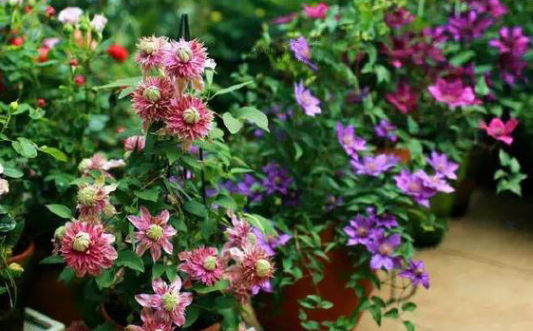
Clematis, known in Europe as the Queen of Vines, which shows just how beautiful its flowers are. Clematis prefers fertile, well-drained alkaline loam and dislikes waterlogging. Summers are relatively dry, and if the soil cannot retain water, the plant can easily die.
Reasons Why Clematis Won't Bloom and What to Do About It
1. The Blooming Period of Clematis
The blooming period of clematis is mainly concentrated from May——July, but in reality, because there are many varieties and each variety has different characteristics, the blooming times are not all the same. Some bloom in spring, and some bloom in summer or autumn, depending on the variety.
2. Why Clematis Won't Bloom
The most common reason clematis won't bloom is improper pruning:
There are three ways to prune clematis: no pruning, light pruning, or hard pruning. The timing of pruning is not very fixed; it mainly depends on the blooming time of different varieties to decide when to prune. If you don't understand the clematis variety and its characteristics and just prune according to conventional methods, you may accidentally cut off the flower buds and important branches of the clematis, which will cause it not to bloom.
If you want to carry out pruning work, it is best to analyze the best pruning time based on the entire growth period of the clematis. For specific pruning methods, you can refer to Clematis Pruning Methods.
If clematis won't bloom, it is very likely due to the influence of light:
Light is very important for the growth of clematis. Only with sufficient sunlight can clematis grow well. Basically, even the most shade-tolerant clematis varieties still need to be given more sunlight; otherwise, the clematis leaves will turn yellow and the plant will grow leggy, resulting in only leaves growing and no flowers.
Of course, the reason clematis won't bloom may also be because the plant is too small or because it has entered dormancy. There is no need to worry too much; just take good care of it.
What Are the Winter Care Methods for Clematis?
1. Temperature Requirements for Clematis
The most suitable temperature for clematis dormancy is 0-10 degrees Celsius. If the temperature is kept within this range in winter, the little clematis will certainly be safe and sound. But clematis is actually very cold-hardy and will be fine even at a low temperature of minus 25 degrees. If grown in pots in North China, it is best to wrap the flower pot with foam or plastic sheeting to keep it warm. In other regions, this is not necessary.
For clematis planted in the ground, in winter you can mound up the soil around the roots to better protect the crown area. Potted clematis can be moved indoors, but should be placed in a slightly cooler garage, balcony, corridor, etc.
2. Watering Requirements for Clematis
Before the temperature drops below zero, the watering rules for clematis are no different from other seasons——do not water if not dry. Put your finger 4-5 cm into the soil; if it feels moist, there is no need to water. Before the winter freeze is about to begin, whether the clematis is potted or planted in the ground, it needs one watering of freeze water, thoroughly watered once, and after that until early spring, no further watering is needed.
3. Clematis Blooming in Winter
In the clematis family, very few varieties bloom in winter, and most are varieties in the Tendril Clematis group, such as ‘Freckles’. Large-flowered clematis are basically dormant in winter.
But clematis enthusiasts have found that the Florida group clematis, which usually blooms from June to September, is very malleable in terms of blooming time. This group of varieties is very suitable for indoor potting. As long as the temperature is suitable and nutrition keeps up, they can bloom almost all year round. Therefore, many flower lovers move this group of clematis indoors in winter, provide a suitable growing temperature, and let them continue to bloom. Among this group, very popular varieties include ‘Utopia’, ‘Little Green’, ‘Sweet Memories’, ‘Best Wishes’, etc. If pruned in September or October, they can bloom during the Spring Festival.
How Does Clematis Survive Winter? Winter Care Methods for Clematis
Clematis is also known as iron thread peony, passion flower, gold-wrapped silver, mountain clematis, passion flower, and weilingxian; it belongs to the Ranunculaceae family and the Clematis genus. Most are deciduous or evergreen herbaceous vines. Clematis enjoys the reputation of "Queen of Vining Flowers." Its blooming period runs from early spring to late autumn (there are also a few varieties that bloom in winter), and its fruiting period is in summer. But once winter comes and all things wither, clematis also puts away its finery and enters dormancy, storing strength for next spring. How should clematis be cared for at this time? How does clematis survive winter?
Clematis Blooming in Winter
In the clematis family, very few varieties bloom in winter, and most are varieties in the Tendril Clematis group, such as 'Freckles'. Large-flowered clematis are basically dormant in winter.
But clematis enthusiasts have found that the Florida group clematis, which usually blooms from June to September, is very malleable in terms of blooming time. This group of varieties is very suitable for indoor potting. As long as the temperature is suitable and nutrition keeps up, they can bloom almost all year round. Therefore, many flower lovers move this group of clematis indoors in winter, provide a suitable growing temperature, and let them continue to bloom. If pruned in September or October, they can bloom during the Spring Festival.
Watering Requirements for Clematis
Before the temperature drops below zero, the watering rules for clematis are no different from other seasons -- do not water if not dry. Put your finger 4-5 cm into the soil; if it feels moist, there is no need to water. Before the winter freeze is about to begin, whether the clematis is potted or planted in the ground, it needs one watering of freeze water, thoroughly watered once, and after that until early spring, no further watering is needed.
Temperature Requirements for Clematis
The most suitable temperature for clematis dormancy is 0-10 degrees Celsius. If the temperature is kept within this range in winter, the little clematis will certainly be safe and sound. But clematis is actually very cold-hardy and will be fine even at a low temperature of minus 25 degrees. If grown in pots in North China, it is best to wrap the flower pot with foam or plastic sheeting to keep it warm. In other regions, this is not necessary.
For clematis planted in the ground, in winter you can mound up the soil around the roots to better protect the crown area. Potted clematis can be moved indoors, but should be placed in a slightly cooler garage, balcony, corridor, etc.
To sum it up in one sentence: good protection in winter is the guarantee of next year's bloom. Caring for the little clematis does not require too much effort, but you also cannot completely ignore it. While hibernating for winter, don't forget to put some thought into your little clematis!
Winter Care Methods for Clematis
Temperature Requirements for Clematis
The most suitable temperature for clematis dormancy is 0-10 degrees Celsius. If the temperature is kept within this range in winter, the little clematis will certainly be safe and sound. But clematis is actually very cold-hardy and will be fine even at a low temperature of minus 25 degrees. If grown in pots in North China, it is best to wrap the flower pot with foam or plastic sheeting to keep it warm. In other regions, this is not necessary.
For clematis planted in the ground, in winter you can mound up the soil around the roots to better protect the crown area. Potted clematis can be moved indoors, but should be placed in a slightly cooler garage, balcony, corridor, etc.
Watering Requirements for Clematis
Before the temperature drops below zero, the watering rules for clematis are no different from other seasons -- do not water if not dry. Put your finger 4-5 cm into the soil; if it feels moist, there is no need to water. Before the winter freeze is about to begin, whether the clematis is potted or planted in the ground, it needs one watering of freeze water, thoroughly watered once, and after that until early spring, no further watering is needed.
Clematis Blooming in Winter
In the clematis family, very few varieties bloom in winter, and most are varieties in the Tendril Clematis group, such as 'Freckles'. Large-flowered clematis are basically dormant in winter.
But clematis enthusiasts have found that the Florida group clematis, which usually blooms from June to September, is very malleable in terms of blooming time. This group of varieties is very suitable for indoor potting. As long as the temperature is suitable and nutrition keeps up, they can bloom almost all year round. Therefore, many flower lovers move this group of clematis indoors in winter, provide a suitable growing temperature, and let them continue to bloom. Among this group, very popular varieties include 'Utopia', 'Little Green', 'Sweet Memories', 'Best Wishes', etc. If pruned in September or October, they can bloom during the Spring Festival.
To sum it up in one sentence: good protection in winter is the guarantee of next year's bloom. Caring for the little clematis does not require too much effort, but you also cannot completely ignore it. While hibernating for winter, don't forget to put some thought into your little clematis!