What are the propagation methods and feng shui effects of the ponytail palm?
Many flower enthusiasts use cuttings to propagate the ponytail palm, but what is the cutting medium for the ponytail palm, how do you choose the branches... a series of questions, so how exactly do you take cuttings? Let's go take a look together.
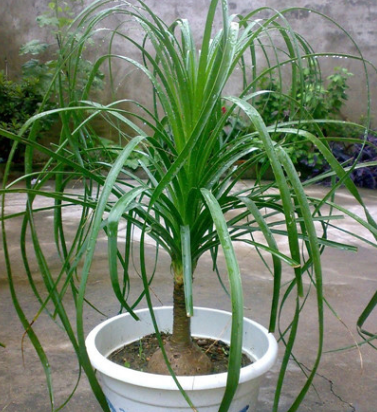
How to propagate the ponytail palm
1. Temperature management for ponytail palm cuttings
The most suitable temperature for ponytail palm cuttings to root is between 20-30°C. If the temperature is below 20°C, the cuttings root slowly; if it is above 30°C, they are easily infected by pathogens and rot, and the higher the temperature, the faster the infection.
When low temperatures arrive, the entire cutting pot needs to be wrapped in plastic film to maintain the temperature and humidity inside the pot; when the temperature is too high, the cuttings need to be properly shaded, blocking out about two-thirds of the total light.
When misting the cuttings, be careful not to mist too many times per day; the suitable number is 3-5 times. As the temperature gradually rises, the number of mistings should also be appropriately increased. In the rainy season or on cloudy and rainy days, the temperature difference is large and the temperature is lower, so fewer mistings are better, and misting may even be skipped.
2. Light for ponytail palm cuttings
Ponytail palm cuttings cannot do without the role of light; their cuttings need to carry out photosynthesis, producing nutrients for the plant itself or supplying them for rooting and sprouting.
If the light is too strong, it will cause the temperature of the cuttings to rise, transpiration to intensify, and water to be gradually consumed, causing the cuttings to lack water, which is unfavorable for propagation and survival.
Therefore, after taking cuttings, two-thirds of the sunlight needs to be blocked, and the shade net should be removed only after roots have grown.
3. Humidity and moisture for ponytail palm cuttings
Ponytail palm cuttings require the air humidity to be maintained at 75%-85%. Before the cuttings root, they must have enough photosynthesis to help them root. If they have not rooted, the cuttings will be unable to absorb water to maintain their internal growth balance, so misting is needed to reduce water evaporation.
What are the feng shui effects of the ponytail palm?
1. The ponytail palm can promote the health of family members
When growing the ponytail palm at home, if it is placed reasonably, it can promote the health of family members. In feng shui, plants cannot be placed casually; if the wrong position is chosen, it may have an unfavorable effect.
When placing the ponytail palm, it is more suitable to place it in the living room of a house whose main door faces north. A ponytail palm placed this way can bring good feng shui and promote the kidney and lung health of the family members. This is how it plays a role in promoting health.
2. The ponytail palm can bring good luck
The ponytail palm is more suitable for people whose Five Elements belong to water to grow.
The Five Elements is a rather wondrous concept; every plant has its own Five Elements attribute, and similarly, every person also has their own Five Elements. If a plant and a person whose Five Elements are compatible are placed together, it can have a good life-promoting effect on the person. The ponytail palm is more suitable for people whose Five Elements belong to water to grow; growing the ponytail palm in the living room can improve the aura of the homeowner and bring them relatively good luck.
When growing the ponytail palm at home, placing it in the kitchen can improve wealth luck. The kitchen represents the wealth luck of the lady of the house and is also related to the wealth luck of the whole family. When placing the ponytail palm in the kitchen, the most suitable position is the spot between the faucet and the stove, as this can ease the situation of water and fire clashing between the two, which is beneficial to the health of family members and can also improve the family's wealth luck.
The feng shui effects of the ponytail palm
The ponytail palm can promote the health of family members
When growing the ponytail palm at home, if it is placed reasonably, it can promote the health of family members. In feng shui, plants cannot be placed casually; if the wrong position is chosen, it may have an unfavorable effect.
When placing the ponytail palm, it is more suitable to place it in the living room of a house whose main door faces north. A ponytail palm placed this way can bring good feng shui and promote the kidney and lung health of the family members. This is how it plays a role in promoting health.
The ponytail palm can bring good luck
The ponytail palm is more suitable for people whose Five Elements belong to water to grow.
The Five Elements is a rather wondrous concept; every plant has its own Five Elements attribute, and similarly, every person also has their own Five Elements. If a plant and a person whose Five Elements are compatible are placed together, it can have a good life-promoting effect on the person. The ponytail palm is more suitable for people whose Five Elements belong to water to grow; growing the ponytail palm in the living room can improve the aura of the homeowner and bring them relatively good luck.
The ponytail palm can improve wealth luck
When growing the ponytail palm at home, placing it in the kitchen can improve wealth luck. The kitchen represents the wealth luck of the lady of the house and is also related to the wealth luck of the whole family. When placing the ponytail palm in the kitchen, the most suitable position is the spot between the faucet and the stove, as this can ease the situation of water and fire clashing between the two, which is beneficial to the health of family members and can also improve the family's wealth luck.
Ponytail Palm - Ponytail Palm Growing Methods | Ponytail Palm Pictures | Ponytail Palm Effects | Ponytail Palm Price
Ponytail Palm
The ponytail palm, also known as the elephant's foot tree, is native to the hot, dry regions of Mexico. It prefers a warm, humid environment with ample sunlight and is relatively drought-tolerant and cold-tolerant. The ponytail palm is a tree-like succulent plant, with a plant height reaching up to 10 m. Because its stem is oddly shaped, with a particularly swollen base that closely resembles a large wine bottle, plus bark that cracks into small squares and clustered, graceful leaves, it has become a very unusual ornamental plant. The flower language and symbolic meaning of the ponytail palm: natural and poised.Growing methods for the ponytail palm
1. Soil: The ponytail palm prefers loose sandy soil and humus soil, and is tolerant of drought and poor soil. The soil for potted plants should be chosen for good drainage; 3 parts fertile garden soil mixed with 1 part cinder can be used, plus a small amount of soybean cake or chicken manure as base fertilizer.
2. Sunlight: The ponytail palm prefers ample sunlight, but also has a certain shade tolerance. If the light is insufficient, the leaves grow thin and weak, and the plant grows less robustly. In spring and autumn, it should be placed in a spot with ample light; in summer, it should be properly shaded, otherwise the leaf tips will scorch and the leaf color will turn yellow. To prevent the plant from growing lopsided, rotate the pot 180° every 4-6 weeks.
The effects of the ponytail palm
The effects of the ponytail palm: 1. Artistic appreciation
The ponytail palm is a flowering plant grown for its stems and foliage. Using it to furnish living rooms and studies, or to decorate hotels and meeting venues, gives people a novel and distinctive feeling. It can be planted in various sizes as indoor decoration: small plants grown in exquisite pots, placed on a desk or tabletop, look elegant and refined; medium and large potted plants, used to furnish halls, meeting rooms, reception rooms, and other places, are full of tropical charm and quite enjoyable to admire.
The effects of the ponytail palm: 2. Reducing renovation pollution
The ponytail palm belongs to the Agavaceae family, and its absorption of toxic gases in the air is relatively pronounced. Generally speaking, placing one pot of ponytail palm in a room of about 10 sq m can eliminate 70% of benzene, 50% of formaldehyde, and 24% of trichloroethylene, so the ponytail palm's effect in reducing home renovation pollution is relatively pronounced.
How to grow the ponytail palm so that it blooms
The ponytail palm is an evergreen small tree in the Agavaceae family, genus Beaucarnea.
Origin and habits: The ponytail palm is native to Mexico. It prefers ample sunlight, relatively prefers fertilizer, prefers sandy loam, is tolerant of dryness, and has strong cold tolerance. In Hainan and along southern China it can overwinter outdoors; in other regions, varying degrees of insulation measures are taken.
Morphological characteristics: Wild ponytail palms reach 2-3 m tall; potted plants can reach 1 m in height. The stem is oddly shaped, and the base of the trunk is particularly swollen, shaped like a wine bottle. The swollen part has bark with a thick cork layer, and it cracks into small squares. The leaves are slender, linear, thinly leathery, and drooping; the leaf margins have fine serrations; they can reach 1.5-2 m in length.
Ponytail palm feng shui
Ponytail palm feng shui: 1. Bringing good luck
Every plant has its own yin-yang and Five Elements attributes. If it is mutually generating and compatible with the homeowner's birth chart, it will naturally have a beneficial life-promoting effect on the person; if it is mutually overcoming, punishing, or harming, then the effect is completely the opposite. The ponytail palm suits people whose Five Elements belong to water; growing it in the home living room can improve the homeowner's aura and bring good luck.
Ponytail palm feng shui: 2. Promoting family health
In feng shui, home decorative plants cannot be planted haphazardly, otherwise they may bring unfavorable effects. The ponytail palm is suitable for planting in the living room of a house whose main door faces north, and can promote the kidney and lung health of family members.
Ponytail palm price
Ponytail palm price: The ponytail palm is a foliage plant belonging to the Agavaceae family. Some people plant it in courtyards, where it generally can reach 2-3 m in height, but what is common in homes is instead the potted form. Potted ponytail palms are much shorter; generally, potted ponytail palms are about 0.5-1.0 m tall. At present, the price of potted ponytail palms on the market is not very expensive. Generally speaking, one without a flower pot is about 15 yuan/plant, and one with a flower pot is about 30 yuan/plant. However, the price level in each region differs, and the season, transportation, and other conditions, as well as the ponytail palm's own variety, height, base bulb size, and so on, will all affect the final price of the ponytail palm.
Related encyclopedia
Pocket scale non-woven bag rush pith bamboo shoot crab claw Redmi Note 3 YKK zipper YBS zipper Prunus sargentii climbing rose wall wild senna winter plum green pine wristwatch Omega Longines famous watch children's building blocks flint stone orchid curling iron sugar apple