How to Grow Dracaena fragrans? Hydroponic Methods and Flower Language Explained
Dracaena fragrans, also known as the fragrant dracaena, is an evergreen tree in the genus Dracaena of the family Asparagaceae. It can grow up to 6 m tall and is native to western Africa. It is distributed and cultivated in Yunnan, Guangxi, Hainan and other places in China. Dracaena fragrans has now become a common ornamental woody plant grown in homes.
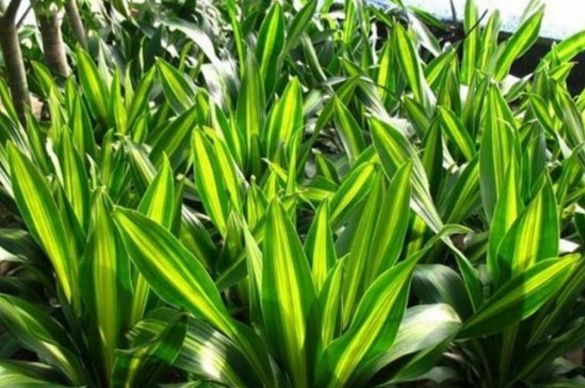
What are the cultivation methods for Dracaena fragrans?
1. Light for Dracaena fragrans
Dracaena fragrans likes a warm environment with ample light. It is fairly shade-tolerant and cold-tolerant, but it also fears scorching sun exposure. Therefore, when growing Dracaena fragrans, it should be placed near a balcony where it receives direct sunlight or plenty of diffused light. Sufficient light absorption allows it to carry out photosynthesis well, and full plant growth can make the air at home fresh and breathing easier.
2. Temperature for Dracaena fragrans
The suitable growing temperature for Dracaena fragrans is between 20-30°C. A warm ambient temperature allows Dracaena fragrans to carry out photosynthesis and respiration better, filling the home with vitality.
3. Soil for Dracaena fragrans
Dracaena fragrans is suited to loose, fertile, well-drained sandy loam soil. When planting Dracaena fragrans, this kind of soil can ensure smooth drainage, greatly reduce water accumulation in the pot, prevent root rot, and also allow it to grow healthily and vigorously.
4. Watering Dracaena fragrans
Dracaena fragrans likes a warm and humid climate, so growing it requires maintaining relatively high air humidity. Never let water accumulate, as water accumulation will cause root rot. Dracaena fragrans should not be watered too much ordinarily; water only after the potting soil has dried out completely.
In winter, when the temperature drops to 13°C, it enters dormancy. At this time, watering should be appropriately reduced, keeping the potting soil moist but leaning dry. If the potting soil remains too wet for a long time, it will cause root rot and death of the plant.
5. Fertilizing Dracaena fragrans
Dracaena fragrans does not have a high demand for fertilizer. During the growth period of young plants, apply a dilute liquid fertilizer once every 15 days. For mature plants, fertilize once every 2 months during the growing season. Fertilization should mainly use phosphorus-potassium compound fertilizer, though more nitrogen fertilizer can be applied.
How to Properly Grow Dracaena fragrans Hydroponically
1. Hydroponic tips for Dracaena fragrans
1. Cut a small section of stem and insert the base into river sand. Roots will form after 30-50 days, after which use a nutrient solution.
2. Use white pebbles or stones to secure the base and grow it in water in an opaque container. After the white roots grow to 3-5 cm, switch to a transparent container.
3. Cut a section of stem with a smooth cut. The upper cut is best coated with wax to prevent water loss, then place it in water 2-3 cm deep. After that, change the water about once every 10 days to keep the water clean.
4. You can directly separate rooted small shoots and grow them in water.
5. The leaves should be sprayed with water frequently to maintain relatively high air humidity.
Ecological habits of Dracaena fragrans
There are many varieties of Dracaena fragrans. It tolerates cold down to 10°C and prefers a high-temperature, humid, semi-shaded growing environment. It likes environments with ample light, high temperature and high humidity, and is also tolerant of shade and dryness. It also grows well in bright diffused light and in the relatively dry environment of northern homes.
2. Placement of hydroponic Dracaena fragrans
Living room, study, etc.
3. Flower language
Rising step by step
Analysis of the flower language of Hippeastrum, and cultivation methods for Hippeastrum
Hippeastrum not only has many varieties, but its flower colors are also extremely complete, even surpassing hyacinths. The flower shape of Hippeastrum is also very unique, making even lilies look inferior. As a bulbous flower, it has the rare dual beauty of both flowers and foliage. Its overall traits can be called the foremost among bulbous flowers. Therefore, Hippeastrum is very suitable for potted display in living rooms, studies and on windowsills, creating a good decorative effect.
Analysis of the flower language of Hippeastrum, and cultivation methods for Hippeastrum
——————————————————————————————————————————————
[Plant profile]
——————————————————————————————————————————————
Chinese name:Hippeastrum
Scientific name:Hippeastrum rutilum
Aliases:Honghua lian (Flora Hainanensis), Huazhou lan (Essential Economic Flora of North China), Xianhao huazhou, Baizhi lian, Zhuding hong, Zhuding lan, Guting hua, Huazhou lan, Baizi lian, Baizhi lian, Duihong, Duidui hong
Family:Amaryllidaceae
Genus:Hippeastrum
Distribution:Distributed in Brazil and Hainan Province and other places in mainland China
Morphological characteristics:Perennial herbaceous plant with a fat, nearly spherical bulb 5-10 cm in diameter, with a pale green or yellowish-brown outer coat. Leaves are opposite on both sides, strap-shaped, with acuminate tips, mostly emerging after flowering. Flowers are trumpet-shaped, with a flowering period in late autumn and from spring to early summer, and some varieties even bloom from early autumn to the Spring Festival. Modern cultivated forms are mostly hybrids, with very large flowers and brilliant colors, including bright red, rose red, orange red, light red, white, blue-purple, green, pink with white, and red with yellow. Apart from pure blue, pure black and pure green, their flower colors can already cover all the other colors in the spectrum.
Flower language of Hippeastrum
——————————————————————————————————————————————
The flower language of Hippeastrum is longing to be loved and pursuing love. It also carries the meaning of physical weakness.
Ecological habits of Hippeastrum
——————————————————————————————————————————————
Hippeastrum likes warm and humid climatic conditions. Its suitable growing temperature is 18-25°C. It dislikes extreme heat and should not be exposed to overly intense sunlight, so it should be maintained under a shade shed. It fears waterlogging. During the winter dormancy period, 10-12°C is suitable, and it must not go below 5°C. It likes sandy loam rich in humus and well drained.
Cultivation methods for Hippeastrum
——————————————————————————————————————————————
Hippeastrum blooms twice, in April in spring and in winter. To promote flowering, management should be strengthened early.
1、Repotting. Hippeastrum grows relatively quickly, so after 1 year of growth it should be moved into a suitably sized pot.
2、Changing the soil. After 1-2 years, the potting soil for Hippeastrum lacks nutrients. To promote growth and flowering, new soil should be used.
3、Division. After 1-2 years of growth, Hippeastrum will produce many small bulbs at the top. These should be divided at the same time as repotting, with large plants grouped into one pot, medium plants grouped into one pot, and small plants grouped into one pot.
4、Fertilizing. When repotting Hippeastrum, apply a base fertilizer. After potting, apply a phosphorus-potassium fertilizer once a month. The fertilization principle is to apply lightly and frequently, to promote flower bud differentiation and flowering.
5、Pruning. Hippeastrum has long and dense leaves. When repotting, cut off dead branches and withered leaves as well as roots and leaves affected by pests and diseases, keeping the vigorous leaves.
6、Pest and disease control. To make Hippeastrum grow vigorously, spray a flower medicine once a month. Spraying should be done around 9 o'clock and 16 o'clock on sunny days. Do not spray under the scorching midday sun, to prevent chemical damage.
Notes after Hippeastrum blooms
——————————————————————————————————————————————
After Hippeastrum blooms, the underground bulb must be kept plump and robust, and the seeds full, so as to propagate good bulbs. At this time, care should note the following:
① Fertilizing. After flowering, continue applying liquid fertilizer 1-2 times, preferably a compound fertilizer, or increase the application of phosphorus and potassium fertilizers.
② Water. The substrate is better kept on the dry side; there is no need to water frequently.
③ Move to a semi-shaded, well-ventilated, cool environment for maintenance.
【More plant encyclopedia】
Agave Canna Red spider lily Forget-me-not Dandelion Dendrobium officinale Chinese yew Kapok Osmanthus Crabapple Hydroponic plants
Home feng shui plants Bedroom feng shui plants Plum blossom Aloe Jasmine Radiation-absorbing plants Copper coin grass Potted plants Bonsai making Drug plants
Mistletoe Indoor flowers Money tree Lucky bamboo Potted plant making Anthurium Mint Living stones Geranium Garden Christmas cactus Peace lily
Cultivation methods for Dracaena fragrans 'Massangeana', with pictures
❤ ❤ Cultivation methods and precautions for pothos ❤ Plants that bloom in autumn ❤ Effects and uses of Sargentodoxa cuneata
Dracaena fragrans 'Massangeana' likes loose, well-drained sandy soil. Placed in a generally lit indoor spot, it can stay there for 6 months to 2 years and can effectively absorb harmful gases such as formaldehyde and benzene indoors. So in recent years, many household greening plants have chosen Dracaena fragrans 'Massangeana'. It not only has a strong decorative effect, but also purifies the air. But what are the cultivation methods for Dracaena fragrans 'Massangeana'? How should this plant be grown?
[Basic information on Dracaena fragrans 'Massangeana']
Dracaena fragrans 'Massangeana', also known as golden-hearted Brazil iron, is native to the Canary Islands in western Africa. It likes high temperature, high humidity and a sunny environment. It is not cold-tolerant and fears water accumulation, but it is shade-tolerant. It requires fertile soil with high calcium content and good drainage, and the winter temperature must not be lower than 5°C. It is one of the most shade-tolerant ornamental plants among indoor green plants, very elegant and with a graceful form. Its leaves are glossy and especially beautiful under lamplight! It is deeply loved by people and is an excellent foliage plant for decorating hotels, restaurants, shopping malls and family living rooms.
[Cultivation methods for Dracaena fragrans 'Massangeana']
First: Soil.It dislikes dryness and drought and likes loose, well-drained sandy soil. For pot cultivation, you can use loose, well-drained and well-aerated imported peat of the Pindstrup 5-40 mm specification. Mix the peat with water evenly to make the potting soil.
Second: Water.Pay attention to good ventilation and maintain a relative air humidity of 60-70%. Humidity should not be too high, otherwise leaf spot disease is likely. Do not water too much, to prevent root rot. During high summer temperatures, misting can be used to increase air humidity. Spray into the air, and try not to let water fall on the leaves; high temperature and high humidity in summer can easily make the leaves susceptible to disease.
Third: Light.In spring, control light at 20000-40000 Lux. In summer, due to higher temperatures and high temperature and humidity, strengthen shading and ventilation. In autumn and winter, when temperatures are lower, control light at 20000-40000 Lux or provide full sun.
Fourth: Temperature.The suitable growing temperature is 20-30°C. During high summer temperatures, appropriate shading is needed. In winter, room temperature must not be lower than 5°C. The dormancy temperature is 13°C. If the temperature is too low, yellow-brown spots will appear at the leaf tips and leaf margins.
Fifth: Fertilizing.Dracaena fragrans 'Massangeana' grows relatively slowly and has a relatively low demand for fertilizer. In the first 3-4 months after planting, because the root system is not well developed, generally apply a 2000-fold dilution of Peters 20-20-20 water-soluble fertilizer once every half month. If too much fertilizer is used, it will instead be detrimental to the growth of Dracaena fragrans 'Massangeana'.
Sixth: Pests and diseases.Common pests and diseases mainly include anthracnose, leaf spot disease and aphids. For leaf spot disease, spray a 1000-fold solution of 70% thiophanate-methyl wettable powder. For aphids, use a 1000-fold dilution of pirimicarb for control.
[Ornamental value of Dracaena fragrans 'Massangeana']
Its plant form is beautiful and elegant, and its leaf color is bright. It can decorate a hall or be used as a rental display. It is relatively shade-tolerant and is one of the most shade-tolerant ornamental plants among indoor green plants. The golden stripes on the leaves and the elegant long bow-like curve of the leaves make this variety deeply loved by people. It can effectively absorb harmful gases such as formaldehyde and benzene indoors. It is a good choice for indoor plants.
Conclusion:The above is a detailed introduction to the cultivation methods of Dracaena fragrans 'Massangeana' and related content. If you choose to place it in your home, I suggest you can choose the Dracaena fragrans 'Massangeana' plant. It can also remove formaldehyde and purify the air. Its decorative effect is also very strong. If you want to learn about other plant cultivation methods, please follow Aiyouwo decoration information.
▣ Oleander ▣ Venetian blinds ▣ Identifying silk quilts ▣ Hydroponic plants ▣ Cultivation of Alocasia macrorrhizos