Do Water Lilies Really Sleep? Teach You the Correct Way to Plant Them
Water lilies are planted in late spring or summer, when the plant is already growing vigorously; the tubers taken out have new roots and leaf clusters. Along the surface of the tuber, cut away the broken residual roots and overly long new roots.
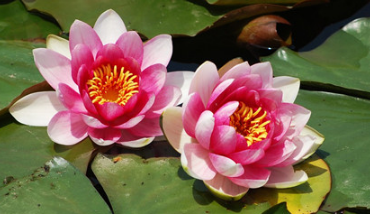
Do Water Lilies Really Sleep?
1. Do water lilies sleep?
The water lily has a very peculiar habit, which is that it sleeps. Of course, a water lily sleeping is not like a human doing so.
Every evening, when the sun sets and night falls, the water lily, amid the darkness, slowly folds its petals until they close. Every morning at 8 or 9 o'clock, as the sunlight gradually brightens, the water lily slowly wakes up and gradually lifts its head. By noon, the water lily will have opened its beautiful flowers. This is the water lily's journey from “sleeping” to “waking up.”
Because of this characteristic of waking at sunrise and closing at sunset, just like a person sleeping, the name "water lily" is very fitting. So, is the water lily really sleeping?
2. Is the water lily really sleeping?
Actually, the water lily is not sleeping; this is a trick played by sunlight. The water lily itself is extremely sensitive to sunlight. Sunlight exposure is the reason the water lily's petals open and close.
In the morning, the water lily's petals slowly open. This is because at this time the outer side of the closed petals receives sunlight, so its growth slows down, while the inner side, being away from the sun, unfolds rapidly, and at this point the water lily's flower blooms.
At noon, the water lily's flower stretches out into a large disc. At this time, the inner side of the water lily's petals receives sunlight, so its growth slows down, while the outer side is the opposite, growing faster, which causes the water lily's flower to slowly close. The water lily then “falls asleep.”
How to plant water lilies
1. Tools and materials used
Water lily tubers or water lily seeds
2. Planting water lilies, the roots
Planting methods and steps:
1. Dig up the water lily tubers
2. Plant the water lily into the soil where it will be grown
Water lilies require good water level control; whether hardy water lilies can grow normally is greatly determined by water level control, which is one of the important factors. Hardy water lilies have different water level requirements at different growth stages, so attention must be paid to controlling the water level. Because water temperature has a direct effect on the growth and flowering of water lilies, in the early growth stage, since the leaf stalks are short, the water level should be as shallow as possible, so as not to let the leaves be exposed to the air, in order to raise the water temperature as quickly as possible and promote root growth and increase the survival rate;
3. The depth of water for hydroponic water lilies
As the leaves grow, gradually raise the water level; when the vigorous growth period is reached, the water level reaches its maximum, which lengthens the leaf stalks and enlarges the leaves, helping to store nutrients;
After entering autumn, the water level should be lowered and the water temperature raised, so that the leaves receive sufficient light and photosynthesis is enhanced, in order to promote the growth of the water lily's rhizomes and lateral buds and increase the number of propagules for the following year.
When the weather turns cool, gradually deepen the water level, keeping most of the leaves from being submerged, thereby controlling vegetative growth; before the water surface freezes, deepen the water level all at once, based on the historical maximum ice thickness, keeping the water lily's terminal buds below the ice layer so it can overwinter safely.
Do Water Lilies Really Sleep?
Do water lilies sleep?
The water lily has a very peculiar habit, which is that it sleeps. Of course, a water lily sleeping is not like a human doing so.
Every evening, when the sun sets and night falls, the water lily, amid the darkness, slowly folds its petals until they close. Every morning at 8 or 9 o'clock, as the sunlight gradually brightens, the water lily slowly wakes up and gradually lifts its head. By noon, the water lily will have opened its beautiful flowers. This is the water lily's journey from "sleeping" to "waking up."
Because of this characteristic of waking at sunrise and closing at sunset, just like a person sleeping, the name "water lily" is very fitting. So, is the water lily really sleeping?
Is the water lily really sleeping?
Actually, the water lily is not sleeping; this is a trick played by sunlight. The water lily itself is extremely sensitive to sunlight. Sunlight exposure is the reason the water lily's petals open and close.
In the morning, the water lily's petals slowly open. This is because at this time the outer side of the closed petals receives sunlight, so its growth slows down, while the inner side, being away from the sun, unfolds rapidly, and at this point the water lily's flower blooms.
At noon, the water lily's flower stretches out into a large disc. At this time, the inner side of the water lily's petals receives sunlight, so its growth slows down, while the outer side is the opposite, growing faster, which causes the water lily's flower to slowly close. The water lily then "falls asleep."
How to Plant Water Lilies_How Water Lilies Are Planted
The water lily is a very precious flower variety, now generally planted in home courtyards and other places, so how should we plant water lilies? Below is the water lily planting method we have carefully compiled for you, let's take a look.
Water lily planting methods
Take out the water lily seeds and soak them in water at around 25, changing the water every day; after two weeks they will sprout, and when the seedlings grow to about 3 cm they can be transplanted into a flowerpot for planting, but make sure the water in the pot is sufficient.
Put some slow-release fertilizer or root fertilizer under the soil in the flowerpot, place one third soil in the pot, press it firm, and bury the corm with the bud point facing up, but note that the deeper you bury your corm, the longer the flowering interval will be but the larger the flowers, while shallow planting gives shorter intervals but smaller flowers. After planting, move it to a place with sufficient light and fill it with water.
Regarding additional fertilization: for the fertilizer of potted water lilies, generally it is enough to select fertile soil and add some chicken manure and bone meal as a base fertilizer when planting. To encourage more flowering, a few additional topdressings mainly of phosphorus and potassium can be applied during the flowering period. Never apply too much nitrogen fertilizer, otherwise, because vegetative growth is too vigorous, it will inhibit reproductive growth, causing poor flowering or no flowering.
While water lilies are growing, attention must also be paid to important operations such as pest control, repotting and changing the soil, and enlarging the water surface. Regarding pest control: water lily leaves are easily attacked by leaf-eating pests such as the noctuid moth, causing damage to the leaf surface and reducing photosynthesis, which will inevitably affect flowering, so they should be controlled promptly. Repotting and changing soil: around the Spring Equinox each year, combine division with repotting and changing the soil, keeping the soil fertile and meeting the water lily's nutrient needs. Enlarging the water surface: if the water surface is small and the leaves overlap, flowering will be affected; it is best to grow them in pots set inside larger tanks, and providing about 1 sq m of water surface per plant can promote more flowering.
Just wait for the water lily to bloom, but also remember to add water appropriately; in autumn the water lily will stop growing and enter dormancy, and fertilizing easily causes root rot, so no maintenance is needed in autumn and winter; when the water is low, just fill it up.
Key Points for Planting Water Lilies
I. Growth habits
Water lilies like sunlight and good ventilation, so tropical and hardy water lilies that bloom during the day close their flowers at night and open again in the morning. In ponds with shade from trees on the bank, although they can bloom, their growth is weaker. They are not strict about soil quality, and can grow normally at pH 6~8; the most suitable water depth is 25~30 cm, and the maximum must not exceed 80 cm. They like loam rich in organic matter. They sprout and grow leaves in March~April, bloom successively from May~August, and each flower blooms for 2~5 days. They set fruit after flowering. The stems and leaves wither in October~November. They sprout again the following spring. In the Yangtze River basin they sprout from late March to early April, form buds in late April or early May, have their peak flowering period from June~August, a yellow-leaf period from October~November, and enter dormancy after November. They grow in ponds and lakes, and are often cultivated in the pools of some parks.
II. Geographical distribution
Most water lilies are native to North Africa and the tropical regions of Southeast Asia, with a few from South Africa, the temperate and cold zones of Europe and Asia, Japan, Korea, India, the former Soviet Union, Siberia, and Europe. They are also found in the United States. Domestically they are distributed from Yunnan to the Northeast, and west to **. They are cultivated in all provinces and regions.
III. Propagation methods
1. Division
Water lilies are mainly propagated by division. Hardy species are usually divided in early spring before sprouting, in March-April; non-hardy species have high requirements for air and water temperature, so division can only be carried out around mid-May. When dividing, first dig out the rhizomes, select rhizomes with plump new buds, cut them into root segments 8~10 cm long, each segment with at least 1 bud, and then plant them. Bury them in the surface soil with the terminal bud facing up, with the covering depth such that the plant's bud eye is level with the soil surface, planting 5~7 segments per pot. After planting, expose them to a little sun, then add shallow water to help maintain the water temperature, but the water should not be too deep, otherwise sprouting will be affected. When the temperature rises and the new buds begin to grow, deepen the water level. Place them in a well-ventilated, sunny place for care, with a cultivation water depth of 20~40 cm; in summer the water level can be appropriately deepened, and in the hot season care should be taken to keep the pot water clean. When planting on a small scale, water lilies that have been planted for 2~5 years can be taken out of the pot, cut into 2~4 pieces, and replanted in the pot.
2. Sowing
Water lilies can also be propagated by sowing, that is, after the flowers open they turn into the water; before the fruit ripens, wrap the flower in a gauze bag so that when the fruit splits the seeds fall into the bag. After the seeds are harvested, they must still be stored in water, as dry storage will cause them to lose their ability to sprout. Sow in March-April, using fertile clay loam for the pot soil; do not fill the soil too full, it should be 5~6 cm below the pot rim; after sowing the seeds, cover with 1 cm of soil, press firm and immerse in water, with the water surface 3~4 cm above the pot soil; cover the pot soil with glass and place it in a sunny, warm spot to raise the temperature inside the pot. The sowing temperature should be 25~30°C; they sprout after about half a month, and can bloom the following year.
III. Cultivation methods
1. Tank cultivation
When planting, choose a bottomless flower tank about 50 cm high with as large a diameter as possible, place evenly mixed nutrient soil in the pot, and control the filling depth
2. Potted water lilies
at 30~40 cm to facilitate water storage. Bury a well-grown propagule in the center of the flower tank, at a depth such that the terminal bud is just slightly exposed above the soil. After planting, add water but do not fill it full; 2~3 cm above the soil layer is best, to facilitate warming and ensure the survival rate. As the plant grows, gradually increase the water level. The advantage of this method is that it is easy to manage; the disadvantage is that overwintering is difficult in the Beijing-Tianjin area, and it must be moved into a greenhouse or sunk into a water pool.
3. Potted and submerged
Choose a bottomless nutrient pot, 30 cm high and 40 cm in diameter, with the planting method and nutrient soil as for tank cultivation; the soil filling height is about 25 cm; after planting is completed, sink it into a water pool, with the pool water level controlled to just submerge the nutrient pot, and then gradually increase the water level as it grows. The advantage of this method is that overwintering is easy; it is enough to raise the water level in winter so that the water lily's terminal bud remains below the ice layer to overwinter; the disadvantage is that management requires entering the water pool, which is slightly inconvenient.
4. Pond cultivation
Choose a pond with fertile soil, with at least 30 cm of mud at the bottom; the propagule can be planted directly into the mud, with the water level shallow at first, controlled at 2~3 cm, to facilitate warming, and gradually raised as it grows. Depending on the region, deepen the water level in the pond before winter so that the rhizomes are below the ice layer to overwinter. The advantage is a better mass effect and greater growth; the disadvantage is that digging them up the following year is difficult and pests and diseases are hard to control. In early spring, drain the pond completely, apply base fertilizer at the bottom (cake fertilizer, barnyard manure, crushed bones, and superphosphate, etc.), fill with fertile soil on top, then plant the water lily rhizomes into the soil, flooding to a depth of 20~30 cm; in the vigorous-growing summer the water level can be deeper, maintained at 40~50 cm, and the water flow should not be too rapid. If the pond water is too deep, you can build a planting platform or planting trough in the water with bricks, or use plastic boards to divide a long planting trough into 1 m×1 m sections to plant multiple varieties, which can avoid mixing varieties. You can also first plant them in pots or tanks and then place them in the pond. During the growth period, topdressing can be appropriately increased 1~2 times. In July~August, mix 50 g of cake fertilizer powder with 10 g of urea, wrap it in paper into small packets, and push them by hand into the mud slightly away from the plant roots, 2~4 packets per plant. After about 3 years of planting, renovate the pond once to avoid crowding and decline. Before winter freezing, keep the water depth at about 1 m to prevent the pond bottom from freezing and damaging the rhizomes.
5. Water level control
Whether hardy water lilies can grow normally, water level control is one of the important factors. Hardy water lilies have different water level requirements at different growth stages,
Water lilies require attention to water level control. Because water temperature has a direct effect on the growth and flowering of water lilies, in the early growth stage, since the leaf stalks are short, the water level should be as shallow as possible, so as not to let the leaves be exposed to the air, in order to raise the water temperature as quickly as possible, promote root growth, and increase the survival rate; as the leaves grow, gradually raise the water level; when the vigorous growth period is reached, the water level reaches its maximum, which lengthens the leaf stalks and enlarges the leaves, helping to store nutrients; after entering autumn, lower the water level and raise the water temperature, so that the leaves receive sufficient light and photosynthesis is enhanced, in order to promote the growth of the water lily's rhizomes and lateral buds and increase the number of propagules for the following year; after the weather turns cool in late autumn, gradually deepen the water level, keeping most of the leaves from being submerged, in order to control vegetative growth; before the water surface freezes, deepen the water level all at once, based on the historical maximum ice thickness, keeping the water lily's terminal buds below the ice layer for safe overwintering.
6. Timely topdressing
The principle of topdressing must be that it both benefits the growth of the water lily and causes no waste in the water, because waste of fertilizer will cause eutrophication of the water body and accelerate the growth of algae and
fragrant water lily aquatic plants, thereby polluting the water body. You can use tough, absorbent paper to wrap the fertilizer, poke a few small holes in the packet so the fertilizer can be released, and apply it at a position 15~20 cm from the center, at a depth below 10 cm. You can also mix moist garden soil or clay with fertilizer in a certain ratio (generally soil to chemical fertilizer 10 to 1, soil to organic fertilizer 4 to 1) evenly and squeeze it into mud balls (best if they do not stick to the hand when squeezed and do not fall apart when released), and apply them radially at 3 points 15~20 cm from the center of the rhizome, 10~15 cm below the rhizome, squeezing and applying as you go. Topdressing is generally done 15 d before the peak flowering period, and then once every 15 d thereafter, to ensure the amount of flowering, but topdressing should not be excessive, as too much easily increases vegetative growth and the number of leaves, affecting the overall effect of the flowering period. Reasonable topdressing can extend the mass flowering period of hardy water lilies and can also increase the number of propagules growing the following year.
IV. Pest and disease control
Rot disease
(1) Choose disease-resistant varieties.
Water lily
(2) Implement a 2~3 year crop rotation in heavily affected fields.
(3) Carefully select disease-free seed lotus roots, and use 50% carbendazim or 20% thiophanate-methyl wettable powder 800-fold solution plus 75% chlorothalonil wettable powder 800-fold solution; after spraying, seal the seeds, cover with plastic film and seal for 24 h, then dry and plant.
(4) Deeply plow and harrow the lotus root field, applying 1500~2250 kg of lime per hectare.
(5) Strengthen fertilizer and water management, apply sufficient decomposed organic fertilizer, topdress timely and appropriately, combining organic fertilizer with chemical fertilizer and nitrogen fertilizer with phosphorus and potassium fertilizer; manage the water layer well according to the different growth stages of lotus root, keeping the depth appropriate, using water to regulate temperature and fertilizer, and preventing increased disease incidence from water temperature being too high or long-term deep-water irrigation.
(6) Promptly pull out diseased plants and spray 50% carbendazim wettable powder 600-fold solution plus 75% chlorothalonil wettable powder 600-fold solution.
Leaf rot disease
(1) Remove diseased and residual plants at harvest, bury them deeply or burn them in a concentrated manner, to reduce the source of the pathogen.
(2) In the early stage of the disease, spray 50% carbendazim wettable powder 800-fold solution, or 70% thiophanate-methyl wettable powder 800-fold solution, or 30% basic copper sulfate suspension concentrate 500-fold solution, spraying once about every 10 d, for 2~3 consecutive sprays.
Anthracnose
(1) During the growing season, collect diseased and residual matter and bury it deeply or burn it.
(2) Apply sufficient decomposed organic fertilizer, topdress timely and appropriately, combining organic fertilizer with chemical fertilizer and nitrogen fertilizer with phosphorus and potassium fertilizer.
(3) Promptly pull out diseased plants and spray 50% carbendazim wettable powder 600-fold solution, 75% chlorothalonil wettable powder 600-fold solution, 36% thiophanate-methyl suspension concentrate 500-fold solution, 50% carbendazim wettable powder 1500-fold solution, or 80% anthracnose thiram wettable powder 800-fold solution, spraying once about every 10 d, for 2~3 consecutive sprays.
Water lily leaf beetle
It is a destructive pest; the adults overwinter in vegetation near the pond edge, lay eggs on the leaf surface in late spring, and can produce 2~3 generations per season; at this time you can wash the leaf
Water lily picture surface with water, so that the adults and pupae fall into the water and are eaten by fish. Once the larvae cause damage, you can spray and kill them with 1200-fold decis solution.
V. Water lily rhopalosiphum aphid
It harms many soft-leaved aquatic plants; in summer it attacks leaves and flower stems, causing the flower color to change. Its eggs overwinter on Prunus plants, especially on plum and hawthorn trees, and occasionally on cherry trees; you should avoid planting large areas of Prunus plants by the water's edge, or wash these host plants with tar in winter; you can also wash the leaves with a hose and spray insecticides, etc.
When it is causing damage, you can mix carbofuran or trichlorfon into sawdust, put it into a cloth bag, tie it to the leaf stalk, and let the bag float on the water surface; as it moves with the waves, it diffuses the pesticide solution and kills the pests. Biological control works very well: stocking 5 kg of loach in 1000 sq m of water surface can effectively stop the spread and overflow of the pests.
For water moss, spray with 0.3%~0.5% copper sulfate.
For aphid-damaged leaves, spray with dichlorvos 1000~1200-fold solution, or spray with 50% dimethoate emulsifiable concentrate 2000~2500-fold solution.