What are the seed propagation methods and flower language of the parlor palm?
Because its plant shape closely resembles a tropical coconut palm, and its form is small and exquisite, beautiful and distinctive, it is named the parlor palm. It symbolizes vitality. So do you know how this plant of vitality reproduces? Next, let us find out.
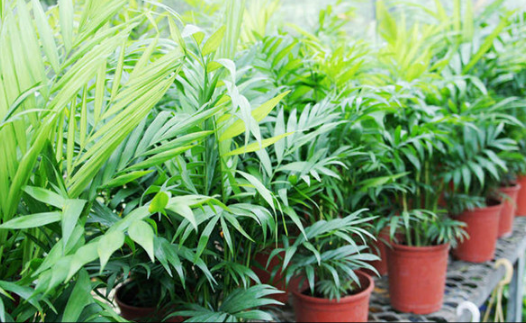
How to propagate the parlor palm by seed
1. Seed treatment of the parlor palm
Before sowing the parlor palm, you first need to select suitable seeds; only if the seeds are well chosen can sowing possibly succeed. When sowing, it is best to use seeds harvested in the current year, because seeds cannot be stored for a long time, which will affect the germination rate of the seeds. The seeds are best plump, free of pests and diseases, and intact.
The selected seeds need to be disinfected, and the soil also needs to be disinfected. After disinfection, the seeds need to continue to be germinated; soak the seeds in warm water for 24 hours, and once the seeds absorb water and swell, that is enough.
2. Sowing method for the parlor palm
The germinated parlor palm seeds can then be used for sowing. The sowing time range for the parlor palm is relatively wide; it can be done in spring and summer, autumn, and winter.
Scatter the parlor palm seeds on the prepared soil, and note that after sowing you should cover them with a layer of soil, about 1 cm is enough. After sowing, place the entire sowing pot into water, and note that the water depth reaching two-thirds of the flower pot's height is enough; this allows water to slowly seep upward and saturate the soil.
3. Precautions for sowing the parlor palm
After sowing, the parlor palm then needs care and management. First, if the parlor palm is sown in early spring, late autumn, or winter, you need to pay attention to the maintenance temperature, because the temperature is relatively low at these times and insulation is needed; you can wrap the flower pot with plastic film, which can keep it warm and moist.
When the parlor palm begins to sprout, uncover the plastic film; after the seeds have all sprouted, thinning is needed, keeping the stronger seedlings. When the seedlings have grown more than 3 leaves, they can be transplanted.
What is the flower language of the parlor palm
The flower language and symbolic meaning of the parlor palm: vitality
The parlor palm plant is small and exquisite and symbolizes vitality. In addition, the parlor palm is shade-tolerant, so it is very suitable as a small to medium-sized indoor potted plant, decorating indoor environments such as living rooms, studies, meeting rooms, and hotel service counters, and can add an atmosphere and charm of tropical scenery to the interior. Placed in a corner of a room or on a coffee table, it can add a breath of full vitality to the interior, giving the interior a charming tropical scene. It is a very good indoor ornamental plant.
Parlor palm: cultivation methods of the parlor palm, parlor palm picture appreciation
Native to Mexico and Guatemala, the parlor palm is an ornamental indoor potted plant. It is famous for being small, exquisite, beautiful, and distinctive. As an indoor small to medium-sized potted plant, it can add the atmosphere and charm of tropical scenery to the interior. Today, here the editor will tell everyone about the cultivation methods of the parlor palm, and attach parlor palm pictures for everyone to appreciate.
[Editor's strong recommendation] indoor plants: Cuban oregano, fragrant wood, hydroponic plants, small potted plants, flowering plants, feng shui plants, radiation-proof plants, lover grass
[Parlor palm] cultivation methods of the parlor palm, parlor palm pictures
——————————————————————————————————————————————
[Plant profile]
——————————————————————————————————————————————
Chinese name: parlor palm
Scientific name: Chamaedorea elegans
Aliases: dwarf coconut palm, miniature palm, dwarf palm
Family: Arecaceae
Genus: Chamaedorea
Origin and distribution: native to Mexico and Guatemala.
Morphological characteristics: potted parlor palm, plant height not exceeding 1 m, its stem slender and upright, unbranched, dark green, with irregular ring markings. Leaves emerge from the top of the stem, pinnately compound, fully divided, segments broadly lanceolate, pinnate leaflets 20~40, sickle-shaped, dark green, glossy. The plant blooms in spring, spadix inflorescence axillary, dioecious, male flowers slightly upright, female inflorescence slightly drooping when nutritional conditions are good, flowers yellow and bead-like; it bears small berries mostly orange-red or yellow.
How to grow the parlor palm?
——————————————————————————————————————————————
◆Growth habits: prefers a warm, humid, and semi-shaded environment. The suitable growth temperature is 20~30 degrees; at 13 degrees it enters dormancy; the minimum winter overwintering temperature is 3 degrees.
◆Potting soil: potted parlor palm can generally use leaf mold and peat soil plus 1/4 river sand and a small amount of base fertilizer prepared as a substrate. It is best planted in loam that drains well and is loose and fertile.
◆Watering: the principle for watering is to keep it moist rather than dry; just keep the potting soil often moist. When the air is dry in summer and autumn, often spray water on the plant to increase the ambient air humidity, which is beneficial to its growth and at the same time can keep the leaf surface dark green and glossy; in winter appropriately reduce the amount of watering to help it overwinter.
◆Fertilizing: the parlor palm does not have high fertilizer requirements; generally apply liquid fertilizer 1-2 times per month during the growing season, and apply slightly or not at all in late autumn and winter. Repot once every 2-3 years in spring.
◆Propagation: the parlor palm is generally propagated by seed.
◆Temperature settings: the suitable growth temperature is 15-30°C, of which May-September is 19-30°C, and October-the following April is 13-16°C. In summer it can tolerate high temperatures of 35°C; when the temperature exceeds 35°C, appropriate shading or measures such as spraying water and ventilation should be taken. In winter, the ambient temperature should be maintained not lower than 5°C; otherwise, when the temperature is below 5°C for a long time, it is prone to freezing and leaf drop.
◆Placement: the parlor palm has a large tolerance for light, but the best is a semi-shaded place with 50-60% sunlight
◆Disease control: in addition, under high temperature and high humidity, the parlor palm is prone to brown spot disease. If brown spot disease is found, promptly use 800-1000 times diluted thiophanate or carbendazim for control. When the air is dry and ventilation is poor, scale insects are also likely to occur. If scale insects are found, in addition to manual scraping, you can also spray 800-1000 times diluted omethoate for control.
Cultivation methods of the parlor palm
——————————————————————————————————————————————
①Sowing
Selection: before sowing, the seeds must first be selected; whether the seeds are well chosen directly relates to whether sowing can succeed.
◆Use seeds free of pests and diseases.
◆Use seeds that are plump and free of defects or deformities.
◆It is best to use seeds harvested in the current year. The longer the seeds are stored, the lower their germination rate.
Disinfection: disinfection includes two concepts, one refers to disinfecting the seeds, and the other refers to disinfecting the sowing substrate
Germination: soak the seeds in warm hot water for 12~24 hours, until the seeds absorb water and swell. For very common seeds that germinate easily, this work can be omitted.
Method: for tiny seeds that are difficult to pick up with hands or other tools, you can moisten one end of a toothpick with water and stick the seeds one by one onto the surface of the substrate, cover with substrate 1 cm thick, then place the sowing flower pot into water, with the water depth at 1/2~2/3 of the flower pot's height, letting the water slowly soak upward; for larger seeds that can be picked up with hands or other tools, place the seeds directly into the substrate and sow them in holes at a spacing of 3×5 cm.
Management: after sowing in late autumn, early spring, or winter, when encountering a cold wave and low temperatures, you can wrap the flower pot with plastic film to help keep it warm and moist; after the seedlings emerge, promptly uncover the film. After most of the seeds have sprouted, appropriate thinning is needed: pull out the diseased and unhealthy seedlings so that the remaining seedlings have a certain amount of space between them; when most of the seedlings have grown 3 or more leaves, they can be transplanted.
②Division
Method: use a mixed substrate of peat and perlite, use a plastic flower pot with a diameter of 15 cm to 20 cm, and add ceramic sand particles at the bottom of the pot as a drainage layer. Take a soilless potted parlor palm more than one year old, divide it in spring together with repotting, and plant it in the flower pot with the above mixed substrate, planting 3 to 4 plants per pot.
Humidity: maintain relative air humidity at 75~85%. The basic requirement for spike rooting is that before the cuttings root, it must be ensured that the cuttings are fresh and tender and can carry out photosynthesis to produce rooting substances. However, cuttings that have not rooted cannot absorb enough water to maintain their internal water balance.
Light: sunlight is indispensable; after cuttings are taken, 50~80% of the sunlight must be blocked, and after the root system grows, gradually remove the shade net: on sunny days, remove the shade net at 4:00 p.m. every day, and cover the shade net before 9:00 a.m. the next day.
To grow the parlor palm well, attention should be paid to the following technical issues:
——————————————————————————————————————————————
◆During the seedling stage, applying 3~4 times of thin liquid fertilizer in the two spring seasons is enough.
◆Beware of scorched edges caused by excessive light. Because the parlor palm prefers a more shaded environment, when grown indoors it should be placed near a north window, east window, or other place with bright scattered light; the parlor palm fears direct strong light most, and even short exposure to the sun can cause leaf scorch and yellowing of leaf color. On the contrary, if placed in an overly dry and dark place for a long time, the leaf color will also fade and lose its luster.
◆Suitable temperature. Generally the most suitable growth temperature is 20~30°C; in winter the indoor temperature should be between 12~14°C, and the lowest temperature must not be lower than 10°C. At the same time, the surrounding air humidity should also be maintained. It is necessary to often spray water on the leaf surface to increase air humidity.
◆Repotting is needed once every 3 years. The potting soil must not use acidic soil, and a small amount of clay should also be added.
The role of the parlor palm
——————————————————————————————————————————————
The parlor palm not only has relatively high ornamental value, but can also purify benzene, trichloroethylene, and formaldehyde from the air, making it a "high-efficiency air purifier" among plants. It is very suitable for placement indoors or in newly renovated rooms.
"Conclusion: The parlor palm is a relatively popular indoor potted plant in the north, and in recent years it has become popular all over the world. Many consumers are always attracted by its verdant color. I believe that as long as you understand the cultivation methods of the parlor palm and add careful care, the parlor palm will show a perfect posture with a graceful plant shape, elegant bearing, and dark green, glossy leaf color.
[More plant encyclopedia]
Cultivation methods of creeping lettuce, cultivation methods of sago palm, role of cactus, characteristics of peony flowers, how to grow wintersweet, how to grow Aglaia odorata
Cultivation methods and precautions of pothos, does the cactus absorb radiation, cultivation methods of Guzmania, yellowing leaves of cyclamen, price of blue enchantress roses
Lucky bamboo, sago palm pictures, cultivation methods of sago palm, is the rubber tree toxic, flower language of moss rose, peace lily, cyclamen, water lily, Sansevieria trifasciata 'Laurentii'
Yellowing leaf tips of spider plant, how to grow lilies, Cymbidium 'Jiuzi Dahua', is Anthurium andraeanum toxic, cultivation methods of Pachira aquatica, bonsai pictures of Podocarpus macrophyllus
Cultivation methods of the parlor palm, can the parlor palm be hydroponically grown
The parlor palm is an evergreen small shrub, generally appreciated as a potted plant. The parlor palm has an upright stem, unbranched, dark green, with irregular markings. Everyone knows that the cultivation methods of many plants are different, so what are the cultivation methods of the parlor palm? Can the parlor palm be hydroponically grown? Let us take a look together.
Cultivation methods of the parlor palm:
1. Seed propagation: before sowing the parlor palm, the seeds must first be selected; of course, the seeds selected for sowing must be good, free of pests, and not deformed.
2. Light: the parlor palm by nature loves light, and its growth cannot be separated from sunlight, because the cuttings still need to continue photosynthesis to produce nutrients and rooting substances to supply their rooting needs.
3. Temperature: the parlor palm likes warmth; the suitable growth temperature is about 18-24 degrees Celsius, and at 13 degrees Celsius it enters dormancy. In winter it is best not lower than 10 degrees Celsius.
4. Watering: watering is an indispensable part. The parlor palm likes water; during the growth period the soil should be kept moist, and during the dormant period water only after two-thirds of the potting soil has dried.
5. Fertilizing: besides watering, of course there is also fertilizing. During the growing period, the parlor palm is generally fertilized with a compound fertilizer about once a month. This helps the parlor palm grow well.
Can the parlor palm be hydroponically grown?
Actually, the parlor palm can be hydroponically grown, but when hydroponically growing it you should also pay attention to some related issues, otherwise it is very difficult to care for the parlor palm.
1. The hydroponic material uses the potted root-washing method; after washing with water, new roots can grow in a few days.
2. Avoid direct sunlight, as this will make the leaves withered and yellow, and the leaf color will gradually fade.
Conclusion:Actually, many plants nowadays can be hydroponically grown according to nutrient solution preparation and selection of the growing environment, but during hydroponic culture careful care is needed, otherwise the flowers are likely to die due to nutrition! So the parlor palm can be hydroponically grown, it just needs careful care. I hope the above suggestions can help you.
More information:
| Flower language of calla lily | Cultivation methods of the peace lily tree | Effects and functions of Chinese rose | Role of cactus fruit | Hangzhou white chrysanthemum |
| Peace lily tree, effects and functions of osmanthus tea | Effects and functions of Gynostemma pentaphyllum | Effects and functions of rosemary | Ficus bonsai |
| Marigold planting | Maintenance methods of the peace lily tree | Flower pictures and names | Role of pothos flowers | How to grow gardenia |