What to do when lucky bamboo leaves turn yellow in winter? Add some sand to the glass container
When it comes to lucky bamboo, many people love growing it. This lucky bamboo is super beautiful, and it is usually grown in water. The growing method is also super simple. Let's take a look at what to do when lucky bamboo leaves turn yellow in winter:
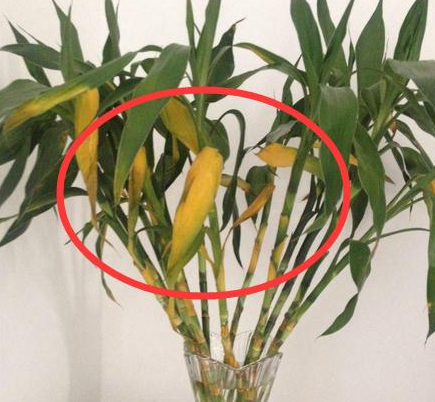
1. It's very simple. Take the newly bought lucky bamboo, use a fruit knife to shave off about 2 cm from the root end, then peel off the outer layer of skin from the bamboo.
2. Add a little soil to the bottom of the glass container, then add a layer of coarse sand at a 1:1 ratio, then put the trimmed lucky bamboo in, and add water to about half of the container.
3. Keep it in a spot with bright, indirect light and good ventilation. Before it grows roots, drop one aspirin in. Once it has rooted, no need to use it anymore.
4. After it roots, put an iron nail in the bottle, water it well, and promptly deal with any dead leaves. It can live for a long time. As long as the water quality is fine, it can live over 5 years.
Winters are relatively cold, so pay attention to keeping lucky bamboo warm. If you place it somewhere with air conditioning, it will grow lush and green.
What to do when lucky bamboo stems wilt and turn yellow: 6 causes and solutions
What to do when lucky bamboo stems turn yellow: 1. Stems turning yellow due to not changing the waterIf lucky bamboo stems turn yellow because the water has not been changed for a long time, bacteria will multiply in the water, causing some plants to develop root rot. This then affects the water uptake of some plants, causing the stems to turn yellow.
What to doa. First, take out the lucky bamboo stems that have turned yellow, then clean the roots and cut off the rotten roots;
b. Also, throw away the stems that have already turned yellow, then rebind the remaining good stems and insert them into freshly changed clean water;
c. Wait for them to re-root. You can place a small piece of charcoal in the water, add a little hydroponic plant nutrient solution, or add a little ferrous sulfate, or put in one or two small rusty iron nails to supplement iron, which will make the leaves greener.
2. Stems turning yellow due to lack of waterIf the potting soil of lucky bamboo is too dry, or the water-growing container lacks water, the leaves and stems will successively turn yellow.
What to doWater the lucky bamboo in time. When the temperature is suitable at 20°C—28°C, lucky bamboo should be watered once a week. For water-grown lucky bamboo, add water promptly when you see the water level in the container drop.
3. Stems turning yellow due to exposure to strong sunlightLucky bamboo is afraid of sun exposure. If you do not shade it in summer and directly expose it to strong sunlight outdoors, the leaves and stems of the lucky bamboo will be sunburned, causing scorch yellowing.
What to doPromptly move the lucky bamboo to a cool, ventilated place for a period of care. If the stems are only slightly yellow, they may turn green again with care. If they are scorched yellow from sunburn, it is recommended to promptly remove the yellowed stems and just care well for the lucky bamboo stems that have not yet turned yellow.
4. Stems turning yellow due to lack of fertilizerIf gardeners only know how to water lucky bamboo and never fertilize it, then the lucky bamboo cannot get sufficient nutrients for growth. When nutrients are insufficient, both the leaves and stems of lucky bamboo will show yellowing symptoms.
What to doIt depends on the actual growth of the lucky bamboo. On average, fertilize about once every 30 days. Moderate fertilization can keep the stems glossy green and robust for a long time, or you can add an appropriate amount of nutrient solution.
5. Stems turning yellow due to large temperature differencesGenerally in winter, lucky bamboo needs to be kept indoors at 6°C—8°C. Only in this way can lucky bamboo overwinter safely. If the room temperature is too low, or if it is exposed to cold outdoors and then moved into a shaded cold room, the stems will gradually wilt and turn yellow, and some will wither entirely, causing the stems to rot and die. In addition, if lucky bamboo bought in winter has not rooted, its stems are also very likely to turn yellow due to low temperatures.
What to doa. If you find withered stems, remove them immediately. In their space, you can insert non-withered plants to replace them.
b. Place it indoors with light, and keep the minimum room temperature at 6°C—8°C. When low temperatures occur, cover the pot with 1—2 layers of plastic bags, and keep it away from glass windows at night.
c. Pay attention to adding water to prevent dryness, and change to warm water once every 7—10 days. Stop fertilizing during the winter.
6. Stems turning yellow due to normal agingIf the roots and leaves of the lucky bamboo are growing well but the stems turn yellow, this is a sign of plant aging.
What to doThis shows that the lucky bamboo you are growing may be quite old. Gardeners can directly cut off the yellowed stems, then propagate new lucky bamboo by cuttings.
What to do when lucky bamboo leaves turn yellow: growing methods and precautions for lucky bamboo
Many people buy lucky bamboo, and when its leaves turn yellow they do not know what to do. Below, let's tell everyone about the growing methods and precautions for lucky bamboo.
Growing methods for lucky bamboo:
The growing methods for lucky bamboo are basically no different from those for lucky bamboo, except that more effort is needed in shaping. Lucky bamboo likes a warm, humid, and shaded environment. The suitable growing temperature is 20-30°C, so the high-temperature summer and autumn seasons in the south are very favorable for its growth. When it is below 10°C for a long time in winter, the leaves of lucky bamboo will turn yellow and fall off.
For lucky bamboo in a bottle, it is best to use overnight tap water or cooled boiled water, and replace it once every 10-15 days. Each time, just pour out half and add half, otherwise the roots will not adapt. Nutrient solution may cause the roots of lucky bamboo to rot, so it is not recommended to add it.
Lucky bamboo likes a high-temperature environment, so the water temperature for growing it should be relatively higher, and the minimum temperature should not be lower than 20°C. Its requirements for water quality are also relatively higher. Be sure to keep the growing water clean, otherwise root rot is likely to occur. Before it roots, you can change the water once a week. When changing the water, rinse the bottom with clean water, and also wash the growing container clean.
Many people encounter the situation where the height of the lucky bamboo they bought does not match their container at home, which requires root cutting. There is a proper way to cut the roots. The correct method is to use a sharp knife (preferably disinfected with alcohol first) to make a flat cut about half a centimeter below the node of the lucky bamboo, because this position is where roots grow most easily. When growing lucky bamboo in a water-filled bottle, it is best to choose robust plants with intact leaves, straight stems, and intact terminal buds.
How to grow lucky bamboo:
Key points for water-growing lucky bamboo include: before putting it in the bottle, remove the leaves from the base of the cuttings, and use a sharp knife to cut the base into a 45-degree slant, with a smooth cut, to increase the area for absorbing water and nutrients. Grow it in a straight glass container with a water depth of about 5 to 10 cm. Change the clean water once every 3-4 days. You can put in a few small pieces of charcoal to prevent rot. Do not move the position or change the direction within 10 days. After about 15 days, silvery-white fibrous roots will grow. After lucky bamboo roots, stop changing the water. When the water decreases, just add more in time. Frequently changing the water can instead easily cause yellowing and withering of the leaves. After rooting, give it a small amount of light and drip in a small amount of compound nutrient solution, then apply nutrient solution once every 3 weeks thereafter.
1. Water quality requirements: after lucky bamboo roots, it should not be moved to fresh water; when the water evaporates, you can only add water in time. Frequent water changes easily cause yellow leaves and withered branches. The added water is best well water. If using tap water, first store it in a container for one day. The water should remain clean and fresh. Do not use dirty water, hard water, or water mixed with oil, otherwise root rot is likely.
2. Fertilization requirements: for water-grown lucky bamboo, to prevent excessive leggy growth, do not apply chemical fertilizer. It is best to inject a few drops of brandy into the bottle about once every 3 weeks, and add a small amount of nutrient solution; you can also dissolve half an aspirin tablet or one VC tablet ground into powder in 500 grams of water, and drip in a few drops when adding water, which can keep the leaves emerald green.
3. Avoid wind: do not place lucky bamboo next to a TV or in places where air conditioners or electric fans often blow, to avoid dry and withered leaf tips and leaf edges.
Precautions for growing lucky bamboo:
First, there is the water quality issue. Mainly check whether the roots of the lucky bamboo are fresh. If the roots are rotten, cut off the rotten roots and change to cooled boiled water. If the symptoms are severe, appropriately spray pesticide or add a small amount of fungicide to the water tray.
Second, it is caused by environmental conditions, such as too little light, stuffy and unventilated conditions, dry air, and so on. If it is due to light, first cut off the yellow leaves, and create a clean, suitable-temperature, cool, humid environment with good indirect light for it. When bamboo branches rot, untie the binding of the lucky bamboo, pick out the rotten ones, and rebind them so they gradually recover.
What to do when lucky bamboo leaves turn yellow
1. Yellowing caused by alkaline soil. Lucky bamboo likes acidic soil. If the soil is alkaline, the leaves will turn yellow. You can spray it with alum fertilizer water, and the leaves will improve.
2. Yellowing of leaves caused by excessive fertilization. Although lucky bamboo is highly tolerant of fertilizer, too much fertilizer can also cause leaf yellowing. Specifically, the tips of new leaves appear dry brown, and the tips of old leaves become dry, scorched, yellow, and fall off. Generally, although the leaf surface is thick and glossy, it is mostly uneven. At this time, be sure to stop fertilizing, reduce the frequency of fertilization, and water more with clean water.
3. Yellowing of leaves caused by lack of fertilizer. If you often do not fertilize and only water, or do not repot for several years, the roots of lucky bamboo will become tangled together, leading to malnutrition and causing leaf yellowing. At this time, fertilize appropriately, or repot and tidy the roots.
4. Yellowing of leaves caused by too low temperature. Lucky bamboo leaves turn yellow in an environment below 10°C, so in winter, pay attention to keeping lucky bamboo warm. Do not place it outdoors or by a window, but also note that the temperature should not be too high, as too high can also cause yellowing.
5. Yellowing caused by exposure to sunlight. Lucky bamboo likes shady, humid, and high-temperature conditions. If it is exposed to sunlight for a long time, the leaves will turn yellow. Just move it back to a shady place, and it will improve after a period of time.
More information