How to Plant Baby's Breath Seeds and Germination Time
When it comes to baby's breath, many people love it, but keeping it thriving is no easy task. If you are growing it from seeds, germination is not easy either. Let's take a look at how to plant baby's breath seeds. How long do baby's breath seeds take to germinate:
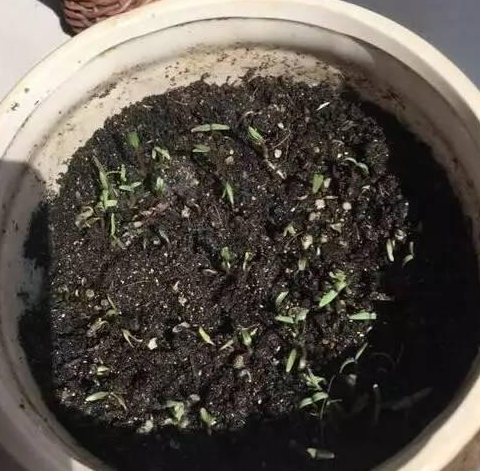
How to plant baby's breath seeds:
To grow baby's breath, use a looser soil. First wet the soil thoroughly, and once it has settled, scatter the seeds and cover them with a thin layer of soil.
When sowing baby's breath, it is best not to sow too densely. As for watering, water thoroughly only once the soil has dried out completely, and reduce watering once the seedlings have moved past the seedling stage.
If you need to repot baby's breath, be sure to transplant it with the soil around the roots, as this makes it easier for the plant to survive. Another point is that after transplanting, you must water very carefully so as not to knock over the baby's breath seedlings.
About 20--35 days after planting, side shoots begin to sprout from the lower part of the plant. You can keep 3--4 pairs of leaves at the bottom and pinch off the main growing tip to let the side branches grow, so as to achieve high yields. Generally keep 6--8 side branches per plant.
Apply fertilizer once every half month, and later increase phosphorus and potassium fertilizer. If possible, set up supports for the baby's breath so that it will not fall over.
4 points to note when sowing baby's breath:
1. Wet the peat soil, then sow.
2. Avoid light and cover with soil (just enough to cover the seeds).
3. Cover with cling film and poke some small holes in the film with a toothpick.
4. Place in a shaded, light-avoiding spot and be careful to maintain ventilation.
Key care points after baby's breath has grown:
(1) Do not water baby's breath too frequently every day. Water only when the surface of the potting soil turns pale. In summer during high temperatures, generally water 2 times a day; in winter, about once every 8 days. In short, water an appropriate amount whenever it looks dry.
(2) It is best to place baby's breath in a sunny spot, such as on a windowsill, a balcony, or the steps of a small courtyard, so that it will produce more flowers.
(3) Sometimes we need to prune away poor branches and leaves to let new leaves grow, so that the baby's breath will become fuller.
(4) For fertilizing baby's breath, you can use compound fertilizer, nutrient solution specially made for flowers and plants, or farmyard manure. The fertilizer should be applied in appropriate amounts, about once every 10 days, and water appropriately after fertilizing.
If growing it indoors, it is recommended to use a nutrient solution so that there will be no unpleasant odor afterward.
That is all for how to plant baby's breath seeds. Why not grow a pot of baby's breath in your own home?
How to Plant Baby's Breath Seeds to Help You Improve Seed Germination Rate
Baby's breath is also known as the "bridesmaid flower." Used as a foil, baby's breath can handle the relationships of weight and lightness, sparseness and density, depth and lightness, concealment and exposure, bending and uprightness, height and lowness, and distance and nearness in flower arrangements. As a flowering plant used as a foil, how should baby's breath seeds be planted? Let's take a look together.
I. How to plant baby's breath seeds
Prepare 10 baby's breath seeds, soak them in 70°C water for 20 minutes, then take them out and set aside. Then take 1 petri dish with a diameter of 10 cm, lay two layers of filter paper at the bottom of the petri dish, and after fully moistening it, take out the soaked baby's breath seeds and evenly sow them on the filter paper, then cover with moist gauze. After sowing, place the petri dish in a constant-temperature incubator at 20°C--22°C and wait for germination.
Suitable temperature for seed growth: growth is best at a daytime temperature of 25°C; if it exceeds 30°C, the best nighttime temperature is 10--15°C. Light has an extremely profound effect on whether baby's breath seeds germinate. As for the seeds' soil requirements, generally a well-drained, slightly alkaline calcareous soil or gravelly loam is best. The seeds have a relatively high water requirement, and whether moisture is properly controlled is often the main factor determining success or failure in cultivating baby's breath.
II. How to plant baby's breath seeds
1. Cultivation techniques: Choose field soil with good drainage, clear weeds, and dig it over 2 times. For relatively poor soil, applying some farmyard manure is better. Box-style cultivation with a width of 2.5--3 m and unlimited length is preferable, and break up the soil clods and level the soil surface for easier management. Choose seedlings about 15 cm tall from the seedbed, 2--3 plants, and transplant them at a spacing of 20 cm X 30 cm between plants and rows. Plant about 8000--10000 plants per mu. Planting slightly deeper helps increase the root system, and it is best to transplant on a rainy day or on a sunny afternoon. After planting, water to keep moist, and generally new roots will regrow in 3--5 days. Afterward, according to weather conditions, apply a 1%--2% urea or compound fertilizer solution along with watering, which is beneficial for rapid growth. There are few pests and diseases during the growing season. If aphids are found damaging the leaves at the seedling stage, you can use ordinary dichlorvos 800-times solution to kill them. This variety is suitable for cultivation in all four seasons, generally mainly in spring, autumn, and winter. In summer, transplanting with soil on rainy days generally will not kill the seedlings, and the survival rate is high.
2. Propagation method: This variety has extremely strong vitality, roots quickly, tolerates long-distance transport and transplanting, and has a survival rate of over 95%. Propagation generally uses cuttings. In spring, cut new branches of the plant to about 10 cm, insert 3--4 stems as one clump into a sand bed, spray water to keep moist, and shade them. They will root in about 15 days, then after more than 20 more days of cultivation, transplant them into soil to grow into large seedlings for sale.
How to plant baby's breath seeds, how to grow baby's breath seeds
Sowing and raising seedlings is one way to propagate baby's breath. For planting baby's breath seeds, choose loose soil to make the bed, sow in September, cover lightly with fine soil, and they will germinate in about 10 days. Before winter begins, move them to a cold frame to overwinter. The suitable germination temperature for baby's breath is 15~20°C, and the suitable growth temperature is 10~25°C. The sowing period is from early autumn to early spring. For detailed information on how to plant baby's breath seeds, please see the editor's introduction below.
How to plant baby's breath seeds, how to grow baby's breath seeds
1. Soil selection: Choose loose soil, first wet the soil thoroughly, and after it has settled, scatter the seeds and cover with a thin layer of soil. Sunlight and temperature are essential. The watering principle is to water after the soil has dried out. After leaving the seedling stage, reduce the amount of watering. As baby's breath grows, leggy growth will occur, so you need to keep adding soil to stabilize it, and it must not be too dense.
2. Cultivation specifications: Choose seedlings about 15 cm tall from the seedbed, 2-3 plants as one clump, and transplant at a spacing of 20 cm X 30 cm between plants and rows. Plant about 8000-**** plants per mu. Planting slightly deeper helps increase the root system, and it is best to transplant on a rainy day or on a sunny afternoon. After planting, water to keep moist, and generally new roots will regrow in 3-5 days.
3. Temperature control: Because baby's breath is relatively afraid of heat throughout its entire growth period, and the most suitable temperature for sowing is 15~20°C, sowing is often carried out after mid-to-late September: first disinfect the substrate used for sowing. The best method is to put it in a pot and heat it to carry out high-temperature sterilization. It is recommended to use special sowing peat for sowing.
4. Repot less: Baby's breath easily dies when repotted, but if transplanted with soil around the roots, it is easier for it to survive. After transplanting, you must water very carefully and must not knock over the seedlings. According to weather conditions, apply a 1%-2% urea or compound fertilizer solution along with watering, which is beneficial for rapid growth.
5. Pruning and pinching: Prune according to tree shape and growth height to increase crown diameter. Generally in 6-8 months, it can grow into a large seedling about 30 cm tall, which can then be used in landscaping projects. The larger the plant shape and crown diameter, the higher the price. About 20-35 days after planting, side shoots begin to sprout from the lower part of the plant. At this time, you can keep 3-4 pairs of leaves at the bottom and pinch off the main growing tip to let the side branches grow, so as to achieve high yields. Generally keep 6-8 side branches per plant. Most varieties need 70-90 days from pinching to flowering. Not pinching is also possible, but the yield will be lower.
6. Pest and disease control: There are few pests and diseases during the growing season of baby's breath. If aphids are found damaging the leaves at the seedling stage, you can use ordinary dichlorvos 800-times solution to kill them. This variety is suitable for cultivation in all four seasons, generally mainly in spring, autumn, and winter. In summer, transplanting with soil on rainy days generally will not kill the seedlings, and the survival rate is high.
Notes: First wet the peat soil, then sow. Avoid light and cover with soil (just enough to cover the seeds). Cover with cling film and poke some small holes in the film with a toothpick. Place in a shaded, light-avoiding spot and be careful to maintain ventilation.
The above is the article on how to plant baby's breath seeds and how to grow baby's breath seeds. In cold regions, baby's breath is suitable for spring sowing, and in areas where the soil does not freeze, it can be sown in autumn. Seedlings emerge in 7~10 days. Water frequently in the early stage after planting, and control water appropriately when flower buds begin to form. The soil should be loose, rich in organic matter, with moderate water content, and a pH of about 7.