How to grow Scutellaria barbata so it spills over the pot? Explaining the origin of the alias "Hanxin grass"
Scutellaria barbata is also called "die-bu-liao" (cannot die), and its flowers are small but very pretty. When growing Scutellaria barbata, if you can get it to fill and spill over the pot, it is sure to be beautiful. Scutellaria barbata is a plant in the Lamiaceae family, with functions such as clearing heat and detoxifying, invigorating blood and removing stasis, reducing swelling and relieving pain, and anti-cancer. It is often used to treat injuries from falls and blows, vomiting blood, coughing blood, abscesses, hemorrhoids and other diseases.
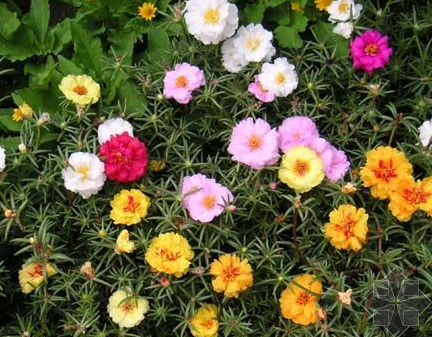
How to grow Scutellaria barbata so it fills the pot?
Care for Scutellaria barbata to make it fill the pot:
1. Light
The growth of Scutellaria barbata is closely related to light. First of all, it needs plenty of sunlight. During daily care, be sure to place it in a spot with ample light, and do not leave it in a dark place for a long time. With sufficient light, it will bloom abundantly.
2. Temperature
When growing, Scutellaria barbata needs a warm environment. If the temperature is kept warm and stable, it will grow well and bloom abundantly. Note that in winter it needs to be kept warm.
3. Watering
The growth of Scutellaria barbata has a fairly high demand for water. When growing Scutellaria barbata, you need to keep the soil sufficiently moist, but in summer when temperatures are high, evaporation is strong, so you can appropriately water a little more. Reasonable watering can help Scutellaria barbata grow well and store some nutrients for blooming.
4. Fertilizing
Scutellaria barbata actually does not have a high demand for fertilizer, but to help it bloom better, nutrients must be sufficient.
First, when choosing soil, you need to choose sandy soil, as this will have better drainage. As for fertilizer, generally applying it once every half month is enough, and phosphorus fertilizer and potassium fertilizer are preferable. This way, not only will the plant grow vigorously and bloom more, but the flowers will also be very brightly colored.
5. Pruning
To make the overall shape of Scutellaria barbata look fuller, appropriate pruning and pinching are very necessary. This can give Scutellaria barbata more branches, and naturally it will then fill the pot.
Finally, if you want Scutellaria barbata to fill the pot, you can plant several Scutellaria barbata plants in the flower pot, and this can also achieve the effect of filling the pot.
Why is Scutellaria barbata also called Hanxin grass?
1. Other names for Scutellaria barbata
Scutellaria barbata is the commercial name. Besides this, depending on different local customs, it has many other names, such as: bingtouchao (twin-headed grass), yashuacao (toothbrush grass), sifangmalan (square four-sided malan), wa'ercao (ear-picking grass), tongjingcao (menstruation-promoting grass), ziliancao (purple lotus grass), fang'ercao (square grass), banxianghua (half-facing flower), banmianhua (half-side flower), piantoucao (crooked-head grass)…… Among them, the most famous and most widely spread is “Hanxin grass”.
2. The origin of Hanxin grass
According to legend, Han Xin, the great general and founding hero of the Han Dynasty, lost his father in childhood and his mother in his youth. His family was poor, and he struggled to get by by selling fish. One day, while Han Xin was selling fish at the market, he was beaten by several ruffians and was bedridden. His neighbor Aunt Zhao brought him food and cared for him, and also got a kind of medicinal herb from the fields and boiled it into a decoction for him to take. Within a few days, he recovered his health. Later, Han Xin joined the army and became a general with outstanding military achievements. He cared deeply for his soldiers. After every battle there were many wounded, so while visiting and comforting them, he also sent people to the fields to gather the same medicinal herb that Aunt Zhao had used to treat his injuries. After it was gathered, it was distributed to each camp, and large pots were used to brew the decoction for the wounded soldiers to drink. Those lightly injured recovered in three to five days, and those seriously injured recovered in ten days to half a month. The soldiers were all very grateful to Han Xin.
The army doctors asked Han Xin what the medicinal herb that healed everyone was called, but Han Xin only knew what it looked like and had never heard its name. When everyone heard that Han Xin also did not know the name of this medicinal herb, they wanted to give it a name. Someone suggested calling it “Hanxin grass”, and so the name “Hanxin grass” spread and has been passed down to this day.
Why is Scutellaria barbata also called Hanxin grass
Other names for Scutellaria barbata
Scutellaria barbata is the commercial name. Besides this, depending on different local customs, it has many other names, such as: bingtouchao (twin-headed grass), yashuacao (toothbrush grass), sifangmalan (square four-sided malan), wa'ercao (ear-picking grass), tongjingcao (menstruation-promoting grass), ziliancao (purple lotus grass), fang'ercao (square grass), banxianghua (half-facing flower), banmianhua (half-side flower), piantoucao (crooked-head grass)... Among them, the most famous and most widely spread is "Hanxin grass".
The origin of Hanxin grass
How did the name "Hanxin grass" come about?
According to legend, Han Xin, the great general and founding hero of the Han Dynasty, lost his father in childhood and his mother in his youth. His family was poor, and he struggled to get by by selling fish. One day, while Han Xin was selling fish at the market, he was beaten by several ruffians and was bedridden. His neighbor Aunt Zhao brought him food and cared for him, and also got a kind of medicinal herb from the fields and boiled it into a decoction for him to take. Within a few days, he recovered his health. Later, Han Xin joined the army and became a general with outstanding military achievements. He cared deeply for his soldiers. After every battle there were many wounded, so while visiting and comforting them, he also sent people to the fields to gather the same medicinal herb that Aunt Zhao had used to treat his injuries. After it was gathered, it was distributed to each camp, and large pots were used to brew the decoction for the wounded soldiers to drink. Those lightly injured recovered in three to five days, and those seriously injured recovered in ten days to half a month. The soldiers were all very grateful to Han Xin.
The army doctors asked Han Xin what the medicinal herb that healed everyone was called, but Han Xin only knew what it looked like and had never heard its name. When everyone heard that Han Xin also did not know the name of this medicinal herb, they wanted to give it a name. Someone suggested calling it "Hanxin grass", and so the name "Hanxin grass" spread and has been passed down to this day.
Scutellaria barbata, barbated skullcup herb. Scutellaria barbata picture guide: how to grow Scutellaria barbata / how to propagate Scutellaria barbata
Scutellaria barbata profileScutellaria barbata, barbated skullcup herb
Scutellaria barbata growing methods and precautions, introduction to Scutellaria barbata
Scutellaria barbata is the dried aboveground part of the Lamiaceae plant Scutellaria barbata, with functions such as clearing heat and detoxifying, invigorating blood and removing stasis, reducing swelling and relieving pain, and anti-cancer. Jiang Yi's "Supplements to the Mirror of Medicines" records that "barbated skullcup herb is the immortal herb for treating snake bites." In folk medicine, besides treating venomous snake bites, it is also used to treat tumors, with a certain short-term effect. "Revised Compendium of Materia Medica" records that "this herb bears purple-white flowers, the herb is purple-red, with opposite paired leaves, and is harvested in the seventh and eighth months." The described morphology is similar to this species. Among folk medicinal herbs, there are very many varieties named banzhilian or "banzhi." "Hundred Herbs Mirror" states that "there are seventy-two kinds of various banzhi." Zhao Xuemin, in "Supplement to the Compendium of Materia Medica," recorded rat-tooth banzhi, dog-tooth banzhi, and tiger-tooth banzhi, etc., which are several plants of the genus Sedum in the Crassulaceae family. The Scutellaria barbata recorded in the 1985 edition, part one, of the "Pharmacopoeia of the People's Republic of China" is this product.
The flower language of Scutellaria barbata
I offer my life. Related legend: According to legend, Han Xin, the great general of the Han Dynasty, was not only highly skilled in martial arts, but also a general who cherished his subordinates greatly. After every battle, he would have people go to the fields to gather an unnamed medicinal herb to treat the soldiers' wounds, and the soldiers who used this herb would all recover quickly. The soldiers were very grateful to Han Xin, so they called this unnamed herb Hanxin grass, in memory of Han Xin's love for them. And because the soldiers loved and respected Han Xin, when fighting they would all advance courageously and bravely kill the enemy, even if it meant sacrificing their lives.
Distribution areas of Scutellaria barbata
Distributed in Jiangsu, Guangxi, Guangdong, Sichuan, Hebei, Shanxi, Shaanxi, Hubei, Anhui, Jiangxi, Zhejiang, Fujian, Guizhou, Yunnan, Taiwan, China, Henan and other places.
The cultural background of Scutellaria barbata
Scutellaria barbata, also known as Hanxin grass, is often used to treat injuries from falls and blows, vomiting blood, coughing blood, abscesses, hemorrhoids and other diseases. How did the name "Hanxin grass" come about? According to legend, Han Xin, the great general and founding hero of the Han Dynasty, lost his father in childhood and his mother in his youth. His family was poor, and he struggled to get by by selling fish. One day, while Han Xin was selling fish at the market, he was beaten by several ruffians and was bedridden. His neighbor Aunt Zhao brought him food and cared for him, and also got a kind of medicinal herb from the fields and boiled it into a decoction for him to take. Within a few days, he recovered his health. Later, Han Xin joined the army and became a general with outstanding military achievements. He cared deeply for his soldiers. After every battle there were many wounded, so while visiting and comforting them, he also sent people to the fields to gather the same medicinal herb that Aunt Zhao had used to treat his injuries. After it was gathered, it was distributed to each camp, and large pots were used to brew the decoction for the wounded soldiers to drink. Those lightly injured recovered in three to five days, and those seriously injured recovered in ten days to half a month. The soldiers were all very grateful to Han Xin. When everyone heard that Han Xin also did not know the name of this medicinal herb, they wanted to give it a name. Someone suggested calling it "Hanxin grass", and so the name "Hanxin grass" spread and has been passed down to this day.
Cultivation techniques for Scutellaria barbata
Loose, fertile sandy loam or loam is preferable. Plow the soil, and at the same time apply 2000 kg of farmyard manure per mu as base fertilizer. Till finely and level, then make beds 1.3 m wide.
Ecological habits of Scutellaria barbata
It grows in damp places by ponds, field edges or roadsides.
Disease and pest control for Scutellaria barbata
During the growth of Scutellaria barbata, almost no diseases occur. During the flowering period, aphids and cabbage black bugs are prone to cause damage. The former can be controlled with dimethoate, and the latter can be controlled by spraying with a 1000-fold dilution of 50% dichlorvos.
Propagation methods for Scutellaria barbata
Seed propagation is the main method, and division propagation can also be used. (1) Seed propagation is mostly by direct sowing, from late September to early October, in drills or holes. For drill sowing, open furrows at a row spacing of 25-30 cm, with a furrow depth of about 4 cm; for hole sowing, open holes at a hole spacing of about 27 cm. When sowing, first scatter the seeds into plant ash mixed with livestock manure water, mix them into seed ash, then evenly scatter it into the furrows or holes, and cover with a layer of fine soil or plant ash, with a thickness not exceeding 0.5 cm. After sowing and before emergence, the soil must be kept absolutely moist. About 20 days after sowing, seedlings can emerge. Use 1.5-2 kg of seeds per mu. (2) Division propagation is carried out in spring and summer. Dig up the old roots of the plants, select robust plants free of pests and diseases for division, with 3-4 shoots per plant, and plant them in holes at a hole spacing of about 27 cm, then water after planting.
The dietary or medicinal value of Scutellaria barbata
The medical information and health dietary information on Hugarden are for reference only and cannot be used as a basis for diagnosis or medical treatment. For any health problem, consult professional medical personnel, and for the treatment of any disease, follow doctors' advice.
Ultimate flower-protecting mission: love yourself, start from reality, and strictly follow doctors' advice. For illness, do not be careless, do not delay, do not give up hope, face it bravely, use love to warm the silent world, and use your heart to care for the flower field within.
Medicinal form: This product is 15-35 cm long, hairless or sparsely hairy on the inflorescence axis. The roots are slender. The stems are clustered, relatively thin, and square-column shaped; the surface is dark purple or brown-green. The leaves are opposite, with short petioles; the leaf blades are mostly shrunken, and after flattening are triangular-ovate or lanceolate, 1.5-3 cm long and 0.5-1 cm wide; the apex is obtuse, the base is broadly cuneate, the margin is entire or has a few inconspicuous obtuse teeth; the upper surface is dark green, and the lower surface is gray-green. The flowers are solitary in the leaf axils of the upper part of the stems and branches; the calyx lobes are obtuse or relatively round; the corolla is two-lipped, brown-yellow or light blue-purple, about 1.2 cm long, and hairy. The fruit is flattened spherical, light brown. The odor is slight, and the taste is slightly bitter. Medicinal value 1. Pharmacological effects of Scutellaria barbata: This product contains alkaloids, flavonoid glycosides, steroids, as well as phenolics, tannins, etc. The scutellarein it contains is a flavonoid compound (2,5-dihydroxy-6,7,8-trimethoxyflavone). In addition, there are two other flavonoid compounds, wogonin (5,7-dihydroxy-8-methoxyflavone) and 5-hydroxy-7,8-dimethoxyflavone. Animal experiments have confirmed that Scutellaria barbata has a certain inhibitory effect on sarcoma 180, Ehrlich ascites carcinoma, brain tumor 22, etc. Japanese scholars, when screening 800 kinds of traditional Chinese medicines for anti-tumor activity through in vitro experiments, found that 88 kinds of traditional Chinese medicines had an inhibition rate of over 90% on tumor cell proliferation, among which Scutellaria barbata had a 100% in vitro inhibition rate on JTc-26 tumor cells, while its inhibition rate on normal cells was only 50%. When observing the clinical anti-tumor efficacy of these traditional Chinese medicines, it was found that even for advanced tumors for which treatment is exhausted, they still have effects in improving symptoms, inhibiting tumor proliferation, and prolonging patients' lives. Experiments also confirmed that, using the methylene blue test tube method, barbated skullcup herb has a mild inhibitory effect on acute granulocytic leukemia cells; using the cell respiration method, the inhibition rate on acute granulocytic leukemia cells is greater than 75%. Scutellaria barbata preparations also have a certain inhibitory effect on animal tumors such as W256, U14, S186, EAC, and ESC [5]. Besides anti-cancer effects, this product also has various pharmacological effects such as antibacterial, diuretic, cough-relieving, and anti-asthmatic effects. 2. Application of Scutellaria barbata in clinical cancer treatment: Scutellaria barbata is very widely used in clinical cancer treatment, often combined with Hedyotis diffusa, Lobelia chinensis, etc. in compound formulas for the treatment of various tumors, with numerous clinical reports. a. Gastric cancer: It has been reported that a compound pill called Sanbao Gongde Dan made from Scutellaria barbata, Hedyotis diffusa, etc. was used to treat 182 cases of intermediate and advanced gastric cancer. Take 10 g orally each time, 3 times a day, and take it with a decoction made from 10 g each of Cortex Lycii and wolfberry fruit. Patients took the medication for 1 month to 10 years. Results: basically cured (symptoms disappeared, cancer lesions disappeared on gastroscopy, survival of more than 3 years) in 46 cases, markedly effective in 52 cases, improved in 45 cases, and ineffective in 39 cases. Clinically it is confirmed that the longer the medication time, the better the efficacy. Others used an anti-cancer injection (barbated skullcup herb, Hedyotis diffusa, Solanum lyratum, black nightshade, Galium aparine) to treat 41 cases of gastric cancer, with an overall clinical effective rate of 82.4%. b. Esophageal cancer: It has been reported that a Scutellaria barbata compound formula, Lianshe Yin (Scutellaria barbata, Hedyotis diffusa, Artemisia anomala, turmeric, etc.), was taken orally, 1 dose per day, and at the same time Kaidao San 3 g was added, taken in 3 divided doses, to treat esophageal cancer. It was confirmed to relieve symptoms, reduce suffering, and prolong survival. After treatment, some patients could eat smoothly, recover their strength, take care of themselves, and survive for more than 5 years. The People's Hospital of Nanzhang County, Hubei Province, used a compound Scutellaria barbata decoction (Scutellaria barbata 60 g, dandelion and Dioscorea bulbifera 30 g each, Coptis chinensis 6 g, Pinellia ternata 9 g, one whole Trichosanthes fruit) as the main treatment for 25 cases of esophageal cancer. Results: markedly effective in 6 cases (subjective symptoms disappeared, cancer cells disappeared on cytological examination, basal layer cells greatly increased or severely hyperplastic, cancer cells atrophied or destroyed, and local lesions disappeared on X-ray), improved in 9 cases, ineffective in 7 cases, and death in 3 cases, with an overall effective rate of 60%. Zhang reported treating 31 cases of esophageal cancer. Based on syndrome differentiation, Scutellaria barbata compound formulas were used for both the qi stagnation and blood stasis type and the phlegm-dampness congelation type, with 60 doses as 1 course of treatment. For those with good efficacy, the decoction was changed to a powder, 10 g per dose, 2 times a day; for those with poor efficacy, the decoction was continued for 2 courses of treatment. Treatment results: 6 cases survived more than 5 years, 9 cases more than 3 years, 10 cases more than 1 year, and 6 cases died in less than 1 year. Hepatitis, tumors and other diseases.
Scutellaria barbata pictures