Lobelia Home Care Methods and Pinching Techniques
Lobelia, also known as trailing lobelia, originated in southern Africa and is now distributed across many provinces in China. It only blooms under long-day, low-temperature conditions. It is not very cold-hardy, dislikes extreme heat, and prefers loose loam rich in humus.
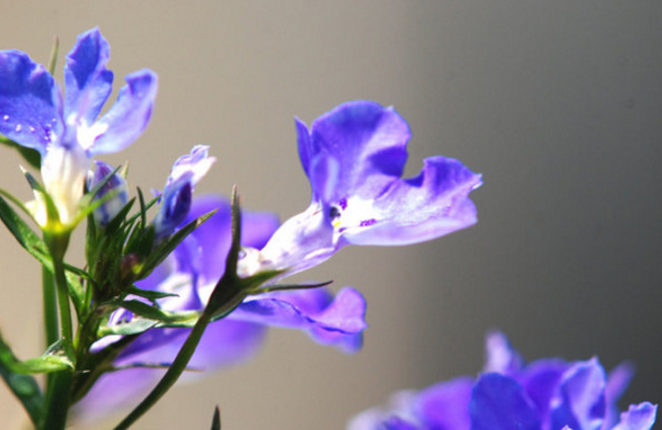
Lobelia Home Care Methods
1. Lighting
Lobelia does not tolerate shade and must grow in full light to develop normally. For home care, it must be placed where direct sunlight reaches it. If light is insufficient, try to move the lobelia to a spot with ample light for three to four hours every day. It only blooms normally under long-day, low-temperature conditions.
2. Temperature
Lobelia is a cool-season flower, but it is not very cold-hardy and cannot overwinter outdoors in the north. It dislikes extreme heat and enters a dormant state when summer temperatures are high.
3. Soil
It prefers loose, fertile soil rich in humus.
4. Water
Watering should be determined by the care environment, pot size, and growth condition; under normal circumstances, simply keep the potting soil moist. When you water, water thoroughly.
5. Fertilizer
Fertilize selectively as needed; apply more during the growing season, and stop fertilizing in winter when temperatures are low.
How Do You Pinch Back Lobelia?
Flowers can grow normally without pinching, but pinching is done to achieve a better plant shape, allow the plant to produce more branches, and form more flower buds, so you can also choose whether to do this.
Lobelia Pinching Requirements:
In actual care, lobelia can be pinched once it grows to about ten centimeters. Pinching means removing the tip of the young plant to remove apical dominance and promote the development of lateral buds. After pinching, many lateral buds will grow from beside the main stem, and these lateral buds can then be pinched again. This ensures a full plant with abundant flowers.
If pinching is not done in time, the plant may become less compact and produce fewer flowers.
Lobelia Pinching Precautions:
1. Pinching should be done in the morning.
2. Pinching will cause vigorous growth of lateral branches, so the lateral branches should be pinched back vigorously.
When to Sow Lobelia Seeds (Which Month) and How to Sow Lobelia
A plant's growth state and overall performance change with the sowing time, so sowing time is key to the entire growth process. Different species have somewhat different growth habits, so the sowing time for lobelia should be determined according to its growth needs.
When to Sow Lobelia Seeds
1. Fall Sowing
The best sowing time is September, and no later than November, as temperatures that are too low affect the seed germination rate. When sown in August, the seedlings take shape very early and bloom around February to March of the following year. However, due to the influence of the growing environment, it is difficult to guarantee sunlight, temperature, and other factors, so the flowering effect is not very good.
2. Spring Sowing
Spring sowing is generally done between January and March. At this time temperatures gradually warm, plants grow faster, and the climate is pleasant, making it more suitable for plant growth. However, spring sowing also has drawbacks: as temperatures gradually rise, the plant grows quickly, leaving a relatively short window for pinching control, so timely pinching is needed to achieve a good shape. But precisely because it is the suitable growing season, the flowering period lasts relatively long.
How to Sow Lobelia
Lobelia seeds are very small, and sowing them one by one is laborious, so broadcast sowing is recommended. First prepare a little sand, sift it, mix a small amount of sand with the seeds, spread evenly over the ground, cover with a thin layer of soil, very thin is enough, and spray water onto the surface with a spray bottle. Never wash directly with a strong stream of water, as it will wash the seeds away.
You can also use the dibbling method. You can use folded paper to help distribute them, sowing about 10 seeds per cell tray, approximately, or one seed per cell is also fine; later dividing into pots is also convenient, but it tests patience and eyesight.
Lobelia Growing Methods and Precautions
1. Lighting
Lobelia does not tolerate shade and must grow in full light to develop normally. For home care, it must be placed where direct sunlight reaches it. If light is insufficient, try to move the lobelia to a spot with ample light for three to four hours every day. It only blooms normally under long-day, low-temperature conditions.
2. Temperature
Lobelia is a cool-season flower, but it is not very cold-hardy and cannot overwinter outdoors in the north. It dislikes extreme heat and enters a dormant state when summer temperatures are high.
3. Soil
It prefers loose, fertile soil rich in humus.
4. Water
Watering should be determined by the care environment, pot size, and growth condition; under normal circumstances, simply keep the potting soil moist. When you water, water thoroughly.
5. Fertilizer
Fertilize selectively as needed; apply more during the growing season, and stop fertilizing in winter when temperatures are low.
6. Pinching and Pruning
Pinching and pruning is a simple way to control the plant shape of lobelia. Pinching during the growing period promotes the growth of lateral buds, so there are more branches and therefore more flower buds.
7. Pests and Diseases
During the growth of lobelia, you need to regularly observe the plant's growth condition. Using some fungicides and insecticides to prevent mold or red spider mite damage keeps lobelia growing healthily.
Lobelia's Blooming Period
Lobelia is a very important ornamental flowering plant. It generally blooms in spring, in February and March, with flowers mainly terminal or axillary, looking somewhat like butterflies.
Lobelia flowers also come in fairly rich colors, including red, peach red, purple, white, and more. The distinctive blue lobelia is a common flowerbed plant in spring.
Lobelia can be sown in spring or fall, and spring sowing is one of the better planting times, as we can enjoy a longer flowering period, so the editor here suggests choosing spring sowing; however, if the season is inconvenient, choosing fall sowing is the next-best option.
Lobelia's Growth Habits and Potted Growing Methods
Lobelia, also known as trailing lobelia, mountain lobelia, and half-flower lobelia, is a perennial herbaceous plant in the genus Lobelia of the family Campanulaceae. It has very high ornamental value; when in bloom, the whole plant takes on a swollen rounded shape and is almost completely covered by flowers. It is suitable for flowerbeds, potted plants, hanging baskets, and garden landscaping, and is widely loved by households in Europe and America. Below, let us take a look at how to grow lobelia.
Lobelia's Growth Habits
Lobelia originated in southern Africa and is also widely distributed in Jiangsu, Anhui, Zhejiang, Jiangxi, Fujian, Taiwan, China, Hubei, Hunan, Guangdong, Guangxi, Sichuan, Guizhou, and other places in China. Lobelia only blooms under long-day, low-temperature conditions. It is not very cold-hardy, dislikes extreme heat, and prefers loose loam rich in humus.
Lobelia's Propagation Methods
Sow lobelia from January to March, and it blooms after July. Sow from August to October, and it blooms the following year. Seeds sown at 22 degrees Celsius can germinate after 20 days. It is generally commonly used as a potted or hanging basket plant or mixed with other flowers. The plant grows slowly, the seeds are very tiny, and no covering is needed at germination. It does not adapt well to high temperatures and grows better at 12 to 15 degrees Celsius. It can bloom 65 days after sowing, and generally 8 to 12 seeds are sown per cell.
Lobelia's Growing Methods
1. Potting soil: Lobelia needs loose, well-drained sandy soil rich in humus. Put the soil into a flowerpot about 10 cm to 15 cm in diameter and add some base fertilizer. You can plant 2 to 3 young seedlings in the pot, making the potted lobelia fuller and more vigorous when it blooms.
2. Lighting: Lobelia is a long-day plant and needs to be guaranteed a relatively long period of light. It needs to receive long hours of sunlight every day. In winter and early spring, when daylight hours are shorter, supplemental artificial lighting is needed for lobelia to meet the light conditions for blooming.
3. Temperature: Lobelia grows best under low-temperature conditions. The suitable growing temperature is between 15°C and 18°C. It has poor cold tolerance and also does not tolerate extreme heat. In winter, when the weather is cold, it can be left indoors to overwinter, but note that lobelia is not frost-hardy and must be protected from freezing.
4. Water and fertilizer: During lobelia's growing period, water once every 7 to 10 days, basically following the principle of watering thoroughly after the soil dries out. Fertilization should be carried out according to lobelia's growth needs. During the growing period, to keep lobelia growing healthily, apply a nitrogen fertilizer once a week.
5. Pinching: Lobelia pinching and pruning is a simple way to control the plant shape. Pinching during the growing period promotes the growth of lateral buds, so there are more branches and therefore more flower buds.
6. Pests and diseases: During lobelia's growth period, you need to regularly observe the plant's growth condition. Use some fungicides and insecticides to prevent mold or red spider mite damage.