A Detailed Guide to the Benefits and Uses of Water Chestnut Herb and Its Cultivation and Propagation Methods
The plant known as Ma Niao Hua is also widely called water chestnut (Hydrocharis dubia). This plant mainly grows on the water surface, and its overall shape is flat and round, looking somewhat like a lotus leaf from the outside. Ma Niao Hua is mainly distributed in East China, South China, and Southwest China, and it is suited to growing in places with relatively abundant sunlight. Ma Niao Hua has a rather beautiful appearance, so this plant has good ornamental value, and it also has excellent medicinal value. So let us get to know the benefits of Ma Niao Hua and its cultivation techniques together.
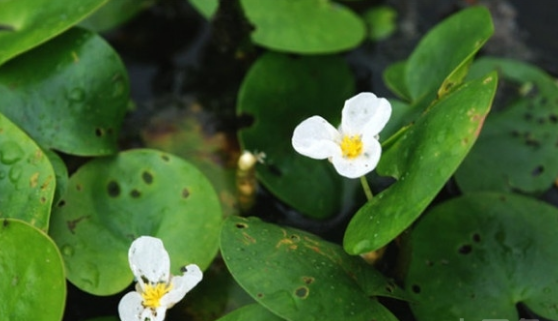
I. Benefits and Medicinal Value of Ma Niao Hua
Ma Niao Hua is a traditional Chinese medicinal material. The whole plant is used as medicine, and it has the effect of clearing heat and draining dampness.
[Nature and Flavor] Bitter in taste; cold in nature.
[Functions and Indications] Clears heat and drains dampness. Mainly used for damp-heat leukorrhea.
[Supplementary Formulas] In the "Shennong Bencao Jing" under the entry for duckweed (Shuiping), the "Bielu" says: “Also called Shuibai.” According to the "Bencao," there are many kinds of duckweed, and the one that Tao quoted from the "Yaolu" as “having white flowers in the fifth month” is one of them. The name Shuibai may have been derived from its white flowers. Other names such as Fuping and Daping have nothing to do with the color white. Therefore, “Shuibai” refers to the duckweed that bears white flowers. This kind of Shuibai has another characteristic: the back of the leaf has a water-blister-like air sac tissue, which is what Chen Zangqi called “a little bit of water froth under the leaf.” The "Gangmu" quotes the "Gengxin Yuce" as saying: “A kind of paozi is called shuibie.” This should be the same plant. “Bie” and “Bai” are related by a single sound shift, so the name “Shuibie” may also come from “Shuibai.”
II. How to Grow and How to Propagate
1. Growth Habits
The growing season of Ma Niao Hua is in spring and summer, and its flowering and fruiting period is from August to October. The flowers are white with yellow centers. In autumn the plant stops growing, and in winter it produces dormant buds that sink to the bottom of the water to overwinter. It prefers a warm environment, and temperature levels will affect the plant's growth. It often lives in rivers, streams, and ditches.
2. Cultivation Techniques
First fill a basin with pond mud, then cut the stolons and plant small plants in it, and add water. After new plants grow, transplant them into a small pond to grow. If the mud lacks fertilizer, or the plants grow too densely, yellow leaves or root rot may occur, so pay attention to ventilation and light penetration.
From what we have introduced above, we can see that the plant Ma Niao Hua not only has good ornamental value and good medicinal value. In fact, it also carries a certain plant culture, because the shape of Ma Niao Hua resembles a heart, so it also carries the meaning of hearts linked together. On the market, we can see many accessories related to Ma Niao Hua such as necklaces and bracelets. These accessories also symbolize friendship or love lasting forever and being companions for life.
How to Grow Michelia figo (Banana Shrub) - How to Care for Michelia figo
Flower and Bonsai Network: How to Grow Michelia figo - How to Care for Michelia figo
What environmental conditions does Michelia figo require?
Michelia figo is native to southern China and is cultivated in the provinces (regions) south of the Yangtze River. In eastern Guizhou Province, the related species Michelia maudiae and Michelia multiflora are distributed. Michelia figo is a southern subtropical flower, requiring a warm, humid, and well-ventilated climate environment, as well as fertile, loose, well-drained acidic loam. It is relatively shade-tolerant, not tolerant of severe cold, drought, barren soil, or scorching sun, and it fears waterlogging. When growing Michelia figo in winter, the indoor temperature should be kept above 5 degrees Celsius. When the temperature drops to around 31 degrees Celsius, the normal physiological activities of Michelia figo are affected, causing the plant, new shoots, and leaves to wilt.
How to propagate Michelia figo?
It can be propagated by sowing, cuttings, layering, and grafting.
(1) Grafting commonly uses Magnolia liliiflora, Michelia champaca, Magnolia amoena, and Magnolia cylindrica as rootstock. The common methods are cut grafting or cleft grafting. If root-collar side grafting is performed, it is best done in April. After grafting, mound soil around it, leaving only one bud exposed.
(2) Layering is carried out before budding in early spring.
(3) For cuttings, after the flowers fade, select current-year woody branches and cut them into 8-10 cm long cuttings. The cutting bed should use well-drained, loose sandy loam or vermiculite, with a planting spacing of 6-10 cm. After inserting, cover with plastic film or build a shade shed, and maintain the relative humidity in the cutting bed space at about 90%. Too dry or too wet is unfavorable for rooting.
How to cultivate Michelia figo? How to force or delay its flowering period?
Michelia figo is not cold-tolerant. In China, aside from high-heat areas and some wind-sheltered microclimates in the south where it can be grown in the open ground, it is mostly grown in pots in other regions and kept warm to overwinter.
(1) For potted growing medium, mix 5 parts garden soil, 3 parts decomposed compost, and 2 parts sand; or mix 3 parts leaf mold (made by stacking and fermenting fallen leaves with soil and then sieving) and 7 parts sandy soil. Place a few pieces of horse hoof or bone meal at the bottom of the pot as base fertilizer, then fill with soil.
Potting and repotting: Pot before budding. Repot once every year, mostly after the flowers fade and before new buds sprout. When repotting, cut off rotten roots, dead roots, some overly long roots, and excessive weak twigs. The size of the pot should correspond to the diameter of the plant canopy.
Fertilizer and water management: Apply fertilizer and water according to the plant's growth condition before it blooms in spring.
Generally apply 2-3 times of liquid fertilizer, mostly diluted oil-cake water that has been mixed with phosphate fertilizer and human and animal manure and urine and fully fermented. Loosen the soil and apply fertilizer once about every half month. During the bud stage, spray 0.2% monopotassium phosphate.
After each thorough watering, if the pot soil still looks rather dry, water again immediately. Michelia figo has fleshy roots, fears waterlogging, and is prone to root rot. But it is also a flower that likes warmth and humidity, so the pot soil must be kept moist and aerated. After heavy rain or rainstorms in summer, promptly drain the accumulated water from the pot. Generally in summer, water thoroughly once a day and spray water once; in winter, the main task is keeping warm, keeping the room temperature where the Michelia figo pot is placed above 3 degrees Celsius and not higher than 15 degrees Celsius. If the temperature is too high, it easily sprouts and grows leggy, consuming nutrients and harming bud formation and flowering the following year. After moving the pot indoors, apply less fertilizer and water. If the air is dry, just spray to moisten the leaf surface and the ground. Note that you must not spray cold tap water; the water temperature should be as close as possible to room temperature. Indoor air humidity is best kept above 60%. After moving indoors, the flowerpot should be placed in a spot with light. After the frost period ends, move the pot outdoors and place it in a wind-sheltered, slightly shaded, and airy place.
Shaping and pruning are done during the dormant period before budding in spring. Focus on cutting out overly dense branches, diseased and pest-infested branches, weak twigs, leggy branches, and branches that disrupt the canopy, so as to keep the canopy neat and attractive. After flowering, cut off the remaining flower stalks and fruits to encourage new branch growth.
(2) Open-ground cultivation: Choose a wind-sheltered and slightly shaded site, or sparse woodland, with loose, fertile, organic-rich, well-drained acidic sandy loam. Transplant before budding. First transplant them temporarily in a transplant bed at a spacing of 15 cm x 20 cm, and finally dig planting holes 50 cm deep and 50 cm wide and plant them at a spacing of 1 m x 1 m.
Prune every year during the dormant period, and dig a ring-shaped trench to apply base fertilizer, while adding a small
amount of phosphate fertilizer. Other fertilizer and water management is the same as for potted plants. After autumn, control fertilizer and water early, stop growth early, and build a shed early or, when the temperature drops, burn fire piles around it to protect against cold.
In order to make Michelia figo bloom at National Day and Spring Festival, water once every 1 ~2 days from August to September, and apply fermented oil-cake water once a week. In most places in Jiangnan, China, it can bloom at National Day. About 40 days before New Year's Day or Spring Festival, keep the room temperature at around [missing value], and for the last two weeks keep the room temperature below 30 [unit missing], and water once every 2-3 days. Apply fertilizer once about every [missing value] week, and it can bloom at New Year's Day or Spring Festival.
What are the main diseases and pests of Michelia figo? How to control them?
There are sooty mold, Atlas moth, and bagworm moth, among others.
Sooty mold control is the same as above.
Control methods for Atlas moth and bagworm moth include: (1) Use black light traps to kill male adults;
(2) Spray with 90% trichlorfon crystal or 50% phoxim at 1000 times dilution each;
(3) Protect the natural enemy Ctenophorocera pavida.
Peach Blossom Prunus persica Peach Blossom Illustrated Guide: How to Grow Peach Blossom / How to Propagate Peach Blossom
Peach Blossom ProfilePeach Blossom Prunus persica
How to Grow Peach Blossom and Precautions - Introduction to Peach Blossom
Peach blossom, that is, the flower that blooms on the peach tree, belongs to the Rosaceae family. The leaves are elliptic-lanceolate, and the drupe is nearly spherical. It is mainly divided into two major categories: fruit peaches and flowering peaches. Peach blossom originated in central and northern China and is now widely planted in temperate countries and regions around the world. Its propagation is mainly by grafting. Peach blossom can be made into foods such as peach blossom pills and peach blossom tea. It has high ornamental value and is a common material for literary creation. In addition, the elements in peach blossom have medicinal value for dredging meridians and nourishing the skin. Its flower language and representative meaning are: captive of love. Every year in March, various places use peach blossoms as the medium to hold grand peach blossom festival events.
Morphological Characteristics of Peach Blossom
Peach blossom is a deciduous tree. The leaves are elliptic-lanceolate, with coarse serrations along the leaf margin, hairless, and the petiole is 1-2 cm long. The height can reach 3-10 m. There are usually 1 to several glands; the leaf blades are elliptic-lanceolate to obovate-lanceolate, with fine serrations along the margin, and hairless on both sides. The flowers are usually solitary, opening before the leaves, about 2.5-3.5 cm in diameter, with short stalks; 5 sepals, fused at the base into a short calyx tube, hairless. The petiole is 7-12 mm long, with glandular dots. The trunk is grayish brown, rough, and porous. The branchlets are reddish brown or brownish green, smooth. The flowers are solitary, in colors such as white, pink, and red, double or semi-double, with a flowering period from March to April. The drupe is nearly round, yellow-green, densely covered with short down on the surface, and depending on the variety, the fruit ripens from June to September. It is mainly divided into two major categories: fruit peaches and flowering peaches. Varieties include color changes such as deep red, crimson, pure white, and red-white mixed colors, as well as double-petaled and multi-petaled types.
The more important varieties include: nectarine, flat peach, Shouxing peach, and Bitao. Among them, nectarine and flat peach are both cultivated as fruit trees, while Shouxing peach and Bitao are mainly for ornamental use, and Shouxing peach can also be used as a dwarfing rootstock for peaches. The tree height is 4-5 m. One-year-old branches are reddish brown. The leaves are mostly lanceolate, with serrations along the margin, and nectar glands often grow at the base of the petiole. There are two flower types: rose type and bell type. Except for flat peach, the drupe is mostly round or oblong, and except for nectarine, the fruit surface is covered with fuzz. The flesh is white, yellow, or with a red blush, and a few are red; the texture is soft, crisp and hard, or dense and tough; the stone surface has different groove and dot patterns, all of which are important bases for classifying species and variety groups.
Peach blossom is a traditional Chinese garden flower and tree. Its tree form is graceful, its branches are sparse, its flowers are plump, and its colors are gorgeous. It is one of the important ornamental flowering tree species of early spring.
The fruit of the peach is a famous fruit; peach kernels can be pressed for oil; its branches, leaves, fruit, and roots can all be used as medicine; peach wood is fine, dense, and hard, and can be used for carving.
Ecological Habits of Peach Blossom
The peach likes light and requires good ventilation; it likes good drainage and is drought-tolerant; it fears waterlogging. If waterlogged for 3-5 days, it may shed leaves in mild cases or die in severe cases. It is cold-tolerant, and in East China and North China it can generally overwinter in the open ground.
Peach blossom is suitable for light loam, and the moisture is best kept at half soil moisture. It is not tolerant of alkaline soil, nor does it like soil that is too heavy and clayey. It is not particular about fertilizer. Its other ecological habits are roughly similar to those of plum. However, its growth vigor and branching ability are both stronger than those of plum, but they cannot last long, and it begins to decline from about 20 years of age.
Generally, the tree age can be maintained for 20-40 years. Peach trees enter the flowering and fruiting age early. Usually, grafted seedlings begin to flower and bear fruit 1-2 years after planting, and enter the peak flowering and fruiting period in 3-5 years. Growth is rapid, and it can send out 2-4 secondary shoots in a year. The root system is developed, especially with many fibrous roots; transplanting easily survives. Flower buds are 1-3 per node, almost stalkless, and flowers and leaves roughly emerge at the same time, while the leaves reach full form after flowering.
Most peach blossom varieties use long fruit branches as the main site for flowering and fruiting, but a few varieties such as "Shouxing peach" mostly flower and fruit on short fruit branches and medium fruit branches. In East China and Central China, flowering is mostly in mid-to-late March, and the fruit ripens from June to September.
Variety Classification of Peach Blossom
I. Small-flowered white Bitao: Bears small white flowers, petals elliptical, fewer sepals and flowers, flower branches mostly brown with green spots.
II. Large-flowered white Bitao: Bears larger white flowers, with round petals, and the green flower branches are densely covered with fine hairs.
III. Five-color Bitao: Also called Sajin Bitao. Most flowers are white or slightly tinged with red filaments, with one or several branches bearing pink flowers, and there are also flowers or petals that are half white and half pink. Petals are oblong, and flower branches are reddish brown.
IV. Thousand-petaled peach red: The flowers are pink, mostly with three whorls of petals, and pink filaments. Some flowers are slightly closer to red, with red filaments and purplish-red flower branches.
V. Red Bitao: Bears pink flowers, nearly double-petaled, and the flower branches are reddish brown.
VI. Jiangtao: The flowers are deep red, the calyx tube is purplish brown, deeply wrinkled and hairy. The flower branches are greenish brown.
VII. Green-flowered peach: The petals are light green, obovate, and the flower branches are green with reddish-brown spots. The flowering period is relatively late, mostly blooming in mid-April.
VIII. Weeping Bitao: The branches droop, the flowers are double-petaled, and the flower colors include deep red, sprinkled gold, pale red, and pure white.
In addition, there are also Shouxing peach, purple-leaf peach, and others. The former bears large white flowers, blooms relatively late, has a dwarf tree form, and larger leaves; the latter's main feature is that the leaves are purple. There are also varieties such as white Bitao, single pink, Pinxia, Wubao peach, Zhaoshou red, green-calyx weeping branch, two-color peach, chrysanthemum peach, and crimson peach.
Cultivation Techniques of Peach Blossom
Transplanting and planting of peach blossom are mostly carried out in early spring or after leaf fall in autumn and winter. Plant it in a place with good drainage and sufficient sunlight, and apply base fertilizer in the planting hole (human manure and urine, compost, cake fertilizer, bone meal, etc.) to promote flower bud differentiation. Young seedlings can be transplanted bare-rooted; large seedlings and large trees, especially more precious varieties, are best transplanted with a soil ball, or at least the roots should be dipped in mud slurry and then transplanted, to ensure survival. Shaping is mainly based on the natural open-center form, and pruning can be slightly heavier than for plum. Both thinning and heading back should be carried out. Thin twigs, crossing branches, and diseased and pest-infested branches within the canopy should all be cut off. This is mostly done before flowering, while potted plants can be delayed until after flowering. Generally, apply base fertilizer once every winter, and topdress once before flowering and once around June, to promote flowering and flower bud formation. In addition, appropriate intertillage and weeding should be done at ordinary times. Diseases and pests mainly include peach aphid, peach mealy aphid, peach leafhopper, oriental fruit moth, peach leaf curl, and peach brown rot, among others, and should be controlled promptly.
Key Maintenance Points
Watering peach blossom: Do not water if the soil is not dry, and water moderately when watering, to prevent waterlogging from causing root rot. Spray with new high-lipid film to regulate water absorption. Peach trees fear waterlogging, so in summer drainage must be kept unobstructed, especially in seasons when heavy rain comes, and the work of clearing silted ditches should be done well. Household peach blossom planting must also do a good job of drainage.
Pruning peach blossom: Peach blossom comes from the axillary buds of plump one-year-old peach branches, differentiates flower buds in July, and blooms in the following spring. Therefore, attention should be paid to pruning. For young peach trees, the main goal is to develop the peach canopy. After flowering, prune promptly. For branches that have already flowered, keep only two or three buds at the base and cut off the rest. In summer, pinch the tips of overly vigorous branches to promote flower bud formation. For plants with poor growth, avoid excessive pruning, suppress the strong and support the weak, and pay attention to even branch distribution to create a graceful plant shape.
Repotting peach blossom: Repot once every spring.
Disease Control of Peach Blossom
Controlling diseases and pests of peach blossom: Peach blossom can develop leaf curl disease. At the early stage of the disease, spray Bordeaux mixture once every half month and brush it on the trunk for control. Pests such as aphids, slug moths, and longhorn beetles can be caught manually or killed by spraying pesticide. Peach blossom is a good material for indoor vase arrangement during Spring Festival. To ensure that it blooms at Spring Festival, flower forcing can be carried out. Generally, after leaf fall, move the pot to a cool place below 7 degrees Celsius, then move the pot indoors one to one and a half months before Spring Festival. First give a temperature of about 10 degrees Celsius, then gradually raise the room temperature. In an environment of 20-25 degrees Celsius, it can bloom after fifteen to twenty-five days.
Peach bacterial spot, peach anthracnose, and peach gummosis are the three most common peach blossom diseases.
Peach Bacterial Spot
It mainly harms leaves, and also harms twigs and fruit. One type is bacterial spot caused by bacteria, and the other is fungal spot caused by fungi. Warm and rainy seasons favor the occurrence of peach bacterial spot, which is a common disease of peach blossom. Peach fungal spot is likely to occur under warm and rainy conditions, and peach blossom plants with weak tree vigor, poor drainage, and poor ventilation and light penetration are susceptible. Strengthening management, applying more base fertilizer, improving the soil, enhancing tree vigor, and improving disease resistance are the main methods for controlling peach bacterial spot. At the same time, pay attention to cutting off diseased remnants to reduce re-infection sources. Before budding in early spring, spray 3-5 degrees Baume lime sulfur mixture, which can also control pests. During the growing season, spray 70% thiophanate-methyl wettable powder at 800-1000 times dilution. For bacterial spot, bactericidal agents such as streptomycin, oxytetracycline, and validamycin can be used.
Peach Anthracnose
It mainly harms fruit, and leaves and new shoots can also develop the disease. If peach blossom encounters low temperature and rain during flowering, it is more likely to develop the disease. Eliminating diseased twigs, dead branches, and mummified fruit and reducing overwintering pathogen sources are its main control methods. It can also be sprayed with 5 degrees Baume lime sulfur mixture before flowering. After flowering, 50% thiram at 600 times dilution or 70% thiophanate-methyl at 800-**** times dilution can be sprayed.
Peach Gummosis
It mainly harms branches and trunks, and is more serious on older trees. Strengthening peach tree management, enhancing tree vigor, improving resistance, timely and effectively controlling trunk pests, and reducing unnecessary mechanical wounds are the main control methods. Appropriate insecticides and fungicides can also be selected according to specific circumstances.
Peach Leaf Curl
It mainly occurs in the low-temperature and rainy seasons of early spring. To eliminate overwintering pathogens, the main control method is spraying 3-5 degrees Baume lime sulfur mixture or 1:100 Bordeaux mixture, and it can also be sprayed with 70% mancozeb at 500 times dilution or 70% thiophanate-methyl at 1000 times dilution when the petals show red. Characteristics: Peach blossom is a deciduous tree. The leaves are elliptic-lanceolate, with coarse serrations along the margin, hairless, and the petiole is 1-1.5 cm long. The flowers are solitary, opening before the leaves, almost stalkless, mostly pink, with 5 petals. The flowering period is from March to April, and the fruit ripens from June to September. Varieties include deep red, crimson, pure white, and red-white mixed colors, as well as double-petaled and multi-petaled types.
Medicinal or Dietary Value of Peach Blossom
The medical information and health dietary information on Huhua Network is for reference only and cannot be used as a basis for diagnosis or medical treatment. Any health problems should be consulted with professional medical staff, and the treatment of any disease should follow medical advice.
Ultimate flower-protecting mission: Love yourself, start from reality, and strictly follow medical advice. For illness, do not be careless, do not delay, do not give up hope, face it bravely, use love to warm the silent world, and use your heart to care for the flower field within.
Garden Sightseeing
Going to Wenzeng Road to admire peach blossoms in the warm spring season of blooming flowers is a romantic and simple mini-trip. With plum and cherry blossoms interspersed, bees flying in groups, and intoxicating floral fragrance, the spring scenery of the whole garden cannot be contained, just waiting for tourists' praise. It attracts many newlyweds to come here for wedding photos, and against the backdrop of red flowers and green leaves, the bride appears especially beautiful.
Floral formula: Peach blossom: *K(5), C5, A∞, G1:1
It indicates that peach blossom is a radially symmetrical flower, with 5 fused sepals, 5 separate petals, numerous and indefinite stamens, one pistil with one carpel, one locule, and a superior ovary. Introduction: Peach blossom is native to central and northern China and has a long history of cultivation. It later gradually spread to surrounding areas of Asia and was introduced to the West from Persia. The Latin name Persica means Persia. It is planted in warm zones such as China, France, the Mediterranean, and Australia. It likes sunlight, is cold-tolerant, drought-tolerant, and not tolerant of waterlogging. When planting, it is best to choose a place with good air circulation. Its nutritional requirement is nitrogen fertilizer, and in autumn it is best to add some bone meal.
Introduction to Medicinal Value
Chemical constituents: Peach blossom contains kaempferol-3-rhamnoside, quercitrin, multiflorin A and B, multinoside A, and chlorogenic acid, astragalin, meratin, kaempferol-3-β-D-glucopyranosido-β-D-glucopyranoside, persicogenin, naringenin, aromadendrine, hesperetin, persicogenin-5-β-D-glucopyranoside, naringenin-5-O-β-D-glucopyranoside, hesperetin-5-O-β-D-glucopyranoside, dextro-catechol, levo-epicatechol gallate, chlorogenic acid and chrysanthemin, kaempferol, and coumarin. White peach blossom contains trifolin.
Source:This product is the flower of the Rosaceae plant peach Prunus persica (L.) Batsch. It is picked when flowering in spring and dried in the sun.
Nature, Flavor, and Meridian Entry:Bitter, neutral.
Functions and Indications:Purging and relieving constipation, promoting diuresis and reducing swelling. Used for edema, ascites, and constipation.
Usage and Dosage:5-10 grams.
Selected Formulas:
(1) To treat beriberi, retained water in the waist, kidneys, and bladder, and phlegm-fluid retention: Take peach blossom, dry it in the shade, measure one large sheng, and pound it into powder. Mix it with warm clear wine and take it all in one dose, with free bowel movement as the standard. Take it on an empty stomach. Before long there should be six or seven bowel movements, and undigested food and other materials should all be purged out. If you feel hungry and weak in the meantime, take a little soft rice and congee. ("Waitai" Peach Blossom Powder)
(2) To treat constipation: Take peach blossom powder with water, one square-inch spoonful. ("Qianjin Fang")
(3) To treat dry feces blocking the intestines with distending pain and no passage: 50 grams of hairy peach blossom (wet), 150 grams of flour. Mix the above medicine with flour to make wontons, cook them thoroughly, and eat them on an empty stomach. By the early afternoon, there will be rumbling in the abdomen, and the bad matter should be passed. ("Shenghui Fang")
(4) To treat postpartum constipation and difficult urination: 50 grams each of peach blossom, sunflower seed, talc, and areca nut. Pound the above medicines finely, sieve into powder, and take 10 grams each time before meals, mixed with scallion-white soup. ("Shenghui Fang" Peach Blossom Powder)
(5) To treat unbearable pain in the lower back and spine: one dou and one sheng of peach blossom, three dou of well flower water, six sheng of yeast, and six dou of rice. Cook it for one period of time, ferment it until warm, remove the dregs, and take one sheng per dose, three times a day. If making food or drink, use river water, with the same prohibitions as in medicinal methods. ("Qianjin Fang")
(6) To treat heart and abdominal pain: Dry peach blossom in the sun and pound it into powder. Take 10 grams with water, and 2.5 grams for children. ("Meng Shen Fang")
(7) To treat persistent malaria: Make peach blossom into powder and take one square-inch spoonful with wine. ("Meishi Jiyan Fang")
(8) To treat back carbuncle, sores, and abscesses: Collect peach blossom at dawn with dew, grind it with strong vinegar and strain out the dregs, then take the juice and apply it to the sore. ("Shengji Zonglu")
(9) To treat favus of the scalp: Collect unopened peach blossoms, dry them in the shade, take equal parts with red mulberry and grind into powder, and mix with lard. First wash away the sore crusts with ash lye, then apply the medicine. ("Meng Shen Fang")
(10) To treat facial sores with yellow fluid discharge and eye sores: Take any amount of peach blossom and grind it into fine powder. After meals, take one square-inch spoonful mixed with half a cup of water, three times a day. ("Haishang Jiyan Fang")
(11) To treat sores on the feet: Equal parts peach blossom and table salt. Pound evenly, mix with vinegar, and apply. ("Zhouhou Fang")
Related Records
"Qianjin Yaofang" records: "Three peach blossom plants, taken on an empty stomach, slim the waist." "Mingyi Bielu" records: "Peach blossom is bitter in taste, neutral, mainly removes water qi, promotes bowel and bladder movement, and expels three worms." Peach blossom is sweet in nature and flavor, neutral and non-toxic, and can promote digestion, regulate qi, and treat phlegm-fluid retention, food accumulation, difficult urination, and amenorrhea. This formula alone for weight loss and beauty care is an excellent cosmetic product.
The ancient Chinese recognized the cosmetic value of peach blossom very early. The earliest extant pharmaceutical monograph, "Shennong Bencao Jing," mentions that peach blossom has the effect of "making people look good in complexion." Around Qingming, when peach blossoms are still in bud, collect 250 grams of peach blossom and 30 grams of Angelica dahurica, soak them in 1000 milliliters of white liquor in a sealed container for 30 days, and drink 15-30 milliliters each morning and evening. At the same time, pour a little of the liquor into the palm, rub the palms until the centers feel warm, and repeatedly rub and wipe the face. It has a good effect on facial pigmentation diseases such as chloasma, dark spots, and dull complexion.
The cosmetic effect of peach blossom mainly comes from the nutrients in the flower, including kaempferol, coumarin, trifolin, and vitamins A, B, and C. These substances can dilate blood vessels, dredge meridians, moisturize the skin, improve blood circulation, promote skin nutrition and oxygen supply, accelerate the excretion of lipofuscin that promotes human aging, and prevent the chronic deposition of melanin in the skin, thereby effectively preventing chloasma, freckles, and dark spots. Bitao is also rich in plant protein and free-state amino acids, which are easily absorbed by the skin. It is effective in preventing and treating dry, rough skin and wrinkles, and can also enhance the skin's disease resistance, thereby preventing and treating skin diseases, seborrheic dermatitis, purulent dermatitis, scurvy, and others, greatly benefiting the skin.
A simple way to use peach blossom for beauty is to pound fresh peach blossoms into a paste, take the juice, apply it to the face, and gently massage for a moment. You can also use shade-dried peach blossom powder mixed evenly with honey, apply it to the face, and then wash it off. The nutrients in the fresh flowers can moisturize the skin and change the vitality of facial cells, thereby achieving a beauty effect of rosy complexion, moist and smooth skin, and elasticity.
Peach blossom tea: There are also many sellers of peach blossom tea on the market, which is quite convenient, and you can also pick and dry it yourself in early spring for later use. Put winter melon seed and white poplar bark in a cup, add boiling water to brew, cover to prevent the aroma from dissipating, and it can be drunk after 10 minutes. It can be drunk as tea, one dose per day. It is suitable for people with facial dark spots, pregnancy pigmentation spots, age spots, and those with darker skin in areas with strong sunlight. It is contraindicated for pregnant women and those with excessive menstrual flow.
Peach blossom porridge: Take 2 grams of dried peach blossom, 100 grams of japonica rice, and 30 grams of brown sugar. Place the peach blossom in a clay pot, soak in water for 30 minutes, add the japonica rice, simmer the porridge over gentle fire, and when the porridge is done add the brown sugar, mix well, and eat. Peach blossom porridge is even better for beauty and nourishing qi and blood.
In the third month of spring, peach blossoms bloom beautifully. The delicate beauty of peach blossoms often reminds people of the fullness of life. The ancients once used "the human face and peach blossoms reflect each other's red" to praise a young girl's delicate and beautiful appearance. In fact, peach blossom does indeed have a beautifying effect. Peach blossom is sweet and pungent in taste and slightly warm in nature, and has effects such as invigorating blood and brightening the skin, drastic purgation and diuresis, and resolving stasis and relieving pain. Peach blossom contains components such as kaempferol, carotene, and vitamins, among which kaempferol has a relatively good beauty and skin care effect.
According to the "Guojing Bencao" (National Classic Materia Medica), it is recorded: pick fresh peach blossoms, steep them in liquor, and drink a little each day; this can make the complexion rosy and beautiful as peach blossoms.
In introducing the preparation method and functions of "peach blossom wine," the "Puji Fang" (Prescriptions for Universal Relief) says: on the third day of the third lunar month, gather fresh peach blossoms, soak them in top-grade baijiu, and take after 49 days. Taken over a long period, it can eliminate illness and benefit the complexion. It has the effects of promoting diuresis, activating blood circulation, and relieving constipation. It treats edema, swollen limbs, phlegm-fluid accumulation, and difficult urination and defecation. Brewing method: an appropriate amount of peach blossoms and an appropriate amount of honey, brewed with boiling water.
Medicinal diet preparation
1. Peach blossom pig trotter porridge: 1 g dried peach blossoms, 1 cleaned pig trotter, 100 g japonica rice, and appropriate amounts of fine salt, soy sauce, minced ginger, chopped scallion, sesame oil, and monosodium glutamate (MSG). Set aside an appropriate amount of peach blossom powder; wash the japonica rice clean; separate the skin and meat of the pig trotter from the bone, place in an iron pot, add an appropriate amount of clear water, bring to a boil over high heat, skim off the foam, switch to low heat and stew until the pig trotter is thoroughly cooked, then remove the bone, add the japonica rice and peach blossom powder, and continue simmering the porridge over low heat; when the porridge is done, add fine salt, soy sauce, minced ginger, chopped scallion, sesame oil, and MSG, and mix well. Take 1 dose every other day, taken warm in several portions. This formula has the effects of activating blood and moisturizing the skin, tonifying qi and promoting lactation, plumping the muscles and beautifying the appearance, and transforming stasis and generating new tissue; it is suitable for nursing women with facial pigmentation. Taking this porridge after childbirth can both promote lactation and remove blood stasis from the body, while also removing facial pigmentation, moisturizing the skin, and nourishing the body.
2. Sui Palace Whitening Formula: 60 g dried peach blossoms, 75 g winter melon seeds, and 45 g tangerine peel, ground together into an extremely fine medicinal powder, stored in a porcelain bottle and taken as needed. Take 1 g each time, 2 to 3 times daily, taken after meals with warm glutinous rice wine. This formula has the effects of activating blood and transforming stasis, removing spots and whitening, and moisturizing and brightening the complexion. It can be used for people with a relatively dark face or with chloasma (melasma), as well as people whose skin is relatively dark from strong sunlight exposure while living in highland, coastal, and southern regions.
3. Peach blossom and angelica dahurica wine: on the third day of the third lunar month (or around Qingming Festival), gather 30 g of peach blossoms from branches facing southeast that are just beginning to bloom or have opened not long ago, place them together with 40 g of angelica dahurica (bai zhi) in a bottle, add 1000 mL of top-grade baijiu, seal, and open after 1 month for use. Drink 1 cup of peach blossom and angelica dahurica wine each morning and evening. This formula can remove dark facial spots and treat conditions such as dull complexion, dark spots, or post-childbirth facial darkening. This method is safe and reliable, simple to prepare, and generally takes effect after 40 to 60 days of use, with the spots disappearing and the complexion becoming rosy and lustrous. Peach blossom is a drastic blood-breaking medicine, so pregnant women and those with heavy menstrual flow should not take peach blossom wine, nor should they take other peach blossom beauty formulas in large amounts. But for most women, peach blossom is still an economical, convenient, and excellent beauty product. May every beauty-loving woman be healthy and radiant, with a "face like a peach blossom." It also has a weight-loss effect.
4. Hydrating and skin-smoothing, resisting computer radiation: 4 g dried peach blossoms (available at dried flower shops and stores selling aromatherapy; if you can collect them yourself from branches facing southeast on the third day of the third lunar month, the effect is better), 5 g winter melon seeds, and 3 g white poplar bark. Each month, place these three items in a cup, brew with boiling water, cover, and drink after 10 minutes; they can be repeatedly brewed 3 to 4 times a day. This tea can remove dark spots and whiten and tenderize the skin, but pregnant women and those with excessive menstrual flow should avoid it.
Edible value: peach blossom porridge
Peach blossom porridge: take 2 g dried peach blossoms, 100 g japonica rice, and 30 g brown sugar. Place the peach blossoms in a clay pot, soak in water for 30 minutes, add the japonica rice, simmer the porridge over low heat, and when the porridge is done add the brown sugar and mix well. Take 1 dose daily, eaten warm once at breakfast; every 5 doses is one course of treatment, and after an interval of 5 days the next course may be taken. It is suitable for those with manifestations of blood stasis (such as a dark complexion, blood clots in menstruation, purple spots on the tongue, and long-term dry constipation). This porridge both has a beauty effect and can activate blood and transform stasis. However, this porridge should not be taken over a long period, and should be suspended during menstruation; those with excessive menstrual flow should avoid it. Using fresh peach blossom petals gives a better effect. For the fresh product, 4 g may be used daily. Peach blossom pig trotter beauty porridge: 1 g dried peach blossoms, 1 pig trotter, and 100 g japonica rice. Dry the peach blossoms over heat and grind into a fine powder for later use. Separate the skin and meat of the pig trotter from the bone, place in an iron pot with water, bring to a boil over high heat, skim off the foam, switch to low heat and stew until the pig trotter is thoroughly cooked, then remove the bone, add the japonica rice and peach blossom powder, and continue simmering the porridge over low heat; when the porridge is done, add appropriate amounts of fine salt, MSG, sesame oil, chopped scallion, and minced ginger, and mix well. Take 1 dose every other day, taken warm in several portions. This formula has the effects of activating blood and moisturizing the skin, tonifying qi and promoting lactation, plumping the muscles and beautifying the appearance, and transforming stasis and generating new tissue; it is suitable for nursing women with facial pigmentation. Taking this porridge after childbirth can both promote lactation and remove facial pigmentation, while also moisturizing the skin and nourishing the body.
Peach blossom whitening formula: 60 g dried peach blossoms, 75 g winter melon seeds, and 45 g tangerine peel, ground together into an extremely fine powder and stored in a porcelain bottle for later use. Take 1 g each time, 2 to 3 times daily, taken after meals with warm glutinous rice wine. This formula has the effects of activating blood and transforming stasis, removing spots and whitening, and moisturizing and brightening the complexion; it can be used for people with a relatively dark face or with chloasma.
Mandarin fish egg custard
20 peach blossoms, 200 g mandarin fish meat, 4 eggs, and appropriate amounts of pea shoots, chopped scallion, shredded ginger, fresh soup, refined salt, MSG, pepper powder, vinegar, yellow wine, and sesame oil. First wash the petals clean, remove the old leaves of the pea shoots and take the tender shoots, and wash clean. Remove the scales, head, tail, and internal organs of the mandarin fish, debone and wash clean, cut into thin slices, add refined salt, yellow wine, pepper powder, chopped scallion, shredded ginger, and MSG and mix well, and marinate to absorb the flavor. Crack the eggs into a bowl, stir evenly, add the fresh soup, refined salt, MSG, and pepper powder, and adjust the seasoning well. Arrange the marinated fish slices neatly on the surface of the egg liquid, then place in a steamer, first steam over high heat then switch to low heat for 6 minutes, lift the steamer lid to let out some steam, then cover the steamer again and steam for about 10 minutes; remove when cooked. Heat a wok, add a little fresh soup, MSG, refined salt, and pepper powder, bring to a boil, skim off the foam, add the peach blossom petals and pea shoots, drizzle with vinegar and sesame oil, and serve the steamed egg custard in a bowl to finish. This dish is characterized by the fragrance of peach blossoms and the freshness of the fish, and has the effects of tonifying qi and nourishing blood, strengthening the spleen and stomach, and preserving youth and beauty.
Peach blossom pill
Peach blossom pill: take newly opened peach blossoms, dry them over heat, grind and sift, and refine with honey into pills; take 6 g each morning and evening. This pill has good effects on dark complexion or acne, pimples, and butterfly spots caused by liver qi stagnation and poor blood circulation; it can also be used for the treatment of dysmenorrhea and migraine in women.
Peach blossom tea
Peach blossom tea: take 4 g dried peach blossoms, 5 g winter melon seeds, and 3 g white poplar bark. Gather peach blossoms on the third day of the third lunar month each year, sun-dry them, and preserve. Each day take the dried peach blossoms together with winter melon seeds and white poplar bark, place in a cup, brew with boiling water, cover, and drink after 10 minutes. They can be repeatedly brewed 3 to 4 times and drunk as tea, 1 dose daily. It is suitable for those with facial dark spots, pregnancy pigmentation spots, and age spots, as well as those with relatively dark skin in areas with strong sunlight. Pregnant women and those with excessive menstrual flow should avoid it. There are many jarred peach blossom teas on the market, available in supermarkets, pharmacies, and online.
Peach blossom wine
Peach blossom wine: an appropriate amount each of peach blossoms (gathered on the third day of the third lunar month) and top-grade baijiu. Pour the peach blossoms into a wine jar, add top-grade baijiu, using just enough wine to submerge the peach blossoms, cover and seal, and after soaking for 30 days open it, decant the medicinal wine and set it aside; each time take 5 to 10 mL of the medicinal wine and drink it, once each morning and evening. Put the peach blossom petals back into the wine jar, add an appropriate amount of baijiu and soak again for 45 days as the second batch of medicinal wine; take 10 to 20 mL each time, once each morning and evening. It is suitable for healthy young and middle-aged men and women alike; drinking it can prevent illness and beautify and brighten the complexion. Those with heavy menstrual flow should avoid it.
Peach blossom and angelica dahurica wine: gather 300 g of peach blossoms that are just beginning to bloom, place them together with 40 g of angelica dahurica in a bottle, add 1000 mL of top-grade baijiu, seal, and open after one month for use. Drink 1 cup of peach blossom and angelica dahurica wine each morning and evening for the face. This formula can remove facial dark spots and treat dull complexion, dark spots, and post-childbirth facial darkening; generally after 40 to 60 days of use, the spots disappear and the complexion becomes rosy and lustrous.
Medical value: freckles
50 g peach blossoms and 50 g winter melon seeds (shelled), ground together into a fine powder, mixed evenly with honey, and applied to the affected area. Several times daily.
Constipation
① 4 g fresh peach blossom petals (2 g dried), rinsed and drained for later use. Cook 100 g japonica rice with an appropriate amount of water into porridge, then add the peach blossom petals, mix well, bring to a boil, and eat. Once every other day, taken several times in succession. This formula is suitable for those with dry-heat constipation. However, peach blossom is cold in nature, so stop once the bowels move; it should not be taken over a long period.
② 30 g each of peach blossoms, winter mallow seeds, talc, and areca nut, ground together into a fine powder; take 6 g each time, taken before meals mixed with scallion-white soup.
Edema: 30 g peach blossoms, decocted in water and taken.
Beriberi: peach blossoms dried in the shade, pounded into a powder; take 3 g each time, taken with clear soup.
Foot sores (eczema of the feet): equal parts peach blossoms and table salt, pounded into a paste, mixed with vinegar and applied to the affected area.
Malaria: an appropriate amount of peach blossoms, ground into a powder; take 3 g each time, taken with boiled water.
Beauty
① 30 g peach blossoms, and 9 g each of clove, fennel, frankincense, ageratum, and agarwood, ground together into a fine powder, mixed with honey into pills; swallow 7 pills each morning. (Empress Dowager Cixi's youth-preserving formula) ② 100 g peach blossoms, 30 g safflower, 100 g winter melon seeds, and 100 g angelica dahurica, dried over heat and ground into a fine powder, mixed with milk into a paste to make a facial mask and applied to the face. Once daily, used over a long period, it can make the skin white with a rosy glow, and it also has a certain effect on freckles and chloasma.
Heart and abdominal pain
① Peach blossoms sun-dried, 9 g each time, decocted in water and taken; for children, halve the amount.
② An appropriate amount of dried peach blossoms, ground into a fine powder; take 6 g each time (1.5 g for children), taken with boiled water.
Impetigo: peach blossoms ground into a powder, taken after meals with boiled water, 3 g each time, 3 times a day.
Skin itching
Peach blossoms dried in the shade, ground into a fine powder, mixed with honey into a paste, and rubbed on the affected area. This formula is especially suitable for treating springtime skin itching.
Back sores and carbuncles
Gather peach blossoms with morning dew, pound them together with vinegar, then take the juice and apply it to the affected area.
Edema and ascites
White peach blossoms dried over heat, ground into a fine powder; about 5 g each time, taken mixed with honey and water. This formula can also treat beriberi with swollen feet, dry constipation, and difficult urination.
Acute jaundice and infectious hepatitis
10 to 15 g each of peach blossoms and white-haired vine, decocted in water and taken.
Scalp ringworm (favus)
An appropriate amount of peach blossoms dried in the shade, and equal parts mulberry. Ground into a powder, mixed with lard, and after washing the scabs clean, applied to the affected area.
Peach blossom propagation methods
Peach blossom propagation is mainly by grafting, mostly using cut grafting or shield budding. For rootstock, in East China, wild peach (a semi-cultivated type of peach) is mostly used, while in the north, mountain peach is used; however, peach trees grafted onto wild peach or mountain peach rootstock all have the drawbacks of a short tree lifespan and many pests and diseases. If apricot is used instead as the rootstock, although grafting is more laborious and initial growth is slightly slower, the lifespan is long and there are fewer pests and diseases.
For rootstock seeds, autumn sowing is convenient; or stratify the seeds in moist sand after autumn, then take them out in early spring of the following year and sow. When sowing, the row spacing is usually 40 to 50 cm, the plant spacing 10 to 20 cm, the trench 5 cm, and one seed per spot. If the buds have already sprouted during spring sowing, cover the young buds well with soil.
Budding is mostly carried out from July to August; the rootstock is best a vigorous one-year-old seedling, and a two-year-old rootstock can also barely be used. The survival rate of budding is very high, mostly above 95%; in the same year they mostly do not sprout; check once the following spring, and for those that survive, remove the rootstock buds to let the peach blossom scion sprout; for those that do not survive, cut grafting can immediately be done as a supplementary propagation.
Cut grafting is carried out in spring when the buds have begun to sprout; select peach blossom branches that grew vigorously last spring, cut them into 6 to 7 cm long sections, which must carry 2 nodes of buds (1 node is also acceptable), with a cut 2 to 3 cm long; the rootstock is best a one- or two-year-old seedling, and older ones are less good. Cut off the top of the rootstock at about 5 cm above the ground, then cut graft. After grafting, soil must immediately be banked up, slightly covering the top of the scion. The survival rate of cut grafting can generally reach 90% or higher.
Cultural background of peach blossom: the meaning of dispelling resentment
In Peach Blossom Spring there is a kind of peach blossom whose petals open layer after layer, blood-red in color, exactly like a peony; its name is Bitao flower (green peach blossom). It is said that it was transformed from the fresh blood of Chen Bi. Chen Bi bled, and it could no longer be stopped. As he bled, he shed his last drop of blood, his body tilted, and he leaned his head against a peach tree, and thus became the largest Bitao tree in the peach grove.
Eight Characters theory of peach blossom
What is commonly called "peach blossom luck" refers to the peach blossom in fate theory, also called "Xianchi." The following comes from the blog of fate analyst Fang Chen:
When peach blossom is mentioned, it generally inevitably makes people think of subtle matters, and people with families often regard it with some fear. In fact, the role of peach blossom in fate theory is very broad, and it does not all indicate lust, nor is it exclusively mistaken for extramarital affairs. Combined with different Eight Characters, peach blossom has rich meanings. For example, good looks, poetic and artistic sensibility, intelligence, and even a sense of responsibility.
Shen, Zi, and Chen are at You; Yin, Wu, and Xu are at Mao; Si, You, and Chou are at Wu; Hai, Mao, and Wei are at Zi.
Checking method: check the other earthly branches of the Four Pillars against the year branch or day branch; whichever is seen is the one.
Xianchi takes the meaning of the sun setting, referring to the time when all things are dark and obscure: "the sun rises from Fusang and sets into Xianchi," hence the place of the Five Elements' bathing is called Xianchi. Xianchi is also called peach blossom. It mainly affects a person's emotions, sexual desire, charm, and love and married life, with incidental influences such as secrecy, darkness, and wine. When a person's fate carries peach blossom, the person is clever in nature, compassionate, fond of romance, versatile, and capable in the arts. If peach blossom appears in the Eight Characters and is in a position of growth and prosperity, it indicates that the person is handsome or beautiful. If it is a man, he is generous and fond of socializing and loves beauty; if it is a woman, she is full of charm and beautiful and alluring. Peach blossom also governs intelligence, elegance and romance, and good luck with the opposite sex. Peach blossom most avoids meeting water; when it meets water, the nature becomes excessively promiscuous and licentious, beautiful as a flower, such as a Shen, Zi, or Chen person encountering Gui You or Hai, Zi, or Chou water. For peach blossom in the hour branch, the hour stem should not again meet the Hurting Officer, because the Hurting Officer itself already harms the Officer star (the husband star); if it again sits on peach blossom, it will lead to having many husbands and an unhappy marriage.
Whenever a woman's fate carries peach blossom and it combines with other branches, it necessarily indicates that outwardly she is respected, but inwardly she is romantic, and her heart loves wine and lust. If in the original Eight Characters chart the Hurting Officer and Indirect Wealth are many, the person appears too affectionate, and if the original chart again has metal and water, and many peach blossoms are seen, it will certainly further increase the nature of being affectionate and full of desire, because metal-water Hurting Officer is already affectionate and loyal, and if the earthly branches Hai, Zi, Chou or the complete Shen, Zi, Chen are again seen, its power is further increased.
When peach blossom carries the Yang Blade, such as Jia Xu seeing Mao, it is called Xianchi peach blossom; also, such as Geng Shen and Geng Chen seeing You, it is also peach blossom Yang Blade, indicating that the person is learned and capable in many things, yet unavoidably prone to illness; if in the yearly luck one meets a clash with peach blossom, one will offend the law because of lust. If a woman's peach blossom carries the Seven Killings and also has many combinations, or if the day master is strong and the husband is cut off, or if the Officer is weak and the Eating God is abundant, or if the Hurting Officer is completely harmed, she is very likely to become a prostitute or an actress.
The commonly so-called "peach blossom" is extracted from the "bathing" position of the Five Elements in the longitudinal three-combination bureau. For example, in the Hai, Mao, Wei wood bureau, wood is born at Hai, bathes at Zi, and Zi is peach blossom. What is generally called peach blossom governs wine and lust, sexual desire, and attraction to the opposite sex; it is relatively casual about sexual love between men and women, and also represents aesthetics and adornment.
Every year in early spring, I always find a Sunday to go for a walk in the Cherry Gully of Fragrant Hills. It is not that I like that huge rock there and the various legends related to that rock about Cao Xueqin writing "The Story of the Stone"; I think these legends are completely groundless. Nor is it that I like the bamboo grove of Cherry Gully, although the bamboo grove here is the greenest in Beijing, it simply cannot compare with the boundless moso bamboo forest of my hometown. Nor is it that I like the spring water here, because the spring water here has already dried up, and the remaining thin stream seems like the tears of nature. What I like is the mountain peach blossoms that bloom early on the slopes of Cherry Gully. At Fragrant Hills, in early spring, what blooms almost at the same time as the winter jasmine is exactly these mountain peach blossoms. On the way to Cherry Gully, I do not admire Cherry Gully up close. I stand on the road on this side of the slope, while the mountain peach blossoms quietly open among the dark green pines and cypress groves on the slope on the opposite side of the gully. I always gaze at them from afar. The mountain peach blossoms are bright red, and the dark green of the pines and cypresses just sets them off like lamps lit one by one. These lamps are on the other side of the slope, one lit here and one lit there. In that instant of gazing intently, you seem not to be on the Shanyin road; you recall scenes of reading by lamplight at night in a pitch-dark room in childhood, recall traveling on the road at night and just turning a bend when warm little lights of a distant village suddenly appear before your eyes, recall the azaleas seen while going up the mountain to gather firewood in youth, and seem also to recall some lines from Tang poems... Almost every year, in the season when the mountain peach blossoms bloom, the mountain scenery of Fragrant Hills' Cherry Gully is like an old friend arranging to meet, and I cannot but go, in order to see that scene once a year and experience that emotion. Sometimes in the deep quiet of night, I think: is it the mountain peach blossoms that draw me there, or is it the pines and cypresses that draw me there? I soon discover that the beauty there lies neither entirely in the brightness of the mountain peach blossoms nor entirely in the dark green of the pines and cypresses; it is a whole. This whole includes the colors of the mountain peach blossoms and the pines and cypresses, and additionally includes my own experiences. If any one of the three - the mountain peach blossoms, the pines and cypresses, and my experiences - were missing, that beauty would not appear. Thus I came to understand a principle: beauty does not belong purely to the object, nor purely to the subject; beauty belongs to the whole relational structure constituted by the interaction between subject and object. Categories of peach blossom.
In fact, "peach blossom" in fate study has many categories.
When peach blossom is located in the year and month, it is "peach blossom inside the wall"; when in the day and hour, it is "peach blossom outside the wall," which anyone may pluck. Peach blossom likes to share a pillar with the Direct Officer and Direct Seal: it indicates that one has self-control and will not be excessive. It likes to share a pillar with the Eating God: it indicates turning desire into literary and artistic talent. It avoids sharing a pillar with the Seven Killings: it indicates being prone to committing crimes for sexual desire; for women, being forced, falling into prostitution and a pit of fire, and receiving and sending off guests in the pleasure quarters. With the Hurting Officer in the same pillar: it indicates liking the new and tiring of the old, being prone to relying on one's talent and looks, pursuing fashion, and trifling with feelings, becoming a demon of lust. With the Rob Wealth in the same pillar: daring to love and dare to hate, snatching love by force, fighting over jealousy, and causing romantic scandals. With the Indirect Seal in the same pillar: prone to narcissism, erotic fantasy, and homosexuality. With the Parallel in the same pillar: self-admiring and solitary, and celibacy.
Peach blossom has many names in fate theory, with distinctions of spring, summer, autumn, and winter.
From the first month to the third month is bright spring, and it is also the season when peach blossoms open, so it is named Peach Blossom Spring. The ancients traveled in spring in the third month; at this time poets and ladies opened their hearts and confided in each other, and peach blossoms drifted fragrance... In Peach Blossom Spring, Mao wood is the true peach blossom. In addition, there are more detailed sayings: Xin Mao is dead peach blossom, Gui Mao and Ji Mao are living peach blossom, Yi Mao is benevolent peach blossom, and Ding Mao is lustful peach blossom. Dead peach blossom is not easy to open, living peach blossom is easy to open; benevolent peach blossom has a kind heart and no malicious intent; people with lustful peach blossom are low in level in speech and behavior and excel in lewdness.
The peach blossom from the fourth to the sixth month is when the peach tree bears fruit, and it is named Peach Blossom Fan. Because the fourth, fifth, and sixth months are summer, the season when people enjoy the cool and escape the heat, the fan becomes a beloved object in the hands of literati and refined scholars. A person with Wu as peach blossom also appears elegant and free-spirited (fire is the image of civilization). But there are also distinctions of category: Ren Wu is dead peach blossom, Jia Wu is living peach blossom, Bing Wu is ceremonial peach blossom, Wu Wu is withered peach blossom, and Geng Wu is golden hairpin peach blossom; therefore, generally, people with Wu as peach blossom are relatively responsible in life.
The seventh to ninth months are the time of golden autumn, when metal is in command, so it is named Peach Blossom Knife. Those with You as peach blossom are true Peach Blossom Knife; Xin You is the strongest Peach Blossom Knife, while Gui You and Ding You are lustful peach blossom; those carrying this peach blossom have especially strong kidney function. Yi You is rootless peach blossom, and Ji You is living peach blossom. All people carrying Peach Blossom Knife easily cause conflict in marriage or love.
The tenth to twelfth months are winter, a time of hiding and storing, and the season when the ancients enjoyed pleasure. They could not avoid drinking and making merry, so it is named Peach Blossom Wine. Because in ancient times in pleasure quarters people drank and then improvised pleasure, this peach blossom is the most lustful. Ren Zi is true Peach Blossom Wine and the most powerful, Geng Zi is next, Bing Zi and Wu Zi are dead peach blossom, and Jia Zi is righteous and benevolent peach blossom. Those carrying Peach Blossom Wine have strong kidney function and harbor lustful desires.
Peach blossom in the Four Pillars also differs according to which pillar it is located in. When peach blossom is in the year pillar, it is the head and early years; when in the month pillar, it is the chest and shoulders, youth, and the in-command peach blossom; when in the day pillar, it is the abdomen and middle age; when in the hour pillar, it is the feet and old age.
Pony peach blossom
Pony peach blossom is one of the main characters in the animated series "My Little Pony." Beautiful, lovely, warm, lively, witty, and brave, Peach Blossom and the other little flying ponies live in Fly Valley; she has a green body and emerald-green mane, and like all the little flying ponies she has superb flying skills, with simple yet orderly lines. Peach Blossom has the special move that all little flying ponies have, named: "Secret Technique Peach Blossom Clone Dazzling Halo Ring." Although she appears few times in My Little Pony, she is very popular. The episodes in which Peach Blossom appears are: The Reappearance of Tuberon Castle, and The Calamity of Fly Valley.
Classical Chinese novel
"Peach Blossom," an ancient-style danmei Wulin Waishi fan novel by Yingri Guyan, depicts the love between Wang Lianhua, who is as beautiful as a peach blossom, clever and somewhat childish, and Shen Lang, who is clear and elegant, with chivalrous tenderness, amid the grudges of the martial world. The main story of "Peach Blossom" was serialized on Jinjiang Literature City from July 17, 2005 to its completion on April 16, 2006. The extra "Mirror Flower" continued serialization from June 4, 2010, and the extra has now been fully updated as of June 28, 2011.
Tang Qi Gongzi's novel "Three Lives Three Worlds, Ten Miles of Peach Blossoms"
Three lives and three worlds, she and he, are they destined to bear an entangled marriage fate? Three lives and three worlds, she and he, can they ultimately promise each other a vow for life after life?
The ancient gods have withered away, and now only the dragon clan, phoenix clan, and nine-tailed white fox clan still have some descendants left. The Fox Emperor Bai Zhi had four sons and one daughter. This only daughter was quite good-looking, yet had the fate of cannon fodder. Living to the advanced age of 140,000 years, altogether she met only five peach blossoms.
One was blocked because of different clans being unable to intermarry; that admiration was still in its budding stage when it was ended by that peach blossom's parents.
One mistook her for a male, struggled over this cut-sleeve romance, and as soon as a woman who looked similar to her appeared, immediately ran off with that person.
One was a marriage arranged for her by his parents themselves, but when he made a trip to their family, he took a fancy to her maidservant, and the two eloped.
Poetry, lyrics, songs, and prose
Li Bai, "To Wang Lun"
Li Bai was about to set off in a boat, when suddenly he heard the sound of stamping and singing on the shore.
The water of Peach Blossom Pool is a thousand feet deep, yet it cannot compare to the affection with which Wang Lun sees me off.
Bai Juyi, "Peach Blossoms of the Great Forest Temple"
In the human world, the April fragrances are all gone, yet the peach blossoms of the mountain temple have just begun to bloom in profusion.
I always regret that spring has gone and can nowhere be found, not knowing that it has turned and entered here.
Cui Hu, "Written at the South Village of the Capital"
On this day last year within this gate, the maiden's face and the peach blossoms reflected each other's red.
The maiden's face, I know not where it has gone, yet the peach blossoms still smile in the spring wind.
Du Fu, "Quatrains, Random Inspirations"
Heartbroken at the spring river nearing its end, leaning on a staff I slowly walk and stand on the fragrant islet.
The wild willow catkins go madly with the wind, the frivolous peach blossoms follow the water's flow.
Yuan Mei, "Written on a Peach Tree"
In the second month spring returns on a stormy day, beneath the green peach blossoms I feel the passing years.
Though there remain three thousand trees of fallen red, they cannot compare to one freshly opened blossom.
Han Yu, "Written on Double-Petaled Peach Blossoms"
The double-petaled twin peaches grow redder in the evening, peeping by the window and reflecting the bamboo, revealing their exquisite loveliness.
One should know that the official attendant has returned to heaven, so they accompany the immortal gentleman lodging within the forbidden palace.
Du Fu, "Quatrain on Watching Falling Flowers Before the Boat in Wind and Rain"
The peach branches of the riverside household, in spring cold and fine rain, emerge from the sparse fence.
Their shadows are secretly enticed by the green water, while the wind envies the red flowers and blows them backward.
Lu You, "Boating to View Peach Blossoms"
The peach blossom spring lies only within Mirror Lake, its reflection falling on clear waves, red for ten miles.
Since parting from the crabapples of Western Sichuan, for the first time I will answer the spring wind with thorough drunkenness.
Li Bai, "Remembering an Old Visit to the Peach Blossoms of Qiupu"
Peach blossoms and spring waters rise, white stones now appear and disappear.
The dodder branches sway, half swaying the moon in the blue sky.
Yuan Zhen, "Peach Blossom"
Peach blossoms, shallow and deep, seem evenly made up in light and heavy cosmetics.
The spring wind aids heartbreak, blowing down the white garments.
Su Shi, "Peach Blossom"
The blossoms vie to bloom without waiting for leaves, densely clustered as if wanting no branches.
By the pond people peep at their reflection, startling fish as water splashes on the bridge.
Yan Xianfeng, "Where the Peach Fragrance Is Smelled, Lovesickness Arises"
(No. 1)
Where the peach fragrance is smelled, lovesickness arises; from which branch did I pluck the fragrant heart? Verse after verse of clear lyrics cannot weave a dream; year after year the red leaves have not become a poem.
Flowers wither in the willow garden, pitying spring deeply; the brush falls on cloud-patterned paper, writing meaning slowly. Had I known earlier that the Lord of the East would ultimately fail it, at the first meeting on the Blue Bridge, better not to have known each other.
(No. 2)
Strolling freely in the courtyard garden at the time of the full moon, where the peach fragrance is smelled, lovesickness arises. Mandarin ducks roost together, the fragrant time is short; the laboring swallows part and fly apart, comforting words come late.
Autumn waters brimming, vainly standing and tying knots; poetic feelings gloomy, bitterly longing for her. The red strings are twisted until the "Yang Pass" tune breaks; grant me a thread of infatuation in the depths of spring.
(Part Three)
The wind coils round the willow shore, rolling up uneven strands; mist locks the cold bridge, and spring's colors come late. When the mood for wine fades, I pity my lone shadow; where the peach's fragrance reaches me, longing stirs.
The jade flute conveys grief, each note a lament; red leaves seal sorrow, every word infatuated. I gaze to the ends of the earth and see you not; in vain the snow of my hair covers the black silk.
(Part Four)
Once parted at the west chamber, our paths forked; this spring the fragrant grass grows lush again. On the tower, a few stanzas of the Farewell Song; at the jade desk, three thousand poems of wind and moon.
When the wild goose's tears fall, they hasten parting sorrow; where the peach's fragrance reaches me, longing stirs. Who grieves over the road from Jieshi to Xiaoxiang? I cut the moon into a boat and ride the waves.
(Part Five)
In the dim dark, the waning moon sinks among the flowering branches, yet it laughs at the Lord of Spring in his lonely hour. The pale willows can well mourn how easily spring passes; the lone phoenix still hates how hard it is to meet.
The fragrant dust is faint and far, no tidings come; the jade pavilion stands empty, only threads of dreams remain. A sharp, cold wind blows me sober from wine; where the peach's fragrance reaches me, longing stirs.
Cheng Shili, "Peach Blossoms"
Whenever spring arrives, she smiles first as the door opens. The wind moves and fragrance fills the branches; the water mirrors her slender, graceful waist.
Tao Qian's dreamland scene, Li Jiao's tune beyond the qin. Who could be worthy of her, my little Yaoyao?
Tang Yin, "Song of the Peach Blossom Hut"
In the Peach Blossom Vale is the Peach Blossom Hut, and in the Peach Blossom Hut lives the Peach Blossom Immortal; the Peach Blossom Immortal plants peach trees, and again picks peach blossoms to trade for wine money.
Sober, I only sit before the flowers; drunk, I come back to sleep beneath them; half sober, half drunk, day after day, flowers fall and flowers bloom, year after year.
I would only grow old and die among flowers and wine; I would not bow before carriages and horses. The dust of carriages and hooves is the pleasure of the noble; the wine cup and flowering branch are the lot of the poor.
If you compare wealth and honor with poverty and lowliness, one is on the flat ground, one in the sky; if you compare poverty and lowliness with carriages and horses, they get to gallop, I get my leisure.
Others laugh at me for being too mad; I laugh at others for not seeing through it all; do you not see the tombs of the great heroes of Wuling, with no flowers and no wine, only hoed into fields?
Li Bai, "A Reply in the Mountains"
You ask why I dwell in the green mountains; I smile and do not answer, my heart at ease.
Peach blossoms drift away on the flowing water into the deep distance; there is another heaven and earth, not the world of men.
Wang Wei, "Song of the Peach Blossom Spring"
The fishing boat follows the water, loving the mountain spring; on both banks peach blossoms flank the departing ford.
Sitting, I watch the red trees and do not know how far I have gone; traveling to the end of the green stream, I see no one.
At the mountain mouth I steal forward into the winding recess; the mountain opens, and gazing far, suddenly it is level land.
Far off I see one place where clouds and trees gather; near at hand I enter a thousand homes where flowers and bamboo are scattered.
The woodcutters first pass on the Han dynasty surnames; the dwellers have not changed their Qin dynasty clothing.
The dwellers all live together at Wuling Spring, and beyond the world of things they raise their fields and gardens.
The moon is bright beneath the pines, the house and windows quiet; the sun rises in the clouds, and chickens and dogs clamor.
Startled, they hear that common guests have come gathering in a rush; they vie to lead them home and ask about the capital and towns.
At dawn they sweep the lanes and open the flowers; at dusk the fishermen and woodcutters come in by water.
At first they left the world of men to avoid the troubles, and when they became immortals they did not return.
In the gorge, who knows of the affairs of men? From the world, one gazes far at empty clouds and mountains.
They do not doubt that the spirit realm is hard to hear of and see; their dust-bound hearts are not yet spent, and they long for their home villages.
Leaving the cave, no matter that mountains and waters lie between; bidding family farewell, in the end they mean to wander long.
They thought that having passed through before, they would not lose the way; how could they know the peaks and gullies have now changed.
At the time they only remembered entering the mountain deep; how many times did the green stream reach the cloud forest?
When spring comes, everywhere is peach blossom water; they cannot tell where the immortal spring may be found.
Modern regulated verse: [Chinese New Rhymes] Seven-character regulated verse - Peach Blossoms
(Author: "Shuxin Jiandan" of the Xinghua Wenshe section of the Xinghua Village website, and "Jiangnan Xianke" of the Wenwen Nongmo section of the Chizhou People website)
Born in the third month of sunny spring,
Passionate and unrestrained, it would burn the sky.
The lovely branches, blazing, draw butterflies into confusion,
The fair shadow, lush, beckons poets to linger.
At times it hides at the source to watch the emerald colors,
At times it comes beyond the wall to keep fair faces company.
In poverty or in wealth, it can hold its ground,
Only holding one hand with the east wind.
Xue Ping's poem "Peach Blossom Fan":
I gift you a peach blossom fan,
When the flowers bloom, good fortune appears;
Fair features fade easily, do not grieve over it,
Only wait to go to the Jade Pool for the longevity banquet.
Love peach blossoms, admire peach blossoms, paint peach blossoms, savor peach blossoms in the peach blossom grove, peach blossoms grow on the peach blossom fan; the peach blossom is me, and I am the peach blossom.
"Song of Peach Blossoms," author: Qin Xiuxi
Rain dyes the crying red, the emerald wetness comes often; the painted railing has no strength to send off the fragrant spring.
The peach blossom says of itself that it mates with famous scholars; how helpless that the fisherman asks again for the ford.
"Peach Blossom March Days," author: Zhang Ju
Do not say the bees and butterflies come and go in busy haste,
Truly its delicate beauty has no equal in the world.
Warm rain and fragrant wind look upon it again and again,
When the flowers bloom, it is just the finest spring light.
One blossom she secretly loved in the depths of her heart for eighty thousand years without daring to confess; when she finally summoned the courage to confess, her former fiance's parents, to make it up to her, arranged another marriage for her.
Of the first four peach blossoms, three were all bad romances; the only one that could count as good was still just a bud newly formed.
The last of these five peach blossoms was her fated husband, the crown prince Ye Hua of the Nine Heavens. Grievances and entanglements drift past like floating clouds; she regrets not having met him in the best years of her life.
Genetics calmly tells us: cross-species romance is doomed to have no good outcome.
It is hoped that Shanghai Tangren Film Production Co., Ltd. will adapt it into a film, currently in planning.
Classical Chinese writings related to peach blossoms
Tao Yuanming of the Jin dynasty's "Record of the Peach Blossom Spring"
The flower language of peach blossoms
Its flower language and representative meaning are: captive of love. In China, peach blossoms have always been inseparable from the word love; people often speak of peach blossom luck, precisely because peach blossoms can bring people opportunities in love. With the blessing of peach blossoms, believe that you will soon have your own love, and so its flower language is captive of love.
Peach blossom pictures