Hyacinth planting method and time: can it be planted in March?
Hyacinth, this is something many people absolutely love, and it is very easy to grow. How do you plant this hyacinth? Can hyacinths be planted in March:
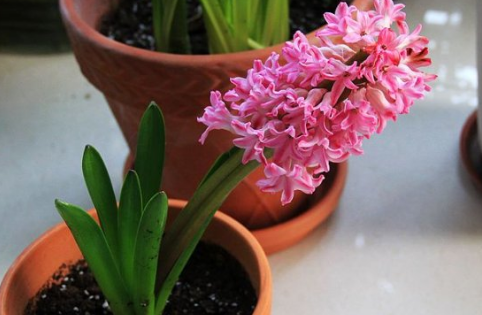
How to plant hyacinths:
The flower market supplies two types, one is supplied between September—October, like dried narcissus bulbs, they are dry bulbs. The other type has already been cultivated and already has flower buds. When this kind of hyacinth is bought before the Spring Festival, it can be grown in water and placed on an indoor windowsill to enjoy and smell the fragrance. For the cultivation method of dry bulbs, choose a spot with ample sunlight, high and dry terrain, and good drainage, and apply enough base fertilizer (made of soybean cake crumbs, fish bone meal, or composted organic fertilizer). During the autumn and winter growing period, apply 1—2 additional feedings of fertilizer mainly based on phosphorus and potassium.
Hyacinth care method: usually keep the soil slightly moist, avoid excessive moisture or waterlogging, so that by March of the following year, they will generally all bloom. The potting method is basically the same as planting in the ground. Use loose soil, 1—4 bulbs per pot, apply enough base fertilizer, place outdoors in a sunny spot, and apply additional fertilizer during the growing period. In the Shanghai area, move them indoors to a sunny spot in November for cultivation, keep the room temperature at 5—10°C, and around March they can also bloom and give off fragrance.
Can hyacinths be planted in March:
Planting hyacinths in March is a bit late.
Hyacinth bulbs are all imported. Merchants generally begin selling them around October each year, and flower lovers can also begin planting then. Generally speaking, they can be planted from October of that year to January of the following year (you can refer to planting when the average temperature is below 25°C), but bulbs purchased by flower lovers in other seasons can all be understood as leftover bulbs that were not sold out, and because hyacinths go dormant when the weather is hot, they are not suitable for planting, so flower lovers should pay attention.
That is all for the introduction to hyacinth planting methods. The planting time for hyacinths must be grasped well. If planted in March, it is a bit late.
Introduction to hyacinth growing conditions and cultivation techniques
Hyacinth flowers are rich in color. After long-term hybridization and propagation cultivation, hyacinths have gradually produced some special double-petaled varieties. Xinci burying the heart, its flower language is: sad love, eternal remembrance, etc. It is a common hydroponic flower and plant variety. The cultivation methods of hyacinth are introduced as follows.
Hyacinth growing conditions
1. Bulbs. The nutrients needed for hyacinth blooming mainly rely on the nutrients stored in the scale leaves of the bulb. Only by choosing bulbs with undamaged outer skins, fleshy scales that are not excessively shrunken, relatively hard and heavy, and plump can they produce abundant and beautiful flowers.
2. Soil. The soil is required to be fertile, high in organic matter, with good aggregate structure, and a pH level of 6-7; the culture soil can be prepared in a ratio of 5 parts leaf mold: 3 parts garden soil: 1.5 parts coarse sand: 0.5 part bone meal; before planting, chemical agents such as formalin can be used. At a soil temperature of 10-15°C, apply the chemical to the soil surface and immediately cover with plastic film. After 3 days of warm weather, remove the film, air for 1 day, then plant, keeping the soil moist.
3. Light. Hyacinths only need more than 5000Lx to maintain normal physiological activity. If the light is too weak, it will lead to conditions such as weak plants, overly long stems, small flower buds, early flower fading, and yellowing leaves. An incandescent lamp can be used at about 1 meter away for supplemental light, but excessive light can also cause scorching of leaves and petals or shorten the flowering period.
4. Temperature. If the temperature is too high, even above 35°C, flower bud differentiation will be inhibited, deformed growth will occur, and the rate of blind flowers will increase; if the temperature is too low, the flower buds will suffer frost damage.
5. Humidity. Soil humidity should be kept between 60-70%. If too high, root respiration is inhibited and rot occurs easily; if too low, the aboveground parts wilt, or even die; air humidity should be kept at about 80%, and humidity can be increased through misting and watering the ground, or reduced through measures such as ventilation.
Hyacinth propagation methods
Bulb division propagation is the main method. Seed propagation is used in breeding, and bulb propagation can also be used. The mother bulb produces 1-2 daughter bulbs after 1 year of planting, and some varieties can produce more than ten daughter bulbs. They can be used for bulb division propagation. Daughter bulb propagation requires 3 years to bloom. Seed propagation is sown in autumn, and only germinates in February of the following year. Seedlings grown from seed bloom after 4-5 years of cultivation.
1. Bulb division propagation
After digging up the bulbs in June, separate the large bulbs from the daughter bulbs. "Large bulbs planted in autumn can bloom in early spring the following year, while daughter bulbs need 3 years of cultivation to bloom. Because the natural bulb division rate of hyacinths is low, generally a mother plant can only produce 1-2 daughter bulbs after one year of planting. To increase the propagation coefficient, during the summer dormant period, the large bulbs can be subjected to a scoring operation to stimulate them to grow daughter bulbs.
In August, when the flower buds have already formed, first evenly scoop out a part of the basal plate at the bottom of the bulb, making the wound at the basal plate concave, then cut once vertically and once horizontally from bottom to top, forming a cross-shaped cut, reaching as deep as the bud center inside the bulb. At this time, mucus will flow out, and 0.1% mercuric chloride solution should be applied for disinfection. Then place it under strong sunlight to expose for 1-2 hours, then spread it flat indoors. First keep the room temperature at about 21°C to allow callus tissue to form. When the base of the scales swells, gradually raise the temperature to 30°C with relative humidity of 85%, and after about three months many small bulbs will form. The small bulbs induced in this way bloom after 3-4 years of cultivation.
2. Seed propagation
It is mostly used when cultivating new varieties. Sow in autumn into the culture soil in a cold frame, cover with 1 cm of soil, and germination occurs at the end of January to early February of the following year. Small bulbs cultivated from seedlings bloom after 4-5 years. Under ordinary storage conditions, seed germination capacity can be maintained for 3 years.
Hyacinth cultivation techniques
For hyacinths, choose sandy loam with good drainage and not too dry, neutral to slightly alkaline. Enough base fertilizer should be applied before planting. For field cultivation, avoid continuous cropping. Cultivation methods include open-field cultivation, potting, forcing cultivation, and water culture.
1. Open-field cultivation
It is suitable to carry out from October to November. Choosing soil with good drainage is the most important condition. Apply enough base fertilizer before planting, add a thin layer of sand on top, then arrange the bulbs, with a plant spacing of 15 cm-18 cm, and cover with 5 cm-8 cm of soil. Also cover with grass to keep the soil loose and moist. Generally no other management is done before flowering. After flowering, if seeds are not to be collected, the flower stems should be cut off to promote bulb development. The cutting position should be as high on the flower stem as possible. In early June, the bulbs can be dug out, spread out, graded, and stored in a cold storage. The summer temperature should not exceed 28°C.
2. Potting technique
Use loam, leaf mold, fine sand, etc. mixed as nutrient soil. Generally, a 10 cm diameter pot holds one bulb, and a 15 cm diameter pot holds 2-3 bulbs. Then bury the pots in the soil, cover with 10 cm-15 cm of soil, and after 7-8 weeks, when the buds grow to more than 10 cm, remove the covering soil to let sunlight reach them. Generally planted from October to November and blooms in March.
3. Water culture technique
For hyacinth water culture, the water level must leave 1-2 cm of space from the basal plate of the bulb so that the roots can breathe. It is strictly forbidden to fill the water so that it covers the bottom of the bulb. In December, place the bulb in a wide-mouthed glass bottle with a grid, add a little charcoal to help disinfect and prevent rot. The hyacinth bulb only needs to be soaked up to the bottom of the bulb. Then place it in a dark place and cover the bottle with black cloth.
If growing in clean water, change the water once every 7 days. If growing in hydroponic nutrient solution, replace the nutrient solution every 10-15 days depending on the degree of cloudiness. In any case, keep the water quality in the bottle clean. Hyacinths can be grown in a specially made gourd-shaped glass bottle, and in the upper section you can view its flower cluster.
During hyacinth water culture, do not place it under direct sunlight before the bulb sprouts. After sprouting, place it in a bright, airy location with sunlight to benefit its growth. At first, give it one or two hours of light each day, then gradually increase it to seven or eight hours. If the weather does not change much, it may bloom by the Spring Festival, and in the lower section you can see a bundle of sturdy white roots. This scene of both flowers and roots flourishing together is hard to see in other flowers and plants except orchids.
Hyacinth pest and disease control
Hyacinth disease control should be based on strengthening management, adopting active prevention, and integrated control as principles. Because hyacinths have a relatively short growing period in the greenhouse, diseases mainly occur. Common hyacinth diseases include sprout rot, soft rot, sclerotinia disease, and viral disease. Strictly disinfect the substrate before planting, clean and disinfect the bulbs, and during the growing period spray once every 7d with 1000 times Tuzet or chlorothalonil, used alternately, which can inhibit the spread of pathogens to a certain extent. Strictly control the amount of watering, strengthen ventilation management, control the relative air humidity in the environment, and promptly remove central diseased plants, which can greatly reduce the disease rate.
1. Gray mold
In the early stage of disease onset, the tips of infected leaves change color, and the leaves shrink and rot. Under cold and humid conditions, the flowers also rot. In the later stage of disease onset, gray mold layers and black sclerotia are produced on the diseased parts. The pathogen overwinters as sclerotia in diseased residues and soil. When conditions are suitable, it produces conidia, and the conidia spread with wind and rain to cause infection and damage. Low temperature and high humidity favor disease occurrence.
[Chemical control] In the early stage of disease onset, spray with 1:1:100 Bordeaux mixture, or 65% zineb wettable powder 500-800 times solution, or 50% benlate wettable powder 1000 times solution, or Banxiuqing 800-1000 times solution for spray control.
2. Root nodule disease
Hyacinth root swelling disease is also called root nodule disease. The root system is normal when it first appears, but after extending to a certain degree it produces small white nodules, growth weakens, and sometimes small flower dry rot occurs, affecting growth and development. In severe cases, the whole plant dies.
[Control methods]
① During storage, strictly disinfect and sterilize, pay attention to strengthening ventilation, check frequently, turn frequently, and promptly pick out diseased plants and burn them in a centralized manner.
② Strictly disinfect and sterilize the soil, do not practice continuous cropping, and do not reuse cultivation soil.
③ During cultivation, promptly remove diseased plants when found, and carry out pest and sterilization treatment on the soil.
④ Strict quarantine, do not allow diseased bulbs or diseased plants into the nursery.
Hyacinth bulb water culture method_How to plant hyacinth bulbs?
Hyacinth is a potted plant very popular among people in Europe and America. Its flower colors are very varied, and there are many varieties, including red, white, blue, yellow, and so on, but the most original color variety of hyacinth is blue, which belongs to the ancestor of hyacinths. In life, anyone who receives the blessing of a hyacinth will radiate a special vitality and attract a lot of attention from others. Hyacinth is not only an ornamental plant, but also plays a certain role in purifying the air. Who would not like such a good plant? Below let us take a look at the hyacinth bulb water culture method and how to plant hyacinth bulbs.
[Introduction to hyacinth]
There are more than two thousand hyacinth varieties in the world, mainly divided into two categories: one is the Dutch type, and the other is the Roman type. The Dutch type is the true hyacinth. Generally, one hyacinth will only grow one flower scape, the flower posture is very robust, and the flowers are also very large and very eye-catching. The Dutch type of hyacinth is a hybrid after variation. Each hyacinth plant will grow two or three flower scapes, the flower posture is very small and delicate, the flowers are also relatively small, and not especially brightly colored. Most people choose the Dutch type of hyacinth because it is very attractive. Hyacinths are native to southern Europe, the Asia region, and southern Africa, and are relatively widely planted in the Netherlands. Hyacinths generally bloom in March-April, and when the flowers are in full bloom they carry a faint fragrance.
[Hyacinth growth habits]
Hyacinths like to grow under sufficient light and need to grow in fertile, well-drained, moist, loose sandy soil. In winter, they like to grow in a warm and humid environment, while in summer they like to grow in a cool, dry, semi-shaded environment. When hyacinths are growing, the bulbs are suitable for growing at a temperature of 2-6°C, so that the root system can sprout better; root sprouting is suitable for growing at a temperature of 5-10°C; leaves are suitable for growing at a temperature of 5-12°C; flower buds are suitable for growing in an environment of 15-18°C when the flowers are in full bloom; bulb storage is suitable at 20-28°C; generally flower bud differentiation is ideal at 25°C. Hyacinths are relatively tolerant of short periods of frost and are also relatively cold-resistant.
It generally takes root in autumn, and new buds grow in early spring. It generally begins to bloom in March, and by late June the whole plant enters a dormant state. During the flower bud differentiation dormant period, it is suitable for growing at a temperature of 15-18°C. Differentiation generally takes about one week. From flower bud differentiation to the growth stage, the temperature cannot be higher than 13°C, as this will affect growth.
[How to plant hyacinth bulbs]
First method: Suitable hyacinth planting methods include bulb division and sowing. In June, when hyacinths enter a dormant state, dig out the bulbs, then separate the large bulbs from the small bulbs. If the large bulbs are planted, they generally bloom the following year, while daughter bulbs need to be cultivated for three years before they bloom. Because the natural bulb division rate of hyacinths is relatively low, one mother plant generally can only produce one or two daughter bulbs after one year. If you want to increase the propagation rate of hyacinths, you need to score the large bulbs in summer to stimulate them to grow daughter bulbs.
Second method: Sowing is generally the method chosen for cultivating new hyacinth varieties. It is generally carried out in autumn by cultivating soil in a cold frame, with a 1 cm layer of soil covering it, so that germination generally begins in January-February of the following year. If small bulbs are cultivated from seedling hyacinths, they generally bloom only after four or five years, and the stored seeds can maintain germination capacity for three years.
[Hyacinth bulb water culture method]
The required materials are: hyacinth bulbs, high-quality water, carbendazim, glass bottle, dropper, plastic box, granular colored crystal mud
Remove a thin layer of skin from the newly bought hyacinth bulbs, then remove the roots, add an appropriate amount of water to the plastic box, then pour in an appropriate amount of carbendazim and stir evenly in the water, then put the bulbs in for disinfection. After the carbendazim solution soaking is completed, add an appropriate amount of water to the glass bottle, then pour the colored crystal mud from the pot into the glass bottle, use a dropper to drip in hyacinth cultivation nutrient solution, then place the hyacinth bulbs on top. The distance between the bulb and the water surface is about 2 cm. Cover the bottle with something black or white, then wait for the hyacinth bulbs to root.
More related information: peach tree pruning techniques Complete flower language guide with pictures Flower language of various flowers Pictures of various flowers Flower language of Gesang flowers