What is the method for making a small cedar bonsai and how much does it cost?
Cedar, also called tower pine, incense cedar, pagoda pine, Tibetan cypress, and Himalayan cedar. Cedar is relatively suited to growing in mild climates and is not very cold-hardy. It likes plenty of light and is fairly shade-tolerant. The soil should be well-draining and acidic. Cedar is intolerant of waterlogging and pollution, and is easily harmed by environmental pollution. Cedar originates from the Himalayan region and has a fairly wide distribution range.
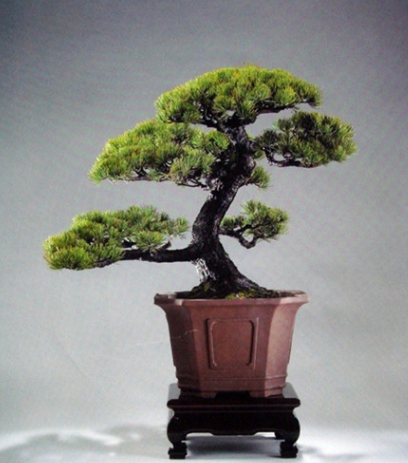
1. Method for making a small cedar bonsai
1. Choosing a pot
For cedar, a purple clay ceramic pot is suitable, and a glazed ceramic pot can also be used. For large bonsai, a deep round pot can be used, as can various carved stone pots, but the base of the roots must be fixed with metal wire. For medium bonsai, crabapple-shaped or horse trough-shaped pots are suitable; for small seedlings planted together in a forest style, a shallow carved stone pot such as white alum stone or marble can be used.
2. Soil
For cedar, loose, well-draining, slightly acidic sandy loam can be used. For pot cultivation, aged garden soil or leaf mold mixed with sand is commonly used.
3. Planting
Spring from March to April is preferable, and after autumn is also acceptable. Cedar seedlings dug from the ground must retain their native soil to help them survive. Also thin out and prune dead roots, spread out the fibrous roots, cover with fine soil, gently shake the pot, and press firm with a bamboo stick so that the potting soil and root system are firmly in contact. For the planting position, the main trunk should preferably lean toward one side at the 1B3 point.
4. Shaping
The shaping of a cedar bonsai is mainly done by training and binding, supplemented by pruning. Training and binding are best done in winter and spring, mostly using palm fiber. The main trunk of the cedar stands upright and the side branches spread horizontally, so the side branches are mostly bent into an S shape, while the main trunk is generally not bent, naturally growing upward into a large-tree form, with an extremely plain and beautiful posture. You can also take 5-7 current-year small seedlings, plant them together in a forest style at varying heights, with swaying branches and leaves, full of distinctive charm.
5. Tree form
The cedar tree body is tall and upright, with side branches spreading horizontally and drooping. When making a bonsai, its natural form must be used; tree forms such as straight trunk, double trunk, slanted trunk, and forest style are best. Through binding and pruning, the branches and leaves can be made into layered or cloud-like forms. After years of care, it can become an excellent bonsai with both firmness and suppleness and an elegant posture.
2. How much does a cedar bonsai cost?
The price of cedar is generally judged based on its height and size, that is, the trunk diameter at breast height, ground diameter, crown width, and height, to determine the value of a cedar, but generally the price of smaller cedars is between 150-1000, and then taller and better ones can reach over a thousand or even tens of thousands.
The above prices are all online reference prices; for actual prices, please consult your local market.
Method for making a cedar bonsai
When making a cedar bonsai, pay attention to choosing the pot, the soil, and shaping. For making cedar, a purple clay ceramic pot or a glazed ceramic pot is suitable. If the bonsai is relatively large, a deep round pot or a carved stone pot can be used, but metal wire must be used to fix the base of the roots to prevent loosening. The soil chosen is best if loose and well-draining.
Precautions
When shaping, pay attention to pruning the tree form according to personal preference, removing unnecessary branches, and keeping the tree form in good condition. You can also place some small decorations in the pot to make the bonsai more beautiful.
After reading this article, do you know how to grow a cedar bonsai? It seems that this kind of plant, which looks majestic and upright, also needs careful care!
An introduction to the method for making a cedar bonsai, and the precautions during making
Cedar is a very cold-hardy plant, and its vitality is very tenacious. The cedar tree form is tall, but it can be cared for as a bonsai and has high ornamental value. Many flower lovers enjoy growing cedar. Today, I will take everyone to learn about the method for making a cedar bonsai.1. Choosing a pot
For cedar, a purple clay ceramic pot is suitable, and a glazed ceramic pot can also be used. For large bonsai, a deep round pot can be used, as can various carved stone pots, but the base of the roots must be fixed with metal wire. For medium bonsai, crabapple-shaped or horse trough-shaped pots are suitable; for small seedlings planted together in a forest style, a shallow carved stone pot such as white alum stone or marble can be used.
2. Soil
For cedar, loose, well-draining, slightly acidic sandy loam can be used. For pot cultivation, aged garden soil or leaf mold mixed with sand is commonly used.
3. Planting
Spring from March to April is preferable, and after autumn is also acceptable. Cedar seedlings dug from the ground must retain their native soil to help them survive. Also thin out and prune dead roots, spread out the fibrous roots, cover with fine soil, gently shake the pot, and press firm with a bamboo stick so that the potting soil and root system are firmly in contact. For the planting position, the main trunk should preferably lean toward one side at the 1B3 point.
4. Shaping
The shaping of a cedar bonsai is mainly done by training and binding, supplemented by pruning. Training and binding are best done in winter and spring, mostly using palm fiber. The main trunk of the cedar stands upright and the side branches spread horizontally, so the side branches are mostly bent into an S shape, while the main trunk is generally not bent, naturally growing upward into a large-tree form, with an extremely plain and beautiful posture. You can also take 5-7 current-year small seedlings, plant them together in a forest style at varying heights, with swaying branches and leaves, full of distinctive charm.
5. Tree form
The cedar tree body is tall and upright, with side branches spreading horizontally and drooping. When making a bonsai, its natural form must be used; tree forms such as straight trunk, double trunk, slanted trunk, and forest style are best. Through binding and pruning, the branches and leaves can be made into layered or cloud-like forms. After years of care, it can become an excellent bonsai with both firmness and suppleness and an elegant posture.
The above is the method for making a cedar bonsai that I have compiled. I hope it can be helpful to the many flower lovers, and please continue to follow Duorou Huapu to learn more about flower care knowledge.