When should nasturtium be sown, and what is its flower meaning?
Nasturtium (Tropaeolum majus) is native to South America. It likes warmth and moisture, dislikes the intense heat of summer, is not tolerant of waterlogging, and is extremely easy to cultivate. In southern China it can be grown as a perennial; in North China it is mostly sown in autumn and grown indoors in pots as a spring-welcoming flower, timed to bloom during New Year's Day and the Spring Festival. Let's take a look at how to sow nasturtium!
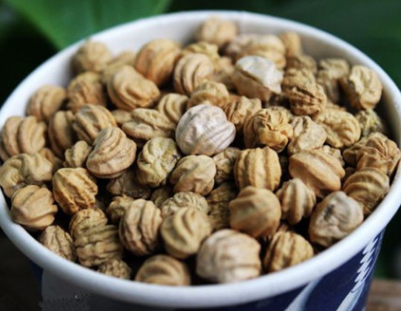
Sowing time for nasturtium seeds:
1. A detailed guide to sowing nasturtium: choosing the season
The usual sowing period for nasturtium: March to June, called spring sowing. The flowering period is August to December.
But sowing artificially in late August or early September is also fine; this is called autumn sowing. This way the nasturtium will bloom during New Year's Day and the Spring Festival. Welcoming the new spring with flowers blooming all over the plant makes people feel joyful.
2. A detailed guide to sowing nasturtium: seed treatment
The outer coat of nasturtium seeds is fairly tough. If left to grow naturally, the seedlings take a long time to emerge.
So before sowing, the seeds should generally be soaked in warm water at 40-45°C for 1-2 days to soften the shell.
3. A detailed guide to sowing nasturtium: potting soil
For the growing medium, it is best to use a loam mixed from 4 parts leaf mold, 4 parts garden soil, 1 part compost soil and 1 part sand. Mixed this way, the soil has good air permeability and strong drainage.
It is best to keep the soil moisture at around 50%.
A medium-sized flower pot can be used, and it is best to plant 3-5 seeds.
4. A detailed guide to sowing nasturtium: covering with soil
The seeds do not need to be buried very deep; cover them with only a thin layer of soil, not too thick, just a covering of fine soil.
After the seedlings emerge, you can add some more soil to the pot to protect the roots of the young seedlings.
5. A detailed guide to sowing nasturtium: seedling care after emergence
15 days after the seedlings emerge, you can apply chicken or duck manure water once to provide nutrients. Water once every 3-4 days, with a small amount of water, and do not let water accumulate.
The young seedlings need full sunlight, otherwise they tend to grow leggy.
Once the stems of the young seedlings grow long, insert wooden sticks or guide the vines, giving the nasturtium something to climb on, otherwise it tends to fall over.
What is the flower meaning of nasturtium:
1. The flower meaning of nasturtium, the love chapter
Love is everywhere, it's just that your mind is elsewhere
Nature generously gives us many gifts; as the seasons change, there are always flowers to accompany us.
Nasturtium is a beautiful flower that blooms in summer and autumn. It got its name because its leaves resemble those of the bowl lotus and its flowers are mostly orange-red.
The leaves of nasturtium are thick and plump, and the flowers are fresh and beautiful; when in full bloom they are like a swarm of butterflies dancing, very moving.
But often we keep our heads down playing with our phones, or crane our necks staring at computer screens, never taking a look at the scenery around us, even ignoring those passionate eyes looking at us, and missing so much unexpected beauty.
2. The flower meaning of nasturtium, the realm chapter
For things that cannot be sought, just be happy
Nasturtium also has beauty-enhancing effects. It is said that nasturtium once made Empress Dowager Xiao's skin fine and white and her complexion radiant, so it was called the beauty-nourishing nasturtium and listed as a tribute to the imperial court.
In the Qing Dynasty, Kangxi once wrote a poem: “Far removed from the desert, a lone root awaits appraisal, its pure fragrance enters past the threshold, its true color matches the heart, upright it rests north of Anshan, uneven on the west of Jiuling, in scorching winds it once escaped the heat, so noble that few can reach it”.
Circumstances are created by the mind, and appearance arises from the heart. We often rely on external forces for skincare, but people with a calm and elegant mindset will not have bad complexions.
For many things that cannot be sought, we need not go to great lengths; quietly wait for the flowers to bloom, and the fragrance will come on its own.
3. The flower meaning of nasturtium, the patriotism chapter
Patriotic heart
China's national color is probably red. Look at our Forbidden City, look at our Xi'an, look at our Nanjing, look at the China Pavilion in Shanghai - everywhere is festive red, vivid red, the morning sun, the power of upward striving.
Nasturtium has such a flower meaning, probably related to the color of its flowers!
After nasturtium blooms, its fragrance spreads all around, living up to the phrase "national beauty and heavenly fragrance."
The flower meaning of nasturtium
Nasturtium is a plant of the family Tropaeolaceae and the genus Tropaeolum, a perennial semi-trailing or prostrate plant. So, do you know what the flower meaning of nasturtium is? Below is the knowledge we have compiled for you about the flower meaning of nasturtium, for your reference!
The flower meaning of nasturtium
Love is everywhere, it's just that your mind is elsewhere; for things that cannot be sought, just be happy; a patriotic heart.
Nasturtium is native to South America. It likes warmth and moisture, dislikes the intense heat of summer, is not tolerant of waterlogging, and is extremely easy to cultivate. It is a perennial trailing herbaceous plant. The plant height is between 30 cm and 70 cm, and the leaves are pentagonal with three-part deep divisions. The leaves are plump and the flowers beautiful; the flower colors include orange-red, cream yellow, purple-red and so on. When nasturtium flowers are in full bloom they are like colorful butterflies dancing, extremely beautiful and moving.
Its leaves are like lotus leaves, and each flower stalk bears only one flower, with five petals. The flower colors include yellow, orange, pink, orange-red, cream white, purple-red, black and bicolor, etc. Nasturtium is called the “Longjing of the frontier”, and among the people there is also a saying, “Better to savor three flowers than to drink two liang of tea.” After brewing, not only is the tea clear and bright, it also has a faint fragrance. Nasturtium has the effects of clearing heat and detoxifying, nourishing the liver and brightening the eyes, and refreshing the mind.
Nasturtium also has beauty-enhancing effects. It is said that nasturtium once made Empress Dowager Xiao's skin fine and white and her complexion radiant, so it was called the beauty-nourishing nasturtium and listed as a tribute to the imperial court. In the Qing Dynasty, Kangxi once wrote a poem: “Far removed from the desert, a lone root awaits appraisal, its pure fragrance enters past the threshold, its true color matches the heart, upright it rests north of Anshan, uneven on the west of Jiuling, in scorching winds it once escaped the heat, so noble that few can reach it”.
The morphological characteristics of nasturtium
Grown as a perennial but cultivated as an annual, the stems and leaves are slightly succulent, herbaceous, semi-trailing, hairless or sparsely hairy.
Leaves alternate; petiole 6-31 cm long, twisted upward, peltate, attached near the [2] center of the leaf blade; leaf blade circular, 3-10 cm in diameter, with 9 main veins radiating in all directions from where the petiole attaches, the margin with wavy shallow notches, the underside usually sparsely hairy or with papilla-like dots.
Flowers solitary and axillary, pedicel 6-13 cm long; flowers yellow, purple, orange-red or variegated, 2.5-6 cm in diameter; receptacle cup-shaped; sepals 5, oblong-lanceolate, 1.5-2 cm long, 5-7 mm wide, united at the base, the margin membranous, one of them extended into a long spur, the spur 2.5-3.5 cm long, tapering to a point; petals 5, usually rounded, the margin notched, the upper 2 usually entire, 2.5-5 cm long, 1-1.8 cm wide, attached at the opening of the spur, the lower 3 narrowed at the base into a claw, the margin near the claw bearing cilia; stamens 8, alternating in length, free; ovary 3-locular, style 1, stigma 3-cleft, linear.
Fruit flattened spherical, when mature splitting into 3 achenes each containing one seed. Flowering period June to October, fruiting period July to November. Chromosome x=6, 7.
Propagation methods for nasturtium
Propagation by sowing
The usual sowing period: March to June, called spring sowing. The flowering period is August to December.
Sowing in late August or early September is also fine; this is called autumn sowing. This way the nasturtium will bloom during New Year's Day and the Spring Festival.
Sowing and raising seedlings: the optimum germination temperature is 18-20°C. Sow in individual spots, cover with about 1 cm of soil, water thoroughly and keep moist; germination occurs in 7 days. When there are 2-3 true leaves, pinch out the growing tip and pot up, and tidy the leaves and branches appropriately to improve ventilation so the flowers are exposed.
Propagation by cuttings
Take cuttings from April to June, choosing tender stems as cuttings, removing the lower leaves; after inserting, shade them, keep up the humidity, and they can root in 2-3 weeks. As the stems and vines grow, bamboo strips should be used promptly to set up a trellis and tie the branches and vines. Apply fertilizer once every 10-15 days, and throughout the whole growth period keep sufficient water and relatively high air humidity.
Each flower has 8 stamens and one pistil, and among these the 8 stamens do not mature at the same time. And only after all the pollen has been dispersed does that pistil mature and extend to the trumpet-shaped opening of the flower.
How to grow nasturtium
What is nasturtium? Nasturtium is also called golden lotus, money lotus, lotus-leaf lotus, dry lotus and so on. It is a herbaceous plant of the family Tropaeolaceae, semi-trailing, able to climb and grow, annual, biennial or perennial. Nasturtium usually grows to 30-70 cm, with plump leaves and beautiful flowers, solitary or in cymes of 2-3 blooms. The flower colors include orange, purple-red, cream white, cream yellow, bicolor and so on. The flowering period is generally in summer or autumn; if conditions are suitable, it can bloom all year round, and usually a bloom lasts 8-9 days. The flower meaning of nasturtium: a patriotic heart; for things that cannot be sought, just be happy; love is everywhere, it's just that your mind is elsewhere. Nasturtium also has a beauty-enhancing effect; brewing it as tea can refresh the mind, and it has the effects of clearing heat and detoxifying, nourishing the liver and brightening the eyes
There are quite a few time points for sowing nasturtium. For example, you can start sowing around March, and it will bloom around July; if sown in June, it will bloom around October, with a growth cycle of about 6 months.
Nasturtium seeds germinate very easily and do not need complicated methods to speed up germination. You can soak the seeds in cold water overnight and then sow them into the soil; the soil can be fine black soil.
When nasturtium has grown a lot of leaves, you need to remove the thin, small leaves and keep 4 large leaves.
During the growth period of nasturtium, you can apply a moderate amount of compound fertilizer. If you want nasturtium to set seeds, you must place the nasturtium outdoors during its flowering period to let bees collect nectar. You can also hand-pollinate, though this is rather troublesome.