When do orchids bloom? What are the reasons they don't bloom?
When it comes to orchids, many people love growing them - orchids are just that lovable. When do orchids bloom? What are the reasons orchids don't bloom:
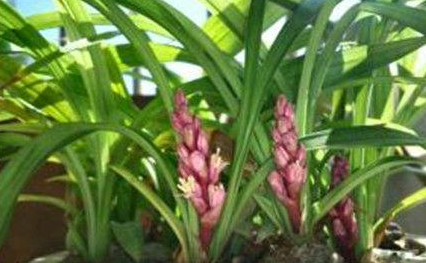
When do orchids bloom:
Different orchid varieties bloom at different times. Cymbidium goeringii (spring orchid) blooms from January to March, Cymbidium sinense (Chinese cymbidium) from December to February, Cymbidium ensifolium (four-season orchid) from May to October, Cymbidium faberi (Faber's cymbidium) from March to May, and Cymbidium kanran (cold orchid) from November to January. Among tropical orchids there are also different varieties with different bloom times - for example, spring Dendrobium blooms in spring, autumn Dendrobium blooms in autumn, and Phalaenopsis normally blooms in summer, but through greenhouse regulation it can also bloom at Spring Festival.
Reasons orchids don't bloom:
1. Not old enough to grow:
Seedling plants (seed-grown plants) and tissue-cultured plantlets may not bloom even after many years of cultivation. Just like other plants - for example, fruit trees need to reach a certain age before they can bloom and bear fruit - orchids also need to reach a certain age before they can bloom and set seed.
2. Different variety differences:
The species differences among orchid types vary, and different regional climate conditions making it difficult for orchids to bloom is also a common phenomenon. Take Cymbidium goeringii (spring orchid) for example - in some regions it is relatively difficult to bloom, or relatively few plants bloom.
3. Disrupted physiological growth:
When the physiological growth of an orchid is disrupted for various reasons, and new leaf buds suddenly appear during the flower bud formation period, in this situation the orchid plant no longer has enough nutrients to maintain normal flower bud differentiation, which causes the flower buds to stop growing and fail to bloom.
4. Improper cultivation methods:
Improper cultivation methods can also cause orchids not to bloom. There are mainly the following two situations.
① Soil too rich in fertilizer: When the orchid's growing medium contains too much nitrogen fertilizer and too little phosphorus and potassium fertilizer, this leads to excessive vegetative growth and inhibited reproductive growth. The solution is to replace it with a growing medium that has balanced nitrogen, phosphorus and potassium, or to apply more phosphorus and potassium fertilizer.
That covers when orchids bloom and the reasons they don't bloom. Growing orchids well is not easy.
② Overwatering: Overwatering during the flower bud differentiation period, with the growing medium too wet, will likewise lead to vigorous vegetative growth and inhibited reproductive growth. Because the growing medium is too wet, the nutrients it contains are constantly released and absorbed by the roots along with water, then transported to the leaves to participate in the plant's metabolism. Once metabolism is strong, respiration becomes vigorous, thereby offsetting the products of leaf photosynthesis. The accumulation of organic matter in the orchid plant is affected, and flower bud differentiation lacks the necessary driving force.
When does Cattleya bloom? What are the reasons it doesn't bloom?
To help Cattleya grow better, timely pruning is quite necessary. When does Cattleya bloom? What are the reasons it doesn't bloom:
When does Cattleya bloom:
Cattleya generally blooms in spring and autumn, blooming 1 to 2 times a year, with the viewing period usually lasting 3 to 4 weeks.
Cattleya is a genus of horticultural hybrids and is one of the most famous orchids internationally. The pseudobulbs are club-shaped or cylindrical, with 1 to 3 leaves growing at the top; the leaves are thick and hard, with the midrib sunken; the flowers are single or several, borne at the top of the pseudobulbs, large and beautiful, with bright and rich colors.
It is native to tropical America and is the national flower of countries such as Brazil, Argentina and Colombia. There are more than several thousand varieties. Colors include white, yellow, green, red and purple, etc. Propagation is by division, tissue culture or sterile sowing. It likes warmth, humidity and ample light.
It is usually potted with fern roots, moss, bark chunks, etc. During the growing period it needs relatively high air humidity, appropriate fertilizing and ventilation.
What are the reasons Cattleya doesn't bloom:
Generally, Cattleya takes 4∼6 years from test-tube plantlet to mature blooming. If during the growing process the orchid plant is frequently divided before it has grown mature, in order to achieve production numbers, then because the plant has not had enough time to grow and mature, it is impossible or rare for it to bloom.
Therefore, during cultivation, this work should only be done when the plant has filled the entire pot surface, or when a medium such as sphagnum moss has rotted and repotting and division are unavoidable. As mentioned above, frequent division affects blooming.
Light is the most important factor affecting both the vigor and blooming of Cattleya plants. Insufficient sunlight will delay blooming or result in a low blooming rate. The key to post-bloom care for Cattleya is that it needs relatively more light - except at noon, direct sunlight can fall on the plant. It can be placed on an east-facing or shaded south-facing windowsill, and a west-facing windowsill also works.
If grown in a greenhouse, it should be shaded to 50%-70% of full light. If light is sufficient, the leaves should be medium green and the pseudobulbs upright, but some varieties do not need too much sunlight, such as the deep vermilion flower types that bloom in winter and the mini-type small-flowered types.
Cattleya flowers are truly very beautiful and live up to their reputation.
When do orchids bloom? Why don't orchids bloom?
The orchid is one of the Four Gentlemen among flowers, and Chinese people have always regarded it as a symbol of purity and elegance. Below let's take a look at when orchids bloom and why orchids don't bloom!
When do orchids bloom
Different orchid varieties bloom at different times. Cymbidium goeringii (spring orchid) blooms from January to March, Cymbidium sinense (Chinese cymbidium) from December to February, Cymbidium ensifolium (four-season orchid) from May to October, Cymbidium faberi (Faber's cymbidium) from March to May, and Cymbidium kanran (cold orchid) from November to January. Among tropical orchids there are also different varieties with different bloom times - for example, spring Dendrobium blooms in spring, autumn Dendrobium blooms in autumn, and Phalaenopsis normally blooms in summer, but through greenhouse regulation it can also bloom at Spring Festival.
Why don't orchids bloom
1. Not old enough to grow: Seedling plants (seed-grown plants) and tissue-cultured plantlets may not bloom even after many years of cultivation. Just like other plants - for example, fruit trees need to reach a certain age before they can bloom and bear fruit - orchids also need to reach a certain age before they can bloom and set seed.
2. Different variety differences: The species differences among orchid types vary, and different regional climate conditions making it difficult for orchids to bloom is also a common phenomenon. Take Cymbidium goeringii (spring orchid) for example - in some regions it is relatively difficult to bloom, or relatively few plants bloom.
3. Disrupted physiological growth: When the physiological growth of an orchid is disrupted for various reasons, and new leaf buds suddenly appear during the flower bud formation period, in this situation the orchid plant no longer has enough nutrients to maintain normal flower bud differentiation, which causes the flower buds to stop growing and fail to bloom.
4. Improper cultivation methods: Improper cultivation methods can also cause orchids not to bloom. There are mainly the following two situations.
① Soil too rich in fertilizer: When the orchid's growing medium contains too much nitrogen fertilizer and too little phosphorus and potassium fertilizer, this leads to excessive vegetative growth and inhibited reproductive growth. The solution is to replace it with a growing medium that has balanced nitrogen, phosphorus and potassium, or to apply more phosphorus and potassium fertilizer.
② Overwatering: Overwatering during the flower bud differentiation period, with the growing medium too wet, will likewise lead to vigorous vegetative growth and inhibited reproductive growth, and flower bud differentiation lacks the necessary driving force, thus causing orchids not to bloom. Proper watering is all that is needed.
What varieties of orchids are there
1. Cymbidium goeringii (spring orchid): Cymbidium goeringii is widely distributed and rich in resources, with a bloom period from February to March lasting about 1 month. The flowers have a rich, pure fragrance. Famous varieties include lotus, plum, narcissus and butterfly petal types in various colors. In terms of petal type, the famous varieties from Jiangsu and Zhejiang are the most typical.
2. Cymbidium faberi (Faber's cymbidium): Cymbidium faberi has thick, long roots and narrow, strap-shaped leaves that are relatively rough and hard, grayish green, with obvious serrations along the leaf margins and prominent midribs. The flowers have a strong fragrance that spreads far and lasts long. Flower colors include yellow, white, green, pale red and multi-colored; most are colored flowers, and there are also plain flowers and butterfly flowers.
3. Cymbidium ensifolium (four-season orchid): Cymbidium ensifolium includes summer-blooming summer orchids and autumn orchids, etc. It is robust and upright, with green leaves and abundant flowers, strong fragrance and beautiful blooms. It is not afraid of heat or cold, has strong vitality and is easy to cultivate. Different varieties have different bloom periods, and flowers can be seen from May to December.
4. Cymbidium kanran (cold orchid): Cymbidium kanran has relatively slender, long leaves, especially slender at the leaf base. The leaf posture is elegant and unrestrained, emerald green and delicate. There are large-, medium- and fine-leaved varieties as well as edged varieties. Flower colors include yellow, green, purple-red and deep purple, etc., generally with variegated veins and spots, and there are also clean, flawless plain flowers.
5. Cymbidium sinense (Chinese cymbidium): Cymbidium sinense is native to China's Guangdong, Guangxi, Fujian, Yunnan, Taiwan, China and Hainan, etc. Orchid growers in southern China, especially in Guangdong and Yunnan, most enjoy cultivating and viewing it. Its bloom period is from October to March of the following year.
6. Chun Jian (Cymbidium tortisepalum): Chun Jian was first treated as a variety of Cymbidium faberi, and later established as an independent species. Flower colors include red, yellow, white, green, purple, black and multi-colored, brilliant and eye-catching, with a graceful bearing, elegant charm, strong fragrance and pure scent, and it is often the first choice favored by orchid growers.