Lipstick Plant Soil Cultivation Methods and Solutions for Leaf Drop
The lipstick plant (Aeschynanthus) is a plant that is absolutely gorgeous, truly beautiful, and its flowers are quite vividly colored. What are the soil cultivation methods for the lipstick plant? What to do when the lipstick plant drops leaves:
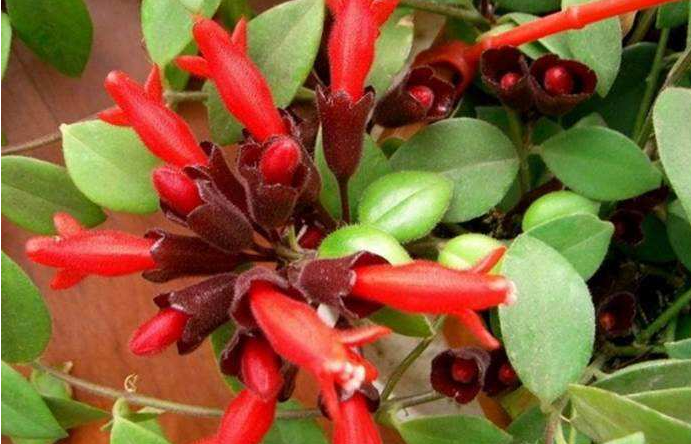
Lipstick plant soil cultivation methods:
1. Soil selection:
Choose loose, fertile and well-draining soil, preferably compost soil mixed with peat soil, adding an appropriate amount of river sand to increase drainage and aeration.
2. Watering
When the temperature is above 15°C, keep the potting soil slightly moist, but avoid waterlogging in the soil, which means watering when the potting soil is half-dry. During summer high temperatures, spray water to cool down.
Reduce watering in winter. If the temperature drops below 10°C, watering should basically be stopped. Cold weather easily causes frost damage, and watering at this time easily leads to root rot.
3. Appropriate fertilizer
During the growing season, give a diluted organic fertilizer solution once a month, diluted with water before use. Before fertilizing, make sure the potting soil is already slightly moist. Dilute with water before applying fertilizer to avoid fertilizer burn to the plant. Stop fertilizing after it turns cool in autumn.
4. Appropriate pruning
After flowering, promptly remove spent flowers, and appropriately prune some leggy branches. If you want more flowers, cut each branch stem to about 15 cm so that there are enough nutrients to develop flower buds.
5. Pest and disease problems
Generally, the lipstick plant rarely suffers from pests and diseases. If watered too much in winter (temperature below 18°C), it easily develops root rot.
Overwatering easily induces fungal infections. Other occasional pests include aphids, red spider mites and whiteflies.
Keep the care temperature above 15°C, keep the growing environment slightly moist but not waterlogged, and the care location should have good ventilation and bright light.
What to do when the lipstick plant drops leaves:
It may be due to low temperature. If watered too much, or too dry, it can also cause leaf drop.
Do not move the flower pot during the flowering period, otherwise it easily causes bud drop.
That covers the soil cultivation methods for the lipstick plant. If leaf drop occurs, it should also be dealt with as soon as possible.
Lipstick Plant Cultivation Methods What to Do When the Lipstick Plant Drops Leaves
The lipstick plant is a perennial evergreen trailing succulent herb. The branches are about 20 cm long, with angular stems, and after extending they become semi-prostrate, lying flat, with many branches. So, what are the cultivation methods for the lipstick plant and what to do when the lipstick plant drops leaves? Let's take a look together below.
Lipstick Plant Cultivation Methods
Soil: For the lipstick plant, loose and fertile sandy loam is best, with good drainage. Potting soil is best slightly acidic. You can use a potting mix made of peat soil, sand and vermiculite, and add an appropriate amount of superphosphate.
Light: It prefers a semi-shaded environment. Throughout the year, except for the strong light at noon in midsummer which should be appropriately shaded, it should be given sufficient light at other times, especially in winter. If the placement location has too strong or insufficient light, the leaves easily turn pale green or yellow-green.
Temperature: The lipstick plant should be placed in a cool, ventilated place, and attention should be paid to maintaining environmental humidity. Avoid continuous high temperature and high humidity; poor drainage and ventilation will cause rot. The lipstick plant is not cold-tolerant and needs to be brought indoors to overwinter in winter.
Watering frequency: The potting soil should be kept moist frequently, and never allow water to accumulate in the pot, to avoid causing root rot. From March to September during the peak growing period, the water requirement is greater, so water and spray frequently to increase humidity; as the weather gradually turns cool in autumn, gradually reduce the amount of watering and fertilizing. In winter, the potting soil should be slightly dry.
Pruning tips: During vigorous growth, pinch back appropriately to promote branching. After the winter flowering period, promptly cut off the spent stems that have flowered, which can save nutrients, promote new branch growth, and help it develop more flower buds and bloom.
The cultivation methods for the lipstick plant are simple; usually extensive management is enough, and being too careful will only backfire. The growing medium is best loose and fertile sandy loam, with good drainage. The optimal temperature is 15-25°C. From March to September each year is the growing period for the lipstick plant, when the water requirement is greater, so water and spray frequently to increase humidity. After autumn, gradually reduce watering to improve the plant's cold resistance.
Throughout the year, except for the strong light at noon in midsummer which should be appropriately shaded, the lipstick plant should be given sufficient light at other times, especially in winter. It prefers a semi-shaded environment. If the placement location has too strong or insufficient light, the leaves easily turn pale green or yellow-green, lacking vitality, losing their ornamental value, and may even dry up and die. If exposed to direct sunlight and dry air, it most easily causes scorching, so it should be placed in a cool, ventilated place, and attention should be paid to maintaining environmental humidity. Avoid continuous high temperature and high humidity; poor drainage and ventilation will cause rot.
What to Do When the Lipstick Plant Drops Leaves
Leaf drop may be caused by low temperature, potting soil that is too dry (not watered thoroughly), or too much shade.
1. The ambient temperature is too low. The lipstick plant is a tropical plant that likes warmth and fears cold. If the room temperature is too low, it will cause poor growth.
2. Watering too frequently, watering again before the potting soil has dried, causing the potting soil to stay wet without drying, which can also cause root rot and leaf and flower drop.
3. Unsuitable growing medium. Poor drainage performance causes the potting soil to stay wet for a long time after watering, and material that is too dense causes poor root respiration.
If the leaves are found to turn red, it is either too much light or too low room temperature. Room temperature should be raised promptly. If the room temperature is too low, it will cause leaf drop and branch drying. If the room temperature is suitable, its flowering period will be concentrated from December to February of the following year. At this time, reduce nitrogen fertilizer, increase indoor light intensity, and control a lower room temperature, which promotes flowering. After the winter flowering period, promptly cut off the spent stems that have flowered, which can save the plant's internal nutrient consumption and promote new branch growth, helping it develop more flower buds and bloom. Sometimes the terminal buds of the flowers will necrose for no apparent reason; this is caused by a lack of calcium fertilizer. At this time, apply an appropriate amount of calcium fertilizer, and the terminal bud necrosis will disappear.
What to Do When the Lipstick Plant Drops Leaves Lipstick Plant Cultivation Methods
The lipstick plant, also known as flower vine grass (Hua Man Cao) and lipstick flower, has a cute and unique shape, fresh green leaves, and bright red corollas. It rarely suffers from pests, making it an excellent potted plant for decorating indoor balconies and sunny spots. So what to do when your own lipstick plant drops leaves? Let's take a look together below at the related cultivation methods for the lipstick plant.
What to Do When the Lipstick Plant Drops Leaves
Leaf drop in the lipstick plant is caused by improper care, mainly including the following aspects. First, if the leaves turn red-brown, then it is either too much light or too low room temperature. If it is summer, too much light will cause the leaves to change color, and appropriate shading should be applied. If it is winter, too low room temperature will cause leaf drop and branch drying, and room temperature should be raised. Second, improper watering can also cause leaf drop. Water accumulation will cause root rot, and potting soil that is too dry will cause the leaves to wither, so watering should be appropriate. Third, improper fertilizing. The lipstick plant does not have a very high demand for fertilizer; during the peak growing period, applying fertilizer solution once every 10 to 15 days is enough. Third, the soil should be loose and fertile sandy soil, otherwise the growth will be poor.
Analysis of Causes and Solutions for Yellowing Leaves of the Lipstick Plant:
1. The ambient temperature is too low. The lipstick plant is a tropical plant that likes warmth and fears cold. If the room temperature is too low, it will cause poor growth, yellowing leaves and other symptoms.
Solution: If the leaves are found to turn yellow, promptly raise the room temperature and take cold protection measures. You can cover the plant with plastic film and uncover it regularly for ventilation. Wait until the temperature returns to a suitable level before removing the film.
2. Watering too frequently, watering again before the potting soil has dried, causing the potting soil to stay wet without drying, which can also cause root rot and yellowing leaves, or even leaf and flower drop.
Solution: Immediately stop watering, and loosen the potting soil for ventilation and airflow. Also cut off the rotted roots and spray with carbendazim. Watering should follow the principle of "water when dry, stop when wet"; never water too frequently.
3. Lack of light. Although the lipstick plant is a shade-loving plant, if the placement location has too strong or insufficient light for a long time, the leaves will easily turn pale green or yellow-green, lacking vitality, losing their ornamental value, and may even dry up and die.
Solution: Take some free time each day to place the plant in the sunlight for a few hours, but it should not be exposed to too much direct sunlight.
4. The air is too dry. Exposure to direct sunlight and dry air most easily causes the leaves to scorch and turn yellow.
Solution: It should be placed in a cool, ventilated place or a semi-shaded environment, and attention should be paid to maintaining air humidity, regularly spraying water on the leaf surface. Avoid continuous high temperature and high humidity; poor drainage and ventilation will cause root rot.
5. Improper fertilizing. Over-fertilizing causes yellowing leaves. When fertilizing exceeds the plant's needs, the leaves initially become glossy and uneven, then the roots rot and the leaves turn yellow.
Solution: Stop fertilizing, water with plenty of clean water, or repot and clean the roots, replacing with new soil.
Lipstick Plant Cultivation Methods and Precautions
1. Soil
The lipstick plant can only grow well in loose and fertile sandy loam. Therefore, a soil mixed with peat soil, sand and vermiculite can be used as potting soil, and an appropriate amount of superphosphate can be added to make the soil slightly acidic. But be careful about drainage, and never allow water to accumulate in the pot, to prevent root rot.
2. Light
The lipstick plant prefers semi-shade. If the light is too strong or insufficient, the leaves of the lipstick plant will turn pale green or yellow-green. So at noon in midsummer when the light is strong, it should be appropriately shaded, moving the lipstick plant to a place with less intense light, otherwise the leaves will turn red-brown. At other times, sufficient light should be given, otherwise the lipstick plant will only grow leaves and not bloom.
3. Temperature
The lipstick plant easily rots in a high-temperature and high-humidity environment, so it should be placed in a cool, ventilated and breathable place. Because the optimal growing temperature for the lipstick plant is around 25°C and it is not cold-tolerant, cold protection should be done well in winter. Place the lipstick plant indoors to overwinter, and the overwintering temperature should be above 12°C, with sufficient light, to prevent leaf drop and branch drying.
4. Watering
The potting soil should be moist, but not waterlogged. During the peak growing period from March to September, water and spray frequently to maintain the moisture of the potting soil. When it turns cool in autumn and winter, appropriately reduce the amount of watering. In winter, the potting soil should be slightly drier.
5. Fertilizing
During the peak growing period from March to September, apply fertilizer solution once every 10 to 15 days. When it turns cool in autumn and winter, reduce the amount of fertilizing. During the flowering period, pay attention to the duration of light and the application of phosphorus fertilizer.
6. Pruning
During the vigorous growth period, pinch back to promote branching; after the flowering period, to save nutrients and promote new branch growth so that it develops more flower buds and blooms, cut off the spent stems that have flowered.
Daily Care of the Lipstick Plant
1. After potting the lipstick plant, keep the potting soil moist, not too wet. Especially when the pot has poor ventilation, the roots easily rot or cause leaf drop. Frequently spray water mist on the leaves to maintain air humidity at around 80%.
2. In the hot summer, the lipstick plant can be placed outdoors under a shade shed or in a ventilated spot under tree shade, with about 50% shading. You can also hang the lipstick plant under a balcony trellis, shade it with bamboo blinds, or hang the pot on the inner side of a south-facing door or window where there is sufficient scattered light.
3. The lipstick plant should avoid wind blowing on its branches and vines, to prevent the trailing stems from being worn and broken by the rim of the flower pot. As the weather gradually turns cool in autumn, gradually reduce the amount of watering and fertilizing.
4. In winter, the potting soil of the lipstick plant should be slightly dry. Apart from appropriately applying some fertilizer solution containing slightly more phosphorus before bud development and flowering, in general, fertilize less or not at all.
When Does the Lipstick Plant Bloom
There is a large climate difference between north and south, so the flowering period of the lipstick plant varies. Some sources indicate it is from November to June of the following year, while other sources indicate it is from December to February of the following year. This depends on where the lipstick plant blooms; different locations will have differences.
The cultivation methods for the lipstick plant are actually very simple. Usually, extensive management is all that is needed. Do not take care of it too carefully, otherwise it will be overdone and backfire.