Dichondra Seed Planting Methods and Benefits and Effects Explained
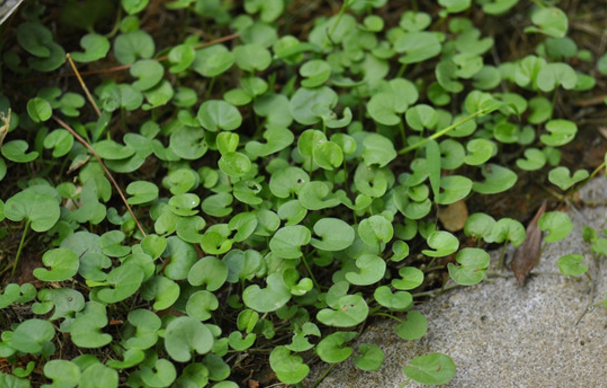
Perennial creeping small herb, stems slender, covered with gray short soft hairs, rooting at the nodes. Leaves kidney-shaped to round, 4-25 mm in diameter, apex broadly rounded or slightly emarginate, base broadly cordate, leaf surface slightly hairy, underside covered with appressed short soft hairs, entire margin; with long petioles, petiole length (1.5)3-5(6) cm.
Flowers solitary in leaf axils, pedicels shorter than petioles, thread-like; sepals obovate-oblong to spatulate, obtuse, 2-3 mm long, hairy on the back and margins; corolla campanulate, shorter to slightly longer than the calyx, yellow, deeply 5-lobed, lobes oblong-lanceolate, hairless; stamens 5, inserted at the sinuses between the 2 corolla lobes, filaments short, equal in length; ovary sparsely pubescent, 2-locular, with 4 ovules, styles 2, stigma capitate.
I. Dichondra Seed Planting Methods
For dichondra, spring sowing is best in April-May, and autumn sowing is best in September-October. When the soil temperature reaches 21°C, it is the best time to sow. Sowing rate 10~15g/m. Before sowing, soak the seeds in 50mg/kg GA for 4 hours before sowing for better results. Sow the treated seeds in drills or broadcast them on the prepared seedbed, then rake the soil with a nail rake so the seeds enter the soil 1-2cm, press down, and cover with non-woven fabric or straw curtains to increase germination temperature and maintain soil moisture, promoting uniform emergence and improving the emergence rate.
1. Land preparation
Loosen the soil by rotary tilling, rake it level, and refine it so that the soil particle diameter is below 2cm. Adjust the soil pH to 5.5~7.0. Use formalin:water = 1:40 for soil disinfection, with a dosage of 10~15L per square meter of bed surface. Before disinfection, the soil needs to be dry.
2. Digging trenches and transplanting
On the prepared seedbed, dig small trenches 2~3cm deep, with a trench spacing of 3~4cm. Separate the prepared dichondra plants, place them evenly in the trenches, keep the plant spacing in the trenches at 3~4cm, cover with 2cm of soil, water thoroughly once, cover with a shade net or straw curtain, and keep the soil moist every day. On the 5th day after planting, the plants grow vigorously, but the creeping branches have not yet fully contacted the ground to grow new roots; on the 10th day, a large number of creeping stems fully contact the ground and grow new roots and new shoots.
3. Cultivation with fine sand covering
Before planting, water the prepared seedbed thoroughly, manually tear the dichondra sod apart, spread it evenly on the seedbed, and evenly scatter the prepared fine sandy soil over the dichondra, covering with sand 6~10mm thick, keep the fine sandy soil completely moist, and cover with a shade net to prevent excessive water evaporation. By the 5th day, a large number of new roots have grown from the creeping stem nodes of the dichondra; by the 10th day, a large number of new branches have grown from the places where new roots emerged.
II. What are the benefits and effects of dichondra
1. Ornamental value of dichondra
Dichondra is shaped like a horse's hoof, and its leaves are emerald green, the plant is low-growing, the leaves are dense and beautiful, it tolerates light treading, has vigorous vitality, strong stress resistance, wide adaptability, low requirements for growing conditions, and needs no pruning. Dichondra is a foliage plant, and its little green leaves are very ornamental.
2. Landscape greening value of dichondra
Dichondra has a long lifespan and a long green period, and its form is beautiful, it is easy to propagate, easy to manage, and also has advantages such as shade tolerance and high temperature tolerance. It is an excellent lawn grass and groundcover greening material, worthy of being called a "green carpet." Dichondra not only has ornamental value, but also has the functions of stabilizing soil and protecting slopes, greening, and purifying the environment.
Dichondra has a high coverage rate and is very suitable for planting on bare yellow soil. It is an excellent groundcover plant, suitable for cultivation and ornamental use in parks, government offices, courtyard green spaces, etc., and can also be used on ditch slopes, embankment slopes, roadsides, etc. as an aloe plant.
3. Medicinal value of dichondra
Dichondra is slightly bitter and sweet in flavor, cold in nature, and can be taken internally or used externally. It treats jaundice, dysentery, urolithiasis, white turbidity, edema, boils and swelling, traumatic injuries, venomous snake bites, etc. It has the effects of clearing heat and draining dampness, and detoxifying and reducing swelling.
Dichondra has a liver-protecting and enzyme-lowering effect, as well as analgesic, anti-inflammatory, antibacterial, antipyretic and cholagogic, immune-enhancing, and anti-cancer effects. It can act on hepatitis, cholecystitis, dysentery, nephritic edema, urinary tract infections, urinary tract stones, tonsillitis, and traumatic injuries. As a traditional Chinese medicine it can also play a great role, but when using dichondra as medicine, attention must be paid: from the "Gangmu Shiyi" it is known that dichondra contraindicates salt. Therefore, doctor's orders must be followed to avoid adverse reactions.
Dichondra seed planting methods: how to water and fertilize
Dichondra, this is also a kind of plant, and many people know about it; many people know it can be grown hydroponically. So what are the dichondra seed planting methods? How to water and fertilize:
Dichondra seed planting methods:
1. Land preparation
Prepare the land terrain well, deciding where it should be high and where it should be low; once the seeds are planted, it is not easy to change the terrain. After determining the terrain, clear all weeds, apply 3~5 tons of farmyard manure per mu, with fermented chicken manure or cow manure being best, and then plow all the topsoil once.
2. Sowing
After preparing the land, you can sow. Dichondra seeds are relatively small, so broadcasting is mainly used. When there is no wind, scatter the seeds evenly, then cover with 1~2 cm of soil and press lightly, then water and cover with plastic film or degradable non-woven fabric. If the temperature is good, they will germinate in about 10 days. After germination, pay attention to timely watering to accelerate the growth of seedlings. Within 2 months of planting dichondra, manual weeding is needed; remember not to use herbicides, as currently no herbicide can be used on dichondra.
Courtyard gardens have a relatively small area, and mechanical plowing is difficult, so manual turning of the soil or water-assisted sowing is generally used. If the soil cannot be turned, clear the weeds and then directly scatter the seeds, but before germination, water every day to keep the seeds able to absorb enough water, until about half a month after germination.
How to water and fertilize dichondra:
Watering is the key to good growth of dichondra. Dichondra is a plant with relatively fine and dense roots and is not very drought tolerant, so the soil needs to be kept moist during cultivation. Generally, when growing dichondra, it is necessary to water reasonably and frequently spray the dichondra plants with water. Be careful not to let it lack water; water shortage will cause dichondra to drop leaves and make the branches and leaves sparse, affecting the ornamental value. Only with sufficient water will hanging-basket dichondra have dense branches and leaves.
Fertilizing is also a very important step. Dichondra prefers nitrogen fertilizer. With sufficient fertilizer, the branches and leaves will grow more luxuriantly, and it is also easier to create a waterfall effect in hanging-basket dichondra. When growing dichondra, nitrogen fertilizer can be applied together with watering, but do not contaminate the leaves.
The dichondra seed planting methods are introduced here. Now you know how to water and fertilize, right!
Dichondra seed planting methods
Dichondra propagation can generally be done through sowing and division propagation methods.
Dichondra division propagation methodThis method is generally commonly used for propagation. It mainly uses its creeping stems for propagation. First, apply base fertilizer to the selected nursery land, water, cultivate carefully, and level it (or make beds and build ridges); the time can be from March to September. Then use a 1:8 ratio for replanting. When replanting, tear the sod into grass blocks 5cm × 5cm in size by hand, place them against the ground, cover lightly with soil and press firmly, and water promptly. Generally, after about 2 months of growth, they can completely cover the ground. After the stem segments are planted, during the period when the new grass blocks have not fully covered the ground, weeds must be pulled out in time, generally requiring 2-3 times.
Dichondra sowing propagation methodChoose the nursery land well, apply base fertilizer and pesticide (furadan 2kg/mu), then plow finely and rake level, and make beds and build ridges. Sow at the right time; generally it can be done throughout the year from March to September, with March-May being best. Before sowing, first irrigate enough bottom water, then evenly scatter the selected seeds into the beds by broadcasting, cover with fine soil 1-1.5cm, with a sowing rate of about 3kg/mu. When 4-5 true leaves have grown, topdress with urea 5kg/mu and diammonium phosphate 10kg/mu. At this time, it is also the rapid growth period of weeds, so weeds must be removed in time and pests and diseases controlled, which is beneficial for the dichondra lawn to cover the ground early.
Dichondra seed sowing propagation steps 1. Dichondra sowing timeFor dichondra, spring sowing is best in April-May, and autumn sowing is best in September-October.
2. Land preparationLoosen the soil by rotary tilling, rake it level, and refine it so that the soil particle diameter is below 2cm. Adjust the soil pH to 5.5~7.0. Use formalin:water = 1:40 for soil disinfection, with a dosage of 10~15L per square meter of bed surface. Before disinfection, the soil needs to be dry.
3. Digging trenches and transplantingOn the prepared seedbed, dig small trenches 2~3cm deep, with a trench spacing of 3~4cm. Separate the prepared dichondra plants, place them evenly in the trenches, keep the plant spacing in the trenches at 3~4cm, cover with 2cm of soil, water thoroughly once, cover with a shade net or straw curtain, and keep the soil moist every day. On the 5th day after planting, the plants grow vigorously, but the creeping branches have not yet fully contacted the ground to grow new roots; on the 10th day, a large number of creeping stems fully contact the ground and grow new roots and new shoots.
4. Cultivation with fine sand coveringBefore planting, water the prepared seedbed thoroughly, manually tear the dichondra sod apart, spread it evenly on the seedbed, and evenly scatter the prepared fine sandy soil over the dichondra, covering with sand 6~10mm thick, keep the fine sandy soil completely moist, and cover with a shade net to prevent excessive water evaporation. By the 5th day, a large number of new roots have grown from the creeping stem nodes of the dichondra; by the 10th day, a large number of new branches have grown from the places where new roots emerged.