Peperomia Water Culture Methods and Root Rot Solutions
Peperomia adapts very well to a water environment and can be grown in water culture, and it is simple to do, making it a lovely variety for beginners to add to their collection. A water-cultured peperomia has a fresh and distinctive look, and placed in a corner of a desk it carries a special charm. So what should you do if the peperomia gets root rot? Don't worry, let's read on one by one.
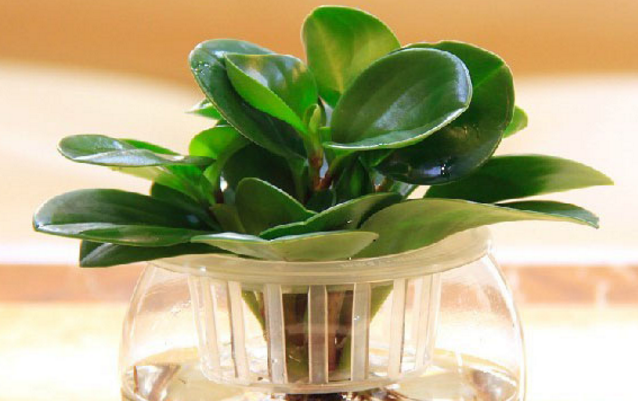
I. How to water-culture peperomia
1. Timing for water-culturing peperomia
Water-culturing peperomia requires a certain adjustment period, usually carried out in April to May in spring. After water culturing, place it in a shaded spot to recover; after one week it will adapt and grow normally.
2. Water culture method for peperomia
Many flower enthusiasts say, isn't water culture just pulling the plant out of the soil by the roots, washing off the soil, and keeping it in water? Well, you are wrong. If water culture were that simple, why would there still be so many plants grown in soil? The key to water culture lies in the details:
Select a soil-grown plant with a good shape, take it out of the pot, wash the soil off the roots, then cut off old roots and dead leaves.
Soak the plant's roots - note, the roots - in a 0.05% concentration potassium permanganate solution for 10 minutes.
To make it easier to secure the plant, you can put a small amount of colored stones or expanded clay pebbles into the water culture container to hold the root system in place.
After placing the plant into the water culture container, add water to cover 1/2-2/3 of the root system; during this process it is best not to let the leaves get submerged in water.
3. Care methods for water-cultured peperomia
At the beginning of water culture, change the water once a day, clean off the sticky substances produced on the root system, then replace with clean water; in about 10 days new roots will grow. After roots have grown, change the water once every 2-3 days. Tap water is usually used for peperomia, and well water is generally not used.
Compared with other water-cultured plants, peperomia needs fewer nutrients and basically requires no fertilizing; water that is too nutrient-rich instead easily causes microorganisms to proliferate in the water, which is not good for plant growth. So just change the water on time and ensure the water has sufficient oxygen.
Peperomia has fleshy leaves and does not demand much light; once new roots have grown, care becomes even simpler. Ensure good ventilation, mist the leaf surface a little when the air is dry, and avoid cold drafts in winter.
II. What to do if peperomia gets root rot
1. Too much watering
Peperomia likes a moist environment, and in conditions of higher air humidity it does not need excessive water. If watered too much at once, it will cause poor root respiration, leading to root rot.
2. Temperature too high
Temperature must also be controlled when growing peperomia; the most suitable growing temperature is 20-25°C, but in summer when the temperature is too high and sunlight is strong, if appropriate cooling measures are not taken, the stems and leaves will turn black, which then leads to root rot.
3. Improper fertilizing
Peperomia has high demands for fertilizer and water; when fertilizing, be careful to avoid the root system, so that the fertilizer does not burn the roots and cause root rot.
4. Disease
Root and crown rot is one of the diseases peperomia is prone to; it must be dealt with promptly, generally by spraying with a 1000-fold dilution of 50% carbendazim wettable powder.
5. Poor water quality
Peperomia can be grown in water culture, but you must pay attention to water quality. If the water becomes sticky and cloudy, it needs to be cleaned and replaced with clean water, otherwise the peperomia's root system will be contaminated and rot.
6. How to handle peperomia root rot
Treatment should be based on the degree of root rot in the peperomia. Cases like the one in the picture below can be treated. If the root rot is severe and the stems and leaves have all rotted, there is already no way to save it.
First take the peperomia out of the pot, then rinse it clean, cut off the rotted parts, then let it dry in a cool, ventilated place for 1 hour until the wounds heal, then insert it into moist soil and it will do (pure sand, perlite, etc. are all fine). In fact, it just means re-cuttings the parts that have not rotted.
What to do about peperomia root rot, how to save it
Peperomia is also a very popular potted plant this year, and very many flower enthusiasts grow it. When caring for peperomia, if you are slightly careless when watering and fertilizing it, it will lead to root rot. Of course, if root rot appears in your peperomia, don't panic either; find out the cause, and then deal with the peperomia root rot problem.
Causes of peperomia root rot 1. Too much watering causes peperomia root rotPeperomia likes a moist environment, and in conditions of higher air humidity it does not need excessive water. If watered too much at once, it will cause poor root respiration, leading to root rot.
2. Temperature too high causes peperomia root rotTemperature must also be controlled when growing peperomia; the most suitable growing temperature is 20-25°C, but in summer when the temperature is too high and sunlight is strong, if appropriate cooling measures are not taken, the stems and leaves will turn black, which then leads to root rot.
3. Improper fertilizing causes peperomia root rotPeperomia has high demands for fertilizer and water; when fertilizing, be careful to avoid the root system, so that the fertilizer does not burn the roots and cause root rot.
4. Disease causes peperomia root rotRoot and crown rot is one of the diseases peperomia is prone to; it must be dealt with promptly, generally by spraying with a 1000-fold dilution of 50% carbendazim wettable powder.
5. Poor water quality causes peperomia root rotPeperomia can be grown in water culture, but you must pay attention to water quality. If the water becomes sticky and cloudy, it needs to be cleaned and replaced with clean water, otherwise the peperomia's root system will be contaminated and rot.
How to handle peperomia root rotTreatment should be based on the degree of root rot in the peperomia; mild root rot can be treated. If the root rot is severe and the stems and leaves have all rotted, there is already no way to save it.
First take the peperomia out of the pot, then rinse it clean, cut off the rotted parts, then let it dry in a cool, ventilated place for 1 hour until the wounds heal, then insert it into moist soil and it will do (pure sand, perlite, etc. are all fine). In fact, it just means re-cuttings the parts that have not rotted.
How to correctly handle root rot in water-cultured peperomia
Raising flowers and plants by hand is actually already much less difficult than raising pets, but if you want to grow healthy and beautiful plants, observing them often is also very important. Peperomia is a foliage plant with emerald-green leaves and a very appealing appearance; it can be grown not only in soil but also in water culture, so it can be said to be very suitable for beginner flower enthusiasts to raise. Although peperomia is relatively easy to raise, it is also prone to root rot. The editor will now analyze in detail for you the causes of peperomia root rot and the solutions; beginner friends can learn from it.I. Overwatering
This is the most common cause of all root rot. Although peperomia likes moisture, if you choose the soil-growing cultivation method, you must pay attention to the amount of watering. If the pot you are raising your peperomia in does not drain very well, then you must control the water, otherwise too much water will very easily lead to peperomia root rot and death. In addition, when watering, also pay attention to the air humidity, and appropriately increase or decrease the amount of watering according to changes in the external environment, season, and so on.
II. Temperature too high
When raising peperomia, also pay attention to the ambient temperature. Although sunlight is very important for peperomia, peperomia is a shade-loving plant, so in the hot summer you must be sure to place it under a shade canopy and spray water to cool it down, otherwise the high external temperature will cause the peperomia's stems and leaves to turn black and rot.
III. Improper fertilizing
When fertilizing peperomia, if it has high demands for fertilizer and water, be sure to avoid the root system when fertilizing, so that the fertilizer does not burn the roots and thereby cause root rot.
IV. Disease
Another cause of peperomia root rot is root and stem rot, and this disease is also one of the diseases peperomia is relatively prone to. Once discovered, it must be dealt with promptly; you can spray with a 1000-fold dilution of 50% carbendazim wettable powder.
V. Poor water quality
When water-culturing peperomia, you must pay attention to water quality; do not think that water culture means peperomia will not get root rot. If the water you provide becomes sticky and smelly, you must clean the root system and replace it with clean water, otherwise water-cultured peperomia will also develop root rot.
Peperomia is a plant very suitable for growing indoors to purify the air and beautify the environment, but during the raising process you will inevitably encounter some problems; as long as you discover them in time and take the correct handling measures, the peperomia can still recover its health quickly.
The above is what Succulent Garden provides for you on how to correctly handle root rot in water-cultured peperomia. We hope everyone can gain something after reading this article!